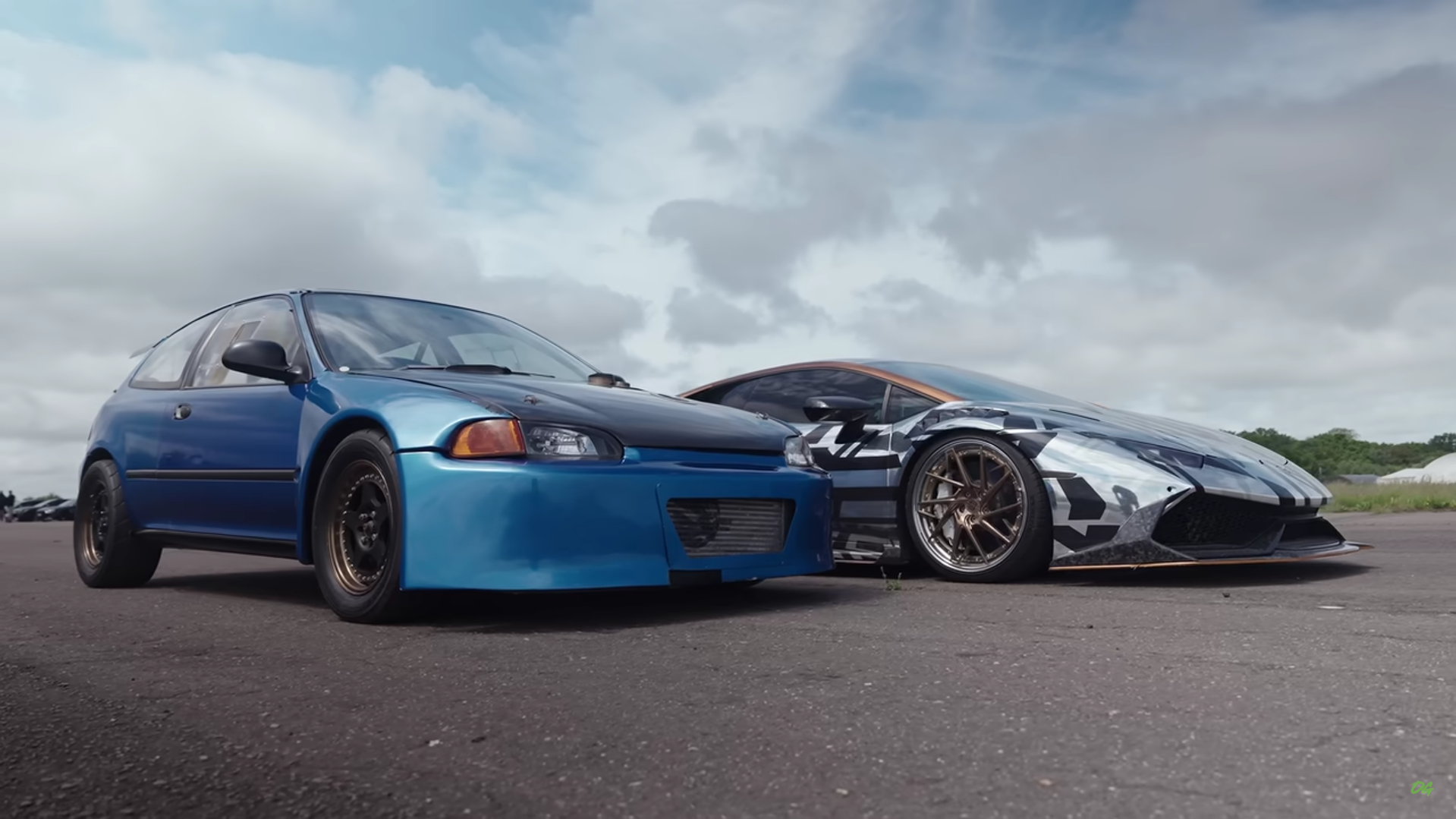
A 1990s Honda Civic has delivered the kind of upset that makes drag racing so entertaining. In a matchup organized by the Officially Gassed YouTube channel, the heavily modified hatchback repeatedly outran a twin-turbo Lamborghini Huracán.
On paper, the Lamborghini appeared to hold the advantage with roughly 1,200 horsepower from its boosted V10. The Civic countered with around 900 horsepower, all-wheel drive, a sequential transmission, and a stripped-out body carrying far less weight.
The contest included individual quarter-mile runs, standing-start drag races, and rolling races. Despite giving up hundreds of horsepower, the Honda proved quicker in nearly every comparison.
Its victory came with a painful ending, however, as the Civic suffered engine damage during the final run. The result was still decisive enough to show why power figures alone rarely tell the full story.
Two Very Different Performance Builds
The Huracán was a 2015 model fitted with a twin-turbo system, exposed exhaust outlets, and a missing rear bumper that left much of its hardware visible. Its owner described output in the region of 1,150 to 1,200 horsepower, placing it firmly in supercar-slaying territory.
Facing it was a 1992 Honda Civic EG powered by a turbocharged 2.4-liter four-cylinder engine. The hatchback had been converted to all-wheel drive, equipped with a sequential gearbox, stripped for weight, and fitted with a parachute for high-speed braking.
The Civic produces around 900 horsepower, giving the Lamborghini a substantial numerical advantage. Its lower mass and aggressive launch setup helped offset that gap almost immediately.
Civic Wins the Solo Quarter-Mile Battle
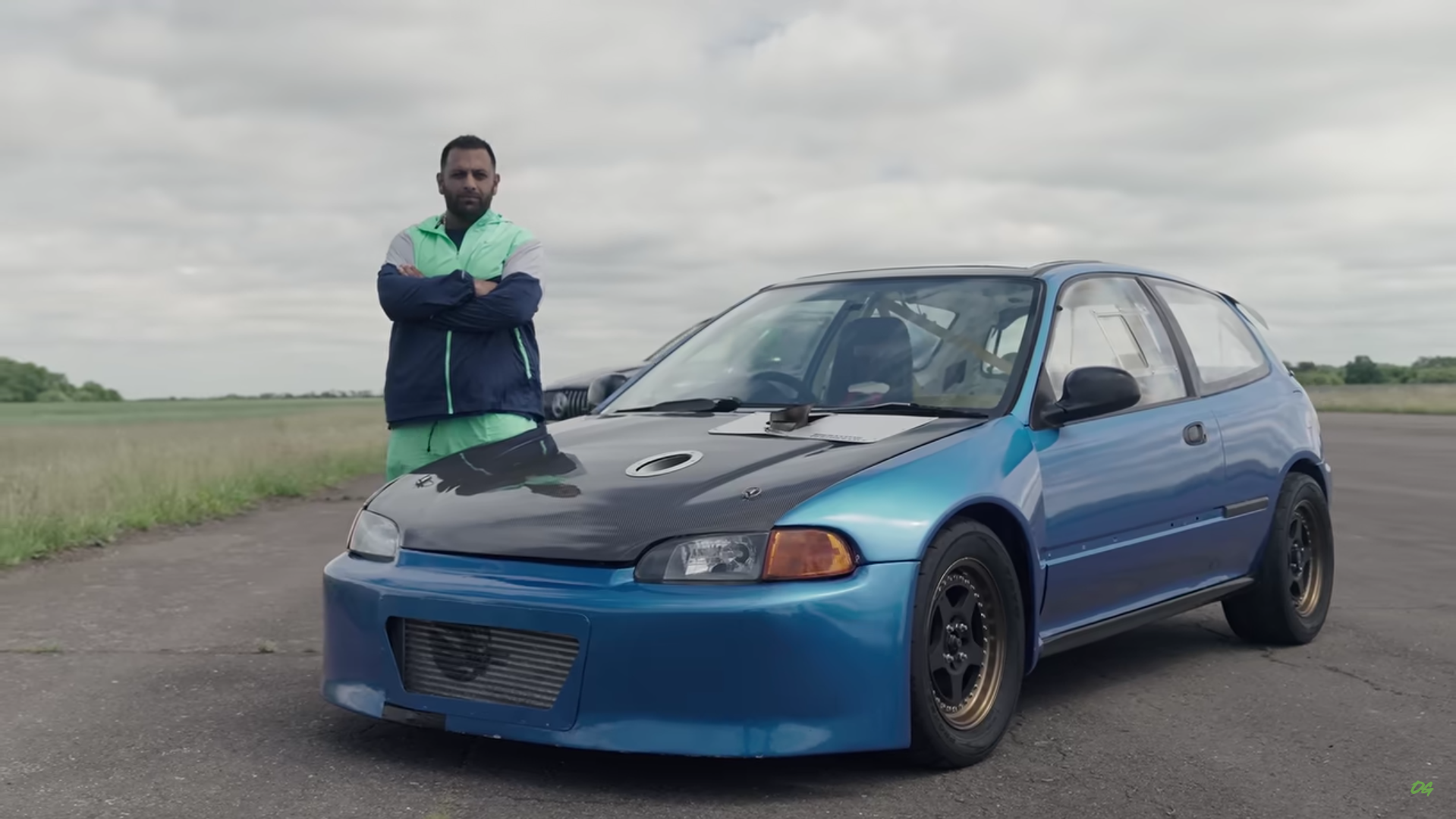
The Lamborghini struggled with a launch-control issue during its timed runs. Without the system functioning properly, its driver had to roll into the throttle or attempt brake boosting, resulting in a best quarter-mile time of 10.30 seconds at 149 mph.
That high trap speed showed the Huracán had serious power once it was moving. Its weak launch, however, cost valuable time during the opening portion of each run.
The Civic initially became unsettled at speed and forced its driver to lift before the finish. Even after easing off the throttle, it recorded a 9.54-second quarter-mile at 144 mph, nearly eight-tenths quicker than the Lamborghini.
Another recorded pass, completed during the head-to-head racing, produced a 9.38-second time at 163 mph. The Honda also managed a claimed 0–60 mph run of 2.49 seconds, showing how effectively its all-wheel-drive system transferred power from a standstill.
Huracán Struggles From a Dig
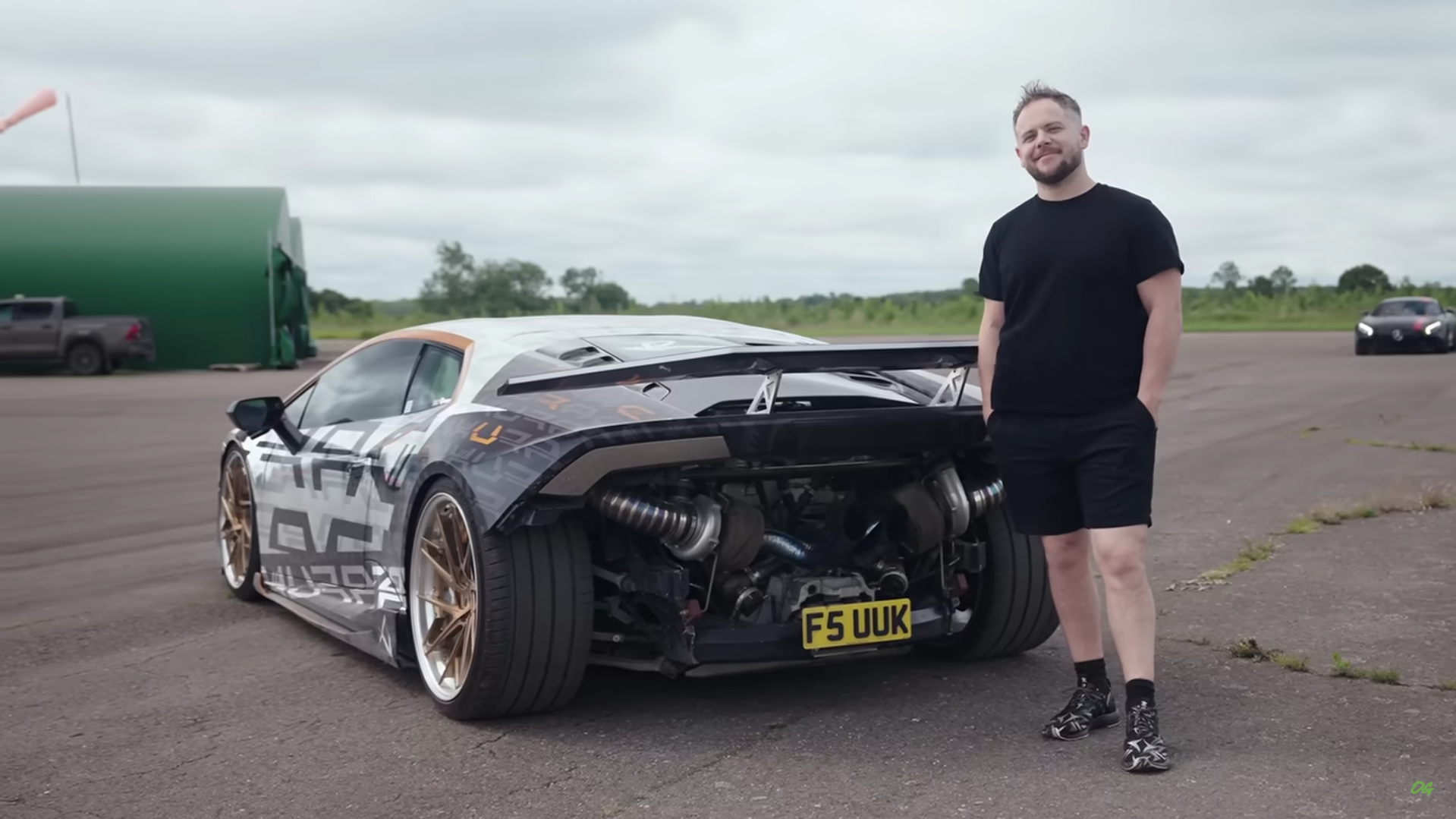
The Civic dominated the first proper drag race, launching hard and building a clear lead before the Lamborghini could reach full boost. The Huracán driver admitted that the first two gears were largely compromised without working launch control.
A second race was awarded to the Lamborghini after the Honda jumped the start. Once the cars lined up again for the deciding run, the Civic produced another clean launch and won the standing-start series two races to one.
The Lamborghini appeared stronger as speed increased, but it could not recover the distance lost at the beginning. Against most cars, its acceleration would have looked spectacular, yet the Honda made it appear unusually restrained.
Rolling Races Produce the Same Result
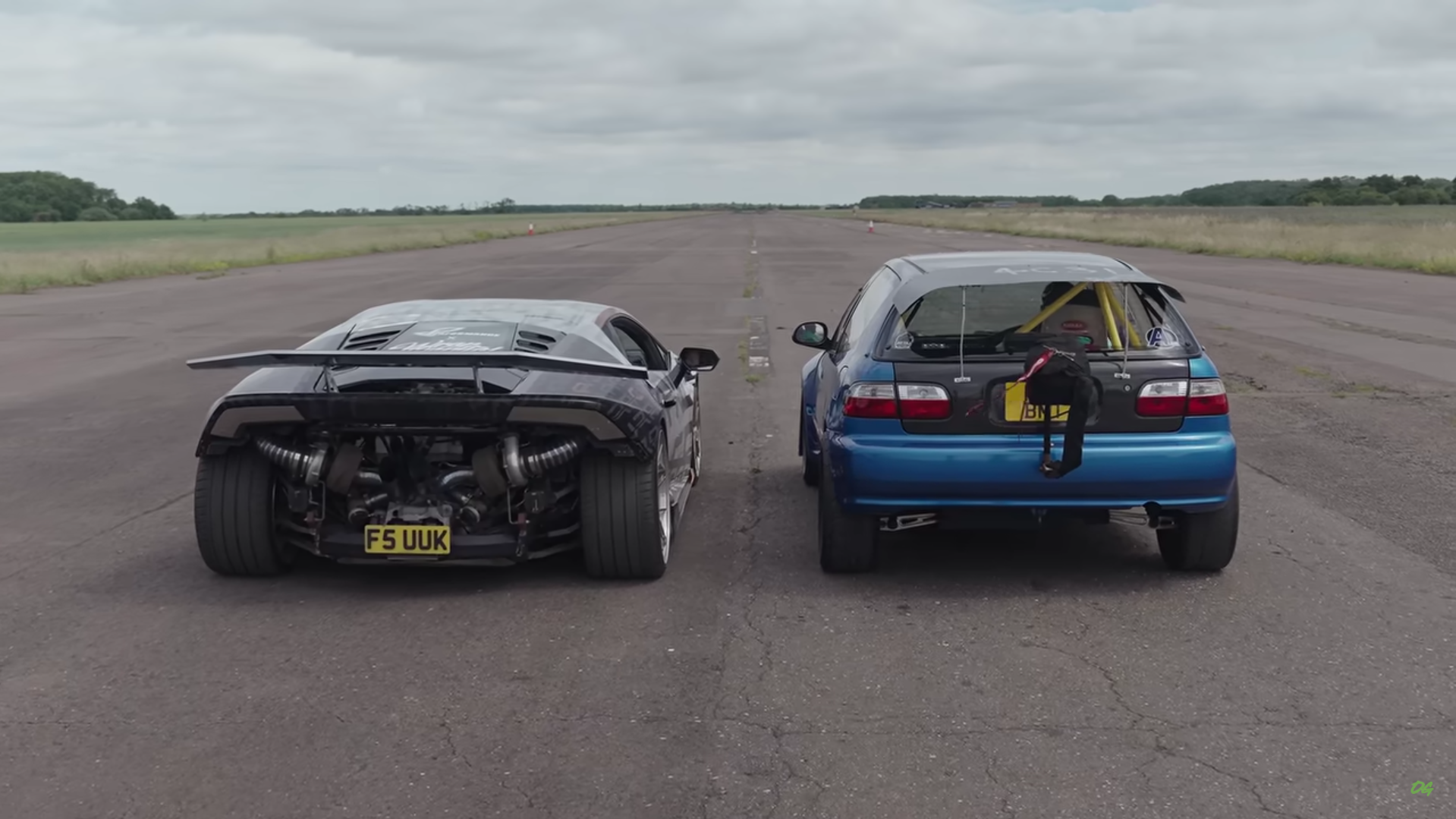
Rolling starts were expected to favor the Lamborghini because they removed its launch-control disadvantage. With both cars already moving and the Huracán in boost, the power gap should have become considerably harder for the Civic to overcome.
The first rolling race remained close through the middle of the course, with the Lamborghini briefly appearing to hold the advantage. At higher speeds, the Civic pulled ahead and crossed the line roughly two car lengths in front.
The final roll race produced a similar outcome, with the Honda winning by approximately three car lengths. Its acceleration above 140 mph surprised both drivers, especially given the Huracán’s stronger aerodynamics and additional horsepower.
Victory Comes at a Cost
After the final race, the Civic’s owner revealed that he had heard the engine knocking during the return to the starting area. Rather than stop, he completed one last run knowing the engine was likely to fail.
The Civic eventually threw a connecting rod, bringing its day to an expensive conclusion. Its owner said a replacement engine was already planned and suggested the car would return with an even stronger setup.
The Huracán completed the event without a similar failure and steadily improved throughout the day. A functioning launch-control system may have made the standing races much closer, although the Honda’s rolling-race victories suggest the result cannot be blamed entirely on the Lamborghini’s technical issue.
Lightweight Honda Delivers a Memorable Upset
This was not a stock Civic embarrassing a factory Lamborghini, since both vehicles had undergone extensive modifications. The Honda’s combination of low weight, all-wheel-drive traction, sequential shifts, and carefully developed power delivery made it an exceptionally effective drag car.
The Lamborghini remained the more refined and usable machine, while the Civic was built for a far narrower purpose. On this particular strip, however, the old hatchback was simply faster.
Would you take the brutally quick Civic or the twin-turbo Huracán, and how different do you think the result would have been with the Lamborghini’s launch control working properly? Does the Honda’s engine failure diminish the victory, or was beating the Lambo before breaking the ultimate way to finish the day? Let us know in the comments.