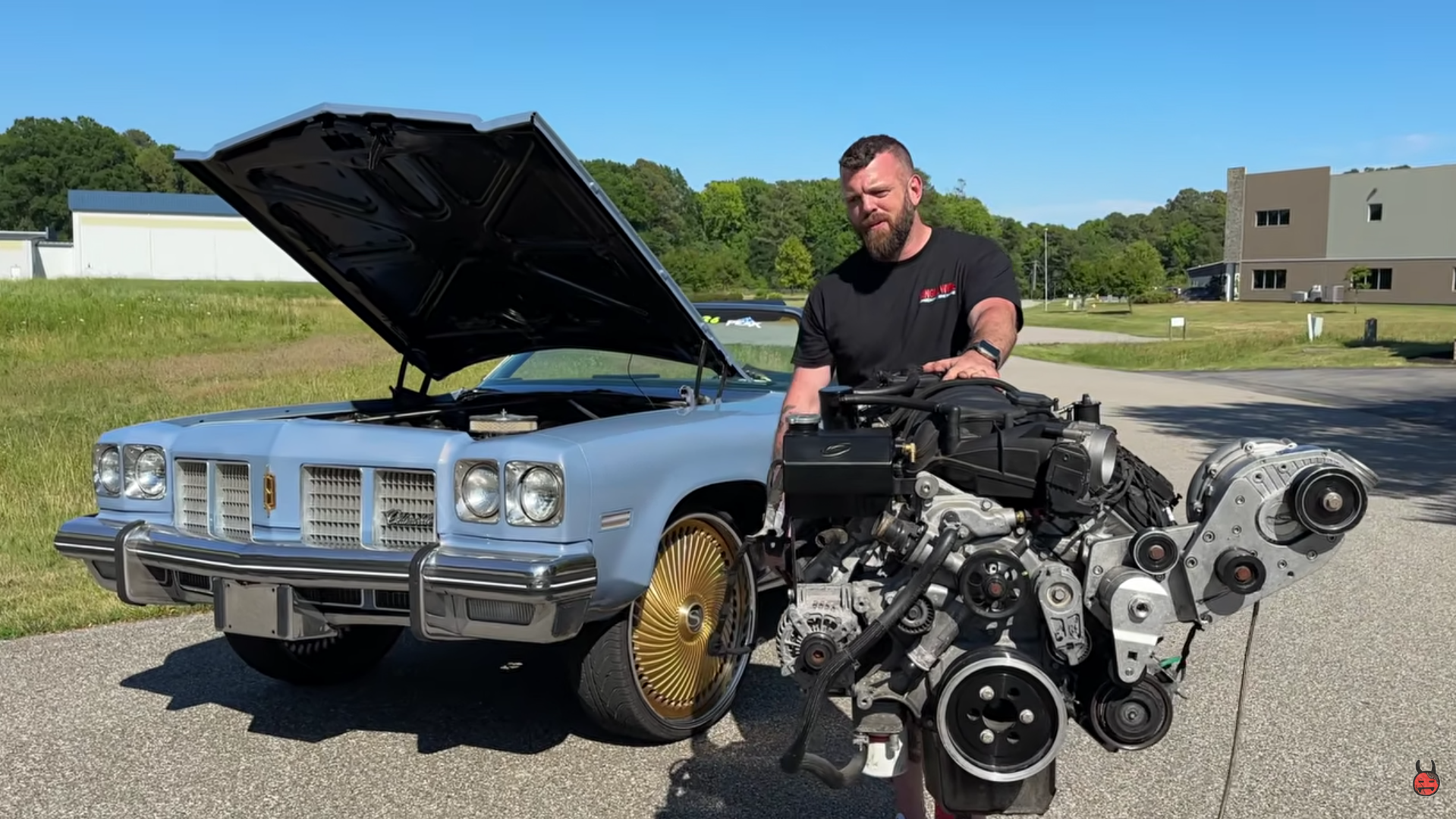
A 1975 Oldsmobile Delta 88 Royale convertible isn’t the first car most people would choose for a modern Hemi swap. ScrapLifeLee had a different vision, transforming the massive cruiser into a high-horsepower street machine while keeping its unmistakable candy paint and oversized 26-inch gold wheels.
The Oldsmobile was purchased from a Florida storage unit and already had plenty of personality. It also came with plenty of problems, including oil leaks, smoke, weak brakes, and a tired small-block V8 that struggled to move the heavy convertible.
Rather than rebuild the original drivetrain, the team decided to install a built, ProCharged 6.4-liter Hemi previously removed from a Dodge Challenger Scat Pack. The supercharged engine promised several times the power of the stock Oldsmobile 350.
The project quickly evolved into much more than a simple engine swap. As the original drivetrain came out, the builders uncovered worn suspension components, questionable repairs, and countless challenges that had to be solved before the modern Hemi could ever fire up.
The Original Oldsmobile Was Better Than Expected… But Still Slow
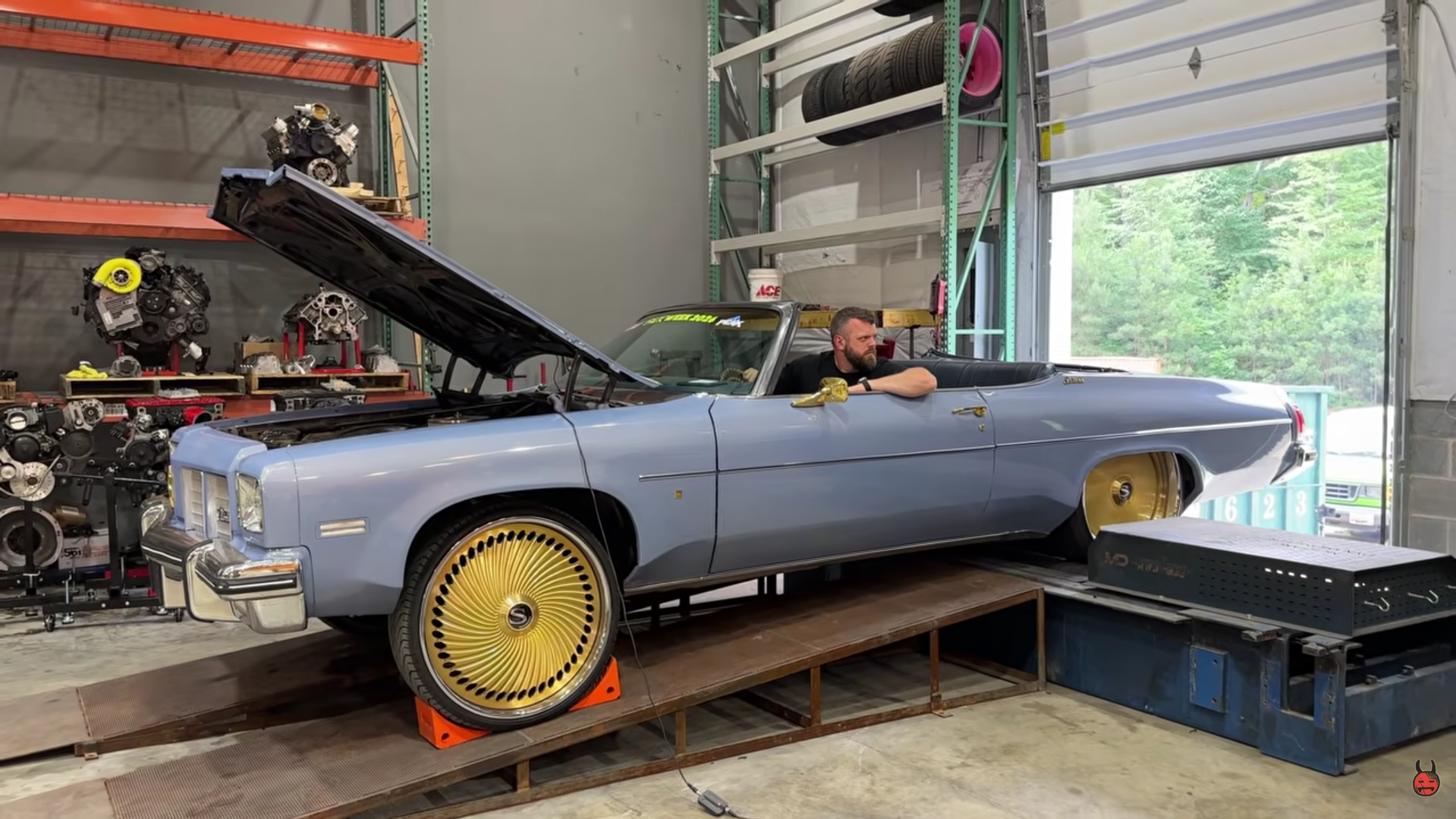
Before removing anything, the Delta 88 was strapped to a chassis dyno to establish a baseline. Although factory ratings placed the original 350 V8 at roughly 170 to 180 horsepower at the crank, this example had already received aftermarket headers and a carburetor upgrade.
The surprise came when the Oldsmobile produced 221 horsepower at the wheels, significantly exceeding expectations. Despite the respectable dyno result, the massive convertible still felt sluggish on the road thanks to its weight and extremely tall gearing.
Inspection underneath the car also revealed why the Oldsmobile left large puddles wherever it sat. Oil leaks appeared throughout the engine bay, while years of grime coated nearly every mechanical component beneath the car.
The Drivetrain Came Out Quickly
With the decision made, the original engine and Turbo 400 transmission were removed. The transmission itself would not go to waste, since a strengthened Turbo 400 was already planned behind the ProCharged Hemi.
Attention then shifted to the rear axle. The team needed to identify exactly which Oldsmobile rear end the car used before ordering a limited-slip differential capable of handling the extra power.
Opening the differential confirmed a 10-bolt rear with an 8.5-inch ring gear, 28-spline axles, and a tall 2.73:1 gear ratio. The differential was filled with thick, decades-old gear oil, while the rear drum brakes showed extensive wear and damage after years of neglect.
Preparing The Modern Hemi
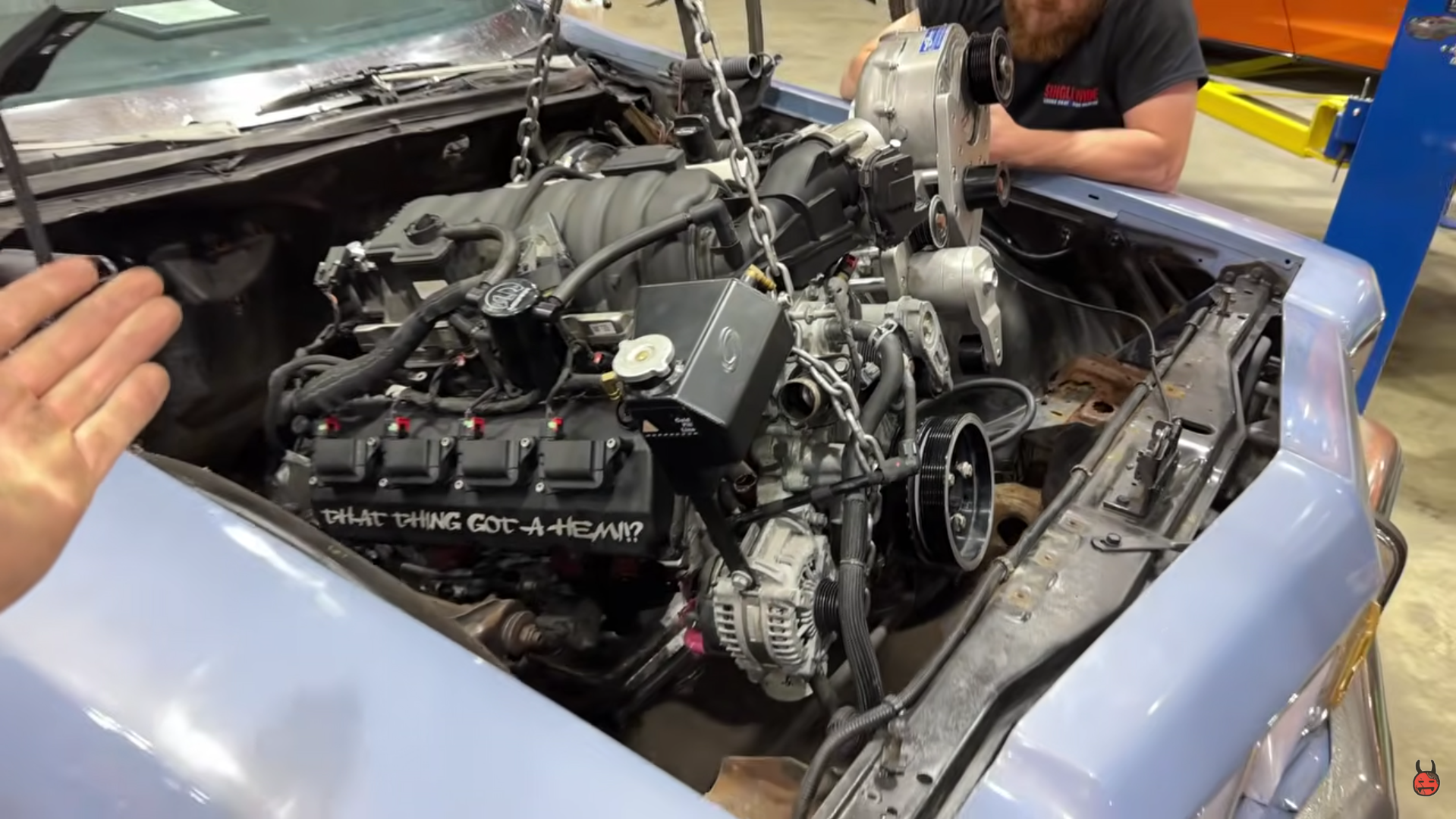
The replacement engine had previously powered a Challenger before being removed after an accident. Although internally built and already equipped with a ProCharger system, it still required several repairs before installation.
Crash damage had broken one plastic valve cover and cracked a mounting point on the cylinder head where the supercharger bracket attaches. After repairing the damaged head, the team installed an aluminum valve cover and replaced the damaged ProCharger bracket.
The factory front-sump oil pan also had to be replaced because it interfered with the Oldsmobile’s chassis. A Holley rear-sump pan designed for Gen III Hemi swaps solved the clearance issues while custom engine mounts positioned the modern V8 inside the enormous engine bay.
Once lowered into place, the Hemi fit surprisingly well. Clearance around the firewall, steering, and suspension proved far better than expected, allowing the builders to reuse the factory transmission crossmember with only minor fabrication.
Exhaust And Fuel System Required Custom Solutions
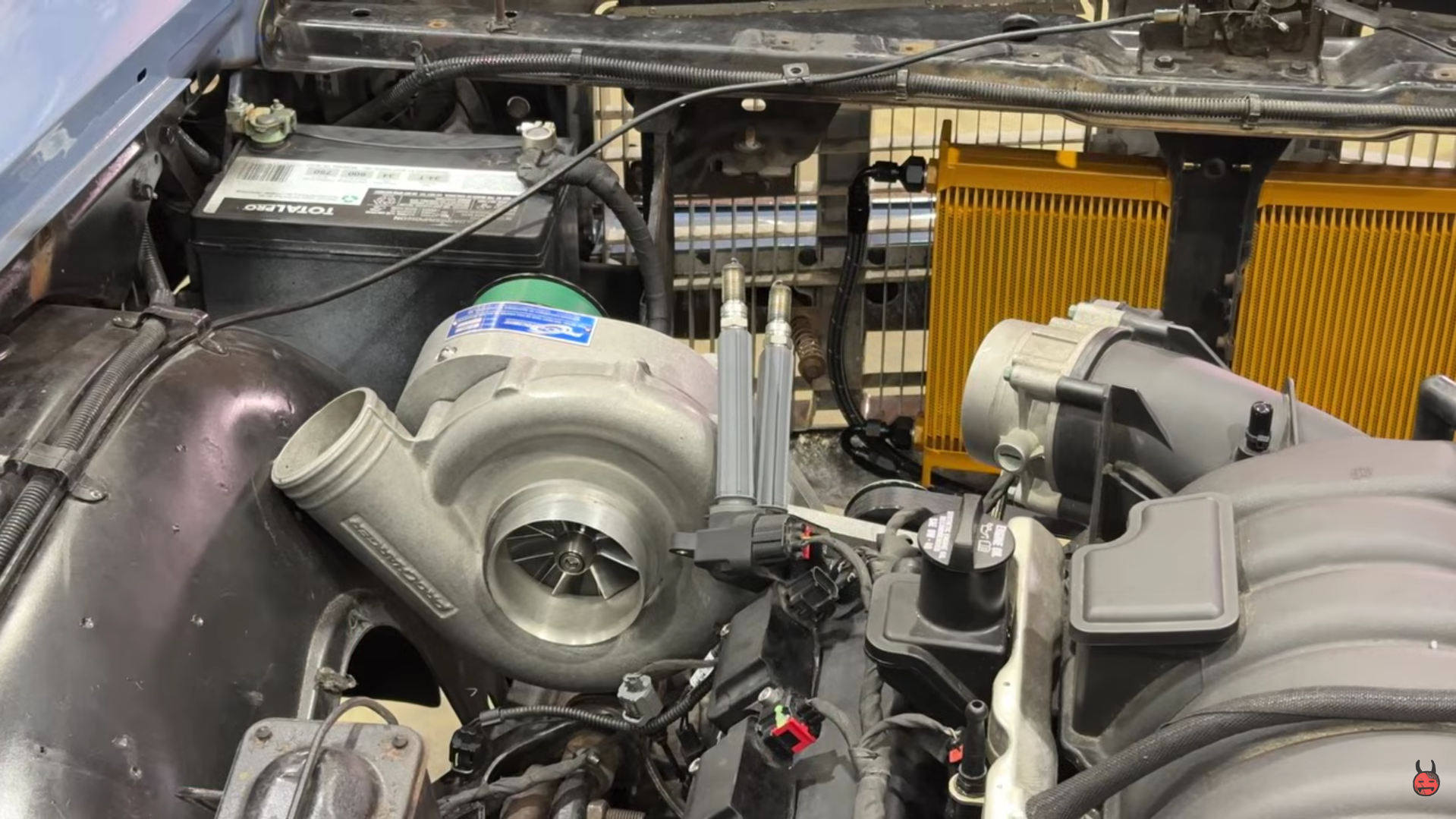
One area that refused to cooperate was the exhaust. Neither the long-tube headers nor factory Hemi manifolds cleared the Oldsmobile’s steering shaft without modification.
Rather than simply crushing the tubes with a hammer, the builders experimented with cutting and reshaping damaged headers to preserve airflow. They even conducted a homemade airflow comparison before deciding which design would eventually be used on the finished build.
The fuel system also required a complete redesign. Although the previous owner had already installed a new fuel tank, every original fuel line was badly corroded and unsuitable for supporting a supercharged fuel-injected engine.
A new external electric fuel pump, modern fuel lines, pressure regulator, and return-style fuel system replaced the Oldsmobile’s original mechanical pump arrangement. The goal was to create a reliable setup capable of feeding the boosted 6.4-liter Hemi on premium pump gasoline.
Electronics Became The Biggest Obstacle
Mechanically, the swap progressed faster than expected. Electronically, however, things became much more complicated. Instead of using a standalone aftermarket ECU, the builders attempted to retain the factory Dodge engine management system. Multiple factory computers were unlocked, reflashed, and reprogrammed in an effort to make the modern Hemi operate inside a 1975 Oldsmobile.
Each attempt produced the same disappointing result. The engine cranked repeatedly but never generated spark or injector operation, despite hours of troubleshooting and assistance from tuning specialists.
Additional ECUs were converted into crate-engine calibrations, transmission settings were altered, and security features were removed. Even after weeks of testing, the engine still refused to start.
Although the project ended without hearing the ProCharged Hemi come to life, the major fabrication work had already been completed. The engine was securely mounted, the drivetrain was installed, the fuel system was operational, and most of the hard mechanical work was finished.
With only the electronics preventing the first startup, the builders remained confident the oversized Oldsmobile would eventually deliver the supercharged performance its appearance promised. When it finally runs, the combination of a ProCharged 6.4-liter Hemi, Turbo 400 transmission, and a 1975 Delta 88 convertible rolling on massive 26-inch wheels should make for one of the more unusual modern muscle swaps on the road.