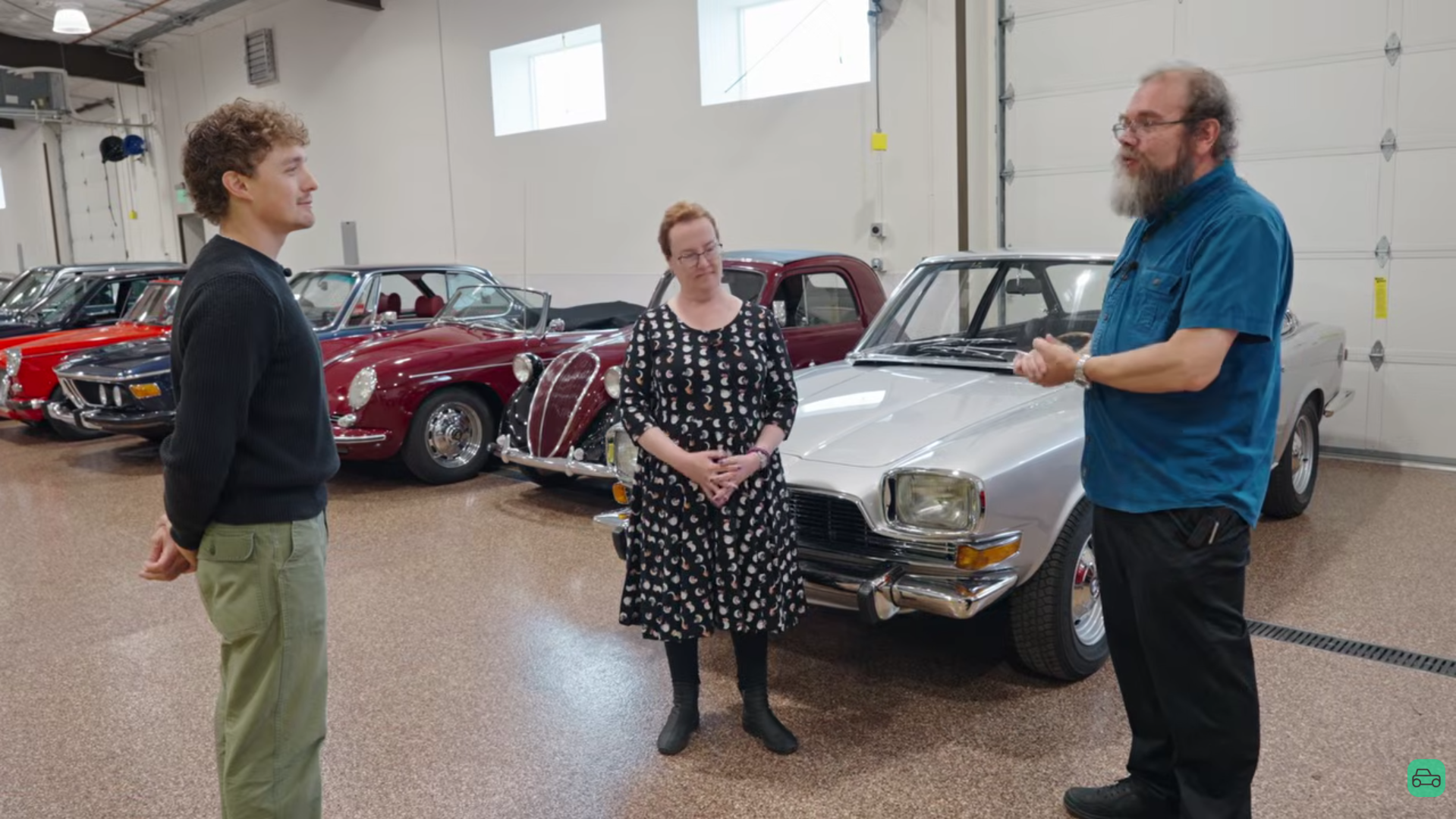
Car collections often follow a familiar formula: one marque, one era, or a garage filled with the latest high-value exotics. Alex and Amy’s collection in Eugene, Oregon, heads in the opposite direction, bringing together obscure microcars, prewar sports cars, Italian grand tourers, vintage racers, and rare BMWs.
Featured on the Cars & Bids YouTube channel, the Haugland Collection reflects a shared interest in cars that are historically important, mechanically unusual, or simply overlooked. Its appeal comes from the couple’s willingness to explore nearly every corner of automotive history without worrying about whether a car fits a conventional collector profile.
A 13-horsepower Italian city car can sit near a Lamborghini Espada, an Aston Martin DB5, or an Enzo-era Ferrari without feeling out of place. The collection is tied together by a preference for distinctive design and driving experiences rather than badges, auction values, or social-media attention.
Viewers responded warmly to that approach, praising the owners’ enthusiasm and the depth of knowledge behind the cars. Several commenters said the collection deserved another episode, while others stated that its welcoming atmosphere made it more engaging than many mainstream automotive shows.
A Collection Built Around the Unusual
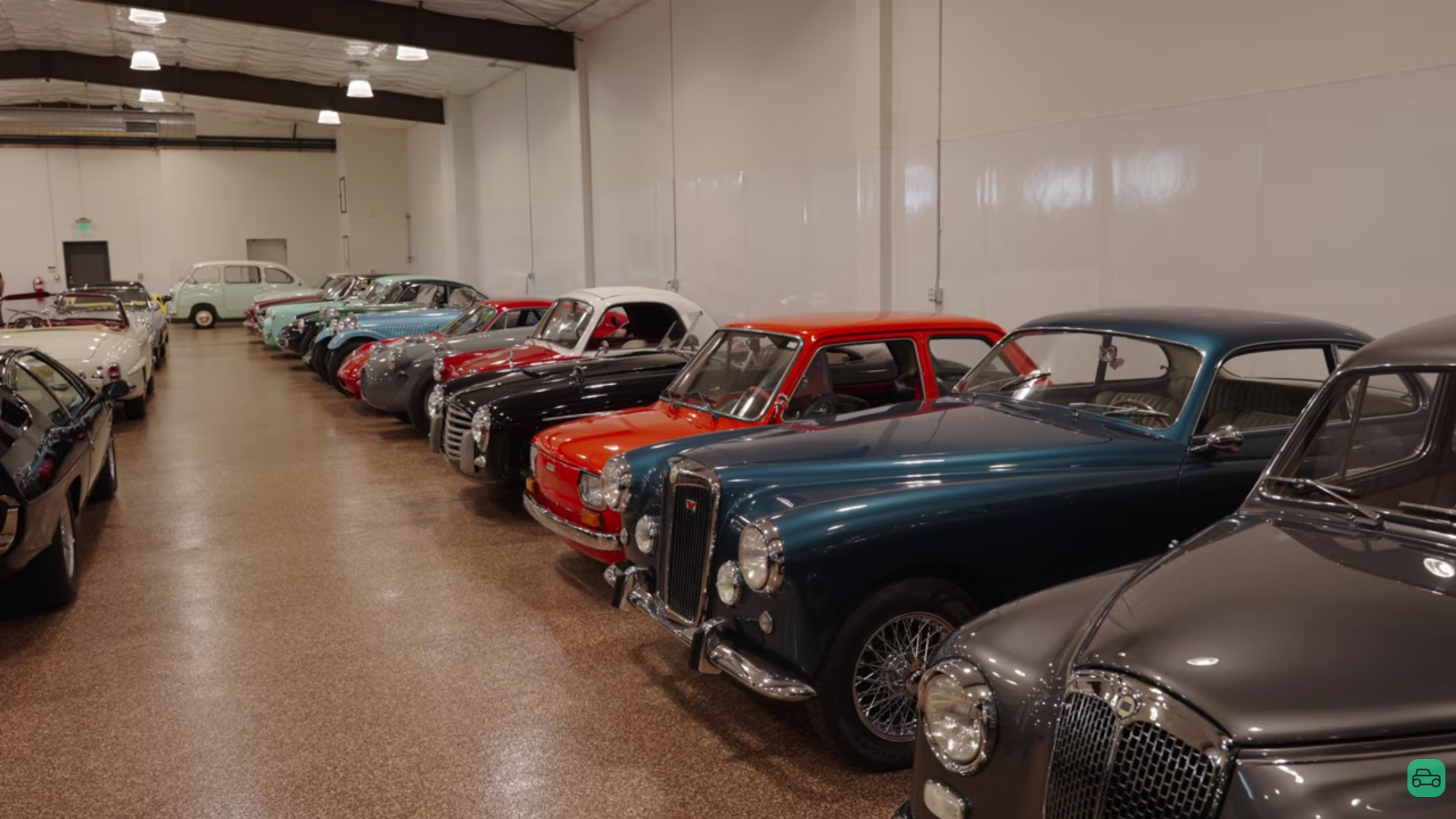
Alex traces his interest in European cars to childhood trips to Italy, where detailed Bburago model kits introduced him to the shapes and personalities of classic machinery. His first restoration project involved a 1967 Jaguar 3.8 S, setting the collection on an early path dominated by British cars before Italian models widened its scope.
Amy entered the hobby from a very different starting point, having received her driving license at 33 after an eventful first lesson involving a Subaru WRX. She says Alex’s enthusiasm proved contagious, particularly because each car offers a connection to design, engineering, or social history.
Both collectors are especially interested in vehicles that sit outside a manufacturer’s familiar catalog. Small coachbuilders, short-lived companies, unusual body styles, and forgotten engineering experiments feature heavily throughout the garage.
Tiny Fiats Share Space With V12 Grand Tourers
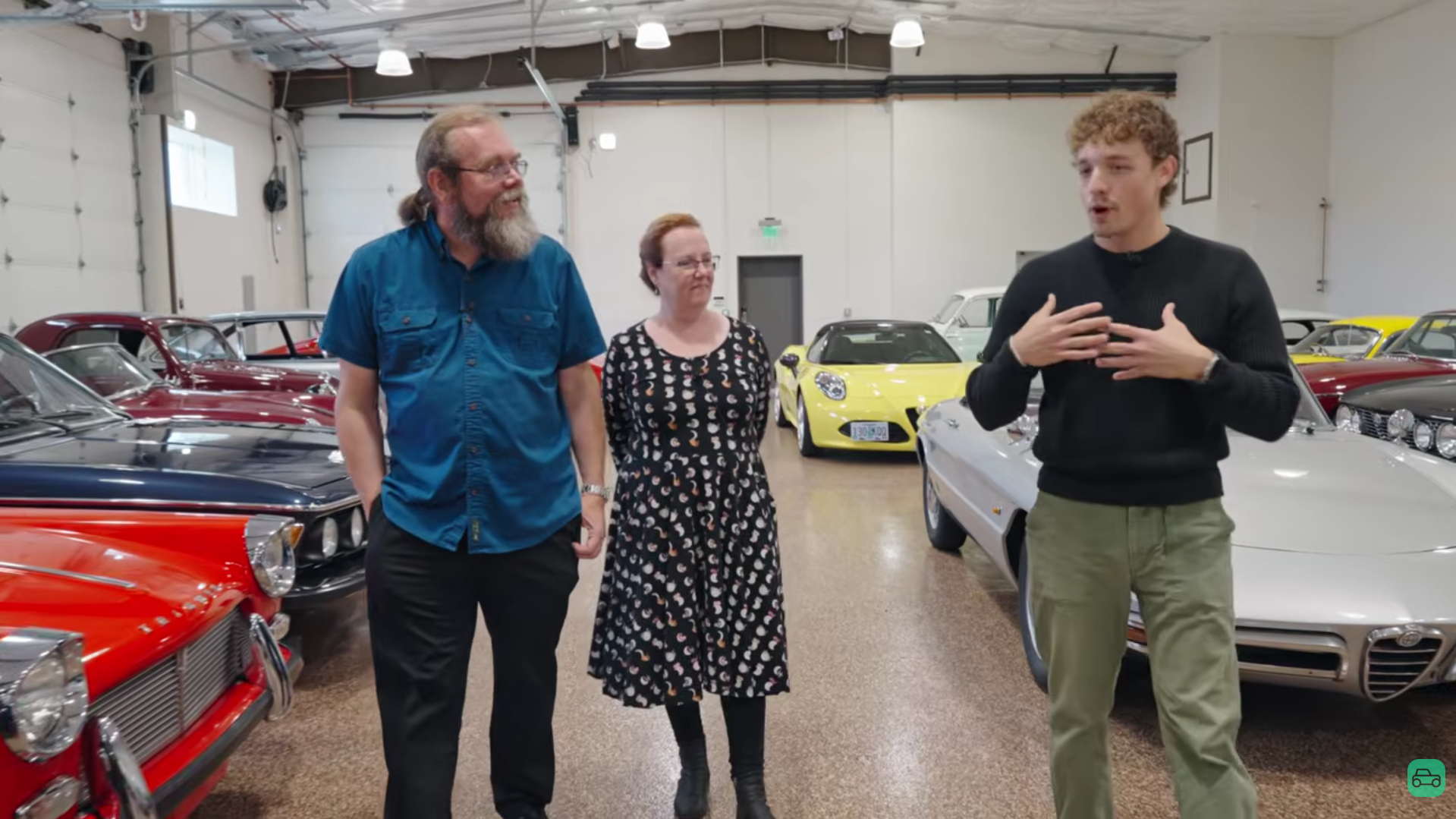
Among the smallest cars is an Autobianchi Bianchina based on Fiat 500 mechanicals. It retains its delicate period appearance but now uses a later Fiat 126 engine and synchronized transmission, improving usability while the original 13-horsepower drivetrain remains safely stored.
A Fiat 126 provides another lesson in minimalist Italian transportation, complete with a rear-mounted two-cylinder engine, narrow pedal box, and floor-mounted starter lever. These cars may lack outright speed, yet their compact dimensions and mechanical simplicity give them a character that modern vehicles struggle to replicate.
At the other end of the spectrum sits an early Lamborghini Espada, one of the collection’s most dramatic machines. The low, wide four-seater combines Marcello Gandini styling with a Lamborghini V12, while its elaborate dashboard and rare early-production details make it especially distinctive.
Rare BMW Has Almost No BMW DNA
One of the collection’s most unusual German cars is a BMW-Glas 3000 GT, produced shortly after BMW acquired the struggling Glas company. Although it wears BMW badges, the car was developed before the takeover and carries bodywork designed by Italian coachbuilder Frua.
Its 3.0-liter V8 evolved from Glas’s smaller four-cylinder architecture and uses two timing belts, which can make maintenance challenging. Alex sourced replacement belts through a European owners’ club, illustrating the extra effort required to keep such an uncommon machine on the road.
The grand tourer also contains components shared with other European vehicles, including trim and lighting pieces sourced from unrelated manufacturers. That parts-bin approach helped Glas create an upscale coupe without the expense of designing every component from scratch.
Familiar Icons Receive Driver-Focused Upgrades
Not every car in the collection is obscure, although even the recognizable models tend to carry an interesting twist. The Aston Martin DB5 has a modified 4.8-liter engine, power steering, air conditioning, and wider tires, turning the valuable classic into a more practical long-distance machine.
The couple also owns two Austin-Healey Bugeye Sprites that demonstrate different approaches to preservation. Amy’s remains largely standard, while Alex’s uses a larger 1,275cc engine, front disc brakes, and a five-speed transmission to improve performance without erasing the original character.
Throughout the collection, we see the philosophy that originality is important, but usability matters too. Cars are maintained, exercised, and adapted where appropriate rather than treated as static exhibits.
Viewers Want to See the Collection Again
The response beneath the Cars & Bids video was notably enthusiastic. One viewer praised the couple’s warmth and knowledge, while another said their genuine excitement stood apart from collectors who appear focused on spectacle or status.
Other commenters described Alex and Amy as ideal ambassadors for Oregon and asked for a follow-up tour. Considering how many vehicles were only briefly shown, another visit would have no shortage of material.
The Haugland Collection succeeds because it treats automotive history as something broad, unpredictable, and worth experiencing from behind the wheel. Its strangest cars may not be the fastest or most valuable, yet they are often the ones enthusiasts will remember longest.