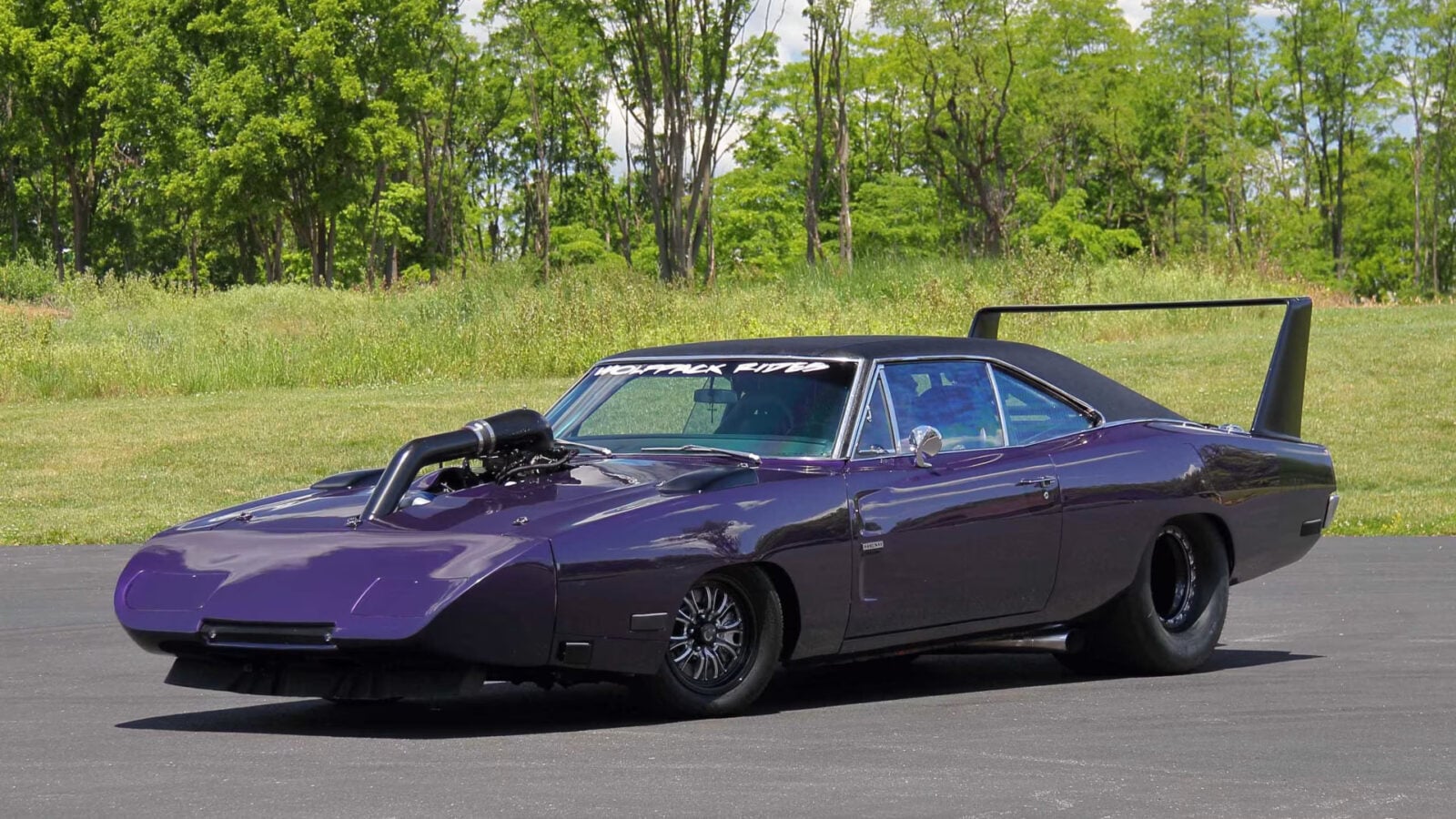
Someone apparently looked at a 1970 Dodge Charger, added Daytona-inspired bodywork, and still decided the result wasn’t outrageous enough. So they came up with “Sinister,” a three-year custom build packing a supercharged 572-cubic-inch Hemi and approximately 1,100 horsepower at the rear wheels.
Built by Wolfpack Rides, the Charger combines the unmistakable nose cone and towering rear wing of a 1969 Daytona with a Pro Street stance and enough mechanical hardware to make the visual drama seem almost restrained. Finished in Plum Crazy Purple with a black vinyl roof, it looks exactly like the sort of car that would struggle to pass unnoticed anywhere.
The headline figure is the claimed 1,100 rear-wheel horsepower, which puts this 56-year-old muscle car into territory occupied by some of today’s most extreme performance machines. A DynoWerks dyno sheet is included with the car, according to its Mecum auction listing.
Now, Sinister is looking for a new garage. The custom Charger will cross the block as Lot S167 at Mecum’s Harrisburg 2026 auction on Saturday, July 25.
A 572-Cubic-Inch Hemi With a ProCharger
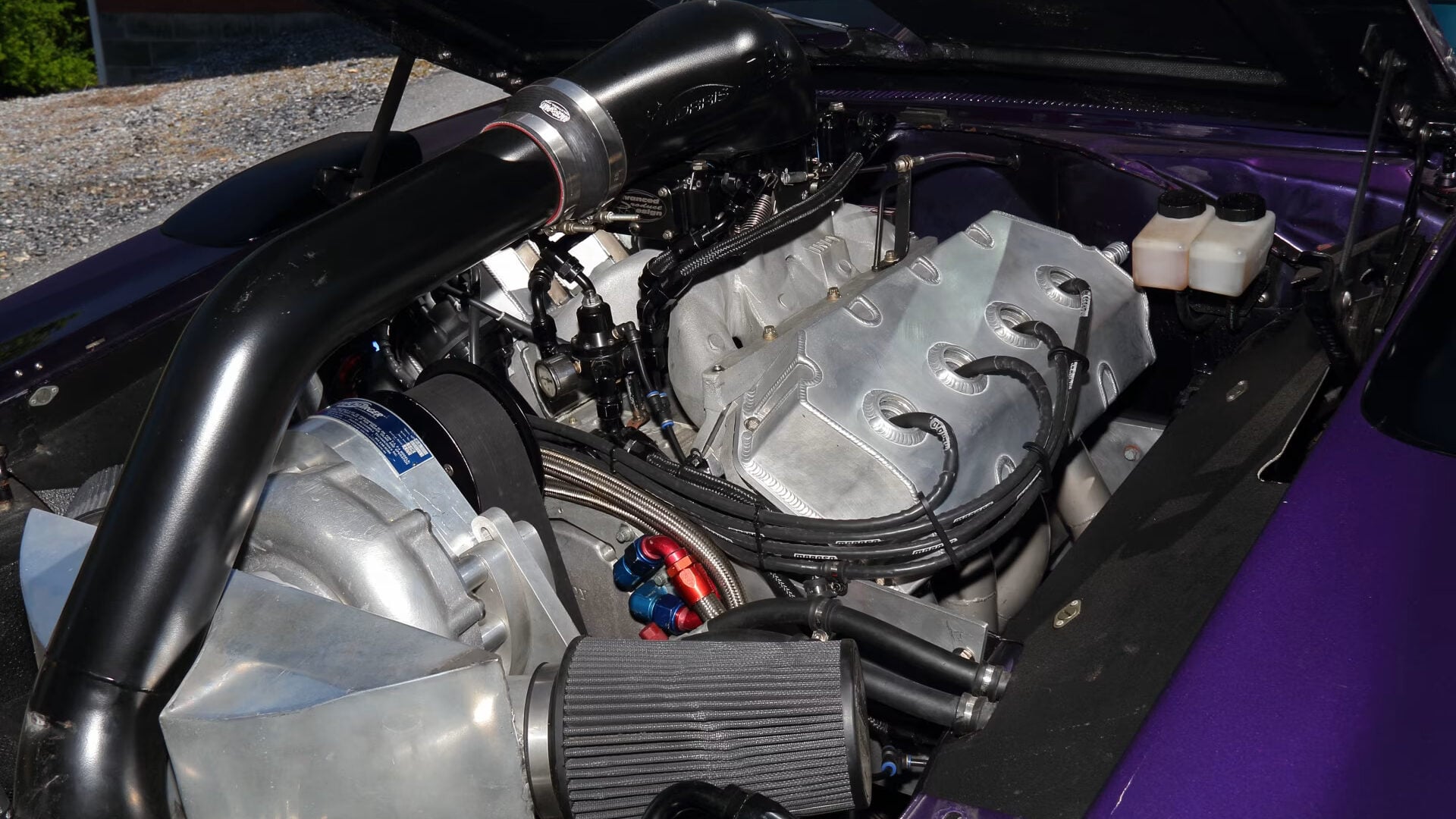
Under the hood sits a 572 CI Hemi V8 built by Indy Cylinder Heads. As if that displacement wasn’t already excessive enough, the engine is force-fed by a ProCharger F-3 supercharger running approximately 7 PSI of boost.
The combination runs on E85 and produces approximately 1,100 hp at the rear wheels, according to Mecum’s listing, and as we all know, rear-wheel output reflects power measured after drivetrain losses rather than a larger figure quoted directly at the crankshaft.
Supporting hardware includes an E85-compatible fuel system and a Moroso vacuum pump. This is clearly an engine package built around serious output rather than a massive Hemi installed purely for show.
The Drivetrain Is Built to Take the Abuse
Sending four-digit horsepower through a vintage muscle-car drivetrain requires something considerably stronger than factory hardware. The Charger uses a Rossler Turbo 400 automatic transmission equipped with an air shifter and transbrake.
Drivers can reportedly use RPM-controlled automatic shifts or operate the transmission manually through a reverse-pattern setup. A 10-inch torque converter with a 2,200-rpm stall speed completes the transmission package.
At the rear is a Dana 60 fitted with Strange axles, giving the Charger hardware better suited to surviving repeated hard launches. An onboard air compressor supports the car’s pneumatic systems, while the drag-style big-and-little wheel and tire combination leaves little doubt about where this build’s priorities lie.
Daytona Styling Makes It Impossible to Ignore
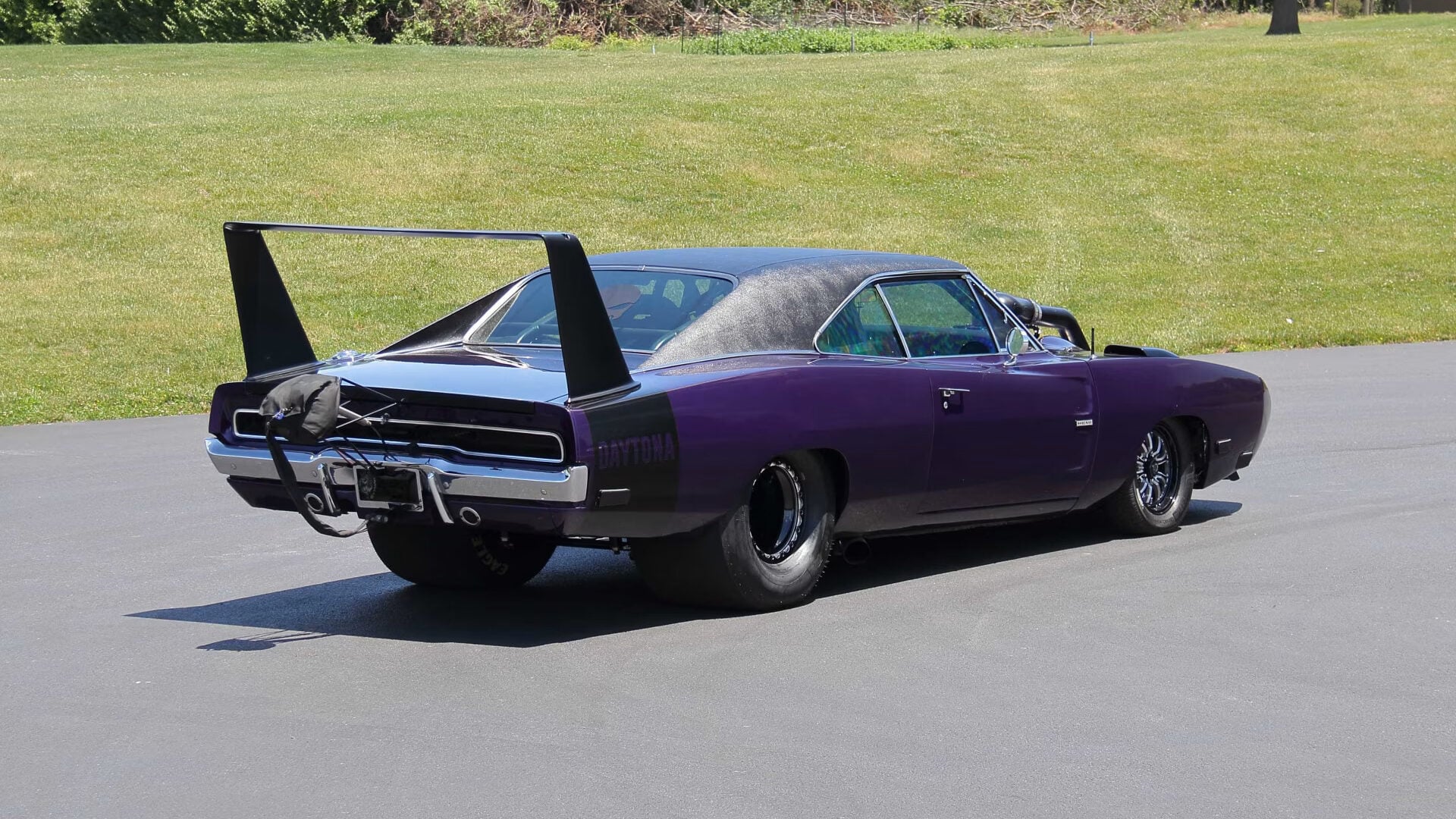
The Charger takes obvious inspiration from Dodge’s legendary aero warrior, wearing a 1969 Daytona-style nose cone and matching high-mounted rear wing. Those additions transform an already dramatic second-generation Charger into something that looks ready for a very different kind of NASCAR grid.
Plum Crazy Purple paint provides the appropriately loud finishing touch, contrasted by a black vinyl roof. The Pro Street wheels and tires give the car a more aggressive stance than an original Daytona, blending late-1960s aerodynamic styling with classic drag-car attitude.
Mecum also notes that the undercarriage has been fully detailed. That suggests the three-year build was intended to look impressive from every angle rather than functioning solely as a horsepower showcase.
Viper Seats and Air Conditioning Make It Livable
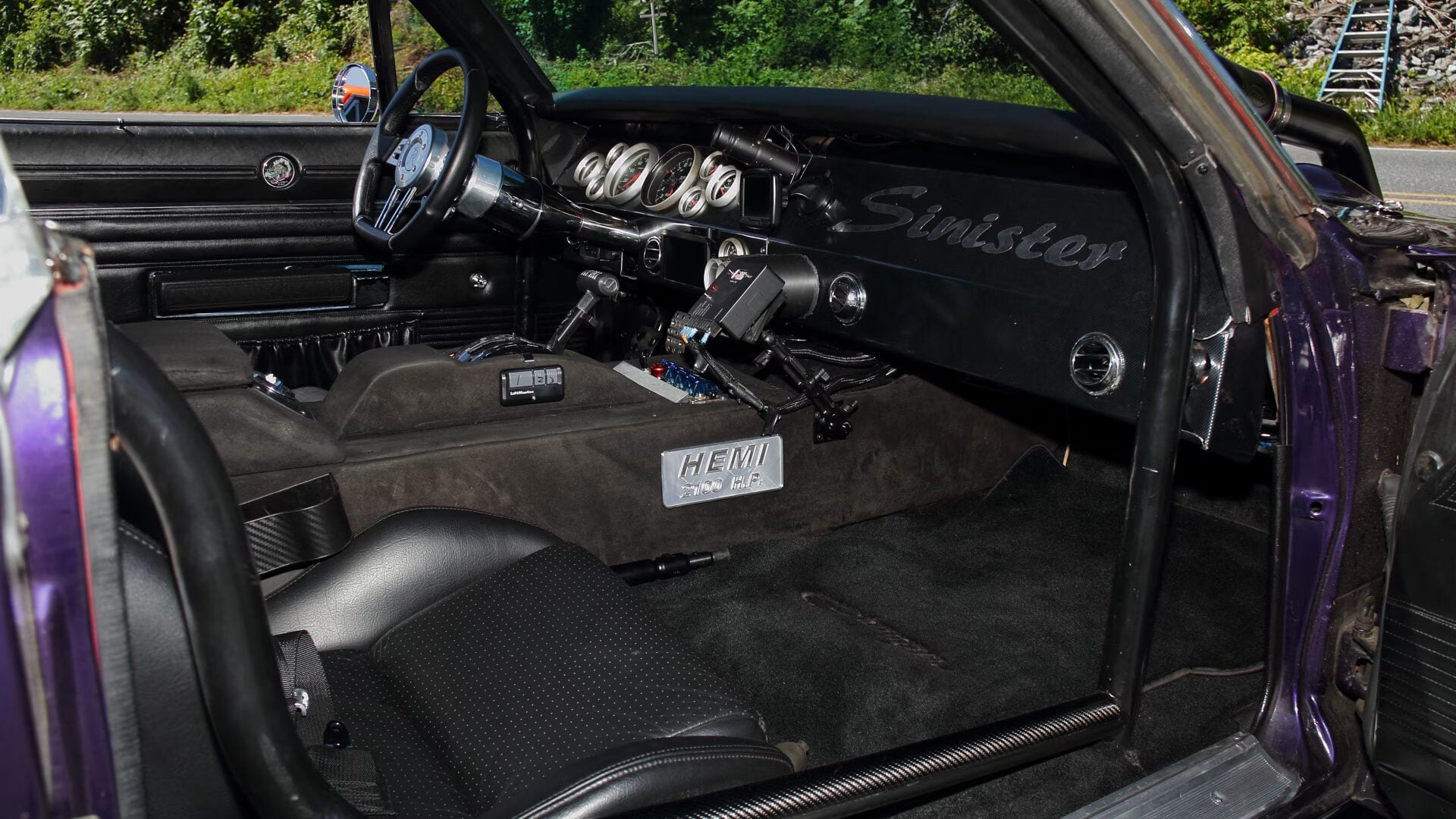
Inside, the Charger is considerably more civilized than its drivetrain suggests. Black leather bucket seats sourced from a 2000 Dodge Viper replace the original chairs, bringing a little more support for anyone brave enough to use all four digits of horsepower.
The car also includes air conditioning, power windows, electric power steering, and four-wheel power disc brakes. Ceramic-coated tinted glass adds another modern convenience, while AutoMeter Sport-Comp Monster gauges keep the driver informed about what the supercharged Hemi is doing.
Forward- and rear-facing cameras have also been fitted, which seems particularly useful when maneuvering a long-nosed Charger with a gigantic rear wing. At low speeds, at least, Sinister appears designed to be considerably easier to live with than its outrageous appearance suggests.
Sinister Is Heading to Auction
There are plenty of modified Dodge Chargers in the world, but few combine Daytona looks with a claimed 1,100 hp at the wheels. This one takes nearly every recognizable element of classic Mopar excess and turns the volume up another few notches.
No auction estimate was included in the supplied Mecum listing, so its final value will be decided when the bidding starts. Given the Charger market, the extensive three-year build, and the sheer absurdity of the powertrain, Sinister should have no trouble attracting attention.
For purists seeking an untouched 1970 Charger, this obviously isn’t the answer. For someone who thinks a Daytona-style Mopar with supercar-crushing horsepower sounds completely reasonable, July 25 could be a very expensive day.