Japanese automakers are known for their high-quality standards, which is one of the key reasons their vehicles have earned a reputation for reliability. Their attention to detail extends to every aspect of a car, from engine construction to interior fit and finish.
While many of their vehicles are made in the USA and are sold locally, a recent trade agreement between the U.S. and Japan meant that Toyota, Nissan, and Honda will export vehicles to their home country, Japan.
While the companies are currently working on select models that will be manufactured in America and exported as complete units for customers in Japan, the automakers in question have flagged the cars, alerting customers to a quality issue.
The warning clearly suggests that these issues may not be seen in vehicles made in Japan, but are specific to imports from the U.S.
What is the Trade Deal About?
According to a CNBC report published in March, Nissan, Honda, and Toyota are exporting U.S.-made vehicles to Japan after Japan changed its import regulations.
The rule change is a result of a trade deal with the Trump administration to enhance trade relations. The vehicles that will be imported to Japan won’t have to meet local regulations as long as they meet American standards.
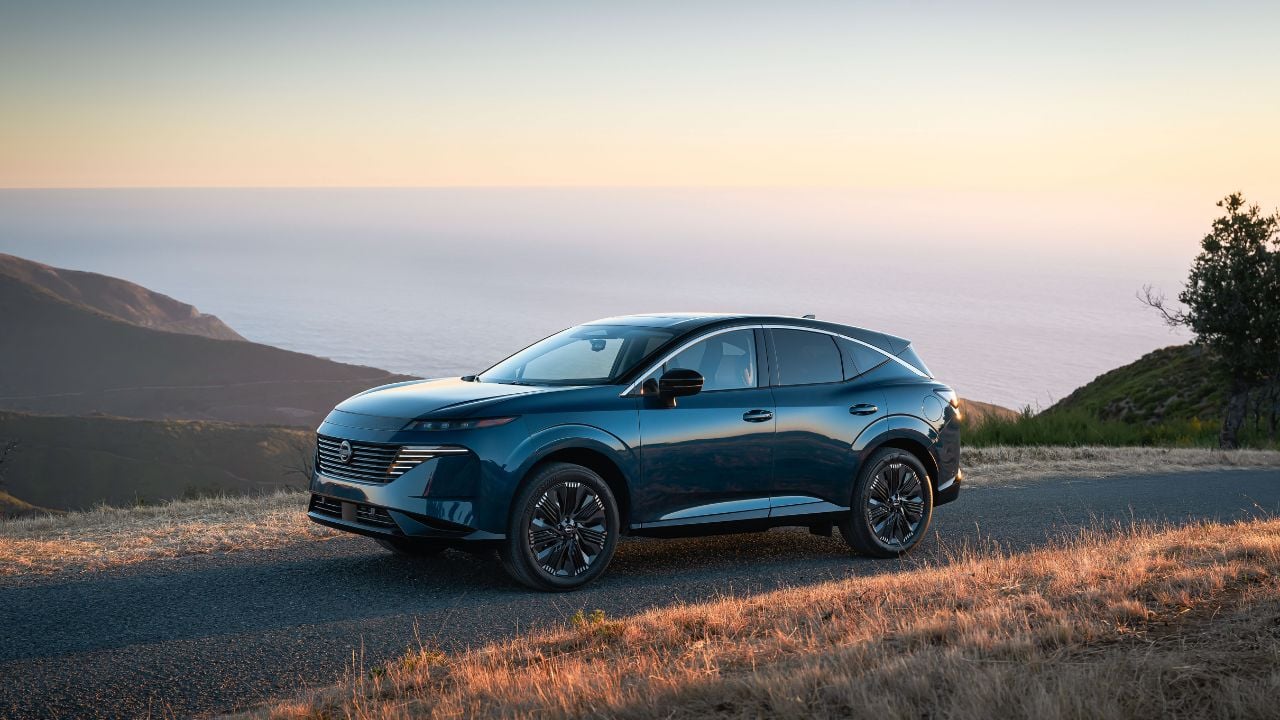
That means the Nissan Murano, which will be imported into Japan, will have the steering wheel on the left-hand side, which is suited to the U.S. style of driving. But vehicles in Japan are mostly right-hand drive because they are driven on the left side of the road.
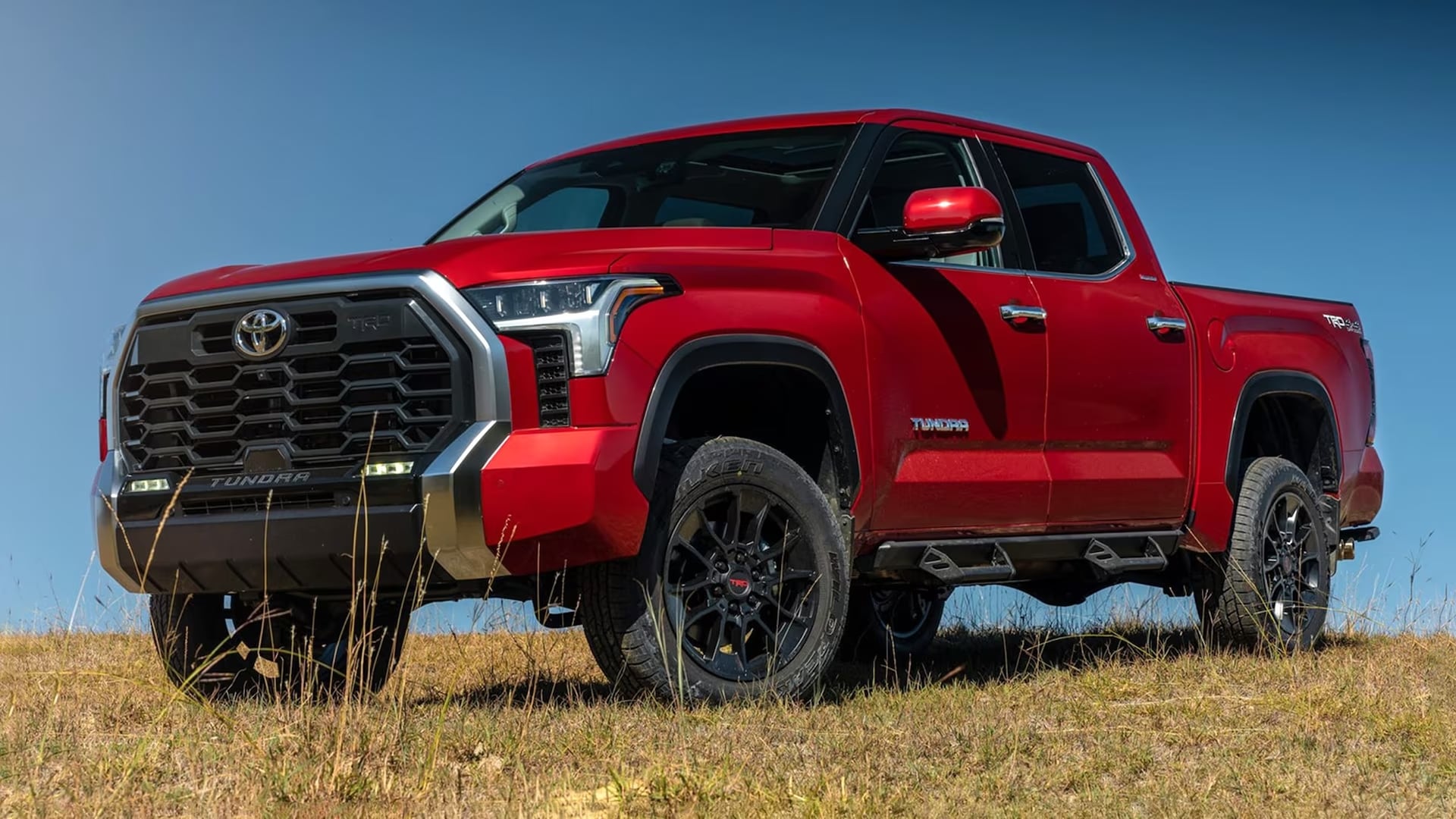
Toyota announced its plan in December 2025 to export the Highlander SUV, Camry, and Tundra pickup truck from the U.S. this year.
Honda, on the other hand, will export the Passport TrailSport Elite SUV and Acura Integra Type S to Japan.
Nissan, meanwhile, has shortlisted the Murano SUV for export.
Nissan and Toyota Advise Caution About U.S.-Made Cars
While Toyota and Nissan have informed customers in Japan about the differences they would notice in U.S.-made vehicles due to the contrast in local regulations, they have also warned customers about potential quality issues with these vehicles.
The concern hints that the imported vehicles could be inferior in certain aspects when compared to the vehicles produced locally in Japan. Nissan actually listed the warnings on its website.
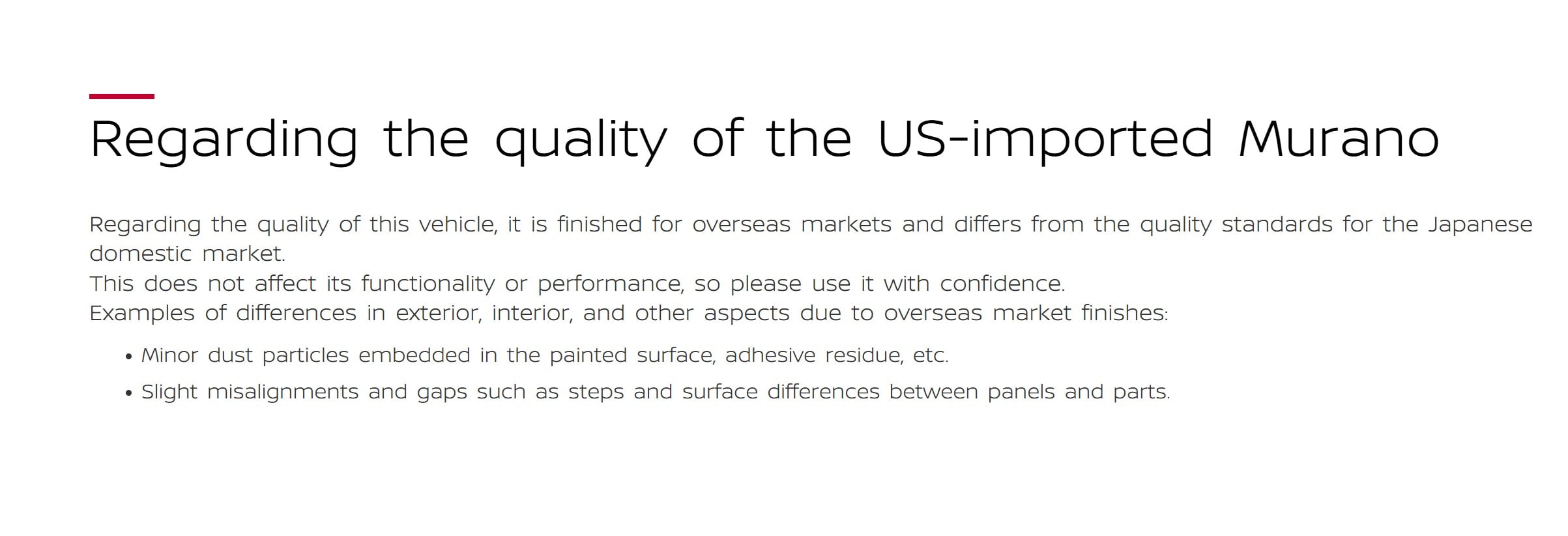
The warning does not relate to the Murano’s performance or functionality but relates to uneven panel gaps and overall paint quality. It reads:
“Regarding the quality of this vehicle, it is finished for overseas markets and differs from the quality standards for the Japanese domestic market.
“This does not affect its functionality or performance, so please use it with confidence. Examples of differences in exterior, interior, and other aspects due to overseas market finishes:
- Minor dust particles embedded in the painted surface, adhesive residue, etc.
- Slight misalignments and gaps such as steps and surface differences between panels and parts.”
CarBuzz quoted Toyota’s warning to its Japanese customers about the quality of the Tundra pickup truck. It reads:
“The paint finish of this product is designed for overseas markets. You may notice the following conditions, but these do not affect the function or performance.”
The conditions include “thin paint, uneven color, polishing marks on the paint surface, dents in the paint surface, bulges in the paint.”
If that wasn’t enough to make potential customers reconsider their purchase, there are other issues too: the infotainment system and digital dashboard won’t have a Japanese language option, the navigation will only feature American maps, and the radio won’t work because Japan uses different frequencies.
The warnings suggest that Japanese automakers themselves expect some U.S.-built vehicles to exhibit cosmetic imperfections that would be less acceptable in Japan’s domestic market.