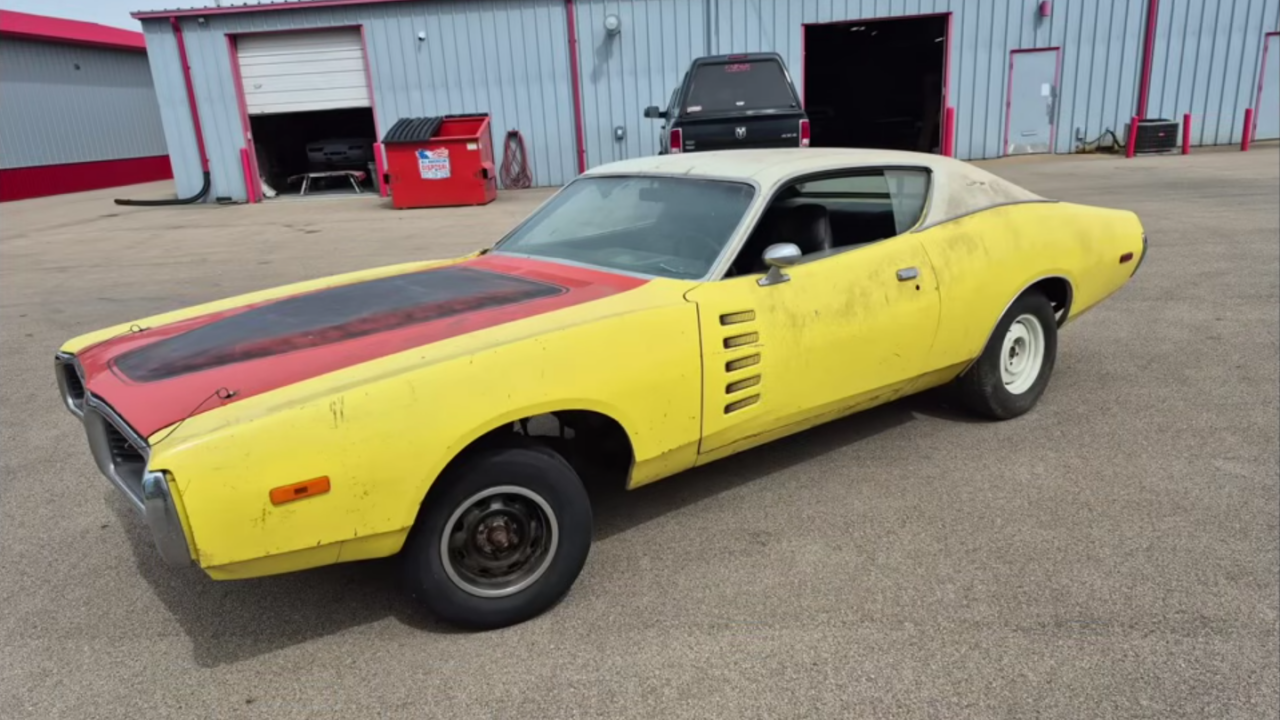
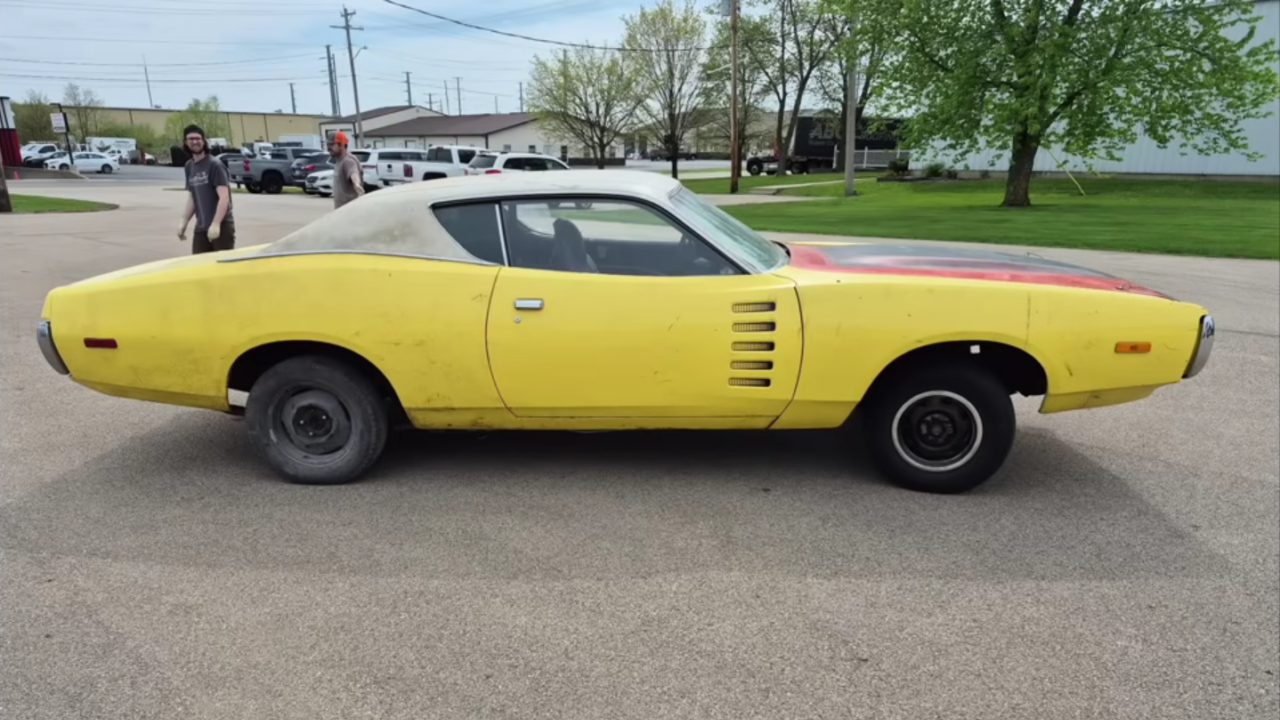
A dusty 1972 Dodge Charger Rallye has emerged from decades of storage, and it may be one of the rarest muscle-era Mopars still in existence. At first glance, the car looks like a worn-out project buried under years of neglect, but its VIN and documentation tell a far more important story.
Featured by the Auto Archaeology YouTube channel, this Charger is reportedly one of only two known 1972 Dodge Charger Rallye models built with the legendary 440 Six Pack V8. That alone makes it an extraordinary discovery, especially because most enthusiasts believed the Six Pack option effectively disappeared after 1971.
Chrysler had planned to offer the 440 Six Pack in the 1972 Charger Rallye and Plymouth Road Runner GTX, but the option was canceled in late October 1971 due to emissions-related concerns. A small number of cars had already slipped through before the order window closed.
This yellow Charger is one of those cars. After decades hidden away in a garage, it is now headed for a full restoration that should return it to its original factory configuration.
A One-Week Window Created A Mopar Legend
The 1972 model year arrived as the muscle car era was rapidly fading. Gross horsepower ratings were being replaced by lower net ratings, emissions regulations were tightening, and many of Detroit’s biggest performance engines were disappearing from order sheets.
Chrysler originally intended to keep the 440 Six Pack alive briefly for 1972. The setup used three two-barrel carburetors and remained one of Mopar’s most memorable big-block combinations.
According to the Auto Archaeology video, the option survived for only a short period before Chrysler issued a cancellation notice on October 28, 1971. Dealers were reportedly instructed to remove Six Pack and Six Barrel references from ordering materials.
That short window means only a handful of 1972 cars are believed to have been built with the engine. The commonly cited number is seven combined Dodge and Plymouth examples, though only three have been physically documented.
This Charger Has Serious Documentation
The featured car is identified as a 1972 Dodge Charger Rallye with a V-code VIN, marking it as a factory 440 Six Pack car. Auto Archaeology notes that its cowl and core support numbers match, and the car retains a fender tag.
The Charger also reportedly has a copy of its original window sticker. That document is especially important because it helps confirm its unusual configuration and shows details such as the Rallye package, painted stripes, lighting options, power disc brakes, bucket seats, and automatic transmission.
The car was apparently sold through Chrysler’s executive lease program before entering private ownership. Stories surrounding its early life vary, including accounts that it once wore standard doors and a flat hood after damage or possibly because someone wanted a sleeper look.
Whatever the exact explanation, the car eventually became a Detroit street and strip machine. It reportedly wore “Night Stalker” graphics, ran different engines over the years, and was raced hard before being stored away.
The Original Engine Is Gone, But The Car Survived
Like many rare muscle cars that lived through the 1970s and 1980s, this Charger did not remain untouched. Its original 440 Six Pack engine is no longer with the car, and it spent much of its life modified for drag racing.
That history may make purists wince, but it also reflects how these cars were treated before collectors fully understood their rarity. Back then, a 1972 Charger with a rare code was still just a fast Mopar to many owners.
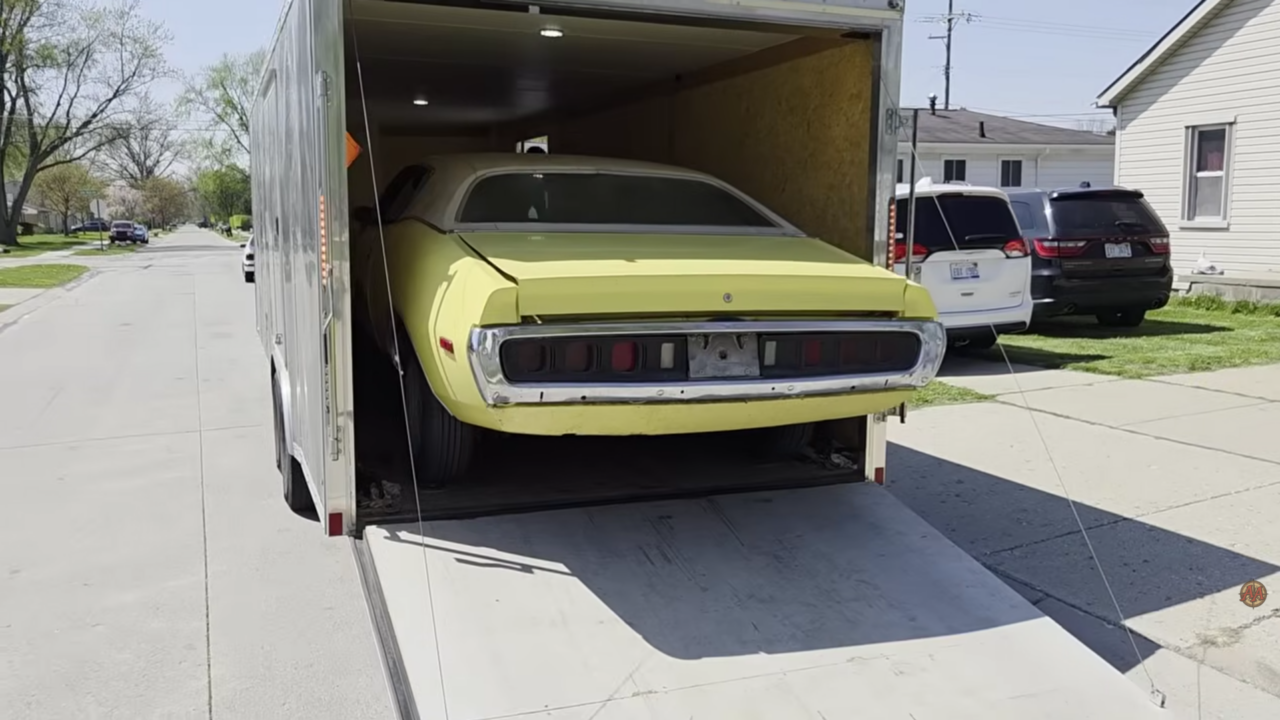
The good news is that the car itself appears surprisingly solid. After being removed from storage, it was taken to Magnum Auto Restoration in Illinois, where it was cleaned and evaluated for a future factory-correct restoration.
The plan is to return the Charger to its original OEM-style specification, including a proper 440 Six Pack powerplant.
A Muscle Car That Was Almost Erased
What makes this Charger so fascinating is not just its rarity, but the fact that it represents a performance option Chrysler tried to cancel before it fully reached the public. Cars like this exist only because production, ordering, and corporate decision-making briefly overlapped.
Auto Archaeology notes that another known 1972 Six Pack Charger exists, along with a documented Six Barrel Plymouth Road Runner GTX. Other possible cars have been discussed among Mopar historians, but physical proof remains limited.
This particular Charger has been known in enthusiast circles for years, including past coverage in Mopar Collector’s Guide and Mopar Connection. Still, seeing it finally pulled from storage and sent toward restoration gives the story new life.
Once completed, it should stand as one of the most historically significant Dodge Chargers from the post-1971 muscle era. For Mopar fans, this is exactly the kind of barn find that proves some legends are still hiding in plain sight.