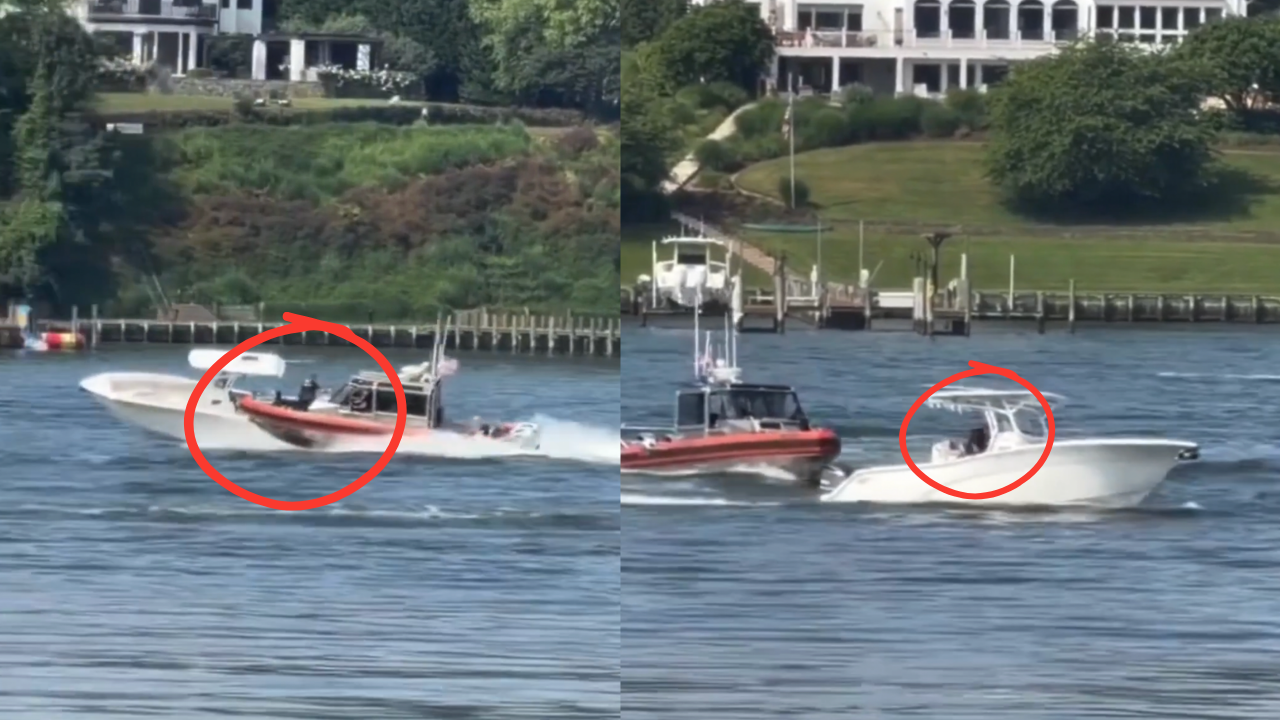
A boat was speeding in circles across the Severn River near Annapolis, Maryland with no one aboard. The only way to stop it was to climb on, so a U.S. Coast Guard officer leaped from a moving patrol boat onto the runaway vessel and killed the engine. It was the dramatic end to a rescue this week that, against the odds, left everyone unharmed.
The trouble began when the boat’s operator was suddenly thrown overboard. With the engine still running, the boat kept circling on its own, eventually becoming a hazard of its own the man in the water. A boat in that state can swing back around and strike the person it just threw.
His son went after him first. He was able to steer close through the water and pull his father out before the boat could come back around. That still left the boat racing across the river with no one aboard.
That is where the Coast Guard came in. A crew from the agency’s Maryland-National Capital Region chased the runaway boat, matched its speed, and eased alongside it during one of its turns. The officer timed the jump to that moment and landed on the speeding vessel. He finally shut the engine down after that. The rescue worked out, but a powerful boat circling on its own is one of the most dangerous things that can happen on the water.
What Made the Runaway Boat So Dangerous?
A boat doesn’t just stop running if the operator is thrown out, like in this situation. If it’s in gear with the wheel turned, the spinning propeller will pull it into a rotating pattern called the “circle of death.” The unmanned boat can then come back around and strike the person in the water, or whoever’s nearby.
Falls overboard are one of the leading causes of boating deaths in the United States, and a running propeller makes them far more dangerous. The Coast Guard logs propeller-strike accidents every year, with recent figures showing dozens of deaths and well over a hundred injuries annually. Many of those cases involve an operator who was thrown from the boat with the engine still running.
What Is an Engine Cut-Off Switch?
An engine cut-off switch is a device that kills the engine as soon as the operator leaves the helm. It usually works through a lanyard that clips to your wrist, belt, or life jacket, almost like the kill switch for a treadmill. Since April 2021, federal law has required operators of most recreational boats under 26 feet to use one while operating boats.
If your boat has one, make sure to use it every time before you get moving, and replace it if it’s missing. Most powerboats already have a switch installed, so the main thing is remembering to use it. The Coast Guard also recommends wearing a life jacket, taking a boating safety course, and never boating under the influence. And even if you’re particularly athletic, don’t attempt the same thing the Coast Guard did here.