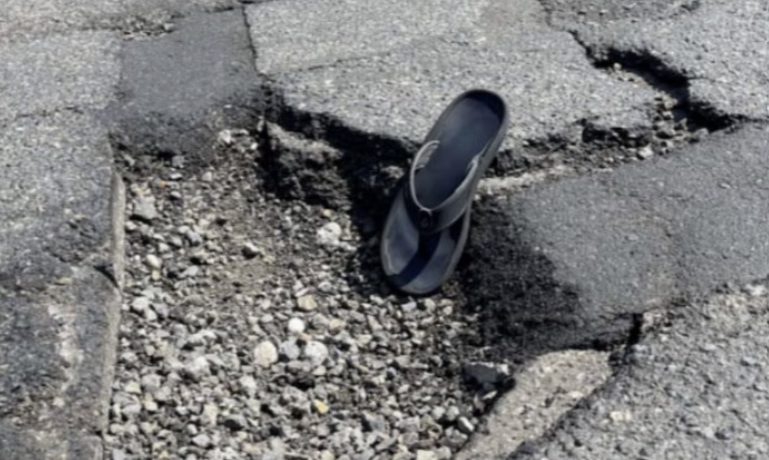
A Portland woman who says she never even saw the pothole coming may be walking away with what could be the largest roadway-related settlement in Portland history. Gillian Conroy was driving along Southwest Capitol Highway when her car struck a pothole so severe that the impact launched her head into the roof of her vehicle.
The jolt left her with a traumatic brain injury, tinnitus, and a torn rotator cuff. According to her lawsuit, she has not been able to return to her career in technical sales at Intel because the cognitive effects of her injuries prevent her from focusing on a computer screen.
For many drivers, a pothole means a damaged tire, bent wheel, or expensive trip to the repair shop. Conroy’s case stands out because the alleged injuries went far beyond vehicle damage, turning a routine roadway hazard into a multimillion-dollar legal fight.
Conroy originally sued the City of Portland, Multnomah County, and the State of Oregon. According to OregonLive, the case ultimately resulted in a $3.6 million settlement that may be the largest roadway-related payout in Portland history.
What the Lawsuit Said Happened
According to the complaint, Conroy was traveling at the posted speed limit on Southwest Capitol Highway when her vehicle was, as described in the court filing, abruptly and forcefully jolted by the pothole. The impact was violent enough to send her head into the ceiling of the car, despite wearing a seatbelt. She sustained injuries to her head and shoulder that have had a lasting effect on both her health and her quality of life.
The nature of her injuries made the legal case more complex than a standard property damage claim. Traumatic brain injury cases require careful documentation because, while broken bones show up clearly on imaging, the cognitive and neurological effects of a concussion or TBI leave more room for interpretation in court.
Defendants in such cases often argue that focus problems, memory issues, or mood changes could be attributable to factors unrelated to the incident. In Conroy’s case, the connection between the pothole impact and her inability to do technical work on a computer was central to the damages she sought.
Tinnitus, an often permanent ringing or buzzing in the ears, is recognized as a serious and difficult-to-treat outcome of head trauma. Combined with the rotator cuff injury she sustained, Conroy’s list of documented injuries went well beyond what many people would associate with a pothole incident.
Could a Seatbelt Fail To Prevent Injuries Like This?
According to deposition testimony cited by OregonLive, Conroy said she was wearing her seatbelt when she hit the pothole.
While seatbelts are highly effective at reducing injuries during crashes, they are primarily designed to restrain forward movement during sudden stops and collisions. A severe pothole impact can create a different type of force, causing a vehicle’s suspension to compress and rebound rapidly.
That motion can generate enough upward force for occupants to strike the roof or interior of a vehicle, even when properly restrained. A seatbelt’s locking mechanism is primarily designed to engage during rapid forward movement or sudden deceleration and may not react the same way to a sudden upward jolt.
Vehicle height, seat position, suspension characteristics, road speed, and the severity of the impact can all influence how occupants move inside the cabin during an event like this.
That does not mean such injuries are common, but it helps explain how a driver could report both wearing a seatbelt and striking the roof during a severe pothole impact.
Portland Is Not the Only City Learning This Lesson the Hard Way
Cities across the country are discovering that deferred road maintenance has a legal price tag that can dwarf the cost of simply fixing the roads in the first place. Long Beach, California, settled a pothole injury case in late 2024 for $500,000 after a woman fractured her ankle stepping into a roughly ten-inch wide, three-inch deep pothole near Heartwell Park on Bellflower Boulevard.
Her attorneys found Google Street View images confirming the pothole had existed at that location since at least 2015, and city maintenance staff had marked it with paint on two separate occasions without ever filling it. That documented history of inaction played a significant role in pushing the city toward settlement.
That same year in Long Beach, a separate pothole case went to trial, and a jury awarded nearly $17.5 million to a woman who had developed a rare and incurable pain condition after stepping in a pothole outside a neighborhood supermarket. The Long Beach City Attorney’s Office noted that, while settlement decisions are case-specific, the city does take prior verdicts into account when weighing litigation risk.
The pattern is consistent. When a municipality has documented evidence that a road defect existed and chose not to address it, the legal exposure increases substantially.
Portland’s Infrastructure Funding Gap
The Conroy settlement arrives as Portland city leaders are actively debating how to close a structural gap in road maintenance funding. Earlier this spring, the Portland Bureau of Transportation put forward a proposal to add a monthly fee to residents’ and businesses’ utility bills specifically to fund street maintenance and safety work.
The proposal estimated the fee structure could generate roughly $46.7 million annually, with residential units paying around $12 per month and commercial properties paying significantly more.
Councilwoman Olivia Clark, who chairs the Transportation Infrastructure Committee, framed the choice plainly: tires are bursting in potholes, a bicyclist has died, and the city will pay for this problem one way or another. The question is whether it pays through planned maintenance or through courthouse settlements.
AAA data shows that pothole damage costs American drivers more than $26 billion in repairs annually, with roughly one in ten drivers sustaining damage significant enough to require a shop visit, at an average repair cost of nearly $600. Those figures reflect property damage only. When personal injuries are involved, especially serious ones involving head trauma or fractures requiring surgery, the numbers take on a different scale entirely.
What Drivers Should Know
For drivers navigating Portland’s streets, Conroy’s case is a useful reminder that documenting everything matters. Photograph the pothole immediately after an incident, noting the location and date. Report it to the city’s pothole hotline at 503-823-2867, which creates a timestamped record with PBOT. Save any repair invoices, medical records, or documentation related to the incident.
The city’s standard position has long been that potholes are the result of normal weather and wear rather than negligence, which is why the large majority of pothole claims are denied or settled for minimal amounts. But cases where the city had prior notice of a specific defect and failed to act present a materially different legal picture.
As both the Conroy case in Portland and the Long Beach ca