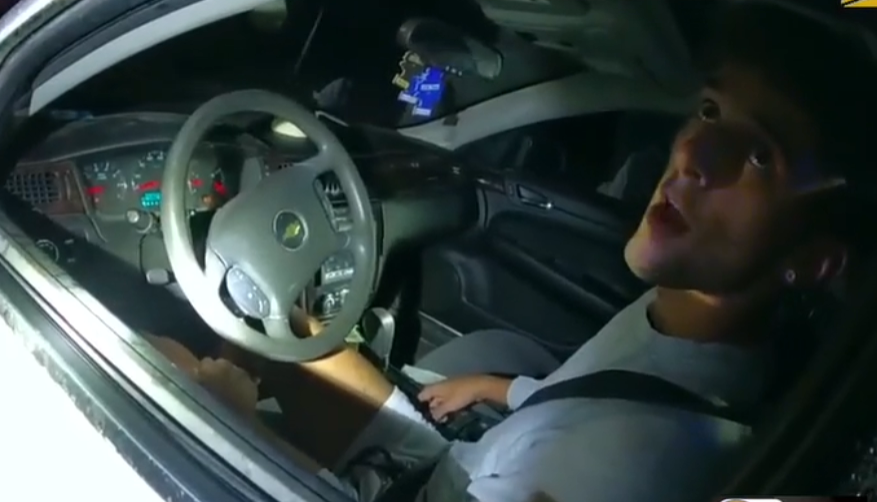
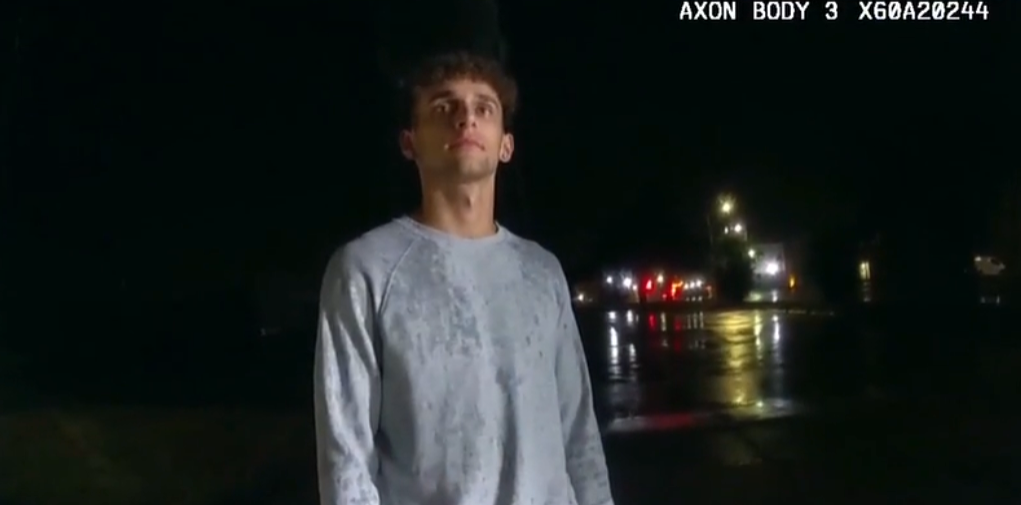
A federal jury in Iowa has sided with a young man who was pulled over, subjected to field sobriety tests, and detained by police for driving under the influence despite blowing a 0.00 on a breathalyzer. The case of Tayvin Galanakis against two Newton, Iowa police officers and the city has concluded with a $105,000 verdict in his favor, capping a legal fight that began in 2022 and wound through multiple courts before landing in front of a jury this week. The outcome was not exactly a surprise to anyone who had watched the body camera footage.
What makes this case particularly notable is the sequence of events on that August night. Galanakis was pulled over by Officers Nathan Winters and Christopher Wing, who almost immediately began pressing him about alcohol consumption. When Galanakis said he hadn’t been drinking, the officer’s response was essentially “what do you mean, none?”
Rather than reaching for the breathalyzer Galanakis was actively asking for, Winters put him through a series of field sobriety tests first. When the breathalyzer finally came out and registered zero, the officer pivoted to marijuana as the new theory. “I blew zeros,” Galanakis told Winters on camera. “Now you’re trying to think I smoke weed. You can’t do that, man.”
A Drug Recognition Specialist at the Newton Police Department ultimately determined Galanakis had no drugs in his system and released him. The resolution that night was essentially: you’re free to go, we found nothing. The resolution four years later, after a lawsuit, a countersuit from the officers alleging defamation, a qualified immunity fight, and a federal trial, was a jury writing a check for six figures. Most people would call that a long road to an obvious destination.
For drivers who have sat behind the wheel their whole lives and take road safety seriously, the details of this case raise uncomfortable questions about the reliability of the enforcement tools meant to keep impaired drivers off the road. Breathalyzers are the gold standard of alcohol detection, but as the drug landscape has shifted, law enforcement has leaned more heavily on officer judgment and subjective tests to fill the gap. The Galanakis case shows exactly where that can go wrong, and a growing body of evidence suggests it isn’t going wrong just once.
A Broader Pattern Across Iowa
This wasn’t an isolated incident that somehow made it to federal court. A months-long investigation found that completely sober Iowa drivers are being arrested and charged with operating while intoxicated, and there is no system in place to track how often it happens. That last part is worth sitting with: there is no mechanism to count the cases.
Open records requests found more than 2,000 OWI cases dismissed in Iowa over a two-year period, though most were part of plea agreements and don’t account for people arrested but never charged. The Iowa Department of Public Safety does log breathalyzer results during OWI arrests, and of more than 11,000 tests conducted over a 12-month span, 956 returned zero alcohol. That is nearly one in ten OWI breathalyzer tests producing a flat zero. Not a technicality, not a borderline reading. Zero.
Another case in the investigation involved Dominic Tangen of Bremer County, who is suing the Iowa State Patrol over a July 2023 arrest in which a drug recognition specialist concluded he was under the influence of a stimulant. Tangen says he was held for six hours, strip-searched, and charged. Urine tests more than two months later showed he was completely sober, and prosecutors dropped the charges.
Why Officers Are Getting It Wrong More Often
The honest answer, according to legal experts and law enforcement alike, is that the job got harder. Defense attorneys say they have seen more sober drivers arrested for OWI as legal marijuana, prescription drug use, and other substances became more prevalent.
Alcohol is measurable with a handheld device and a set legal limit. Cannabis and prescription impairment are far more difficult to assess objectively, and the tools available to patrol officers in the field are nowhere near as reliable as a breathalyzer.
Drug Recognition Specialists, the officers trained to identify impairment from substances other than alcohol, undergo extensive certification, but the process relies heavily on a 12-step evaluation protocol and, ultimately, officer judgment. There is no roadside equivalent of a breathalyzer for THC.
Blood tests can detect marijuana metabolites days or even weeks after any psychoactive effect has worn off, meaning a positive result doesn’t necessarily indicate impairment at the time of the stop. The current toolkit, in other words, leaves a significant gap between what officers suspect and what they can actually prove.
The Qualified Immunity Question
Before the case ever got to a jury, it had to survive a motion from the officers claiming qualified immunity, the legal doctrine that shields government employees from civil liability unless they have violated a clearly established right. A district court judge denied that claim, a ruling later upheld by a federal appeals panel.
Judge Stephen Locher found that Winters had no probable cause to arrest Galanakis because his speech and movements were not even remotely consistent with someone under the influence, and noted that Galanakis insisting almost from the first moment that he wanted to blow into a breathalyzer would be a remarkable act of bravado for someone actually impaired.
That observation, buried in a legal ruling, is the kind of common-sense detail that tends to resonate with a jury. It did.
Taxpayers Foot the Bill
The $105,000 verdict lands on the city of Newton, which means it lands on the people who live there. That is a consistent feature of wrongful arrest civil judgments: the officer who made the call rarely writes the check personally. Municipalities absorb settlements and jury awards through insurance and general funds, which redistributes the cost to residents rather than concentrating it on the individuals whose decisions created the liability.
The ruling is part of a broader pattern of Iowa drivers being stopped and arrested for OWI while completely sober, and observers note that taxpayers may ultimately be the ones paying the price. As more of these cases clear the qualified immunity hurdle and reach juries, that cumulative cost to communities is worth watching. A single $105,000 verdict is manageable. A pattern of them is a budget problem and a credibility problem rolled into one.
For drivers who believe in both road safety and due process, the ideal outcome is an enforcement system accurate enough that the two don’t come into conflict. This case is a reminder that the gap between those goals is still wider than it should be.
The DMV have to make an option in driving license, who doesn’t smoke or drink, every 12 months report blood tests and insurance companies give best discounts to them , solve 99 percent this problem..