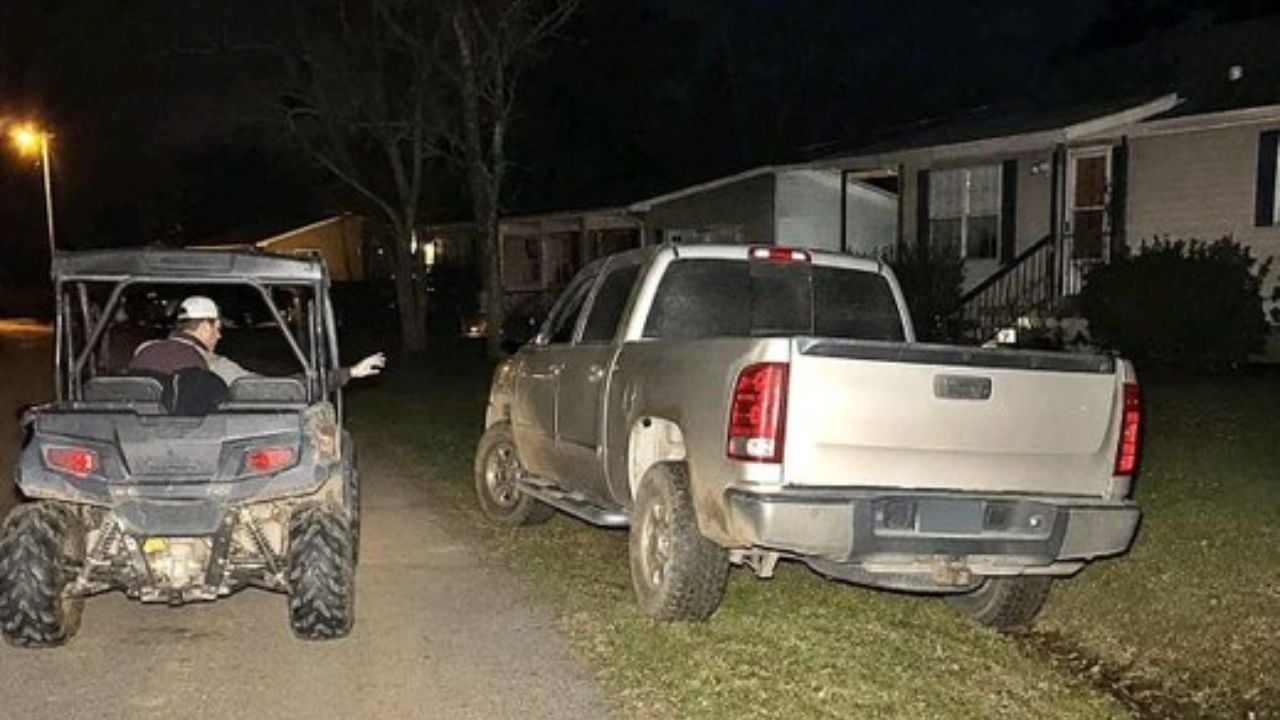

A post on X about a parked pickup truck and a police call has opened a conversation about neighborhood tension in America. The story came from a user named Emma, who posts under the handle @Avabelly__, after she shared a photo of her brother-in-law’s truck sitting outside her home for less than a day.
Emma said a neighbor contacted police over the vehicle despite the fact that it was not blocking traffic or preventing access to homes. According to her account, there were no signs banning parking in the area and drivers could still move through the street without issue.
The image attached to the post showed a silver pickup parked partly on a grass verge beside a paved residential road. The setting appeared to be a suburban neighborhood with homes, lawns, trees, and another utility vehicle nearby.
The post gained attention because many readers saw the police call as unnecessary. Others argued that parking on grass or beside narrow streets can violate local codes depending on the city or homeowners association involved.
Truck Parked Outside Home Leads to Police Call
Emma said the truck belonged to her brother-in-law and had only been parked outside the house for part of a day. She framed the issue as an example of a neighbor escalating a matter that could have been ignored or handled through conversation.
Her post included a caption asking whether the reaction had gone too far. The truck itself appeared parked off the main roadway, with its tires near or on the grass shoulder beside the pavement.
No evidence in the post showed blocked driveways, blocked mailboxes, or vehicles being forced off the road. There also was no indication that emergency access had been affected.
Still, readers pointed out that many American neighborhoods have parking rules that are not always marked by signs. Some municipalities ban parking on grass, while some homeowners associations impose restrictions on trucks, trailers, or overnight parking.
Social Media Reactions Split Along Familiar Lines
The replies under the post reflected the kind of divide often seen in neighborhood disputes online. Many users sided with Emma and described the neighbor’s decision to involve police as an example of people using law enforcement to settle personal frustrations.
Some commenters referred to the neighbor as a “Karen,” a label commonly used online for people viewed as confrontational or controlling in public disputes. Others said the issue reflected tension between property rights and shared neighborhood expectations.
Not every response supported Emma’s position. One user claimed her posting history suggested she may not be an easy neighbor herself, though no details were offered to support the accusation.
The discussion moved beyond the truck and into a wider debate about suburban living in the United States. Readers shared stories about parking complaints, code enforcement calls, disputes over lawns, and conflicts involving homeowners associations.
Questions About Authenticity Do Not Change the Debate
There is no independent confirmation that the incident happened exactly as described in the post. No police report, statement from the neighbor, or outside account has surfaced to verify the claims made by Emma.
That uncertainty matters because social media posts often present only one side of a dispute. In some cases, viral neighborhood stories later turn out to be exaggerated, edited, or entirely fabricated for engagement.
Even so, whether this specific account is real or scripted is not the main issue driving interest in the story. The reason the post resonated with readers is because disputes over parking, property use, and neighborhood conduct remain common across the country.
Many Americans live in communities where informal expectations can carry as much weight as written rules. Conflicts over vehicles, noise, lawns, trash bins, and street parking often create friction between neighbors who may already hold different views about space, privacy, and control.
A Small Parking Dispute Reflects a Larger Cultural Divide
The post also highlighted how social media has changed neighborhood disagreements. Situations that once remained between a few households now become public debates involving thousands of strangers offering opinions.
My brother-in-law parked his truck in front of my house for less than a day. It wasn’t blocking anything, there were no “No Parking” signs, and the road was still passable.
Then a neighbor told us the cops had been called over it.
Maybe I’m missing something, but slowing down… pic.twitter.com/ae6lYWDATe
— Emma (@Avabelly__) June 4, 2026
For some readers, the truck represented personal freedom and the right to use public space without interference. For others, the issue involved standards meant to maintain order and prevent neighborhoods from becoming harder to navigate.
Police involvement added another layer to the discussion. Critics argued that law enforcement resources should not be used for disputes over temporary parking unless there is a clear safety concern.
No further developments have been shared by Emma since the original post. The image and short description, however, were enough to spark another national conversation about how Americans live beside one another and how small disputes can turn into public conflict.