Most drivers on Highway 285 near Morrison, Colorado are watching for wildlife, sudden weather changes, or the kind of aggressive merging that comes standard on busy mountain corridors. Nobody was watching for a semi-truck shedding multiple boxes of roofing screws across the pavement. But that is exactly what happened on Tuesday afternoon, and by the time the dust settled, the damage count had climbed to more than 50 vehicles.
The incident occurred at approximately 12:19 p.m. near milepost 247, the Morrison exit, when a semi-truck spilled multiple boxes of nails and screws onto westbound Highway 285. Colorado State Patrol was notified, located the truck, and made contact with the driver, who cooperated with investigators. The cooperation was a small mercy. The debris field was not.
What started as five confirmed vehicles with damaged tires at the scene quickly ballooned as the afternoon wore on. Drivers who had passed through the area without immediately noticing a problem began showing up at tire shops miles down the road, their warning lights on and their patience long gone. By Wednesday, reports were still coming in. Throughout Tuesday and into Wednesday, troopers continued receiving calls from drivers whose vehicles had been affected.
One of those drivers was Laurie Kennedy, who was traveling through the area around the time of the spill. She thought she was dodging broken glass on the road and kept driving, making it all the way to the Golden area before her tire pressure warning lit up.
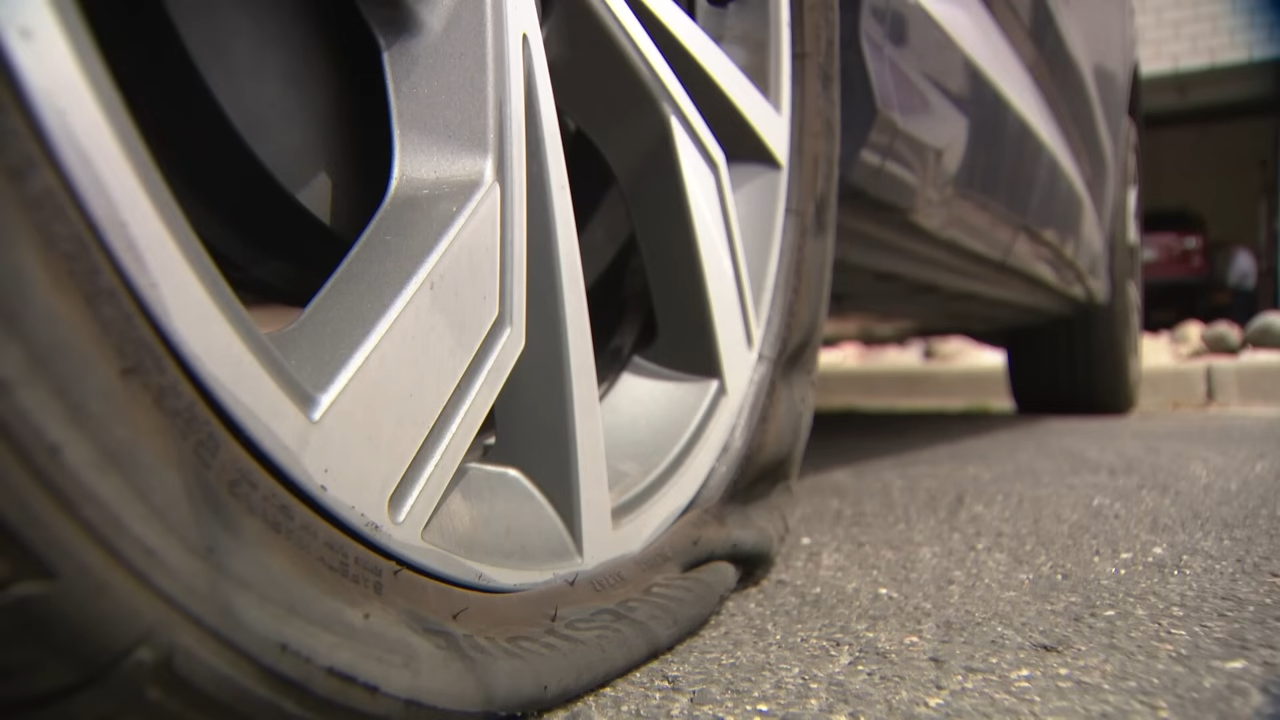
What she found at Discount Tire was hard to believe: 12 screws embedded in her front driver’s side tire alone, with one nail having gone in sideways, making a patch impossible. The shop could not fix the other tires either given the sheer volume of hardware buried in the rubber. Kennedy ended up replacing all four tires and walked out $1,800 lighter. She has since filed a claim with the trucking company’s insurance.
More Than 50 Vehicles Affected Across Two Tire Shops
The scale of this incident put it well beyond a fender-bender level inconvenience. Nearly 20 drivers came off Highway 285 for service between just two area tire shops, Les Schwab in Littleton and Discount Tire, with individual tires containing anywhere from three to twelve pieces of hardware.
Multiply that across multiple tires per vehicle, and the screws-per-car math becomes genuinely staggering. More than 50 drivers in total reported vehicle damage from the spill.
For context, a typical roofing nail or drywall screw is designed to pierce and hold material under compression. That is exactly what they do when a vehicle rolls over them at highway speed. The screw enters the tire, often at an angle, and the rotation of the wheel works it in further.
Patching is only possible when a puncture is clean, straight, and within a repairable zone of the tread. A sideways nail, or a tire with a dozen entry points, fails both tests. Kennedy’s situation was not unusual for someone who drove through a concentrated debris field without stopping.
Unsecured Loads: A Legal Matter With Real Consequences
Under Colorado law, a driver who allows cargo to spill from a vehicle onto a public roadway can face a traffic infraction for “Spilling of Load on a Highway.” As of Wednesday afternoon, the driver had not yet been charged, though CSP confirmed that such a citation is possible given the circumstances. Whether a citation turns into something more substantial depends on what investigators determine about how the load was secured, or wasn’t.
Unsecured load violations are taken seriously in most states for good reason. The Federal Motor Carrier Safety Administration requires commercial trucks to properly contain all cargo before hitting public roads, and individual states layer their own statutes on top.
In cases where debris causes injury or significant property damage, the liability exposure for a trucking company can go well beyond a simple traffic fine. Kennedy and others affected are already pushing on the insurance angle, and at least one witness who was driving behind the truck managed to photograph the company name on the vehicle, passing that information along to other victims.
The company was contacted for comment and declined to respond.
CDOT Cleaned Up, But the Damage Was Already Done
The Colorado Department of Transportation responded to the scene, with crews deploying hand brooms and magnetic rollers to clear the highway of remaining screws and nails. CDOT did not provide an exact count of how much hardware was collected.
Magnetic rollers are effective at pulling ferrous metal debris from paved surfaces, but there is an inherent delay between when material hits the road and when a cleanup crew arrives. Every vehicle that passed through in that window was a potential victim.
Kennedy, who expressed gratitude for CDOT’s response while still hoping for a thorough follow-up sweep, put it plainly: she wants the trucking company held accountable, and she wants other affected drivers to do the same rather than simply absorbing the loss.
What Drivers Can Do After a Road Debris Incident
If you drive through a debris field and hear something strike the undercarriage or notice a change in handling, the advice is straightforward: don’t push it. Pull over when safe, inspect the tires visually, and if you see anything embedded or notice pressure loss, call for a tow rather than driving to the shop. A tire that is losing pressure slowly can fail suddenly at highway speed, turning a manageable situation into a dangerous one.
Documenting everything matters too. Photograph the tire damage, get the shop to note the cause on your repair invoice, and file a report with the state patrol. If a witness caught the truck’s name or plate, that information becomes the thread that connects your $1,800 repair bill to someone who actually has to answer for it. Kennedy was fortunate that a fellow motorist had the presence of mind to grab that photo. Not everyone will be.
Highway 285 has seen its share of commercial truck incidents over the years, from jackknifed semis to rollover crashes. Tuesday’s screw spill was less dramatic visually but left a longer damage trail across the motoring public than most. Fifty-plus drivers with blown tires, a roofing company staying quiet, and a citation that may or may not be forthcoming. For the drivers still waiting on insurance calls, the hardware is out of their tires, but the headache is very much still present.