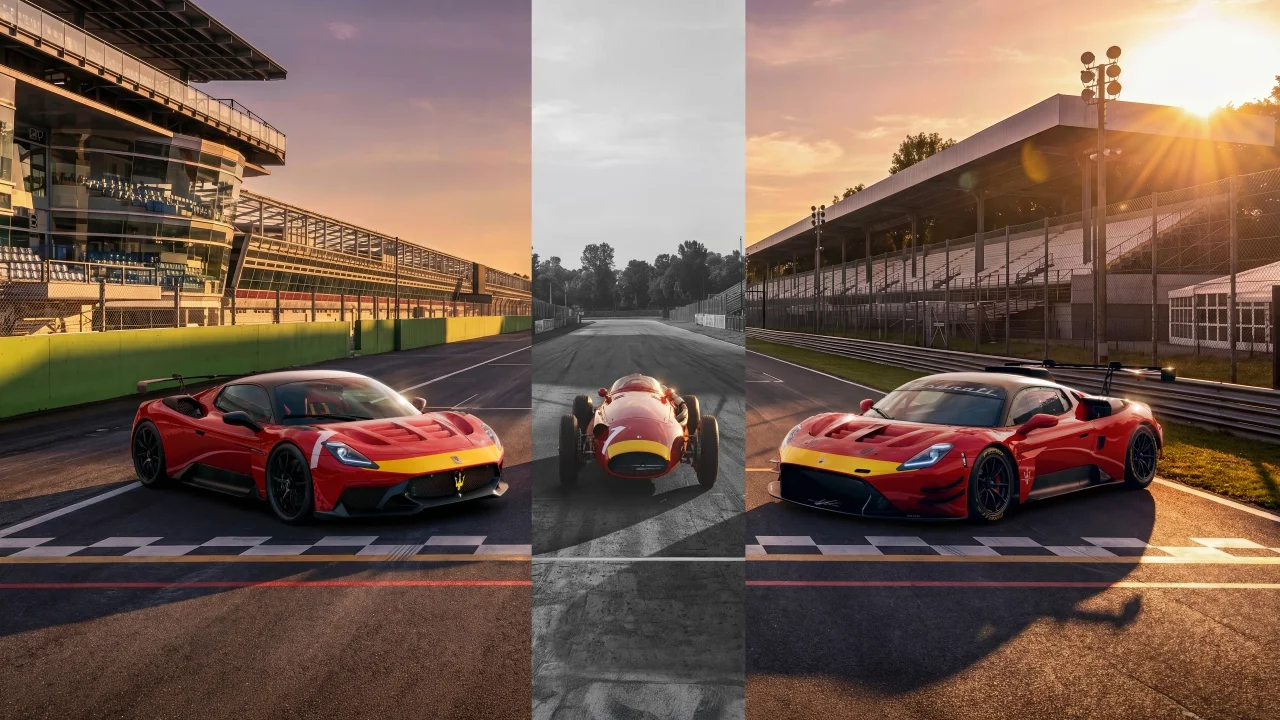
Maserati has celebrated 100 years since the iconic Trident logo was first used, when it was first seen on the Tipo 26 race car back in 1926. To mark the occasion, the Trident has created a series of special liveries that have all been inspired by the 250F Formula 1 car used in the 1950s.
The company took the covers off the liveries publicly at the 2026 GT2 European Series powered by Pirelli, which kickstarted its 2026 season at the famous Monza circuit. The new liveries appeared on the Maserati GT2 Stradale, marking 100 years of the Trident and of the brand’s first appearance in motorsport.
Maserati placed the road-going versions of the race cars next to the GT2 racers to showcase the liveries as fully as possible. The Trident had five cars lined up on the grid for the opening race of the GT2 season.
The liveries themselves will be available on both a one-off Maserati GT2 and the road-legal GT2 Stradale. And thankfully for us, the company gave us plenty of stunning images to look at as they showcased the new colors.
The Liveries Were Inspired by the Maserati 250F
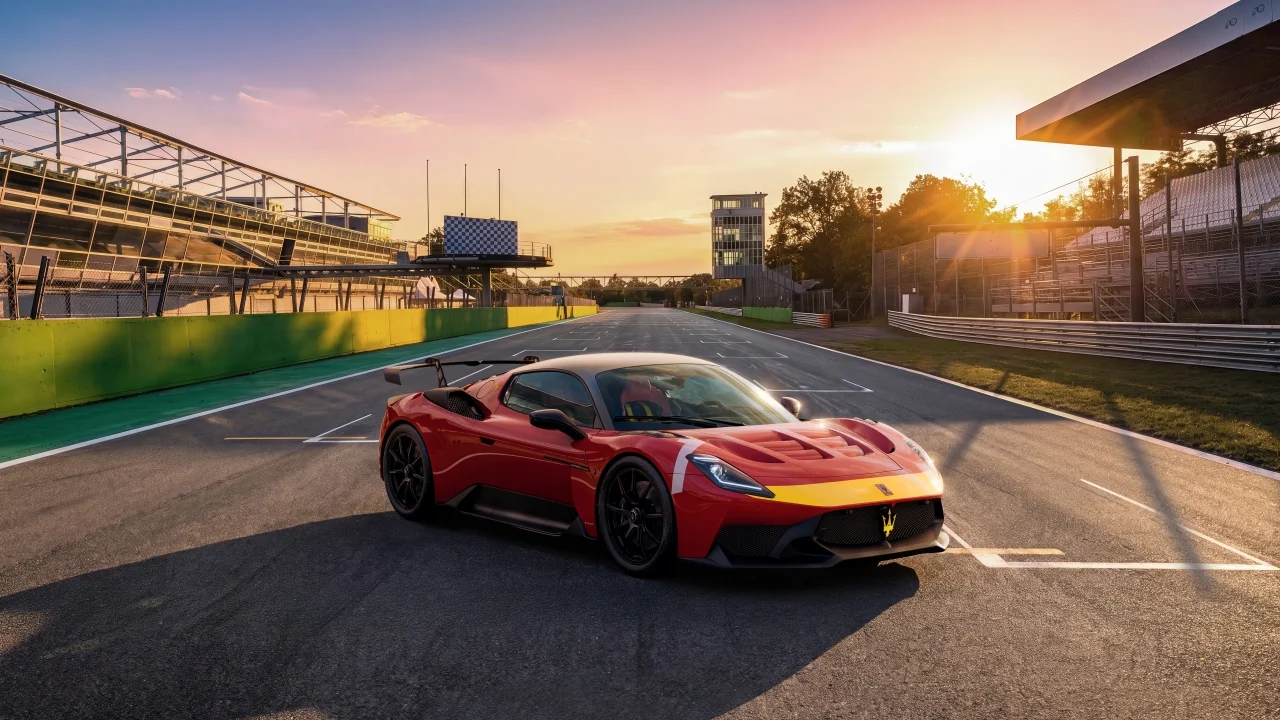
The liveries have been developed in partnership with the Maserati Fuoriserie personalization program. This program was recently expanded, and it gives customers the chance to add their own bespoke touches to cars such as the MC20. Each of these special liveries drew inspiration from the 250FT Formula 1 car.
The 250F won two world titles with Juan-Manuel Fangio in 1954 and 1957, and is regarded as one of the greatest F1 cars of that era. Drivers such as Sir Stirling Moss and Maria Teresa de Filippis also drove the 250F. In terms of its colors, the 250F was finished in a classic shade of red, with yellow banding around the nose of the car. This is the look replicated by modern-day Maserati.
The liveries differ slightly on each of the GT2s. On the GT2 Stradale, the Trident on the front grille is also finished in yellow, which is not the case on the car version. On the front right wheel arch of the Stradale, a white number one has been placed, replicating the one on the real 250F, used to identify the reigning F1 world champion. It is a small detail, but one that adds a little bit of extra something to the overall design.
The Liveries Also Celebrate Maserati’s First-Ever Motor Race
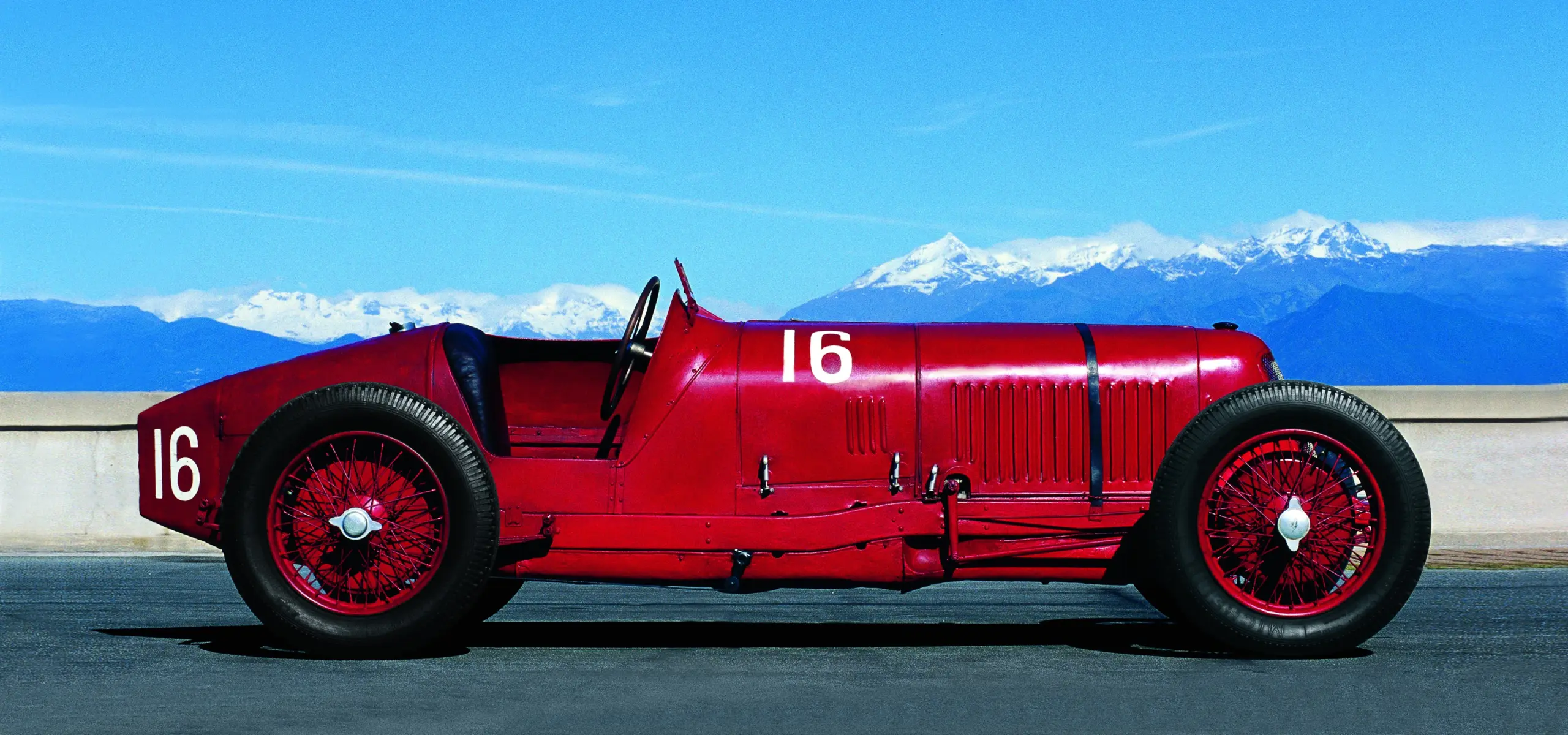
While they are replicas of the 250F’s livery, the new paint schemes also celebrate Maserati’s motorsport legacy as a whole. In particular, they celebrate the first races the company took part in back in 1926. Back then, it was the Maserati Tipo 26 doing the honors, and it won its class at the Targa Florio that year with Alfieri Maserati behind the wheel. This was the first-ever car to wear the iconic Trident symbol on its hood.
Maserati produced 11 Tipo 26 race cars from 1926 to 1932, and under the hood was a supercharged 1.5-liter inline-eight engine. It had a three-speed manual transmission, and the car also competed in races such as the Mille Miglia. It led to the Tipo 26B, with more versions following, and cemented the Trident’s place as one of the leading manufacturers in the motorsport world. It is a legacy that few other manufacturers can come close to claiming.