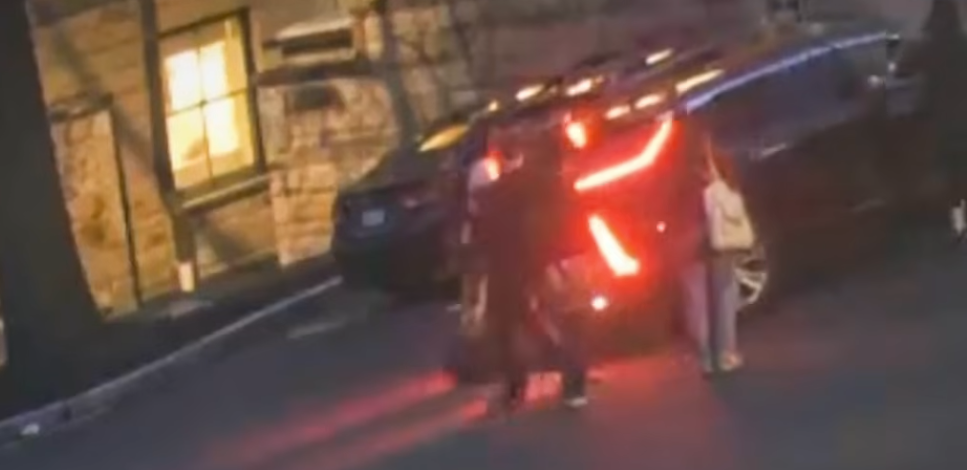
A story that already had people talking back in April just got a new chapter, and it raises some pointed questions about how universities handle situations where they are, quite literally, the ones behind the wheel.
Cornell University’s president, Michael Kotlikoff, backed his car into a group of student protesters on the evening of April 30, 2026, in the Day Hall parking lot on the Ithaca, New York campus. The students had followed him from an Israel-Palestine debate where he had delivered opening remarks, and they wanted to ask him about the university’s speech and disciplinary policies. Video captured by The Cornell Daily Sun showed the president starting his car and reversing directly into the people standing behind it. One of those people, recent graduate Aiden Vallecillo, says the vehicle ran over his foot.
Cornell’s own Board of Trustees convened an Ad Hoc Special Committee to review the incident. The committee concluded that no criminal charges were warranted against anyone involved, including the president. That part, while perhaps frustrating to some, was a defensible outcome given the circumstances. What happened next is a bit harder to square.
Last week, the Cornell University Police Department issued Vallecillo a one-year ban from all university property. Vallecillo had graduated just days before receiving the notice. For those keeping score at home: the man whose car made contact with a student got to drive away, and the student who was standing in a parking lot is now barred from campus for twelve months.
What the Official Notice Actually Says
The language in the campus ban is worth examining closely, because it does quite a bit of rhetorical work. The Cornell University Police Department’s notice to Vallecillo states that he “restricted a motor vehicle’s ability to maneuver while it was in motion as the reverse lights of the vehicle were illuminated,” and that his “intentional act created a hazardous condition.”
That framing, notably, places the hazard on the person standing in the parking lot rather than on the reversing vehicle. Reasonable people can weigh that interpretation differently. What is not in dispute is that a car made contact with at least one person, that no one was seriously injured, and that the Board of Trustees committee cleared everyone of criminal responsibility. The committee did add that the protesters’ conduct was “inconsistent with university policies governing expressive activity,” as well as the school’s standards for respectful behavior and prohibition of intimidation.
President Kotlikoff, for his part, issued a separate statement explaining why he chose not to pursue a code of conduct complaint against the enrolled students involved. His reasoning was that the required public hearings would “grant these students even more of the attention they have been seeking,” and would “reward the behavior and further divide our campus community.” The non-student Vallecillo, however, received no such consideration.
A Pattern That Goes Beyond One Incident
Cornell’s approach to campus bans is not new territory. Ithaca’s NPR affiliate WSKG, which broke the current story, has documented a series of similar actions in recent years. Climate activists were banned from campus following a demonstration in 2025. Pro-Palestinian demonstrators received bans in 2024. Both students and non-students have been subjected to temporary exclusions from university grounds.
Cornell owns roughly four percent of Tompkins County’s land, which means a campus ban is not a trivial thing. It covers a substantial geographic footprint. Vallecillo is prohibited from accessing any property “owned, operated or maintained” by the university for the duration of the ban.
The group that several of the protesters belong to, Students for a Democratic Cornell, has been pushing for reforms to the university’s code of conduct. Their central argument is that students have been unfairly targeted, suspended, or arrested for exercising their right to demonstrate. Whatever one thinks about their tactics on the night of April 30, the ban Vallecillo received arrives as a piece of evidence in that ongoing debate.
How the Ban Was Delivered
There is one additional detail that stands out in the WSKG reporting. Vallecillo says that a Cornell University Police Department officer entered his apartment without permission to serve him the ban notice. He told the station that a roommate heard knocking, and when Vallecillo went to check, a CUPD officer was already standing inside his apartment.
Video that Vallecillo provided to WSKG shows him asking the officer to leave the interior stairwell of his unit. Neither Cornell University nor CUPD responded to WSKG’s request for comment on that specific point, including the question of whether the officer entered without a warrant.
CUPD officers hold full police powers under New York State law. They are authorized to carry firearms and have the same arrest authority as municipal police officers.
What Vallecillo Says About the Timing
The ban arrived after students had left campus for the season, a detail that Vallecillo addressed directly. “This is kind of like how they like to carry out their repression of free speech,” he told WSKG. “They like to wait for things to settle down so that they’re out of the limelight. Students are not presently on campus. I have no doubt they waited for that, so that no attention is being paid to Cornell, so that they can silently and behind closed doors repress free speech on campus.”
Cornell has not publicly responded to that characterization. The university’s broader handling of the April 30 incident, from the Board of Trustees review to the decision on student charges to the issuance of this ban, has unfolded over roughly five weeks. For a situation involving video evidence, a university president, and a parking lot collision that generated national coverage, the pace and sequence of those decisions will likely continue to invite scrutiny.
Whether you view the students’ conduct on that evening as an exercise in free expression or an act of intimidation, the question of proportionality does not disappear just because the spring semester has ended.
The students illegally blocked the University president from leaving, which is a felony crime. They had the ability to retreat at any time during the Incident so there is no fault to the president. The punishment is valid and deserved and hopefully it will make others think before illegally preventing legal ingress and egress.