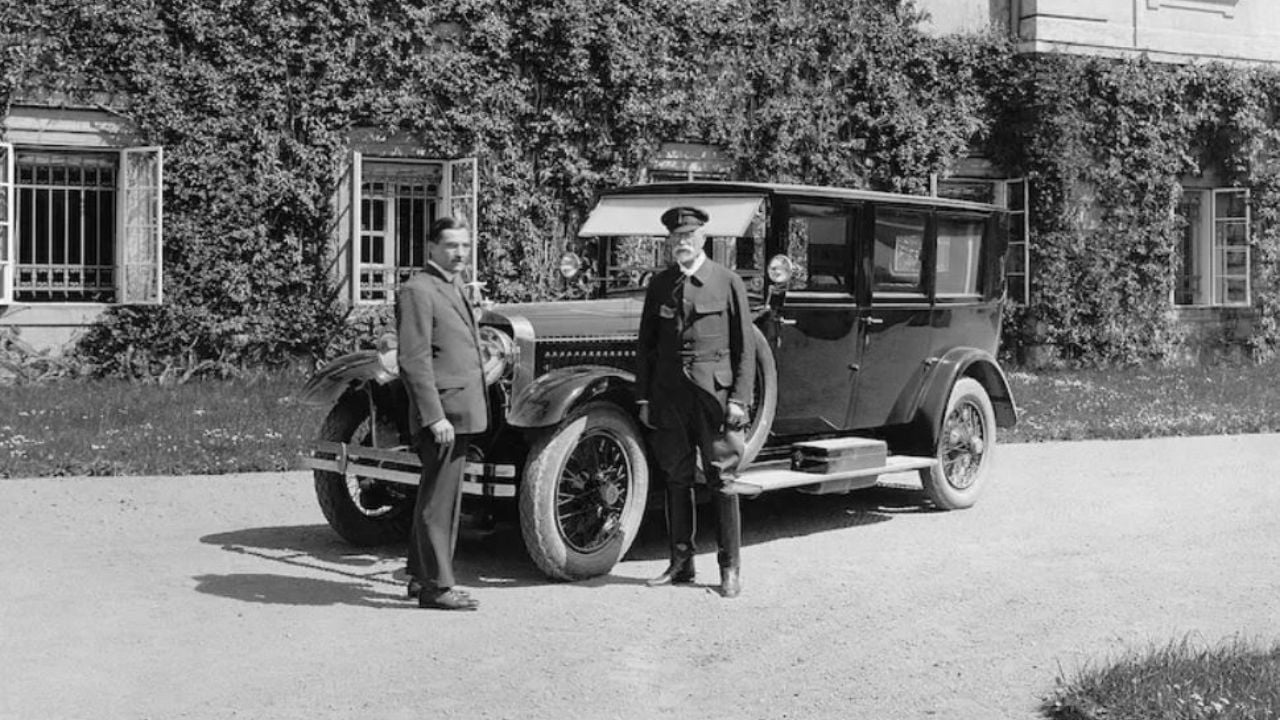
On May 10, 1926, the first passenger car to wear Škoda’s winged-arrow logo entered presidential service. It was not a small family car or a basic state limousine, but one of the most expensive and technically ambitious luxury cars built in the young Czechoslovak Republic.
That car belonged to the Škoda Hispano-Suiza 25/100 HP series, and the first example was handed over to Czechoslovak president Tomáš Garrigue Masaryk at Lány Castle.
Only 100 of these luxury cars were built under the now-familiar badge of the Czech automaker. Each was expensive, slow to build, and aimed at the highest level of political, industrial, and social life.
Today, only about six are believed to survive. That makes the Škoda Hispano-Suiza one of the rarest and most important cars in Škoda history, and one of the clearest symbols of how ambitious Czech industry had become between the wars.
A Presidential Car With Spanish And French Roots
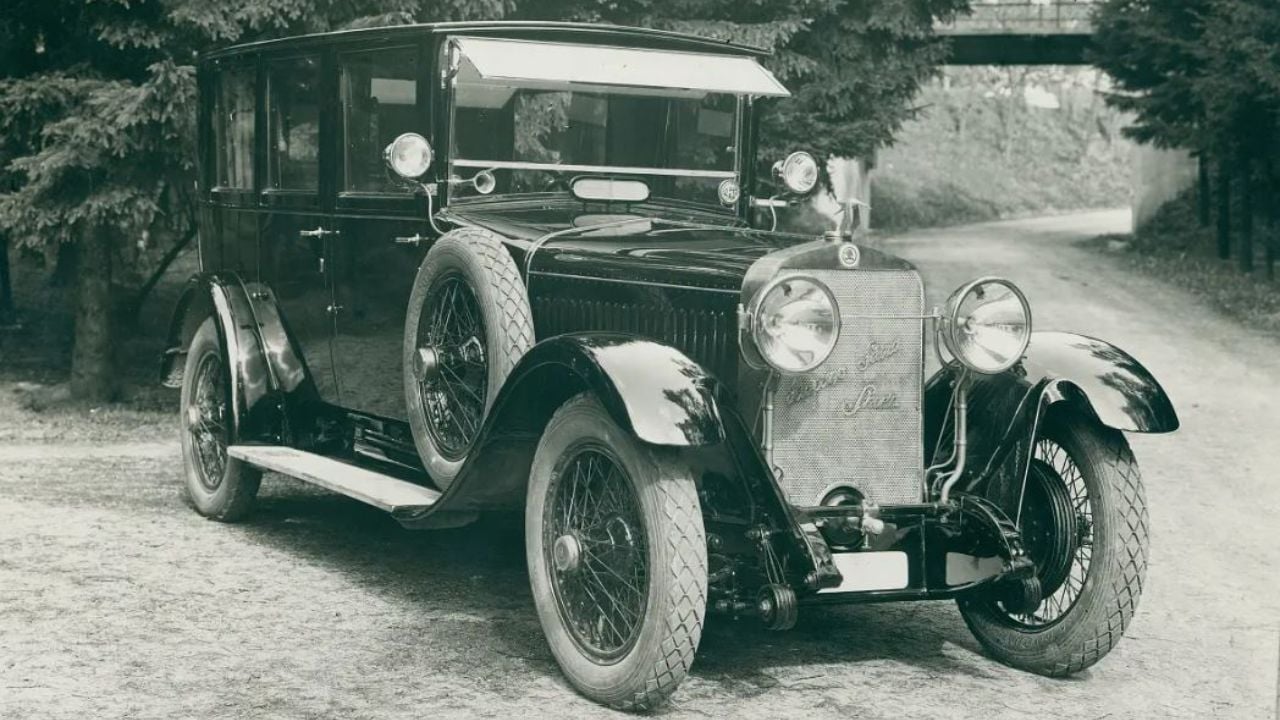
Škoda obtained the license to build the Hispano-Suiza luxury model in 1924, before the Laurin & Klement operation was fully absorbed into the Škoda industrial group. Licensed production started on November 10, 1924, with chassis work centered in Plzeň and bodywork completed in Mladá Boleslav or by specialist coachbuilders.
The agreement connected Škoda with one of Europe’s great luxury names. Hispano-Suiza was a Spanish-founded company whose identity was closely tied to Swiss engineer Marc Birkigt, and its French operation became famous for some of the finest luxury cars and aviation engines of the period.
Hispano-Suiza’s aircraft engines had already earned a major reputation during World War I, especially in Allied fighter aircraft. That engineering background gave the Škoda-built car a level of prestige far beyond an ordinary licensed product.
The first completed presidential car was delivered in May 1926. Škoda historical material gives total production as exactly 100 cars, built in the late 1920s, with some company material listing the series as running from 1926 to 1930.
The most important customer was President Masaryk. He received his car at Lány Castle on May 10, 1926, and it remained in presidential service until 1936, longer than any other official vehicle used during his presidency.
Masaryk’s Car Was Built Like A Royal Limousine
The original presidential car later returned to Škoda, but its later history is unclear. Some accounts suggest it may have been lost around World War II, possibly during the bombing of Mladá Boleslav near the end of the war, but the surviving documentation is not definitive.
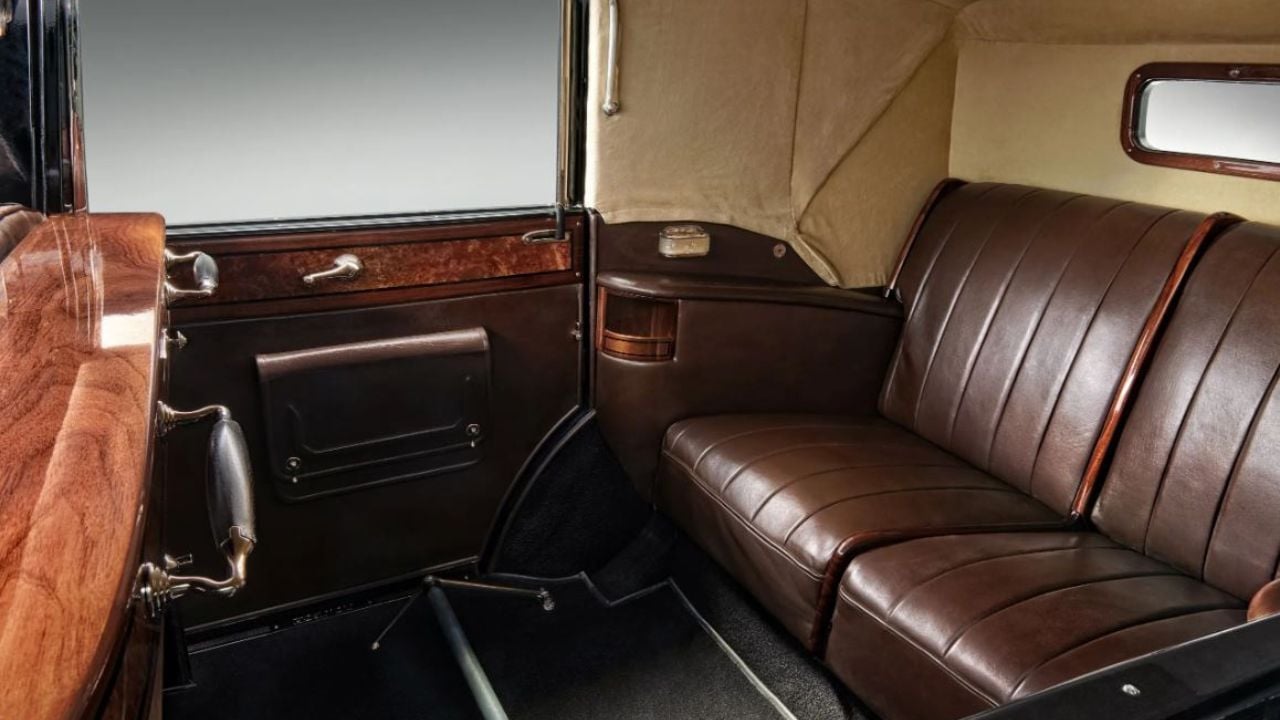
What survives is the original order material, which describes the car in remarkable detail. According to the surviving order sheet cited in recent Czech coverage, the car was specified with six black-leather seats, adjustable backrests, plush carpeting, polished wood, silk curtains, a hat net, a speaking tube for communication with the driver, locks on every door, heating, and mud scrapers on both sides of the vehicle.
The body specification followed a Kellner Frères design, with the order calling for a dark blue body and thin red lines. Surviving correspondence from Prague Castle also shows that preparations for the car were supervised by Masaryk’s daughter, Alice.
The price matched the car’s status. Masaryk’s Škoda Hispano-Suiza cost 280,000 Czechoslovak crowns, several times more than an ordinary small car of the period. It was not just transportation; it was a state limousine built to project authority, modernity, and national confidence.
Only The Elite Could Own One
Masaryk was not the only high-profile owner. The Czechoslovak Hispano-Suiza was also bought by prime minister Antonín Švehla, bankers, industrialists, aristocrats, and Škoda general director Karel Loevenstein.
Some cars were exported to Poland, Germany, Turkey, and Argentina, giving the model a small but international presence. Every example had the same basic prestige, but the coachbuilt nature of the car meant individual buyers could shape the final body and interior specification.
One surviving 1928 example in the Škoda Museum collection had an especially dramatic life. It was once converted into a fire department vehicle, and the rear part of its body had been cut off. Returning it to its original luxury-car form required major restoration work.
That car also carried a different kind of presidential connection. It was used by Robert Mandelík, president of the Union of Czechoslovak Sugar Refineries, which underlines the type of buyer who could afford a machine like this in the first place.
A 6.6-Liter Engine With Aircraft Influence
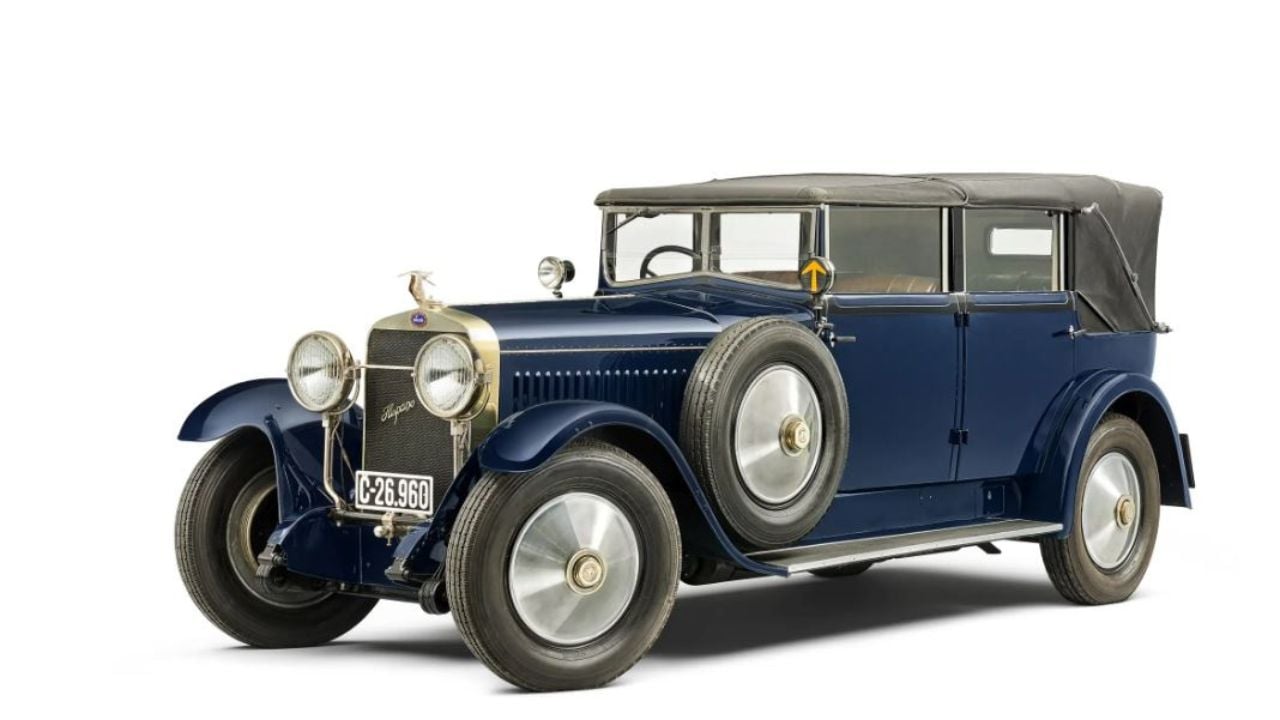
The Škoda Hispano-Suiza 25/100 HP was one of the most advanced luxury cars built in the Czechoslovak First Republic. Its importance came from real engineering, not only from presidential use or rarity.
Its engine was a roughly 6.6-liter inline-six with overhead-cam valve gear. The design drew heavily on Hispano-Suiza’s aircraft-engine experience, especially the company’s celebrated V12 aviation engines, and it used dual ignition in the same spirit of reliability and smooth operation.
The engine was rated at 100 PS, or about 99 to 100 hp depending on unit conversion. That may sound modest today, but it was serious output for a large luxury car in the 1920s, especially one tuned for smoothness, silence, and effortless progress rather than racing drama.
The car needed only a three-speed transmission because the large engine delivered flexible torque. The dashboard was also unusually complete for the period, with a full set of instruments at a time when many cars had little more than a speedometer and basic controls.
Hand-Built Luxury With Serious Engineering
The Škoda Hispano-Suiza was a large, imposing car. Its chassis had a 3,690-mm wheelbase, and many finished cars measured around 4.83 meters long, or about 15.8 feet, depending on bodywork. Complete cars could weigh around two tonnes or more once the coachbuilt body and luxury fittings were added.
Despite that size and weight, the car could reach roughly 130 km/h, or a little over 80 mph, depending on body style and conditions. Stopping performance was also unusually advanced for the era thanks to a brake servo with progressive assistance.
Fuel consumption was heavy by modern standards, as expected from a large 6.6-liter luxury car built for status and effortless travel rather than economy. The point was refinement, speed, and comfort over long distances, not cheap running costs.
Chassis production took place in Plzeň, after which rolling chassis were sent to Mladá Boleslav or outside coachbuilders for individual bodywork. Buyers could turn to respected names such as Brožík, Kellner Frères, Erdmann & Rossi, and J. O. Jech.
Quality mattered as much as engineering. Before the Czechoslovak-built cars were allowed onto the market, one example was sent for inspection. According to Škoda museum restorer Michal Velebný, the feedback praised the Czechoslovak-built cars highly, including their steering feel and gearshift precision.
A century later, the car’s importance is not only that it carried a president. The Škoda Hispano-Suiza marked the first passenger use of the winged arrow, joined Czech industry with Hispano-Suiza prestige, and showed how ambitious the young Czechoslovak auto industry could be.
This article originally appeared on Autorepublika.com and has been republished with permission by Guessing Headlights. AI-assisted translation was used, followed by human editing and review.