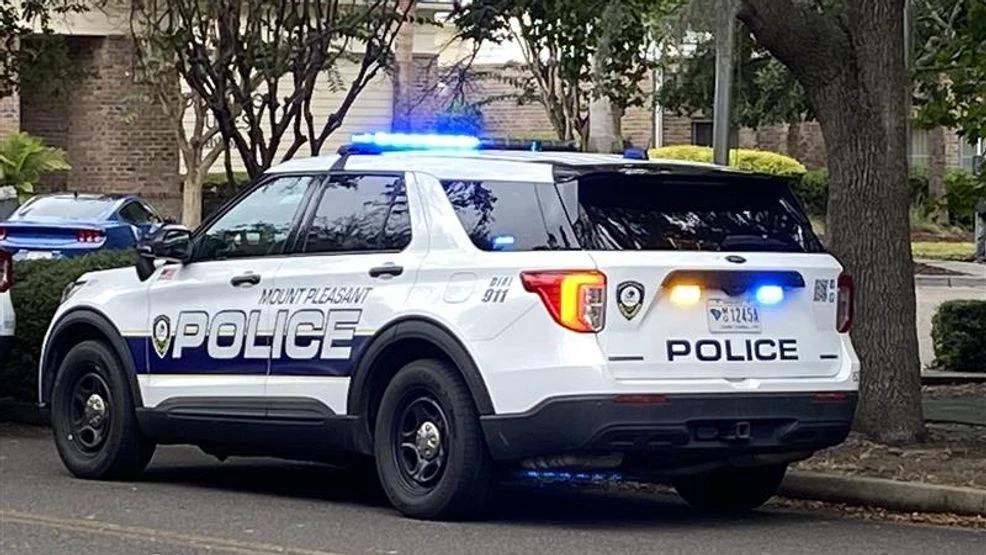
A routine speeding stop on a busy Mount Pleasant corridor turned into a full-blown confrontation Monday, ending with a woman in handcuffs, a police officer with a bite wound, and an open container rolling around somewhere in the car. What started as a 13-mph-over situation spiraled quickly, serving as a reminder that what happens after a traffic stop can matter just as much as what happens before one.
The driver, identified as Nicole Fugera, was pulled over on Coleman Boulevard after an officer clocked her vehicle doing 43 mph in a clearly marked 30 mph zone. That alone would have been a fairly unremarkable traffic stop, one of thousands that happen across South Carolina every day. But Fugera’s reaction upon being approached set the tone for everything that followed: she tossed her passport at the officer when asked for documentation. Not handed. Tossed.
Officers quickly noticed signs consistent with impairment: slurred speech, glassy eyes, and a strong smell of alcohol. When asked to step out of the vehicle, Fugera refused repeatedly. A second officer was called to the scene. Spike strips were deployed. Patrol cars were positioned to block any potential exit. It took a coordinated effort just to get her out of the car, with officers ultimately opening the door, cutting the ignition, and physically removing her.
The situation escalated further during the arrest itself. Fugera bit one officer on the hand and scratched another while resisting handcuffing. Even after being cuffed, she continued to resist. Inside the vehicle, officers found an open container of alcohol and several prescription medication bottles, adding more layers to an already complicated traffic stop. She later refused to submit a breath test at the police station.
What Exactly Were the Charges?
Fugera faces a serious list of charges following the incident. She was charged with driving under the influence as a second offense, assault on a law enforcement officer while resisting arrest, and possession of an open container of alcohol. She was also cited for not having a driver’s license on her person. The second-offense DUI designation is particularly notable, as South Carolina law treats repeat DUI offenses with significantly harsher penalties than a first-time charge.
Under South Carolina law, a second DUI conviction carries mandatory minimum jail time, higher fines, and a longer license suspension than a first offense. According to the South Carolina Department of Motor Vehicles, a second DUI can result in between five days and one year in jail, fines ranging from $2,100 to $5,100, and a license suspension of up to two years. The assault charge on top of that only compounds the potential legal consequences Fugera now faces.
Why Refusing a Breathalyzer Is Not a Get-Out-of-Jail-Free Card
One detail that stands out is Fugera’s refusal to submit to a breath test at the police station. Many people assume that refusing a breathalyzer protects them legally, and while it does prevent a direct blood alcohol concentration reading, it comes with its own consequences in South Carolina.
The state operates under implied consent laws, which means that anyone driving on South Carolina roads has already legally agreed to submit to chemical testing if lawfully arrested for DUI. Refusing that test results in an automatic six-month license suspension for a first refusal. For someone already facing a second DUI charge, the legal picture gets even cloudier. Prosecutors can also use a refusal as evidence of consciousness of guilt in court, meaning the refusal itself can be argued against the defendant at trial. It is rarely the clean escape drivers hope it will be.
What This Incident Tells Us About DUI Traffic Stops Gone Wrong
Traffic stops involving suspected impairment are among the most unpredictable situations law enforcement officers face. According to the National Highway Traffic Safety Administration, roughly 37 people die in drunk driving crashes every single day in the United States, underscoring why officers are trained to treat DUI stops with extra caution even before anything escalates.
What the Fugera stop illustrates is how quickly a situation can snowball when a driver chooses noncompliance at every step. The initial speeding offense was minor. The confrontation that followed, including physical resistance, biting an officer, and a full vehicle containment operation, was anything but. Legal experts often note that resisting arrest almost always results in additional charges that far exceed what the original offense would have produced. A speeding ticket and possibly a DUI charge became a multi-count criminal case in the span of one traffic stop.
The Broader Picture: Repeat DUI Offenses in South Carolina
South Carolina has historically ranked among states with higher rates of DUI-related traffic fatalities. The fact that Fugera is facing a second DUI charge, not a first, points to a pattern that public safety advocates consistently flag as a serious concern. Studies from the Insurance Institute for Highway Safety have found that repeat DUI offenders are disproportionately represented in fatal crashes compared to first-time offenders.
Advocacy groups like Mothers Against Drunk Driving have long pushed for stronger monitoring and intervention programs for repeat offenders, arguing that license suspension alone is not a sufficient deterrent. Ignition interlock devices, which require a driver to pass a breath test before a vehicle will start, are one tool South Carolina courts can require for DUI offenders, including for second offenses. Whether any such measures were previously in place in Fugera’s case has not been disclosed. What is clear is that Monday’s traffic stop on Coleman Boulevard ended in a way that was entirely preventable, for everyone involved.