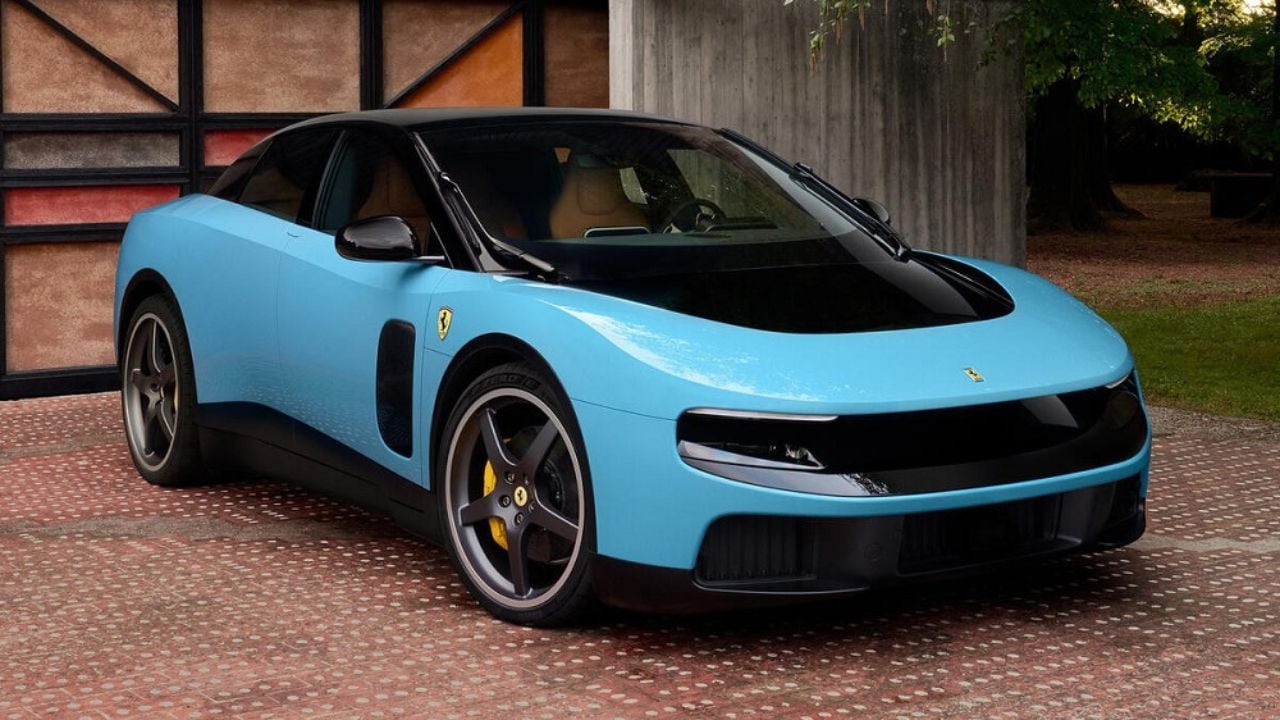
Ferrari has finally revealed the model that spent years surrounded by rumors, renderings, and spy photos. After months of carefully released details, the Italian company presented the Luce in Rome as the first fully electric car in Ferrari history.
Even the name points toward a new chapter. Luce, meaning light, now represents the future of a brand whose identity was built for decades around naturally aspirated V12 engines, high revs, and mechanical drama.
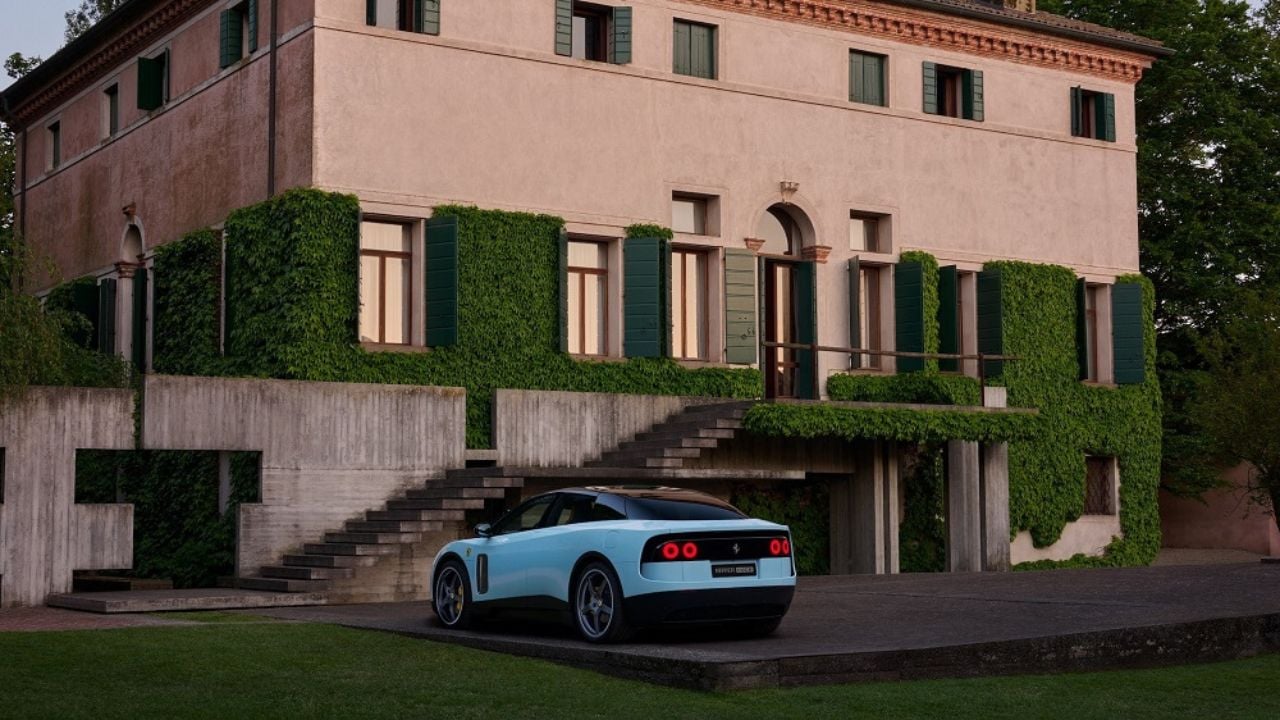
The location was not chosen by accident. Ferrari returned to Rome, the city where it scored its first professional racing victory in 1947, when Franco Cortese won the Gran Premio di Roma in the 125 S.
Almost eight decades later, the same city became the stage for the beginning of a completely different era for the Prancing Horse.
A Ferrari That Looks Unlike Any Ferrari Before It
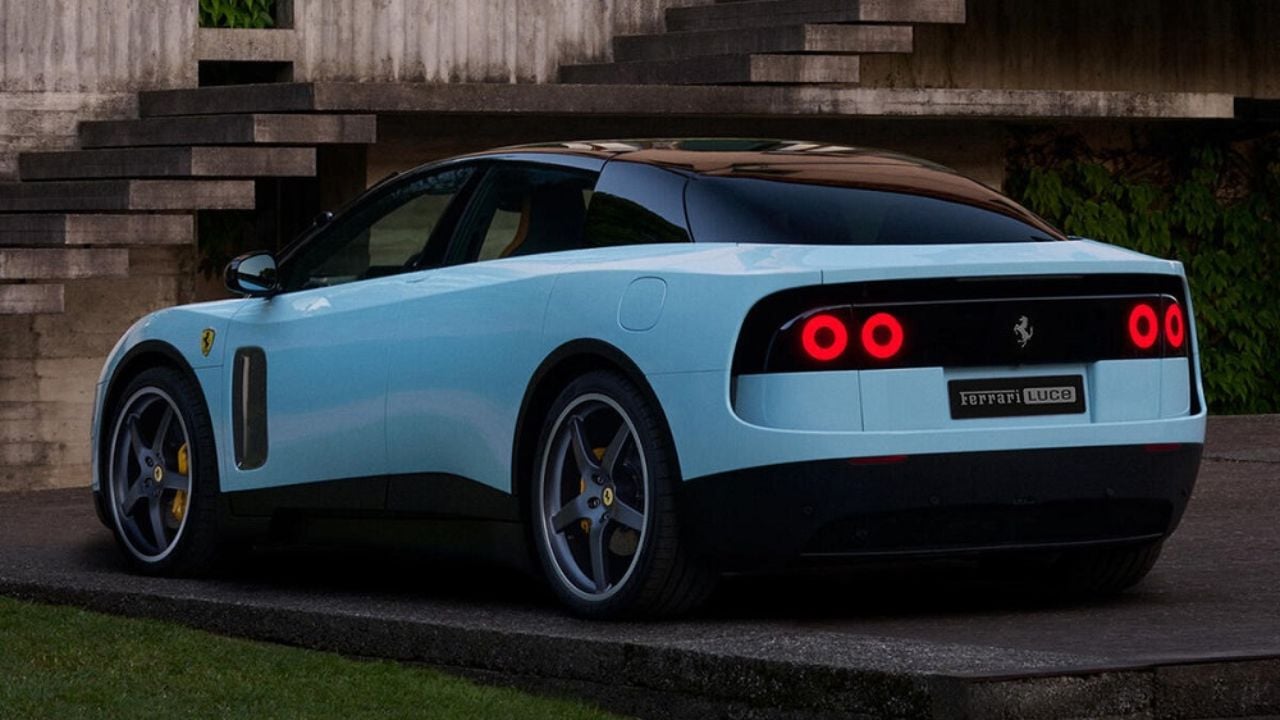
At first glance, the Luce is a car few people would immediately connect with traditional Ferrari design. Its styling approach is completely different from anything Maranello has shown before.
Clean surfaces, a minimalist silhouette, and a glasshouse-style body dominate the exterior. The front and rear lighting panels are finished in a transparent style, giving the car a much more futuristic appearance.
Only the rear lights bring a subtle link to familiar Ferrari history. Their inspiration comes from models such as the 360 Modena and 458 Italia, adding a small touch of recognizable Maranello character.
Under the body is a completely new electric platform developed entirely in house. The powertrain uses four electric motors, one for each wheel, with permanent magnets and a Halbach layout for maximum efficiency.
Four Motors And More Than 1,000 Horsepower
Total output is an impressive 1,035 HP, sent to all four wheels through the first electric all-wheel-drive system in Ferrari history. The performance figures are predictably extreme.
The Luce accelerates from 0 to 62 mph in just 2.5 seconds and reaches 124 mph in 6.8 seconds. Top speed is 193 mph, which puts Ferrari’s first EV among the fastest production electric cars in the world.
Energy comes from a 122 kWh battery made from 210 cells, enough for a driving range of up to about 329 miles. The system supports fast charging at up to 350 kW, allowing much shorter charging stops despite the battery’s large capacity.
Ferrari also wanted the Luce to feel like more than a fast electric car. Engineers focused heavily on driving dynamics, with active suspension borrowed from the F80 and independent rear wheel control for traction and energy regeneration.
A Heavy GT With Serious Chassis Technology
The goal is for the Luce to feel closer to a mid-engine V12 Ferrari than a heavy EV, even though the car weighs about 4,982 pounds.
Weight is one of the biggest talking points around this model. Ferrari has managed to keep compact proportions and a drag coefficient of just 0.254, but the Luce is still a large electric grand tourer.
The car also uses massive wheels, with 23 inch rims at the front and 24 inch rims at the rear. They are the largest wheels ever fitted to a production Ferrari.
That combination shows how far Ferrari is willing to go with its first EV. The Luce is built around speed, range, design, and technology, but it still has to carry the emotional weight of being the company’s first electric production car.
A Cabin Defined by Texture and Grandeur
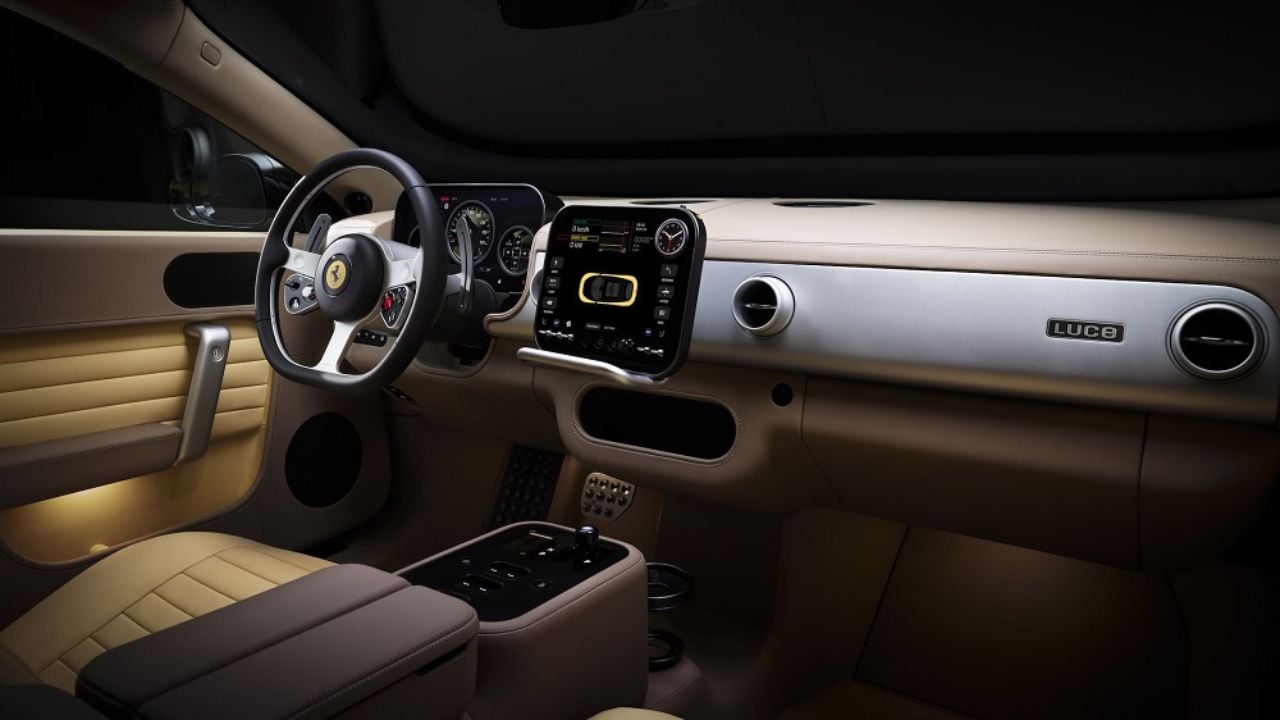
The cabin may be the biggest philosophical shift of all. The interior was shaped with input from former Apple designers Jony Ive and Marc Newson, who worked with Ferrari for more than five years to rethink the driving experience.
The result blends digital minimalism with mechanical interaction. Unlike many modern EVs, the Luce keeps real buttons, switches, rotary controls, and metal toggles that create a stronger physical connection with the car.
The three-spoke steering wheel is made from a single piece of recycled aluminum with an anodized finish. Magnetic paddles behind the wheel allow the driver to manually control torque delivery and regenerative braking.
Ferrari clearly wanted the cabin to feel advanced without becoming cold or anonymous. That matters for a brand whose cars have always depended on emotion as much as engineering.
Ferrari Still Wants Theater In The Electric Era
One of the most unusual details is the instrument panel, which physically moves with the steering wheel so the driver always has key information in sight. The central analog display combines speed and battery status, while the left display shows e-Manettino driving mode settings and regeneration level.
Ferrari has even kept some theatrical drama for acceleration. An aviation-inspired overhead console houses a physical lever for Launch Mode. Once activated, the stopwatch on the instrument cluster changes from a standard 60-second display to a five-second countdown.
Since the electric powertrain is almost silent, Ferrari also developed a new sound identity for the car. A 21-speaker, 24-channel, 3,000-watt audio system uses Ferrari Audio Signature technology with individual sound optimization and dynamic cabin acoustic compensation.
Official pricing has not been confirmed yet, but early industry reports suggest the Luce will start at about $610,000. That makes it clear Ferrari’s first EV is not intended as a mass-market electric car. It is a technological statement and an exclusive symbol of Maranello’s next era.
This article originally appeared on Autorepublika.com and has been republished with permission by Guessing Headlights. AI-assisted translation was used, followed by human editing and review.