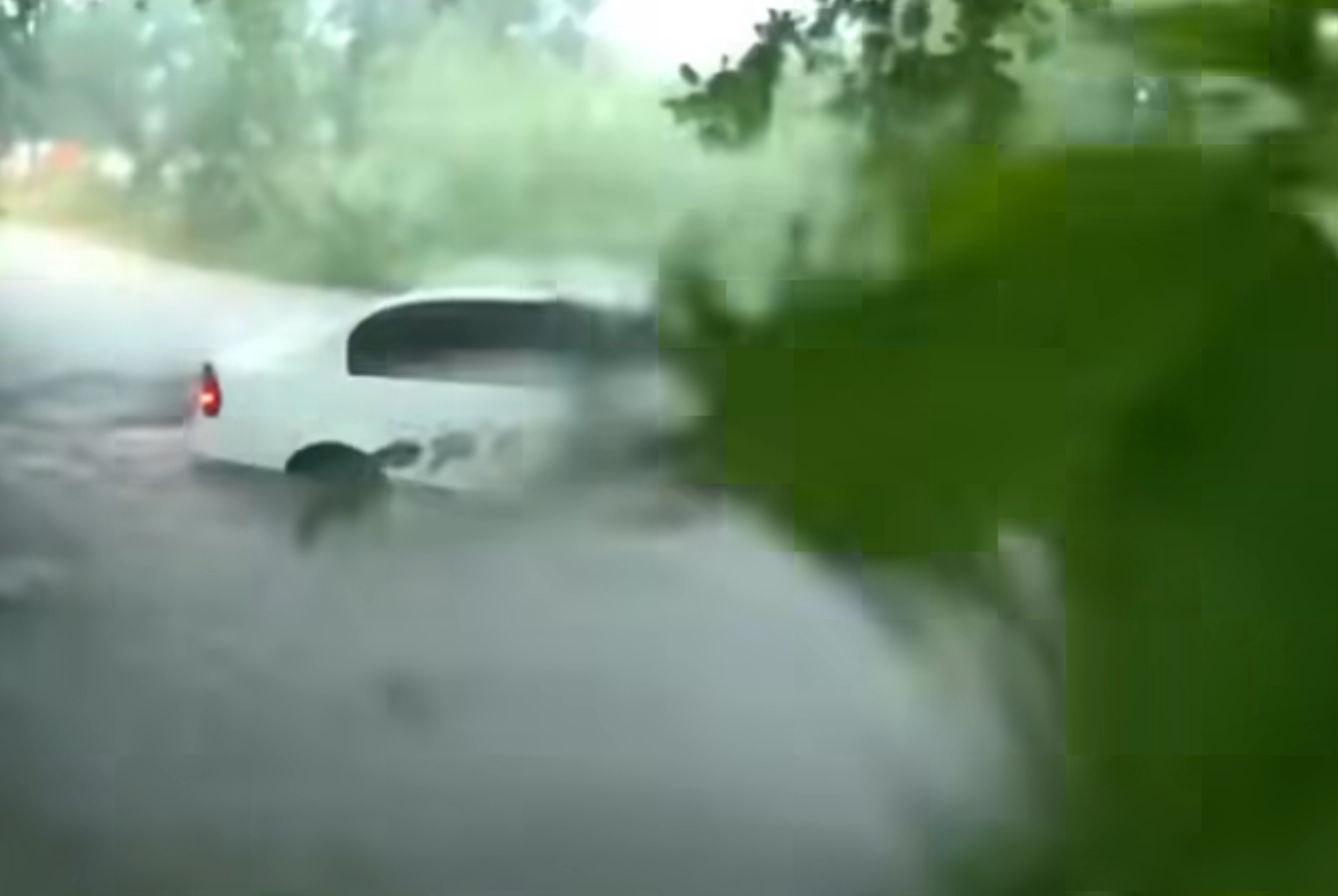
A frantic scene played out in Beeville, Texas on Saturday when a vehicle became trapped in rapidly rising floodwaters at a low-water crossing, with an infant on board. The rescue was captured on police video and shared by the Beeville Police Department, showing officers and firefighters wading into the flooded roadway to retrieve the baby, still secured in its carrier, while other responders helped the remaining vehicle occupants to safety. Miraculously, nobody was hurt.
The car had entered a flooded low-water crossing in Beeville, a city located roughly 100 miles southeast of San Antonio in Bee County. Heavy rain had moved into the area so quickly that authorities had not yet had time to set up barricades at the crossing. The local fire chief was on the scene and attempted to wave the driver off before they entered the water, but the driver did not see the warning in time. Moments later, the rushing creek did the rest.
Once the vehicle was in the water, control was gone. The current pushed the car downstream and first responders moved quickly, entering the floodwaters themselves to reach the occupants. In the video, a panicked driver handed the infant over through the passenger side door. One responder immediately covered the baby with his coat to shield the child from the rain. The imagery, though alarming, ended with everyone safe.
The Beeville Police Department used the moment to issue a pointed reminder about low-water crossings, noting that conditions can shift from seemingly manageable to genuinely life-threatening within minutes. “Flood water is nothing to gamble with,” the department stated, adding that it does not take much moving water to push a vehicle off a roadway, and that by the time a driver realizes how dangerous things have gotten, it can already be too late.
What Makes Low-Water Crossings So Dangerous
Low-water crossings are built at or just above the surface of the waterways they cross, meaning they are among the first structures to go under during heavy rain. Unlike bridges, they offer no elevation buffer. When a creek rises, the crossing goes with it, often faster than drivers expect.
The National Weather Service has long warned that conditions at these crossings can deteriorate in a matter of minutes. Water that looks shallow and slow-moving may actually be swift and deep enough to sweep a vehicle off the road entirely. Safety officials note that just six inches of moving water can knock an adult off their feet, while 12 to 18 inches is enough to carry away most vehicles, including SUVs and pickup trucks. The car involved in Saturday’s Beeville incident weighed far more than a person, and it still moved like it weighed nothing once the water got underneath it.
Texas has approximately 9,000 low-water crossings statewide, according to the State Flood Plan. That is a lot of points where roads dip down to meet waterways with little or no elevation protection, scattered across a state that is no stranger to fast-moving storms and flash flood events.
Texas Has a Long and Complicated History With Flood Deaths
Saturday’s incident in Beeville did not happen in a vacuum. Texas consistently leads the nation in flood-related fatalities, and a significant portion of those deaths involve vehicles and flooded roadways. The National Weather Service has reported that 80 percent of flood-related deaths in South Texas occur as a result of people driving through low-water crossings, walking along banks of flooded areas, or playing in floodwaters.
The summer of 2025 alone made that point with heartbreaking force. In San Antonio, fast-moving floodwaters swept vehicles off a Loop 410 access road last June, killing 13 people in a single morning and contributing to the 15 flood-related deaths reported across the city in 2025, making it the deadliest flooding year in recent San Antonio history. And that was before the July 4th weekend floods in Central Texas, which resulted in a death toll of at least 104 people.
Nationally, flooding is the second leading weather-related cause of death in the United States, following heat, with NOAA recording an average of 145 deaths annually over the past decade. The message has been repeated for decades, and still the crossings keep claiming lives. The Beeville rescue was a reminder that the stakes are real, even when the outcome is a good one.
What We Can Learn From the Beeville Incident
The details of this rescue are worth sitting with for a moment, because they outline almost every factor that makes low-water crossing events so hard to prevent. The rain moved in fast. The barricades were not yet up. A well-intentioned fire chief tried to wave the driver off but was not seen in time. None of those gaps were the result of negligence so much as the simple, brutal speed of a flash flood.
According to TxDOT, most flood-related deaths in Texas happen in vehicles, often when motorists attempt to drive through water-covered roadways, and even six inches of swiftly moving water can cause drivers to lose control and conceal hazards such as debris, downed power lines, or road damage. The lesson is not just “be careful.” It is “do not enter,” full stop, even if the water looks shallow.
Beeville police specifically urged drivers to slow down during heavy rain and pay close attention near creek crossings and other roadways known to take on water. “No errand, shortcut, or destination is worth risking your life or your family’s safety,” the department said. That sentiment sounds simple, but the scenario on Saturday shows exactly how quickly a routine drive can become a rescue operation. A baby in a carrier. A panicked parent. Officers wading into a flooded creek.
The National Weather Service’s long-running “Turn Around, Don’t Drown” campaign has made the phrase a near-reflex in Texas, but studies show some motorists still bypass barricades on flooded roads, and in this case, there were no barricades yet to bypass. The conditions were simply faster than the response. That is not uncommon in a state with thousands of low-water crossings and weather systems that can drop inches of rain before anyone has time to set up a cone.
What to Do If You Encounter a Flooded Crossing
The most important thing to remember is that water depth at a crossing is almost impossible to judge from a moving car. What looks like a minor inconvenience can be two feet of fast-moving water by the time your front tires are in it. TxDOT advises drivers to check DriveTexas.org during heavy rain to stay informed about road and weather conditions, and to follow all closures and barricades without exception. Drivers who ignore barricades face fines of up to $2,000 and up to 180 days in jail.
If a vehicle does become trapped in floodwaters, the advice from safety experts is to get out quickly, before the water rises further and makes the doors impossible to open. Roll down a window while you still can. Move to the roof if necessary. Do not wait for the car to stop moving before trying to exit.
The Beeville rescue ended the way everyone hoped it would. The baby is safe, the driver is safe, and the first responders who waded into that flooded creek to help are already back at work. But the story could have gone a different direction in seconds, and that is exactly the point the Beeville Police Department was trying to make when they shared the video. The water does not care about your schedule.