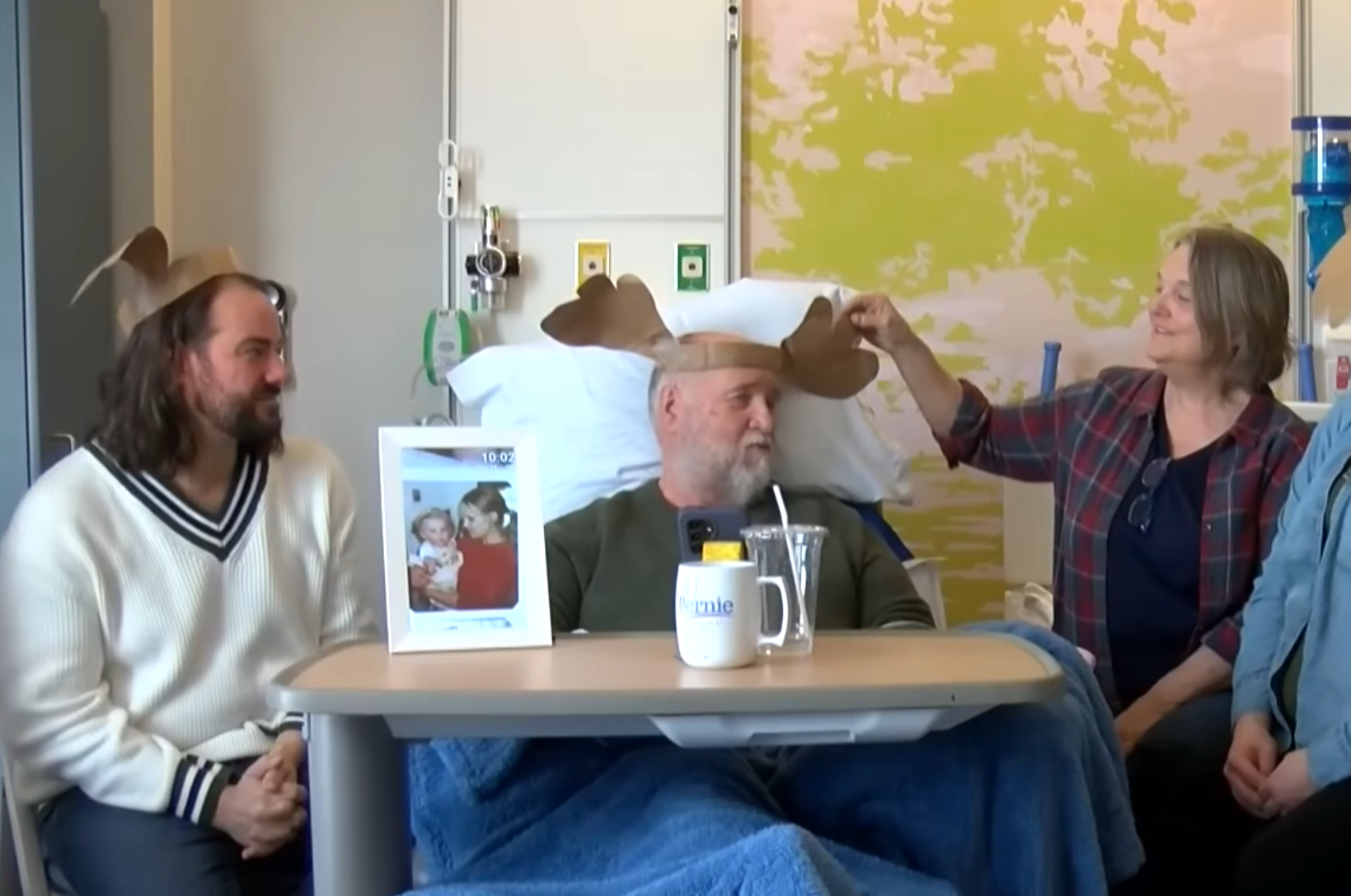
Life in northern Minnesota comes with its share of hazards: brutal winters, remote roads, and the occasional thousand-pound animal stepping out of the dark at the worst possible moment. But even by those standards, what happened to Paul Kessen of Ely is hard to believe. He was a patient being transported by ambulance when the vehicle struck a moose on Highway 169. He survived. And then, in what can only be described as the most complicated plot twist in recent medical history, the scans ordered after the crash revealed something nobody saw coming: a mass in his brain.
Kessen is no stranger to his community. A longtime teacher and city council member in Ely, he is the kind of person who shows up, decade after decade, in the lives of the people around him. His family says he is a devoted dad and grandfather, and the outpouring of community support that followed the news was enormous but, in retrospect, made perfect sense. As his daughter put it, it was not that surprising because her father has dedicated his life to service and is a genuine pillar of the community.
Now, Paul is in neuro rehabilitation, working to regain strength and motor control after what has been a sudden and disorienting change to his everyday life. One moment you are up and moving, and the next you are navigating the slow, difficult work of recovery in a hospital. His family has been candid about how jarring that shift can be, and equally candid about something bigger: their awareness that not everyone facing a similar medical crisis has the same support system or financial footing they do.
That kind of honesty is rare, and it says something about who the Kessens are. Rather than focusing only on their own struggle, they are using Paul’s story as a reminder that community care matters and that the healthcare safety net in this country has serious gaps. Even with their relative stability, the financial strain has been significant enough that they have found themselves thinking about what others in tighter circumstances must be going through.
How the Crash Happened: A Middle-of-the-Night Encounter on Highway 169
According to the Ely Area Ambulance Service and Minnesota State Patrol, the crash happened just after midnight on April 27, as the Ely Area Ambulance was transporting a patient from Ely-Bloomenson Community Hospital to St. Mary’s Hospital in Duluth. A cow moose was standing in the westbound lane of Highway 169, about four miles west of Ely. The ambulance driver spotted the animal, hit the brakes, and shouted a warning to those in the back before impact. The vehicle struck the moose at approximately 45 mph, sending the animal into the windshield. The airbag deployed, briefly blinding the driver, and the ambulance veered off the road into a ditch.
Emergency responders from multiple agencies, including the Ely Police Department, the St. Louis County Sheriff’s Office, Morse Fire and First Responders, and the State Patrol, all responded to the scene. The patient was carefully extracted on a backboard and transported to the local hospital. According to the ambulance director, there were no reports of serious injuries to the crew or the patient at that time. But the scans conducted at the hospital after the crash told a different story for Kessen, whose brain mass was only discovered because of the accident.
The Danger of Moose on Northern Minnesota Roads
If there is one thing northern Minnesota drivers know, it is that hitting a moose is nothing like hitting a deer. Moose can stand nearly seven feet tall and weigh up to 1,500 pounds, and their long legs mean that in a collision, the body tends to go up and over the hood directly into the windshield. According to data compiled by wildlife safety researchers, collisions at highway speeds carry a 52% chance of serious injury. Studies in Canada found that moose collisions resulted in nearly twice as many deaths as deer collisions over a 15-year period.
In northeastern Minnesota specifically, research has documented dozens of moose-vehicle collisions every year, with crashes happening most frequently at night. Highway 169, the very road where Kessen’s ambulance went off the road, has seen multiple incidents involving moose over the years. The combination of rural roads, heavy forest cover, and low visibility after midnight creates conditions where these encounters are genuinely unpredictable and hard to prevent. Wildlife fencing and improved signage can reduce risk, but on long stretches of northern highway, there is only so much that can be done.
What Paul’s Story Teaches Us About Health Care, Community, and the Cost of a Crisis
The Kessen family has been remarkably open about a dimension of this story that often goes unspoken: the financial reality of a sudden, serious medical event. Paul’s daughter noted that even though their family is in a relatively stable position when it comes to healthcare, the strain has still been real, and the thought of what others without that stability must face has been overwhelming to consider.
It is a window into something that affects millions of Americans. A medical emergency does not come with advance notice or a payment plan. Neuro rehabilitation, imaging, hospitalization, and follow-up care add up fast, and for families without strong insurance coverage or savings, a situation like Paul’s can mean financial devastation on top of physical trauma. The Kessens are raising that point not to complain but to advocate, asking people to look around at their neighbors and ask who might need help.
Paul himself, even in the middle of all of this, has apparently not lost his sense of humor. His family says he is still cracking jokes, still focused on the people caring for him, and still convinced that something good can come out of this experience for more people than just his own family. That kind of resilience, in a man who spent decades giving to his community, seems fitting.
How to Support Paul Kessen and Others Like Him
Community members in and around Ely have already mobilized significant support for the Kessen family, and that response reflects the kind of small-town cohesion that Paul himself helped build over a lifetime of service. For anyone looking to help, checking in with local community organizations, hospital foundations, or crowdfunding campaigns associated with the family is a good starting point.
But the Kessens are also pointing outward, asking people to think beyond their own situation. Paul’s message is simple: look at the people around you, figure out who needs a hand, and give it. In a country where a single unexpected ambulance ride can reshape a family’s finances, that call to mutual aid is more than sentimental. It is practical. And coming from a man who was literally in an ambulance that hit a moose and came out with a brain diagnosis, it carries a kind of hard-earned weight that is difficult to argue with.