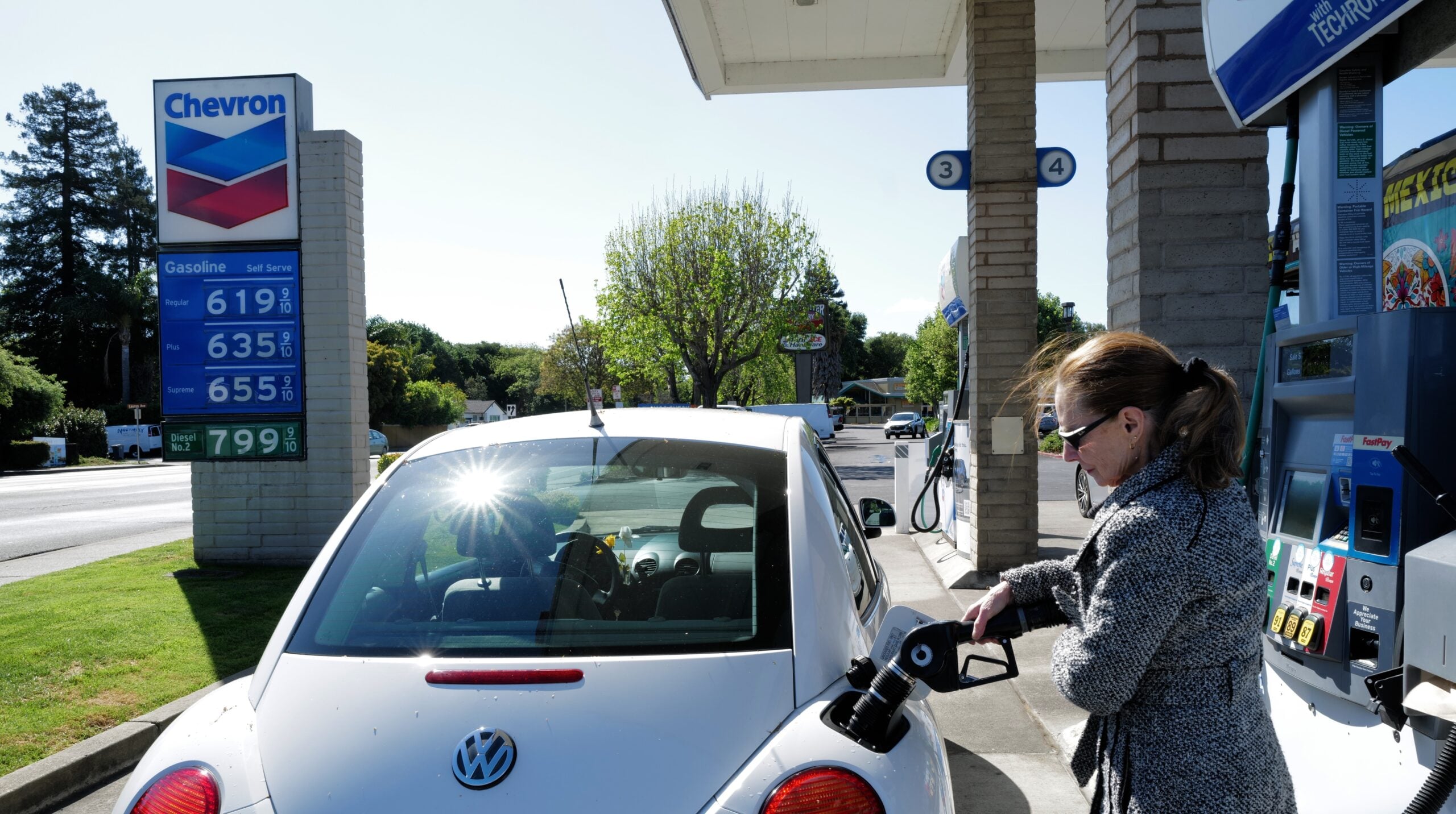
As Memorial Day travelers prepare to hit the road across California, another summer tradition is already heating up right alongside the pavement: the annual fight over who is responsible for the state’s sky-high gas prices.
This year, the battle exploded directly onto social media after Gavin Newsom publicly told Californians to avoid Chevron Corporation gas stations during one of the busiest travel weekends of the year.
The unusually direct warning came as California drivers are once again staring at some of the highest gas prices in the nation, with AAA reporting statewide averages above $6 per gallon ahead of Memorial Day weekend.
Newsom’s office argued that many unbranded gas stations receive fuel from the same refineries and distribution systems as major brands, while still meeting California’s strict detergent and emissions standards. The post also accused “Big Oil” of profiting from instability tied to growing tensions involving Iran and rising global oil prices.
Californians, if you’re hitting the road this holiday weekend, be sure to AVOID Chevron.
Pro tip: unbranded gas comes from the same refineries, storage tanks, and pipelines, and it meets the same state standards to keep your engine running clean, even if it doesn’t have a fancy… pic.twitter.com/FMTnNHE0Bn
— Governor Newsom Press Office (@GovPressOffice) May 21, 2026
Chevron quickly pushed back.
The company argued that California’s taxes, environmental regulations, refinery closures, and energy policies are the real reason prices remain so much higher than the national average. Chevron spokesperson Ross Allen also noted that many Chevron-branded stations are independently owned franchises that set their own retail prices.
That response is part of a broader campaign Chevron has reportedly been running at stations across California, with signs placing blame on Sacramento policies for rising fuel costs.
So Why Is Gas So Expensive in California?
The frustrating reality for drivers is that there is not one single answer.
California gas prices are influenced by several overlapping factors at the same time, which is why the debate becomes so politically heated every summer.
California drivers pay some of the highest fuel taxes in the country. The state also requires special cleaner-burning gasoline blends that are more expensive to produce than fuel sold in many other states.
At the same time, California’s fuel infrastructure is relatively isolated compared to other parts of the country. When refinery outages or closures happen, the state cannot always quickly import matching fuel blends from elsewhere, which can make price spikes even worse.
Global oil markets also play a major role. Rising tensions in the Middle East and fears surrounding oil shipments through the Strait of Hormuz have already pushed crude oil prices upward, affecting gasoline costs nationwide.
Then there is the retail side of the argument.
Brand-name stations like Chevron often charge noticeably more than nearby independent stations, even when the underlying gasoline may come from similar regional supply systems. Whether that premium is worth paying depends on the driver, the station, and the additives being offered.
How Drivers Can Actually Save Money This Weekend
While politicians and oil companies continue fighting online, drivers heading out for road trips can still take a few practical steps to save money at the pump.
Using apps like GasBuddy, Upside, or even warehouse club apps can help drivers compare nearby prices before filling up. In some California cities, stations located just a few blocks apart can differ by 40 to 80 cents per gallon.
Reward programs tied to grocery stores or fuel chains can also make a noticeable difference over a long holiday weekend, especially for larger SUVs, trucks, and RVs.
Driving habits matter too.
Aggressive acceleration, excessive speeding, and unnecessary idling can quickly burn through fuel during heavy holiday traffic. Keeping tires properly inflated and removing extra cargo weight can also improve fuel economy more than many people realize.
Drivers should also remember that most vehicles do not actually require premium gasoline unless specifically recommended by the manufacturer. Paying extra for premium fuel in a vehicle designed for regular gas usually does not improve performance enough to justify the added cost.
The Internet Probably Won’t Solve This One
The political fight over California gas prices is unlikely to cool down anytime soon, especially as summer travel season ramps up and fuel prices remain painfully high.
Some drivers will blame Sacramento. Others will blame oil companies. Most people will probably blame whoever they were already arguing with online before they stopped for gas.
But regardless of where drivers land politically, one thing is certain: debating energy policy in the comments section probably is not going to lower anyone’s fuel bill before Monday morning.
For now, the best most travelers can do is shop smart, drive efficiently, and get out there and enjoy the holiday weekend anyway.