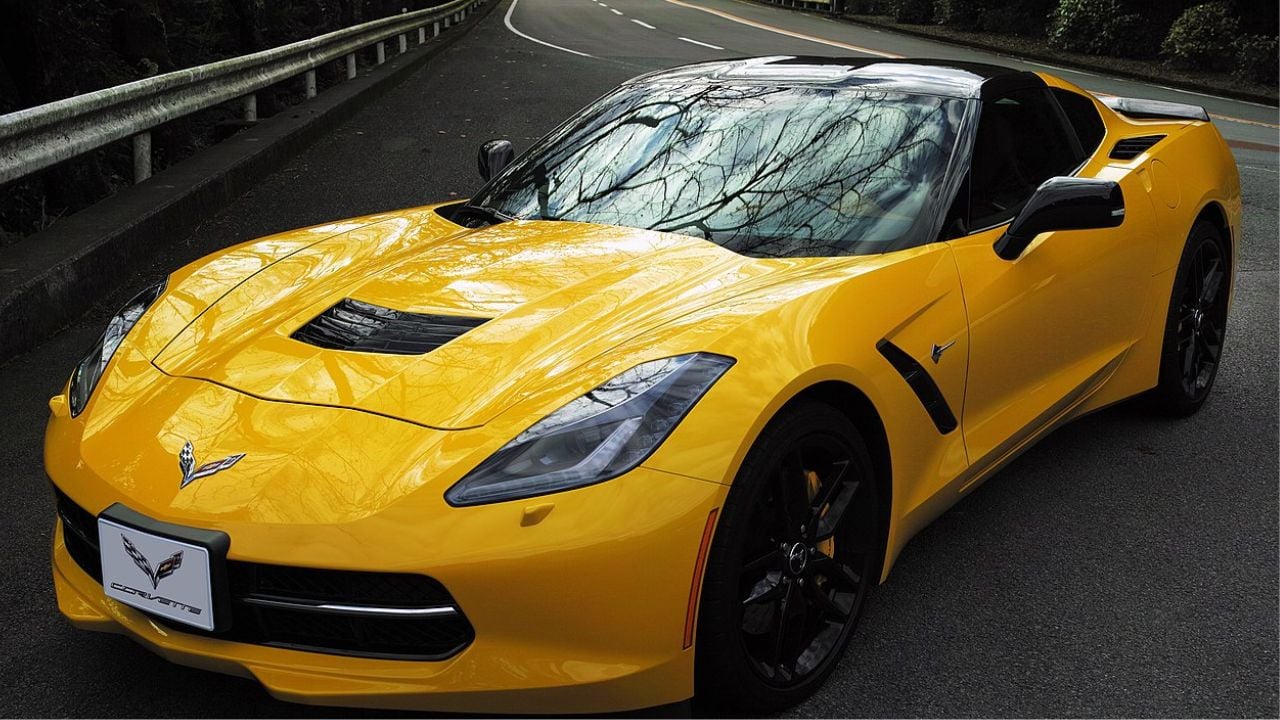
A 21-year-old Washington man apparently decided that losing a stolen sports car to law enforcement was not the end of the story. Duop Tiet Pidor of Pierce County is now facing a fresh round of criminal charges after investigators say he did something that takes a remarkable amount of audacity: he allegedly broke into the tow yard where his impounded Corvette was being stored and drove it away in the middle of the night.
This is not a short story. The whole ordeal spans nearly two months, involves a high-speed chase, a PIT maneuver, a suspicious Tesla, and a trail of cellphone data that prosecutors say put Pidor right at the scene. It is the kind of case that makes you wonder, at multiple points, what the plan actually was.
Pidor is now charged in Pierce County Superior Court with second-degree burglary, motor vehicle theft, and attempting to elude a pursuing police vehicle, according to court documents. The charges paint a picture of someone who, rather than cutting his losses after a dramatic arrest, allegedly went right back to work.
The vehicle at the center of all of this is a yellow 2014 Chevrolet Corvette, which is, to be clear, not exactly a car that blends into a crowd. Bright yellow. No license plates. Hauling through traffic at high speed. Not a subtle getaway vehicle by any stretch.
How It All Started: A High-Speed Chase on SR-410
The trouble began on January 4, when a Washington State Patrol trooper spotted the plateless yellow Corvette heading east on State Route 410 in Pierce County. When the trooper hit the emergency lights, the driver hit the gas instead.
According to the patrol report, the Corvette tore through traffic, crossed double yellow lines, and at one point drove directly against oncoming traffic. The chase ended when the trooper executed a PIT maneuver near Valley Avenue East, forcing the Corvette off the road and onto an embankment where it got stuck.
Pidor was arrested at the scene. He reportedly told investigators he had bought the car in Oregon and that it had previously been rented out to other people. Whether that explanation was meant to be convincing is unclear, but he was booked into the Pierce County Jail regardless.
The Corvette was impounded and hauled off to Hometown Towing and Recovery in South Prairie for safekeeping. That should have been the end of it.
Round Two: The Tow Yard Burglary
It was not the end of it.
On January 30, employees at Hometown Towing showed up to find the Corvette was gone. Someone had cut through the locks on the gates overnight, driven onto the secured lot, and left with the car. Surveillance footage captured the moment: a white or light-colored Tesla pulled up around 2:46 a.m., dropped off a suspect who ran toward the lot, and then drove away as the Corvette rolled out behind it.
Tire tracks led away from the property. The locks were on the ground. The Corvette was nowhere to be seen.
Investigators got to work, and what they found in the weeks that followed was pretty damaging for Pidor. A search warrant served on T-Mobile produced cellphone location data showing his phone had been in the vicinity of the tow yard at least nine times between January 15 and January 30. Several of those visits happened late at night or in the early morning hours, which investigators described in court documents as consistent with surveillance or scouting activity.
In other words, according to prosecutors, Pidor allegedly spent two weeks quietly watching the place before making his move.
The Digital Trail That Led Back to Pidor
Modern criminal investigations increasingly hinge on cellphone data, and this case is a solid example of why that matters. The location records did not just place Pidor near the tow yard during the alleged scouting runs. They also placed his device near the tow yard shortly before the burglary took place and later near a Seattle location where the King County Sheriff’s Office recovered the stolen Corvette.
That is a fairly complete geographic story told entirely by a phone that was presumably just riding along in someone’s pocket.
On top of the digital evidence, tow yard employees reportedly told investigators that Pidor and members of his family had contacted the business multiple times after the impound and had even visited in person to collect personal belongings from the Corvette. That level of ongoing contact with the facility holding the car helped investigators connect Pidor to the scene even before the phone records came in.
Prosecutors filed the burglary and motor vehicle theft charges in May, several months after the original eluding charge was filed following the January chase.
What This Case Teaches Us About Modern Investigations
There is a broader lesson here that goes beyond one flashy car and one very eventful January. Digital forensics have fundamentally changed what investigators can piece together after the fact. A decade ago, placing a suspect at a specific location at 2 a.m. on nine separate nights would have required witnesses, receipts, or security footage from each location. Today, a single search warrant to a wireless carrier can produce a map of nearly everywhere someone has been.
For anyone watching this case unfold, the takeaway is straightforward. Cellphones are extraordinarily good witnesses. They do not forget, they do not get nervous on the stand, and they do not contradict themselves. The data showing repeated late-night visits to a tow yard, followed by a burglary at that same tow yard, is the kind of evidence that is very hard to explain away.
The case also highlights how investigators can use behavioral patterns, such as the multiple contacts with the tow company and the in-person visits to retrieve belongings, as supporting context that helps tell a more complete story in court. Charges like these are rarely built on one piece of evidence. They are built on a pattern, and patterns have a way of emerging when investigators know where to look.