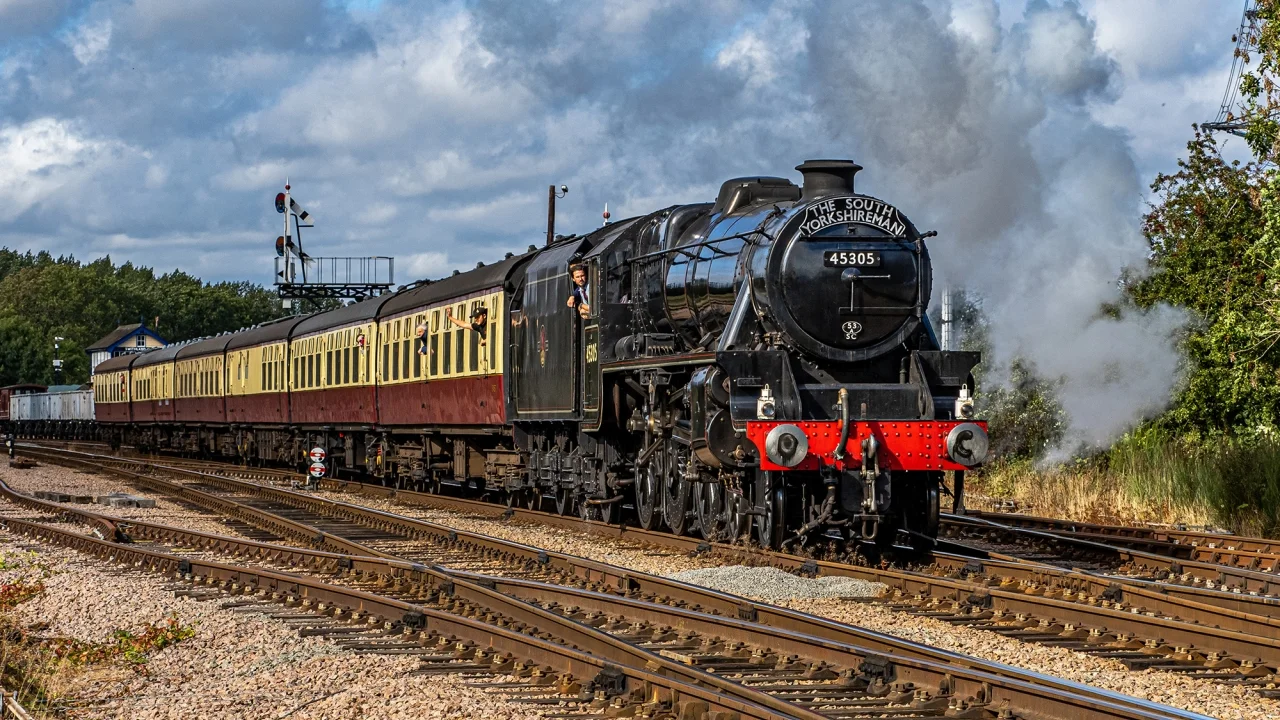
If you were to take a trip to the United Kingdom, you might find that there is a curious love for historic steam engines and steam railways. In the 1960s, Britain’s railways went through massive changes, as lines were shut, steam engines were replaced by diesel and electric power, and modernization swept through the system. While it did decimate Britain’s rail network, there was a silver lining to all of this.
Preservationists moved in to not only preserve parts of some railways, but also save well over 200 steam engines from scrap, to ensure that the age of steam didn’t die. In 2026, in the midst of economic challenges far and wide, these railways are still going strong, offering days out for families and enthusiasts, and rekindling an age that otherwise would have become a distant memory. What might sound incredibly niche is actually a multi-million dollar industry.
Along with the routes themselves, a huge array of steam engines has been saved. Many will have heard of the Flying Scotsman, but other locomotives, such as those used for heavy freight, have also been saved from scrap. Most of these engines were bought from Barry Scrapyard in Wales, with over 200 rescued and preserved from this vast location.
There are a large number of heritage railways in Britain, and some of them stand out a bit more than others. It could be down to length, the scenery, the locomotives, or other factors, but each one has a unique selling point. These are some of the best heritage steam railways in Britain, and why they are worth a visit.
Britain’s Only Heritage Double-Track Mainline
Running from Loughborough to just outside of Leicester in Leicestershire, the Great Central Railway is possibly the most unique heritage line in the United Kingdom. It is the only preserved railway to have double track, in other words, two rail lines running past each other. It is a preserved mainline, whereas other heritage railways are either single-track branchlines or the double track has not been reinstated.
The heritage railway runs for eight miles from Loughborough to Leicester North, located just outside the city of Leicester. This part of the line was originally part of the original Great Central Railway and its London extension, running from Marylebone station in London, through to Leicester, Nottingham, and beyond. The mainline closed in 1966.
Now, six miles of the preserved eight-mile line retain the double track, with possible plans to reinstate the last two miles from Rothley to Leicester North in the pipeline. An ambitious project is also underway to bridge a half-mile gap from Loughborough to the Great Central Railway (Nottingham), which runs on nine further miles of the original line. This gap was severed when the line was shut by the removal of bridges and an embankment.
The Longest Heritage Line in the Country
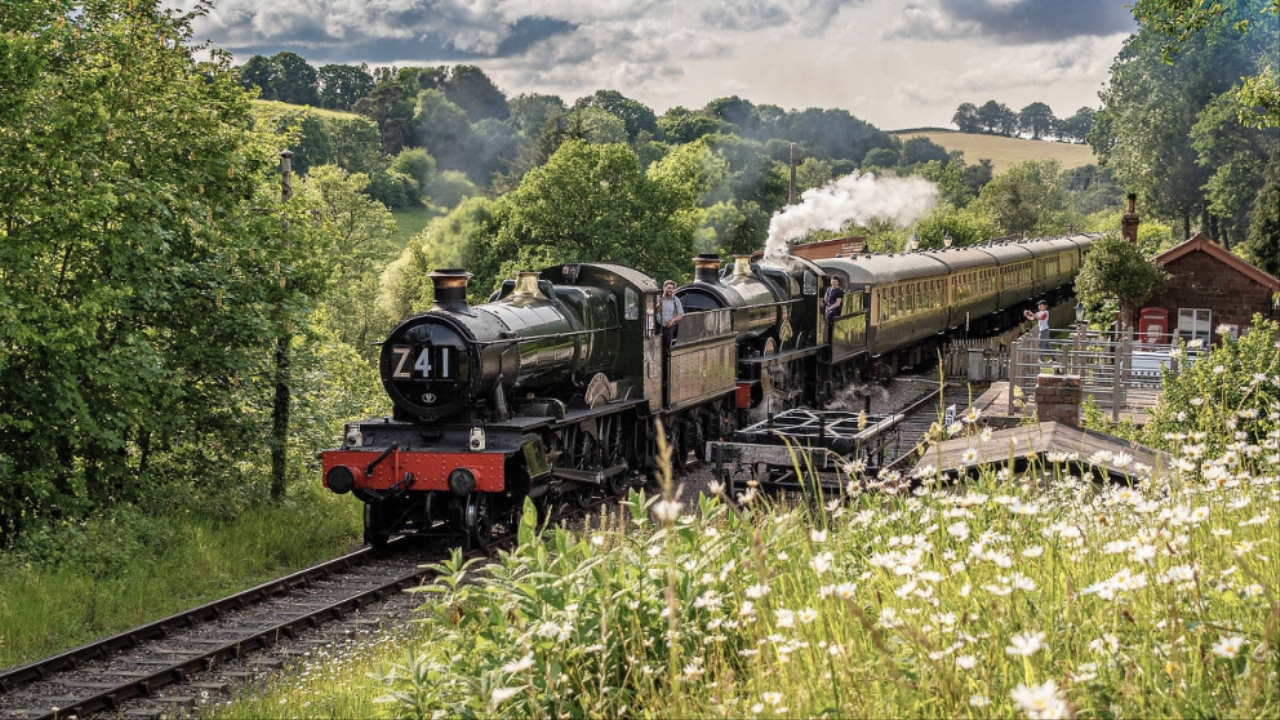
Running from Minhead to Bishops Lydeard, the West Somerset is one of just a few railways in Britain preserved in its entirety. The line runs for 22 miles, thanks to a two-mile extension to Norton Fitzwarren connecting the heritage line to the modern mainline. In recent years, the former Great Western Railway (GWR) route has been the home of various GWR Manor class steam locomotives, including its own No.7828 ‘Odney Manor’.
The line runs along the coast and deep into the Quantock Hills, offering superb contrasts in scenery. Add in the steep gradients along the way, and the WSR is a real challenge for the steam locomotives and those that operate them. The line originally opened in 1862, and it was in operation until 1973. Preservationists moved in shortly after, and it reopened from Minehead to Williton in 1976, roughly halfway along the line. The line finally reopened to Bishops Lydeard in 1979.
Winding Through the Shropshire and Worcestershire Countryside
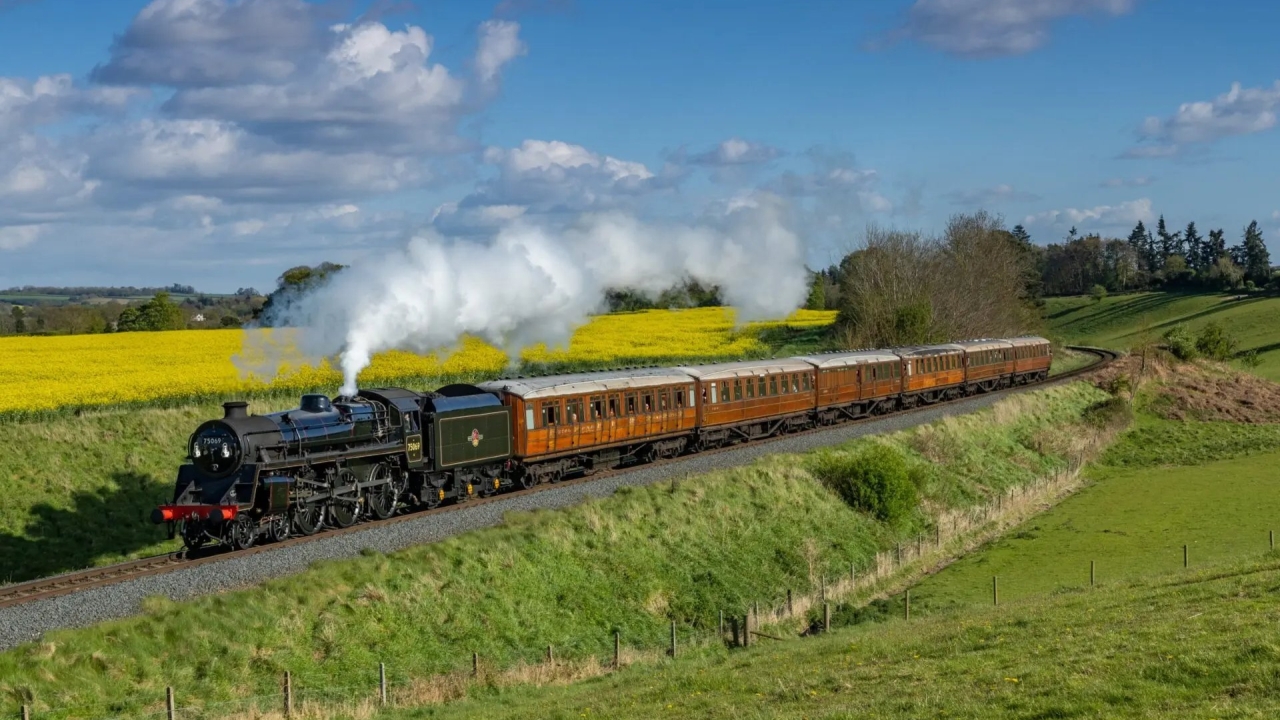
Running from Kidderminster to Bridgnorth through Worcestershire and Shropshire is the Severn Valley Railway. Running for 16 miles, the SVR is part of the route that links Hartlebury with Shrewsbury, across a route that was originally 40 miles long. At 16 miles today, the SVR is one of the longest heritage lines in the UK, beaten only by the West Somerset and North Yorkshire Moors Railway.
The line is most famous for its superb collection of rolling stock. Historic 1930s coaches make up several consists, with coaches from the Great Western Railway, London & North Eastern Railway, and London, Midland and Scottish railway companies all on the line. Plus, the SVR has an amazing collection of engines.
One of these is BR 3MT tank No.82045. What makes this loco so special is that it is brand new, with all 45 original members of the class being scrapped in the 1960s. At the time of writing, No.82045 was nearing completion, with assembly being conducted and the final components produced. It will join a fleet of engines including GWR Hall No.4930 ‘Hagley Hall, the sole-surviving LMS Stanier Mogul No.13268, and recently restored GWR Large Prairie No.4150.