Some cities do not wait for a museum, monument, or famous viewpoint to make the first impression. Color is already on the street: peach façades above the Mediterranean, Dutch-Caribbean buildings along a harbor, hillside houses climbing a Mexican valley, clapboard rows bright against North Atlantic weather, bluewashed alleys in the Rif Mountains, and murals running up Chilean port hills.
These six places are not colorful in the same way. Menton glows in warm Riviera tones. Willemstad lines its harbor with Caribbean color and Dutch-influenced architecture. Guanajuato climbs in bright layers through a steep valley. St. John’s turns residential streets into rows of painted clapboard. Chefchaouen wraps its medina in blue. Valparaíso uses paint, street art, stairways, and Pacific views across its hillsides.
The strongest photos here do not come from one marked spot. They appear while walking: a green shutter beside an ochre wall, a pink house reflected near harbor water, laundry above a stairway, a blue doorway in shade, a row of bright houses under gray sky, or a mural catching late light on a steep street.
For travelers who care about street atmosphere as much as major sights, these cities make the walk itself the main attraction.
1. Menton, France

Menton rises between the Mediterranean and the hills in warm layers of peach, ochre, cream, and pale yellow. From the waterfront, the old town stacks upward behind the promenade, with shutters, balconies, church towers, and stairways packed into the slope above the sea.
The local tourism office describes Menton Old Town through narrow streets, stairways, leafy plazas, and brightly colored façades in ochre shades. It also points to the Baroque buildings around Saint-Michel Square, which is one of the places where the town’s warm colors meet older architectural detail.
The best walk starts low, near the water, then climbs into the old streets. A staircase may turn away from the sea and pass a faded peach wall. A green shutter may sit above a narrow lane where the light is already bouncing between buildings. Higher up, blue water appears again between houses and railings, turning the town back toward the Riviera below.
Morning works especially well here. The colors look fuller before the harshest heat, and the old town feels quieter before the day’s beach crowds and lunch traffic fill the waterfront.
2. Willemstad, Curaçao
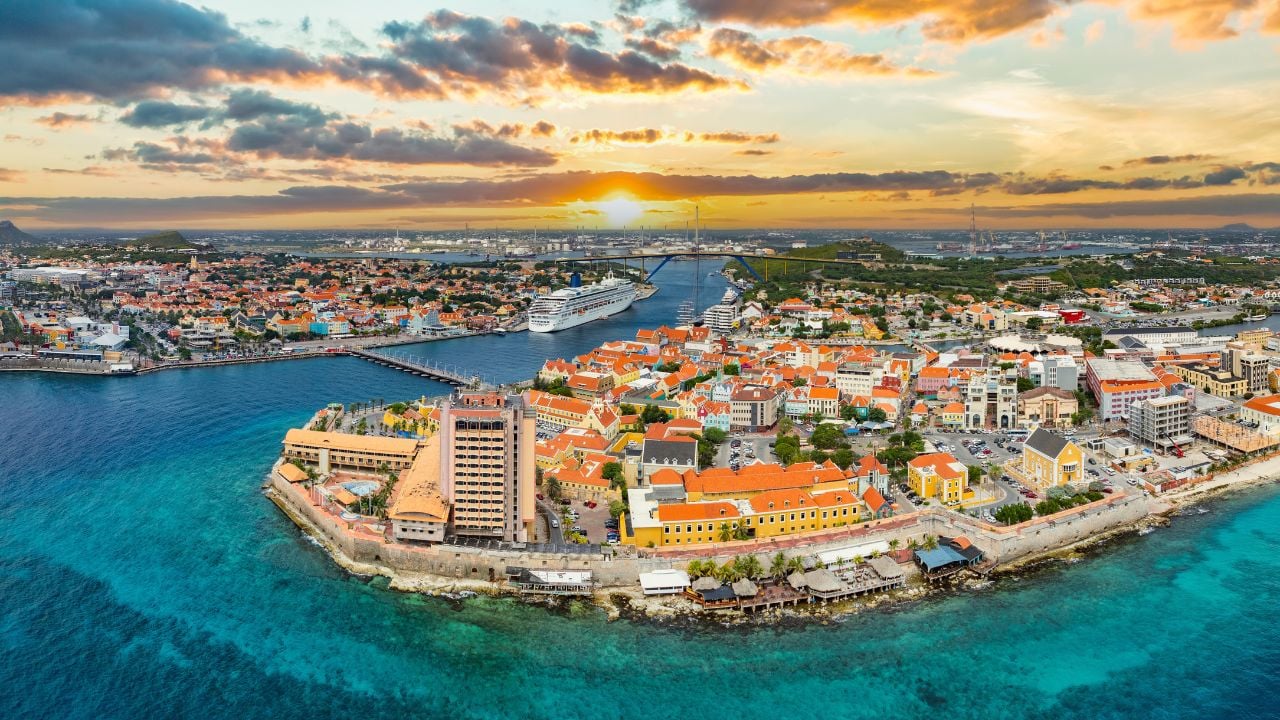
Willemstad’s color is most famous along the harbor, where pastel façades stand beside Sint Anna Bay. The Handelskade view works because the buildings are not only bright; they keep the shape of Dutch-influenced gables and waterfront trading architecture, then replace plain restraint with Caribbean color.
UNESCO says Willemstad shows European architectural styles adapted to the region in a rich range of Caribbean colors, and that the colorful exterior tradition dates from 1817. The official Curaçao tourism site says Willemstad includes Punda, Otrobanda, Pietermaai, and Scharloo, with more than 700 protected monuments in the inner city.
Near the water, wide shots come easily. Painted façades face the bay, boats move through the harbor, and the Queen Emma Bridge gives pedestrians a moving line between districts. The colors shift with the light: yellows and blues look clean in full sun, while pinks and greens soften when the day starts to drop.
The smaller details deserve time too. Cornices, shutters, arched openings, side streets, and restored façades in Punda or Pietermaai keep the city from being only one harborfront postcard. Cross the bridge, look back across the water, then walk into the streets where the same color continues at a more human scale.
3. Guanajuato, Mexico
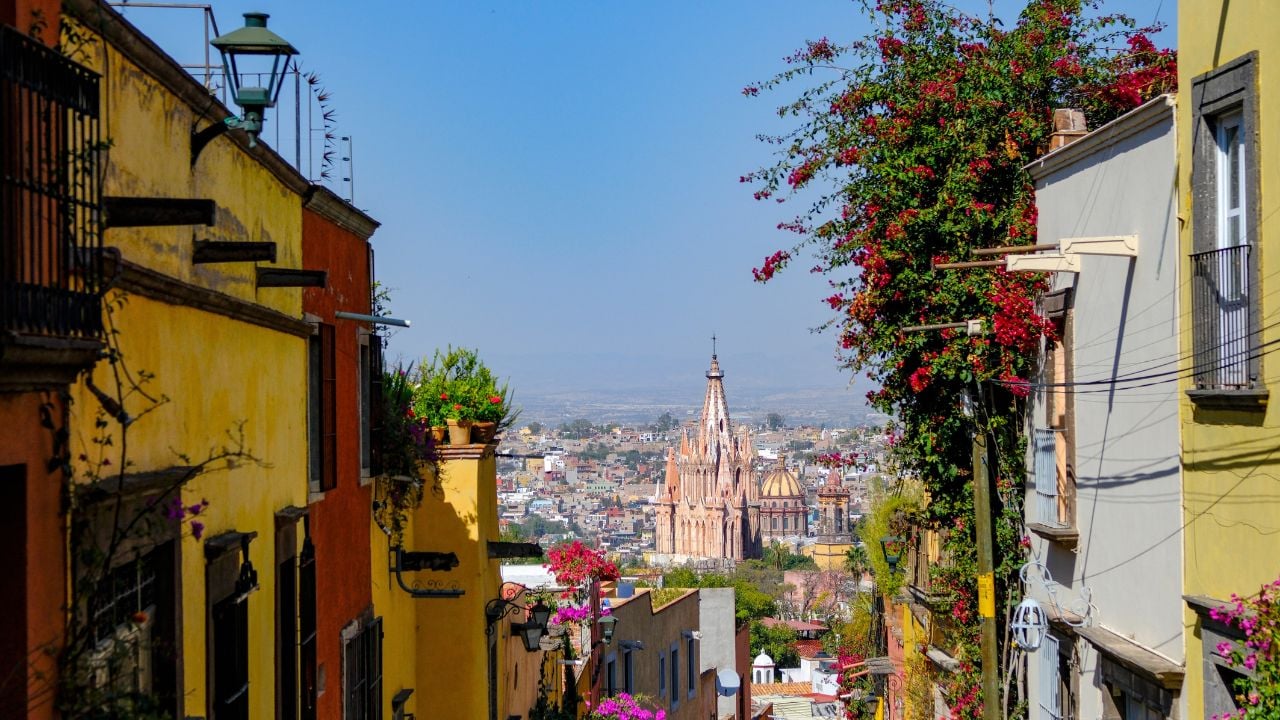
Guanajuato’s color climbs vertically. Houses in pink, yellow, blue, green, orange, and white rise along the sides of the valley, with narrow alleys, stairways, balconies, and small plazas packed into the slopes below.
UNESCO describes the Historic Town of Guanajuato and Adjacent Mines as a cultural landscape set among hills and deep winding valleys at an altitude of 2,084 meters. The terrain matters because the city does not spread flat across a grid. Streets turn, climb, drop, and disappear between buildings, while houses stack above one another on the hillsides.
A lookout view shows the color in one sweep, but the streets give it texture. A staircase may run between painted walls. A balcony may look down over a lane too narrow for cars. A church façade in pink or green stone can appear beside houses that are painted in stronger, simpler colors.
The city’s mining history gives the brightness more weight. Guanajuato is not only a pretty hillside town; its churches, theaters, tunnels, plazas, and old mining landscape sit inside the same steep topography. The result is a city where color, altitude, stone, and slope all end up in the same frame.
4. St. John’s, Newfoundland and Labrador
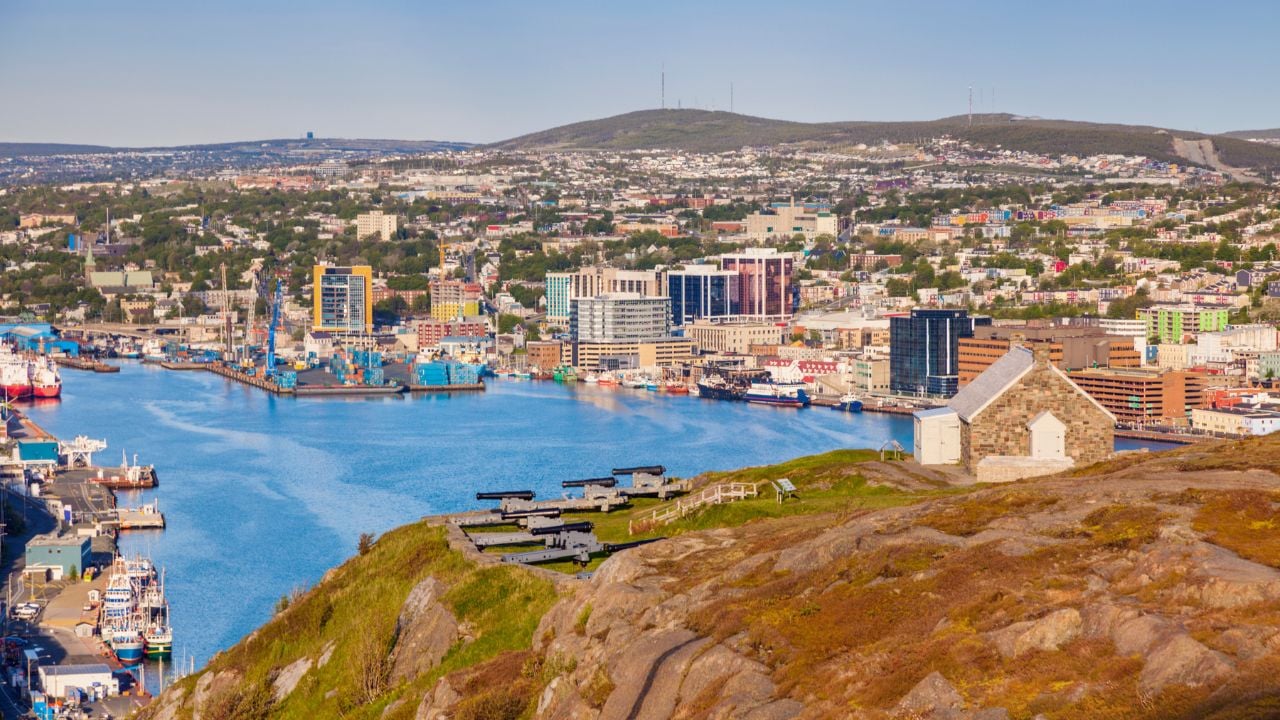
St. John’s turns ordinary residential streets into one of Canada’s most recognizable color scenes. Rows of clapboard houses climb and dip with the city’s slopes, painted in reds, blues, yellows, greens, purples, oranges, and pinks that stand out even when the North Atlantic sky turns gray.
Newfoundland and Labrador Tourism says the colorful rows of houses in downtown St. John’s are often called Jellybean Row. The name fits because the houses are not limited to one famous block; the bright palette appears across older downtown streets where homes sit close together on steep roads.
On foggy or wet days, the paint can look even brighter against the harbor, hills, and gray air. A short walk can bring a red door, a blue clapboard wall, a yellow row house, and a view down toward the water within a few minutes.
St. John’s is especially strong because the color belongs to lived-in streets. These are homes, not a painted tourist set. Cars park outside, steps climb to front doors, laundry or plants may appear in windows, and the harbor and hills keep the city’s coastal setting close to the houses.
5. Chefchaouen, Morocco

Chefchaouen is blue at street level. Walls, steps, doorways, arches, window frames, and low corners of the medina carry different shades, from pale washed blue in the sun to deeper tones in narrow shade.
Morocco’s national tourism site presents Chefchaouen through its medina, heritage, architecture, crafts, museums, and Rif Mountain setting. The mountain position matters visually. Above the lanes, the blue medina is framed by rougher slopes and open sky rather than a flat urban horizon.
In the medina, the blue is right beside the traveler: steps painted in pale blue, doorways edged in darker blue, arched passages with white trim, and uneven plaster walls where the color fades at the corners. A cat may sit on a painted stair, woven goods may hang beside a shop door, and a narrow lane can shift from cool shade to bright wall in only a few steps.
The city is best photographed slowly and early. Before the busiest hours, the lanes show more of their texture: worn steps, uneven plaster, small door knockers, painted edges, and brief views toward the Rif Mountains above the rooftops.
6. Valparaíso, Chile

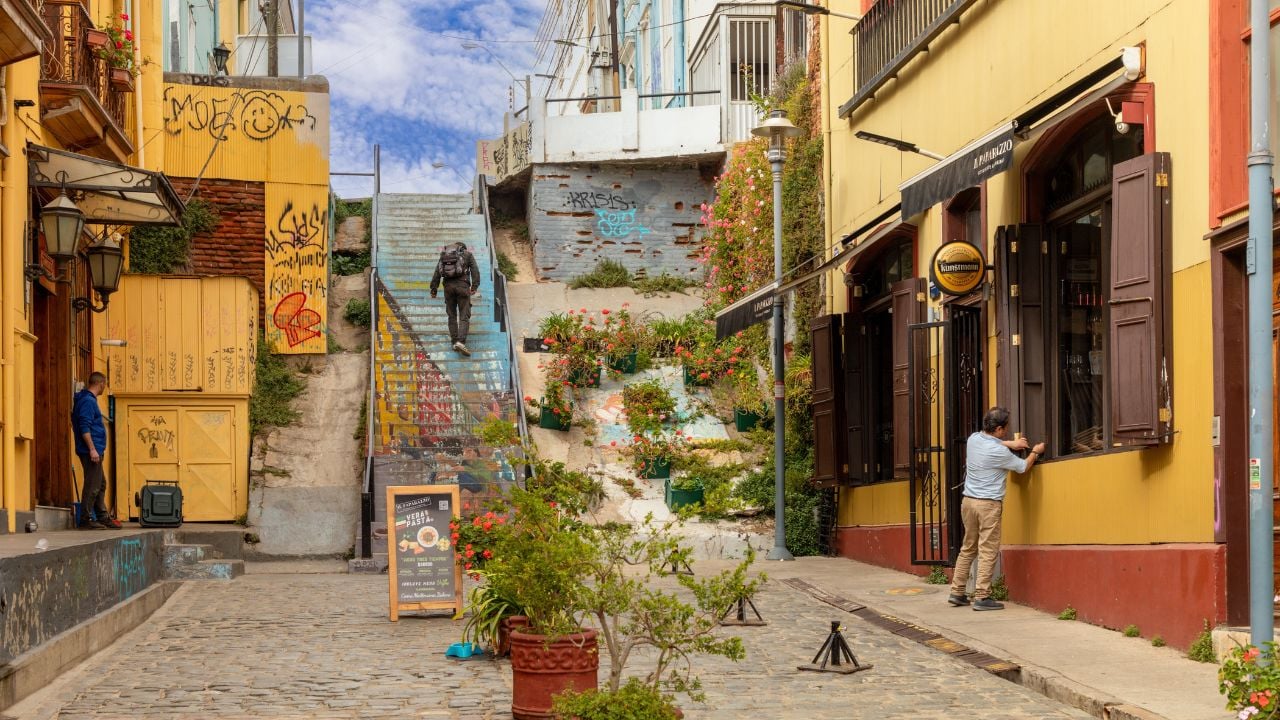
Valparaíso puts color on hillsides, walls, stairways, murals, corrugated façades, and houses facing the Pacific. The city does not arrange itself into one neat waterfront view. It climbs, turns, drops, and opens suddenly toward the ocean.
UNESCO describes the Historic Quarter of the Seaport City of Valparaíso as an important example of late 19th-century urban and architectural development in Latin America. Chile’s cultural heritage authority describes Valparaíso as having an amphitheater-like setting with brightly colored houses.
The hills make the city’s color feel restless. A stairway may begin beside a mural, turn past a corrugated wall, then open to a view of the port below. A funicular ride can shift the perspective in minutes, lifting passengers from lower streets toward painted houses, lookout points, and lanes where walls carry layers of street art.
Cerro Alegre and Cerro Concepción are strong areas for a first walk, but the best moments are rarely one single backdrop. They come in pieces: a painted stair, a balcony over a steep street, a Pacific glimpse between houses, a mural wrapped around a corner, and sunlight catching a colored wall before the lane turns again.