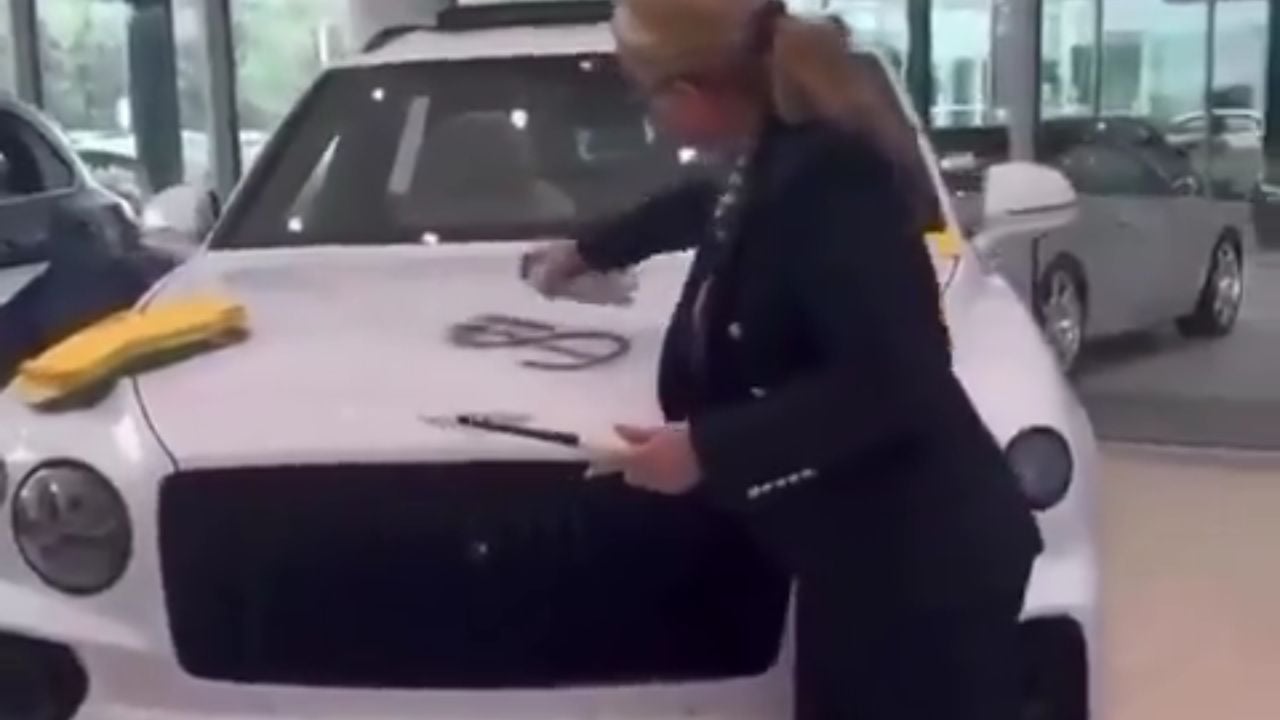

A white Bentley Bentayga sat gleaming under showroom lights at Bentley Jacksonville when a woman walked up holding a can of spray paint. Seconds later, she drew a giant dollar sign across the hood as stunned onlookers stared in disbelief.
Then things escalated even further. The hood was set on fire in front of dealership staff, customers, and a visibly nervous General Manager TJ Samhouri, whose reaction helped turn the stunt into one of the automotive internet’s most talked-about viral clips this month.
The video, shared by Mario Nawfal on X on May 11, has already racked up millions of views thanks to one central question: why would anyone torch the hood of a six-figure Bentley? The answer lies in the invisible layer covering the SUV’s paint.
The Bentayga had been fitted with Paint Protection Film, commonly known as PPF. It’s a transparent polyurethane film designed to shield paintwork from scratches, stone chips, chemical stains, and UV damage.
Spray Paint, Flames, and a Very Expensive SUV
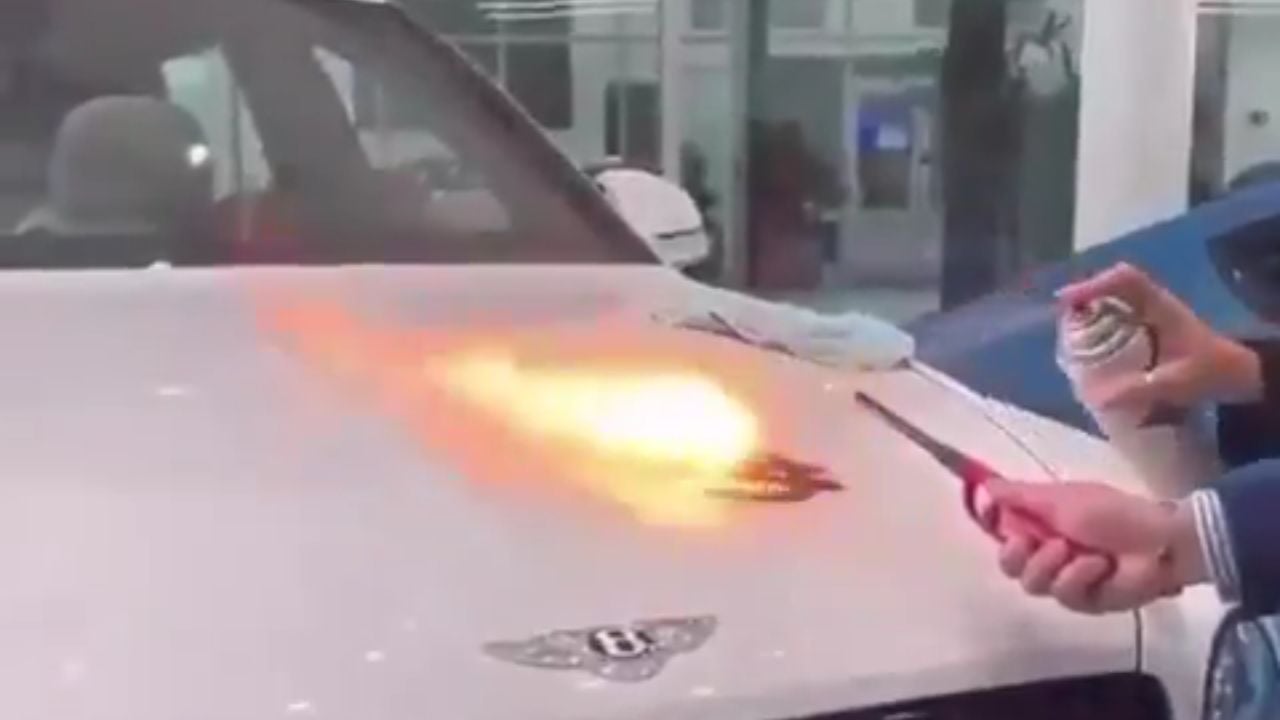
To prove its durability, the woman in the video deliberately attacked the surface in dramatic fashion. First came the spray paint. Then came the flames, ignited directly on the hood while people nearby winced and watched.
For a moment, it looked like catastrophe unfolding inside a luxury dealership showroom. Samhouri could even be seen covering part of his face as the fire burned across the white hood.
Why the Demonstration Actually Works
Despite the chaos, the stunt was carefully calculated. High-end PPF products from brands such as XPEL are engineered to act as sacrificial barriers between the outside world and factory paint. Spray paint does not bond to the actual painted surface when quality film is installed correctly.
Instead, the paint sits on top of the protective layer, allowing detailers to wipe or peel contaminants away without harming the original finish underneath. The fire element is more complicated, though still rooted in science.
PPF materials are designed with heat resistance in mind, and brief exposure to flames may scorch residue on the surface without transferring enough heat to damage the paint beneath. Timing is enormously critical in these demonstrations.
That is why trained installers control every second of the process. Leaving flames burning too long could still damage trim, clear coat edges, or surrounding materials, especially on vehicles packed with sensors and expensive body panels like the Bentayga.
Once the flames were extinguished in the video, the hood was cleaned off to reveal pristine white paint underneath. The moment triggered audible reactions from observers and helped fuel debate online over whether the clip was real, staged, or digitally manipulated.
The Psychology Behind Viral Dealership Stunts
Luxury dealerships increasingly rely on spectacle to capture attention online, especially as social media algorithms reward shocking visuals. Setting fire to a Bentley hood may sound reckless, but from a marketing perspective, it creates exactly the emotional response dealerships want: fear followed by relief.
Viewers instantly imagine the repair costs tied to damaging a Bentley. That emotional tension makes the reveal far more memorable than a traditional product demonstration involving brochures or technical explanations.
The stunt also taps into growing consumer anxiety surrounding modern vehicle ownership. Premium paint repairs can cost thousands of dollars, particularly on luxury SUVs with specialized finishes and complex panel shapes.
PPF installers know buyers are looking for reassurance before spending several thousand more on protective film packages. Demonstrations like this transform an invisible product into something audiences can physically understand.
The Bigger Lesson for Car Owners
While the Bentley video delivered entertainment value, it also highlighted how much vehicle protection technology has evolved over the last decade. Modern PPF is vastly different from older protective films that yellowed, peeled, or dulled paint over time.
Woman at Bentley dealership casually spray-paints a giant $ on a white Bentayga’s hood, then sets it on fire to demo Paint Protection Film.
Until the product proved its worth, the car owner was the most scared person in that place.pic.twitter.com/pB0eAFBw0o
— Mario Nawfal (@MarioNawfal) May 11, 2026
Many newer films now feature self-healing properties activated by heat. Minor scratches can disappear after exposure to sunlight or warm water as the material reshapes itself.
Still, experts caution against trying anything similar at home. Professional demonstrations are performed under controlled conditions using properly installed film, experienced technicians, and carefully managed exposure times.
Even so, the image of a flaming dollar sign burning across the hood of a Bentley may become one of 2026’s defining automotive viral moments. In an era where dealerships compete for attention one scroll at a time, few demonstrations make the value of paint protection harder to ignore.