The happiest trips are not always the ones that send you home with a suitcase full of things. Sometimes the real souvenir is a morning that moved slower than usual, a street smell you keep remembering, a song from a bar, or the sudden thought that daily life could use more long lunches and better views.
The places below are good at leaving that kind of mark. They are not the same overused names that appear in every travel roundup, and they are not empty “hidden gems” either. They have food, water, old streets, museums, hills, markets, weather, and enough local life to make the trip feel personal.
The memory might be a river café in Aarhus, bougainvillea in Nafplio, cats under Kotor’s stone walls, sulfur steam in Tbilisi, marzipan windows in Lübeck, ceramic colors in Pécs, or sea lions waiting near the market in Valdivia.
Those are better souvenirs than most things sold near a checkout counter. You come home with fewer objects, maybe, but with a clearer idea of what a good day can look like.
1. Aarhus, Denmark
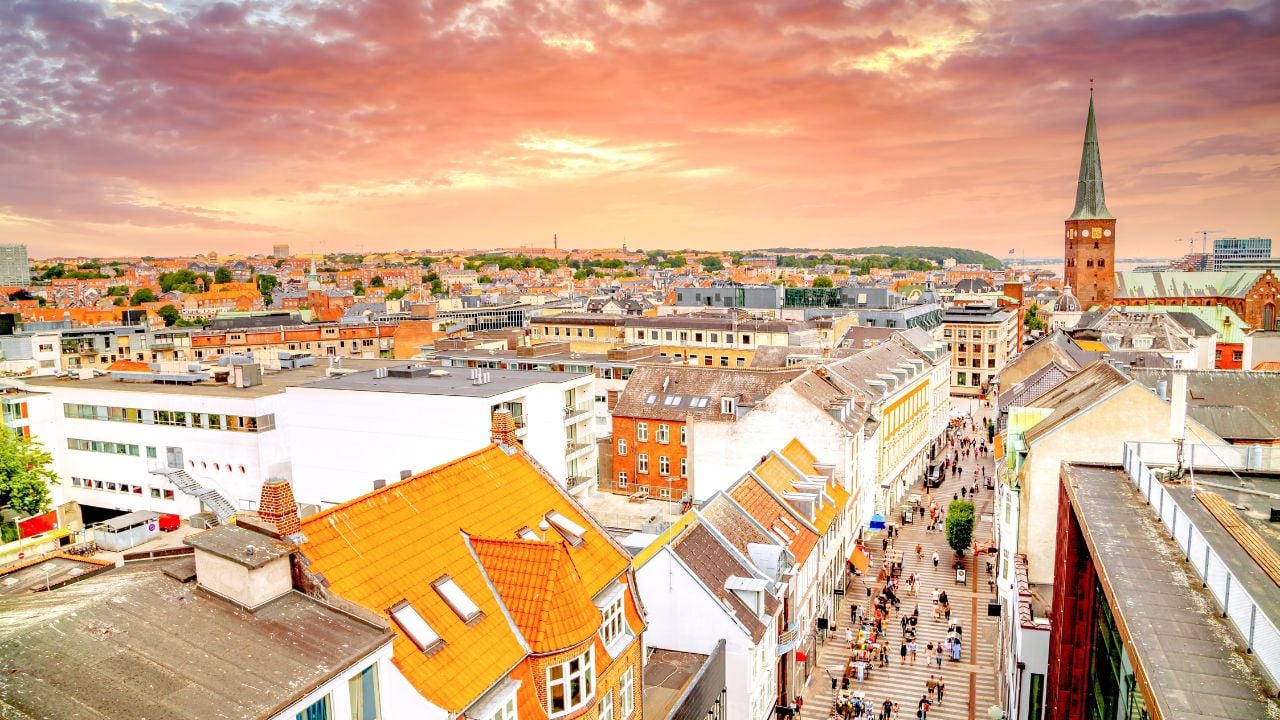
Aarhus has a clean Danish brightness without feeling too polished. The city moves easily between cobbled streets, river cafés, student life, bakeries, museums, modern waterfront buildings, and the kind of harbor air that makes a short city break feel less boxed in.
VisitAarhus describes it as Denmark’s second-largest city, where cobblestone streets and historic neighborhoods meet modern architecture and urban spaces within walking distance. That is exactly what makes Aarhus pleasant for a few days: the old and new parts do not feel separated by some exhausting transfer. They keep bumping into each other.
ARoS brings the bold color. The rainbow panorama turns the city into bands of glassy red, yellow, green, and blue, which is a very good way to make people stop pretending they are too grown-up for playful museums. Den Gamle By pulls in the opposite direction, with old streets, historic shopfronts, houses, and the “Aarhus Story” exhibition tracing the city from the Viking Age to the present.
The Latin Quarter is softer and easier to settle into. Small shops, cafés, narrow streets, bikes, and people sitting outside make Aarhus feel less like a design showcase and more like a place where daily life has been arranged with unusual care. Later, the harbor and Aarhus Ø shift the scene again: more water, more modern lines, more sky.
Aarhus is the kind of city that makes you look at your own weekend habits with mild suspicion. Maybe coffee should last longer. Maybe more cities should put museums, bakeries, water, design, and old streets this close together. Maybe a good day does not need to be more complicated than that.
2. Nafplio, Greece
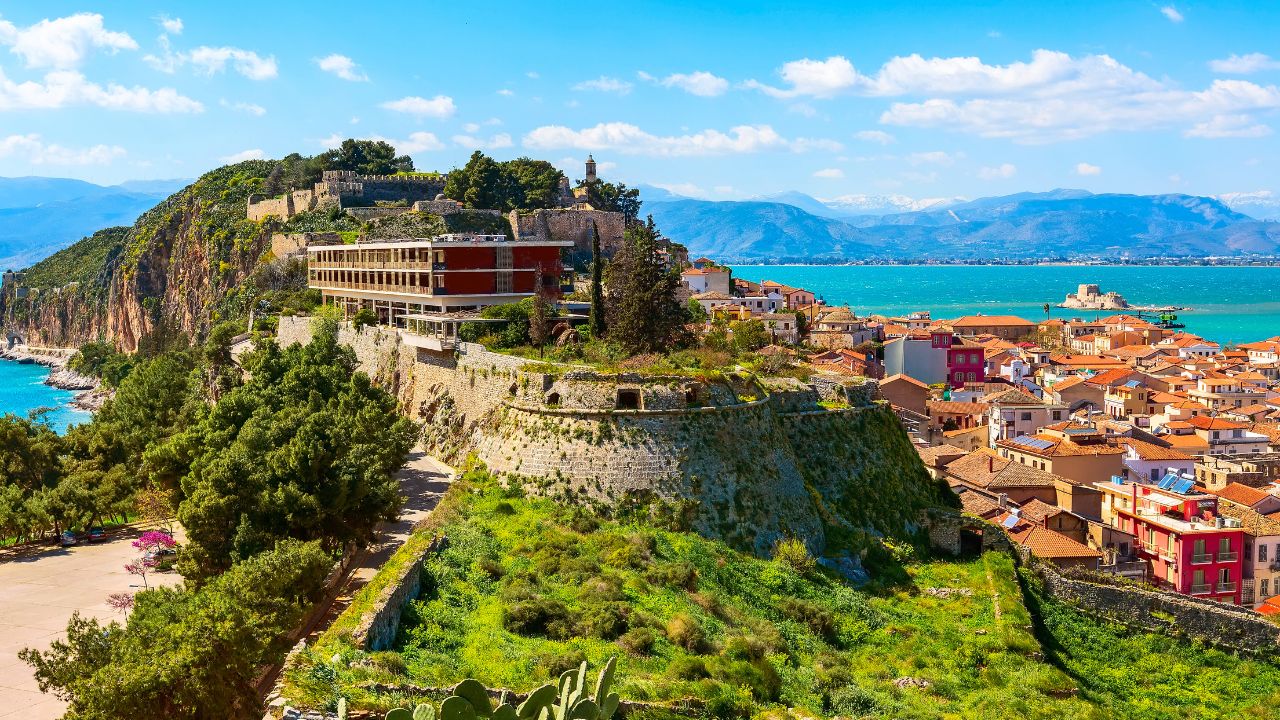
Nafplio is almost annoying in how quickly it starts working on you. A few minutes in the old town and there it is: cobbled lanes, balconies, neoclassical houses, bougainvillea, marble squares, sea air, and fortress views sitting above the roofs like the town ordered them specially for your arrival.
Visit Greece calls Nafplio one of the most beautiful towns in the Argolis area and one of Greece’s most romantic cities. It was also the first capital of the newly born Greek state between 1823 and 1834, which gives the pretty streets more history than their holiday ease first suggests.
The old town does not need much help. Syntagma Square gives you the natural pause; the lanes around it pull you into shops, cafés, shaded corners, and balconies with flowers spilling over them. The harbor keeps appearing at the end of streets, and Bourtzi sits offshore like a small stone reminder that the sea has always been part of Nafplio’s story.
Palamidi Fortress is the dramatic option above town, but Nafplio also knows how to reward laziness. Coffee can stretch. Lunch can turn into the afternoon. A walk by the water can replace a plan you thought you cared about twenty minutes earlier.
The danger of Nafplio is that it makes ordinary evenings at home seem badly designed. After a few nights of sea light, stone lanes, late dinners, and the old town glowing after dark, you may start believing every week deserves at least one square, one harbor, and a meal that refuses to end quickly.
3. Kotor, Montenegro

Kotor does not give you a gentle introduction. The mountains come straight down toward the bay, the old walls grip the town, and the water outside the gates sits so still that the whole place can look staged until a cat walks across the square and ruins the illusion in the best possible way.
UNESCO describes the Natural and Culturo-Historical Region of Kotor as part of Boka Kotorska Bay, with two interrelated bays surrounded by mountains rising rapidly to nearly 1,500 meters. That landscape is not scenery you politely admire in the background. It controls the whole visit.
Inside the walls, Kotor shrinks to human size. Stone lanes twist between churches, tiny squares, laundry lines, shutters, restaurant tables, souvenir shops, and cats that appear to have more confidence than most visitors. The old town can be crowded, especially when cruise passengers arrive, but early morning and evening still give it those quieter pockets where the stone feels cool and the bells bounce between the walls.
The climb above town is hard enough to make you question your choices, then beautiful enough to make you forgive the stairs. Roofs start to flatten below you, the walls become easier to read, and the bay opens behind the town in layers of blue, gray, and mountain shadow.
Kotor stays with people because it keeps changing size. From the road or the water, it looks huge and dramatic, all mountain and bay. Inside the walls, it becomes cups of coffee, cats, church doors, narrow turns, and a dinner table squeezed into a stone corner.
4. Tbilisi, Georgia

Tbilisi is not a city that leaves neatly. It stays as fragments: wooden balconies hanging over steep streets, sulfur steam in the bath district, wine glasses on a crowded table, old staircases, church domes, river views, and food arriving after everyone already said they were full.
Georgia’s national tourism site describes the Tbilisi sulfur baths as a historic wellness tradition that has attracted visitors for centuries. The bathhouses are concentrated in Abanotubani, where brick domes rise low from the ground and the smell of sulfur turns into part of the neighborhood’s identity.
Abanotubani is one of the best first looks at the city because it refuses to separate beauty from ordinary life. People walk past bath entrances, taxis squeeze through nearby streets, tourists stop for photos, and Narikala Fortress watches from above. Nothing feels perfectly arranged, which is why it feels alive.
Food does the rest. A table in Tbilisi can become its own event: khachapuri, herbs, cheese, grilled meat, dumplings, bread, sauces, wine, and someone insisting you try one more thing. The city has landmarks, of course, but many travelers remember the meals with the same force as the views.
Tbilisi’s gift is not calm. It is warmth, noise, edges, hospitality, old rituals, new bars, and a little bit of beautiful disorder. You come home remembering not just what you saw, but how quickly the city pulled you into its pace.
5. Lübeck, Germany
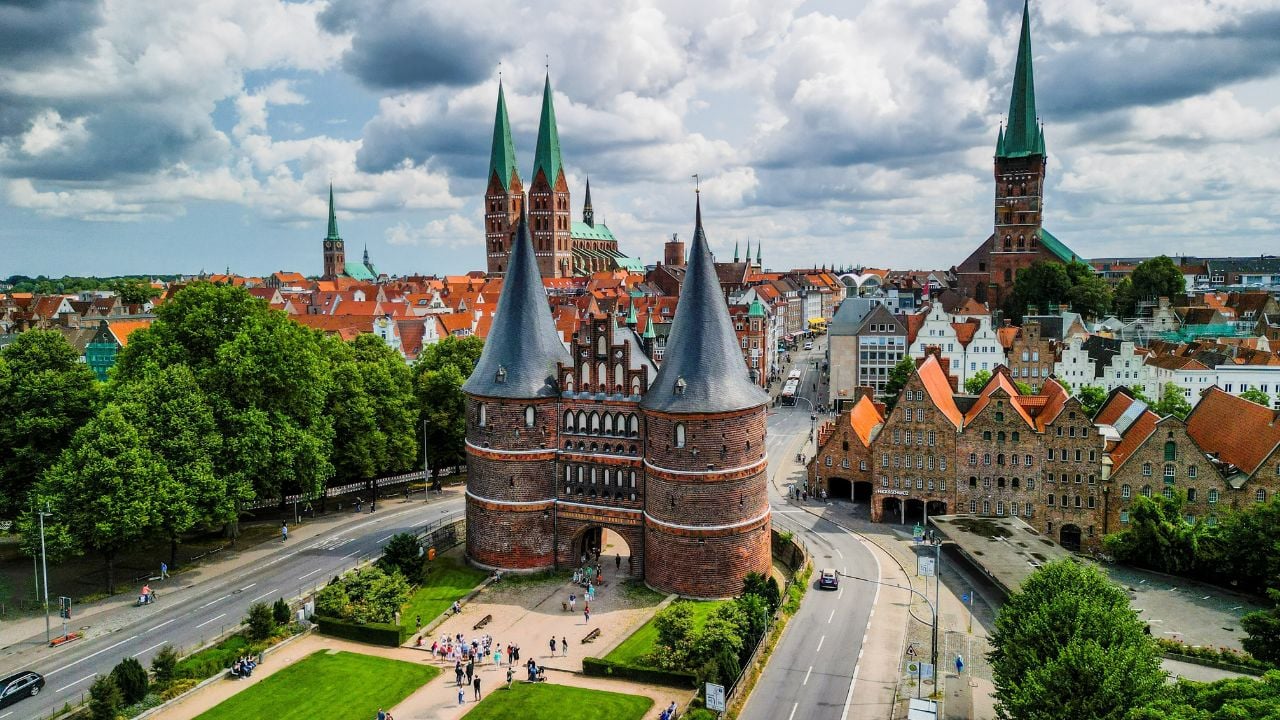
Lübeck looks handsome even under gray skies. Red brick, church spires, water, narrow alleys, courtyards, merchant houses, and marzipan shop windows give the old town a northern richness that does not need sunshine to work.
UNESCO says Lübeck was founded in 1143 on the Baltic coast and was one of the principal cities of the Hanseatic League from 1230 to 1535. Visit Lübeck describes the old town as an island-shaped UNESCO World Heritage Site with the Holsten Gate, Gothic churches, winding alleys, courtyards, waterways, and the famous seven spires.
The Holsten Gate gives Lübeck its postcard face, but the better memory may come from a lane you nearly skip. Slip away from the obvious view and the old town starts opening in smaller pieces: a courtyard behind a doorway, a church tower above red roofs, a canal at the edge of the street, a shop window stacked with marzipan that suddenly seems completely reasonable as a travel priority.
The water matters here. Lübeck was a trading city, and the old town still feels connected to movement, storage, ships, salt, and merchants. The brick does not look decorative in a light way; it looks durable, practical, and proud.
Lübeck sends people home with a sharper eye. You start noticing rooflines, alleyways, shop windows, old warehouse shapes, and the way a city can be elegant without becoming soft.
6. Pécs, Hungary

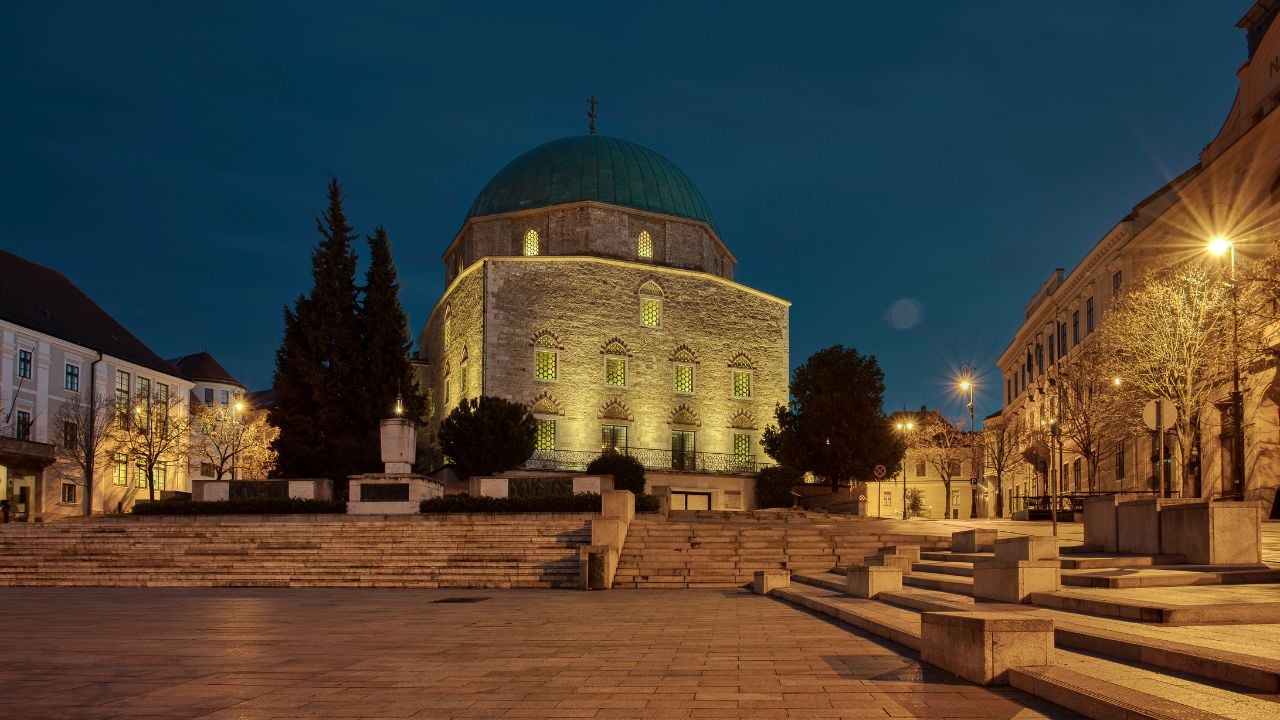
Pécs has a warmer face than many travelers expect from Hungary. The squares invite sitting, cafés spill into the day, church towers and Ottoman traces sit close to the center, and the city has color where other historic places might settle for stone.
UNESCO describes the Early Christian Necropolis of Pécs, ancient Sopianae, as a 4th-century complex of decorated tombs, underground burial chambers, memorial chapels, and murals of Christian themes. That history is literally below the city, close to the streets where people are still drinking coffee and crossing squares above it.
Above ground, Pécs brightens. The Zsolnay name brings ceramics, color, restored industrial spaces, courtyards, statues, and shop windows into the visit. The Zsolnay Cultural Quarter occupies a restored five-hectare former manufactory area, with protected historic buildings, public statues, parks, promenades, cafés, craft shops, restaurants, exhibitions, a puppet theatre, and other cultural spaces.
That contrast keeps the city interesting. One hour can take you underground into ancient burial chambers; another can put you among ceramics, courtyards, cafés, and bright details from a revived factory district. Pécs has serious history, but it does not trap the whole trip inside serious rooms.
The thing Pécs leaves behind is color. You may catch yourself noticing tiles, signs, facades, doorways, and little decorative details more than you did before. That is a pretty good thing for a city to teach in one short trip.
7. Valdivia, Chile
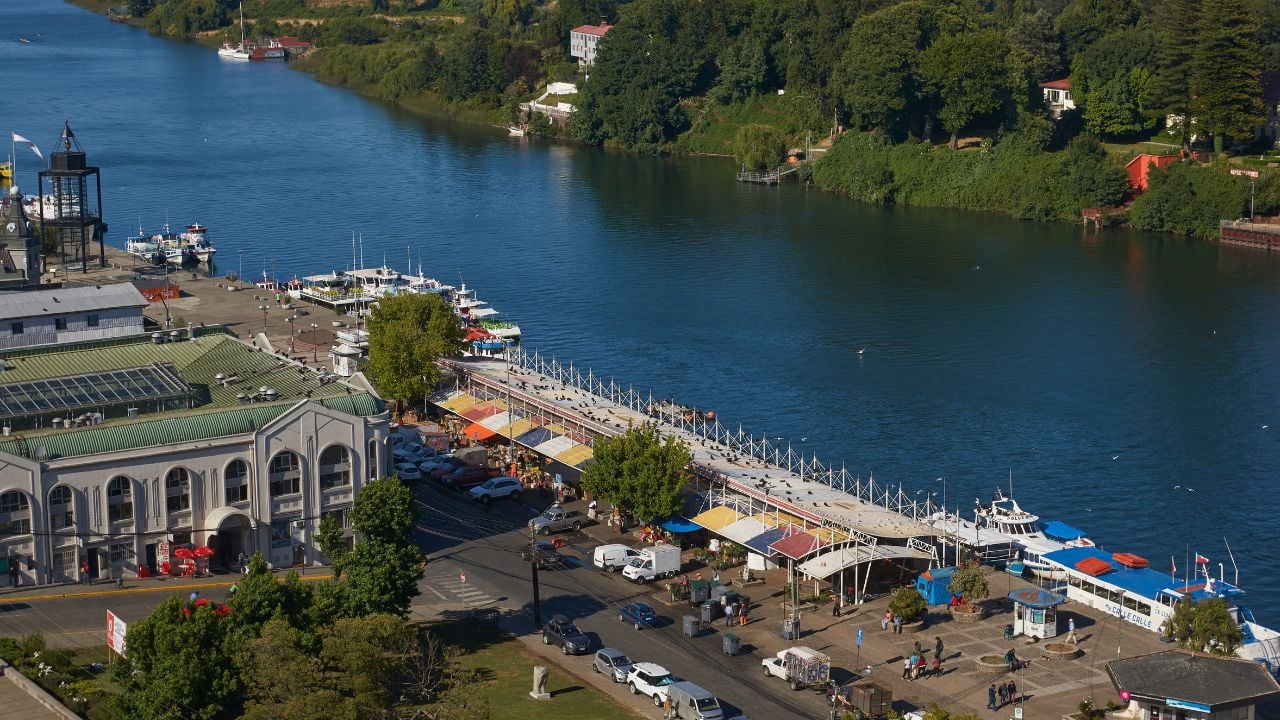
Valdivia feels damp, green, and hungry in the best possible way. Rivers shape the city before anything else does: boats move along the water, the air feels soft, the sky changes quickly, and the market smells like fish, fruit, river mud, and lunch all at once.
Chile Travel places Valdivia at the confluence of the Calle-Calle and Cau-Cau rivers and identifies it as the capital of the Los Ríos Region. The same source points visitors toward the Botanical Garden of Universidad Austral, the Fluvial Market, Isla Teja, Oncol Park, craft breweries, and the Spanish Crown’s 17th-century forts at Corral and Niebla.
The Fluvial Market is where Valdivia feels most itself. Fish counters, fresh produce, vendors, gulls, river traffic, and sea lions near the water make the place feel noisy and useful, not polished for easy consumption. It is one of those markets where standing around and watching is already part of the visit.
After the market, cross toward Isla Teja. The streets turn greener, the university area brings gardens and museums, and the noise of the riverfront drops behind you. It feels like the city has exhaled a little, moving from fish stalls and boats toward trees, paths, and quieter corners.
Valdivia does not need perfect weather to be happy. Clouds suit it. Rain suits it. A craft beer after a wet walk suits it very well. The souvenir is not sunshine; it is the feeling of a city tied to rivers, markets, green spaces, seafood, and weather that keeps changing all day.