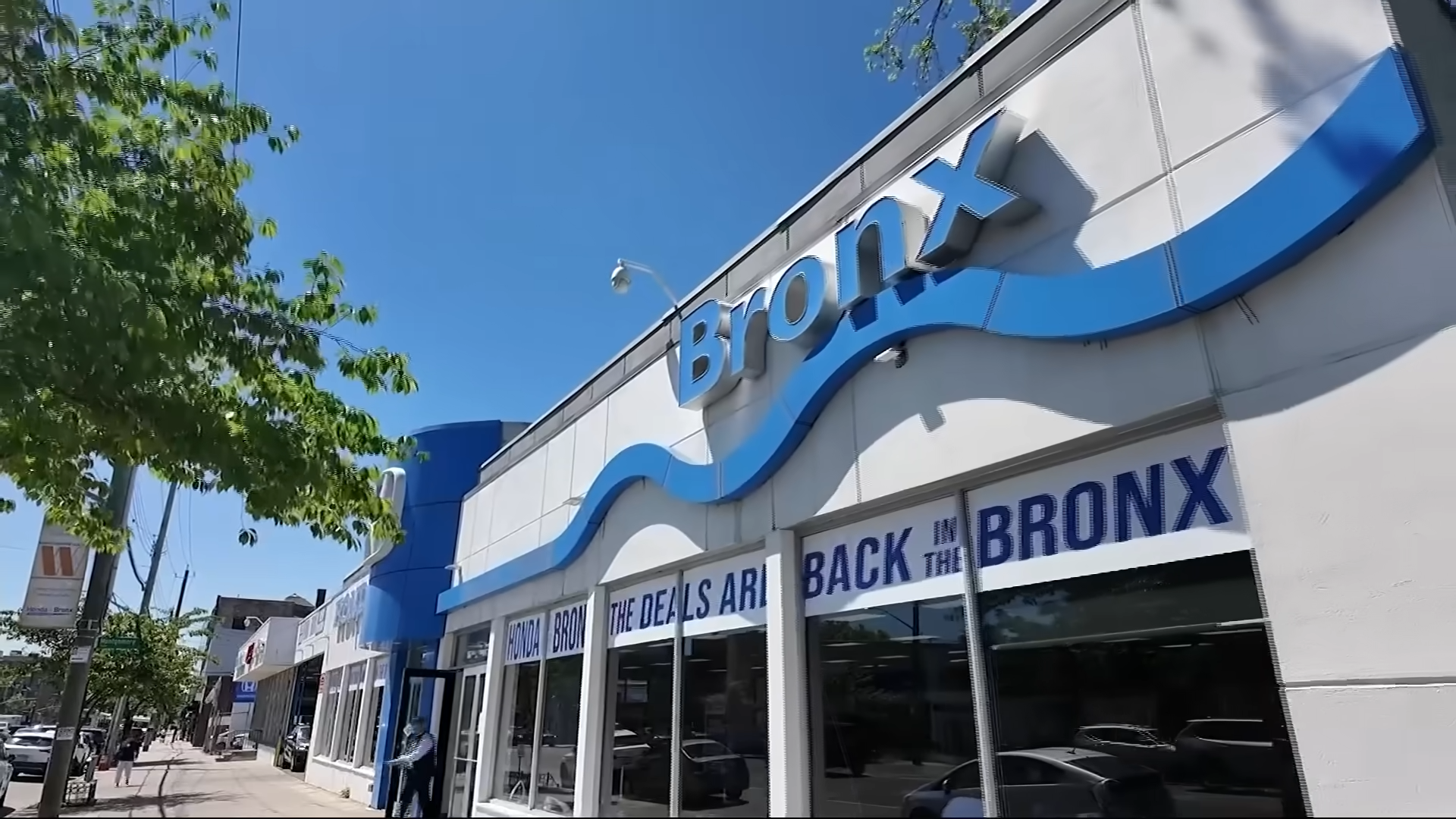
You’ve probably been there. You see a great price on a car, fall in love with it during the test drive, and then spend the next two hours in a little room watching fees appear on paperwork like magic tricks you never asked for. Rust proofing. Tire protection. Documentation charges. By the time you sign, you’re paying a number that barely resembles what was on the window sticker.
That exact experience — on a large, documented scale — is what landed Honda of the Bronx in serious trouble with New York City regulators. The dealership has agreed to a $130,000 settlement after the city’s Department of Consumer and Worker Protection found a pattern of violations that touched customers at virtually every stage of the car buying process. The case is a textbook example of what consumer advocates have been warning about for years: what you see is almost never what you pay.
The settlement breaks down into two buckets. Honda of the Bronx agreed to pay $61,500 in civil penalties directly to the city, plus $68,500 in consumer restitution — money that goes back into the pockets of customers who were overcharged. According to city records, investigators reviewed 35 vehicles and found that 24 of them were sold above the advertised price. The average gap between what was advertised and what customers actually paid? More than $2,800 per car.
But the overcharging was only part of the story. Investigators also found that many customers were never provided required documentation at all — things like financing disclosures, cancellation forms, and information about open federal safety recalls. Those aren’t optional paperwork niceties; they’re legal protections consumers are entitled to. When you strip those away, customers are left making major financial decisions without the information they need to make them. In total, Honda of the Bronx admitted to more than 350 violations of New York City consumer protection laws.
What Actually Happened Inside Honda of the Bronx
DCWP Commissioner Sam Lavine put it plainly when describing what investigators found: it’s the classic bait-and-switch. An attractive price draws a customer in, they spend hours at the dealership, and then the fees pile on one by one during the financing process. Two hundred dollars here. Three hundred dollars for tire coverage. Five hundred for rust proofing. None of it is in the original advertised price, and by the time customers realize what happened, they’re already emotionally invested in the car and deep into the paperwork.
The new ownership of the dealership, which took over last August, chose not to speak on camera but did offer an explanation: the violations occurred during the first 10 days after they assumed control of the business. They say they did not yet have access to the dealership’s website pricing and were still learning the operations at the time, calling the situation “really bad timing.” Commissioner Lavine’s response to that reasoning was direct: even a brand-new owner, in their very first week, is on the hook for what happens at their dealership. The city has zero tolerance for overcharging, full stop.
Since the investigation, the new owners say they have replaced most of their staff, digitized their operations so that required paperwork cannot be skipped, and made other internal changes to prevent a repeat. The city says the settlement puts the dealership on a path toward compliance, and officials expressed a genuine interest in seeing it thrive in the Bronx community — just not at the expense of the people shopping there.
This Is Far Bigger Than One Dealership in the Bronx
If this story feels familiar, that’s because dealership overcharging is a nationwide problem that regulators at every level have been trying to crack down on for years. Honda of the Bronx is the smallest fish in what has become a very large enforcement pond.
In December 2024, the FTC and the Illinois Attorney General announced a $20 million settlement with Leader Automotive Group, a chain of 10 dealerships, in what became the largest FTC settlement ever secured against an auto dealer. The proposed settlement required Leader and its Canadian parent company AutoCanada to pay $20 million to refund harmed consumers, disclose the actual offering price in all advertising, and obtain explicit consent from buyers before adding any charges.
In Maryland and Virginia, the FTC and the Maryland Attorney General pursued Lindsay Automotive Group for similar conduct. According to regulators, more than 88 percent of customers in a sampled group of transactions paid more than the advertised price on third-party sites, with most paying more than $2,000 above the advertised figure. Maryland officials estimated that total restitution in the case could exceed $75 million.
New York has been especially aggressive on this front. The state’s Attorney General secured more than $3.2 million from eight Nissan dealerships found to have overcharged more than 1,700 consumers during end-of-lease buyouts — adding undisclosed fees or inflating vehicle prices on invoices in violation of the consumers’ original lease agreements. That came on top of earlier rounds of settlements totaling millions more from additional Nissan dealers across the state.
In Rhode Island, six dealerships agreed to a settlement of over $1 million after the state’s Attorney General sued them for automatically tacking on add-on warranties that were not part of vehicles’ advertised prices. In Arizona, the FTC and state Attorney General secured a $2.6 million settlement from a dealership that had piled junk fees onto the contracts of Latinx consumers.
The sheer volume of these cases across states makes one thing clear: this is not a rogue dealership problem. It’s a systemic one.
What Car Buyers Can Learn From All of This
These cases offer more than headlines. They are a consumer education course in what to watch for the next time you walk onto a lot.
The first rule, reinforced by every settlement mentioned above, is that the price you see should be the price you pay. If a dealership advertises a vehicle at a certain number, that number should reflect what you will actually owe — minus required government taxes and fees. Any mandatory dealer fee that is not included in the advertised price is a red flag, and in many jurisdictions, it is illegal.
Second, know what paperwork you are legally entitled to receive. In New York City, dealerships are required to provide financing disclosures, cancellation forms, and information about any open federal safety recalls. If a dealership skips over documents or rushes you through signing, slow down and ask questions. You have the right to read everything before signing anything.
Third, New York City buyers have a specific protection worth knowing: you have the right to return a used vehicle within two days for any reason. That window exists precisely for situations where buyers feel pressured or realize after the fact that they were not given accurate information. Dealerships operating in New York City are also required to be licensed by the DCWP — something you can verify before you ever set foot on the lot.
Finally, if you believe you have been overcharged or deceived at a dealership in New York City, you can file a complaint through 311 or at nyc.gov/consumers. For issues in other states, your state Attorney General’s office is typically the right starting point. Regulators across the country have made it clear that they are paying attention — and the settlements keep getting larger.
How to Protect Yourself Before You Ever Sign Anything
Consumer advocates and regulators have a consistent message: preparation is your best protection. Before visiting any dealership, research the vehicle’s fair market value using independent tools like Kelley Blue Book, Edmunds, or CarGurus. Screenshot or save the advertised price so you have documentation of what was listed before you arrived.
At the dealership, ask for a complete itemized breakdown of every charge before you sit down to finalize paperwork. If a fee appears that was not part of the advertised price — and it is not a required government charge — ask what it is, why it is being added, and whether it can be removed. Many fees can be negotiated or waived; they only stay because most buyers do not push back.
Be especially cautious with add-on products like extended warranties, tire protection plans, gap insurance, and rust proofing. These are frequently presented as standard inclusions when they are actually optional. You have the right to decline them. If a salesperson or finance manager tells you that an add-on is required to get the vehicle or the financing rate, that claim is almost certainly not true — and depending on your state, it may be illegal.
The car buying process is one of the largest financial decisions most people make. The dealerships caught in these settlements were counting on customers not knowing their rights, not asking questions, and not pushing back. The more informed buyers are, the harder it becomes to take advantage of them.