The 1990s produced some of the most famous performance cars ever built, but the decade was stranger than the usual poster-car list suggests. Everyone remembers the Ferrari F50, Lamborghini Diablo, McLaren F1, Toyota Supra Turbo, Acura NSX, and Dodge Viper. The more interesting stories often sit just outside that familiar group.
Small manufacturers, racing specialists, and ambitious engineering teams spent the decade building cars that were too rare, too expensive, too complicated, or too unusual to become household names. Some used racing hardware. Some chased impossible top-speed claims. Some tried to beat Ferrari and Lamborghini without having Ferrari or Lamborghini money behind them.
That made the results uneven, but rarely boring. These cars were not ordinary performance models with louder exhausts and bigger wheels. They were low-volume supercars, homologation specials, racing-linked road cars, and engineering experiments that asked buyers to accept risk in exchange for something genuinely different.
The five cars below are not forgotten because they were dull. They were forgotten because very few people saw them, fewer people bought them, and the safer legends became easier to remember. Their rarity is part of the appeal now.
Where the Forgotten Supercar Stories Begin
The cars here needed more than nostalgia to qualify. Each one had to bring real engineering substance: unusual engines, rare construction, racing links, dramatic performance, tiny production numbers, or a design story that separated it from ordinary 1990s performance machinery.
The obvious names were left out on purpose. The Ferrari F50, McLaren F1, Lamborghini Diablo, Porsche 911 Turbo, Toyota Supra Turbo, Acura NSX, and Dodge Viper already dominate most conversations about 1990s speed. This article looks at the cars that lived in the margins of that same era.
Those margins are where some of the decade’s boldest ideas appeared. A transverse V16, an American twin-turbo wedge with aircraft-style ambition, a carbon-fiber Jaguar tied to Group C racing, a huge British V12 GT, and a French mid-engine car with carbon-ceramic brakes all belong to a more obscure side of the 1990s.
Some of these cars were commercially fragile. Some were difficult to build, difficult to sell, or difficult to explain to buyers who could choose a better-known badge instead. That does not make them weaker stories. It makes them better ones.
Cizeta V16T
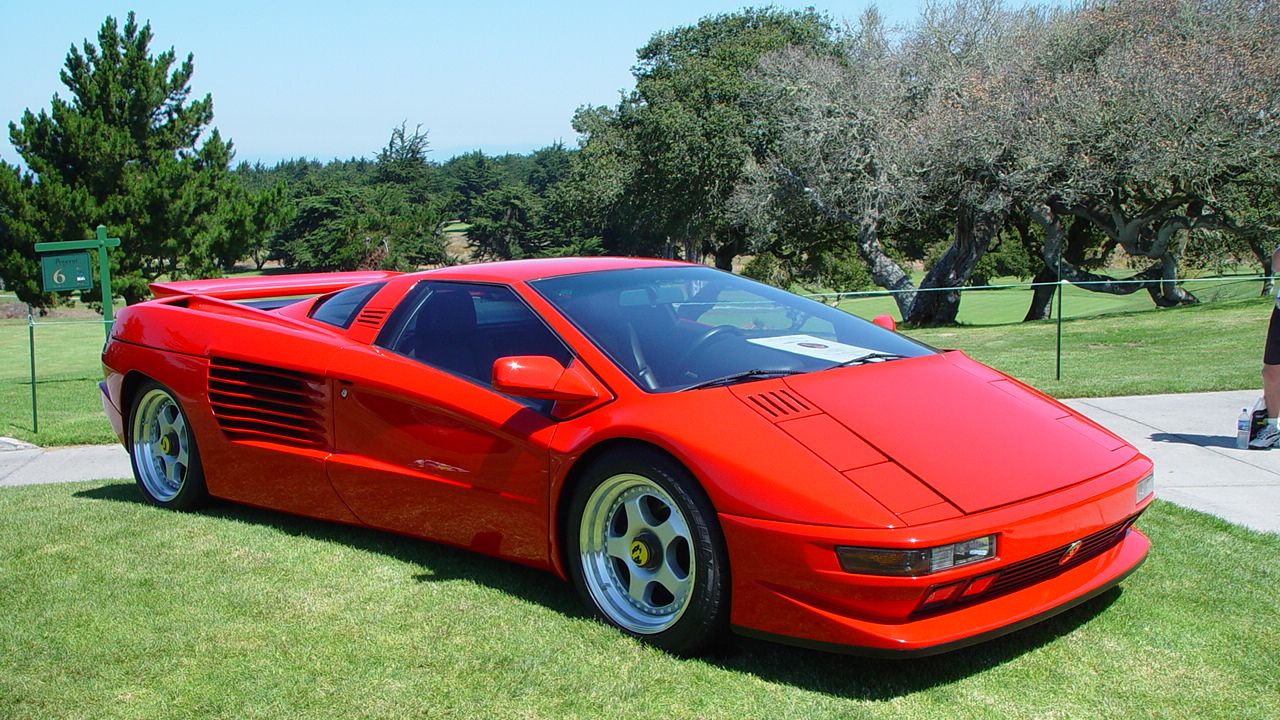
The Cizeta V16T is often remembered through the original Cizeta-Moroder prototype, but the production story became Cizeta’s alone after Giorgio Moroder left the project. The name changed, but the car remained one of the most outrageous supercars of the 1990s.
Its specification still reads like a challenge to the rest of the exotic-car world. The V16T used a transverse-mounted 6.0-liter V16 and a 5-speed manual gearbox, with output commonly quoted at about 540 bhp. Power went to the rear wheels, and period-style figures placed the 0-to-62 mph sprint at around 4.0 seconds.
Marcello Gandini shaped the body, and the connection is easy to see. The V16T looked like a more extreme branch of the same design language that gave the world the Lamborghini Countach and Diablo: wide stance, wedge profile, dramatic proportions, and enough rear bodywork to cover that unusual engine layout.
The Cizeta did not become a mainstream supercar name because production was tiny, the project was expensive, and the car arrived in a world already crowded with better-funded Italian icons. That makes it even more interesting now. It was not a Diablo copy. It was a wider, stranger, V16-powered answer to the same supercar moment.
Vector W8 Twin Turbo
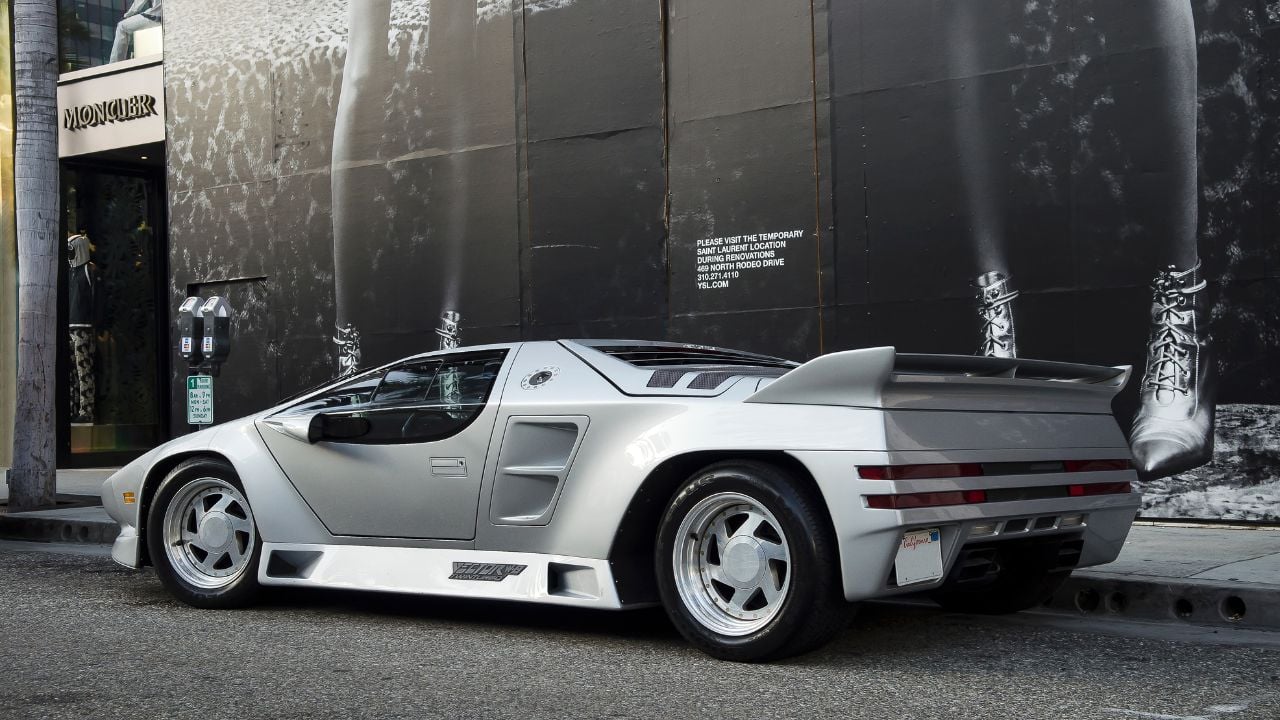
The Vector W8 Twin Turbo was America’s most extreme attempt to build a homegrown supercar on European-supercar terms. It did not look like a Corvette rival or a tuned muscle car. It looked low, angular, aircraft-inspired, and almost experimental.
RM Sotheby’s describes the 1991 Vector W8 as using a transversely mounted, twin-turbocharged 6.0-liter Rodeck V8 rated at 600 hp, with a 0-to-60 mph time of 4.2 seconds and a manufacturer-claimed top speed above 200 mph. Other W8 examples are sometimes described with 625 bhp, which is why the car’s numbers often vary slightly by source and chassis.
The W8 also used a 3-speed automatic gearbox, a detail that sounds strange beside its supercar claims but fits the car’s unusual engineering path. Vector mixed huge turbocharged power, aircraft-style cabin ideas, and dramatic wedge styling into something no Detroit performance brand was building at the time.
Its problem was never a lack of presence. The W8 looked and sounded like a car trying to drag America into the exotic-car fight by force. Vector never became stable enough to challenge Ferrari, Lamborghini, or Porsche at scale, but the W8 still stands as one of the boldest American performance cars of the decade.
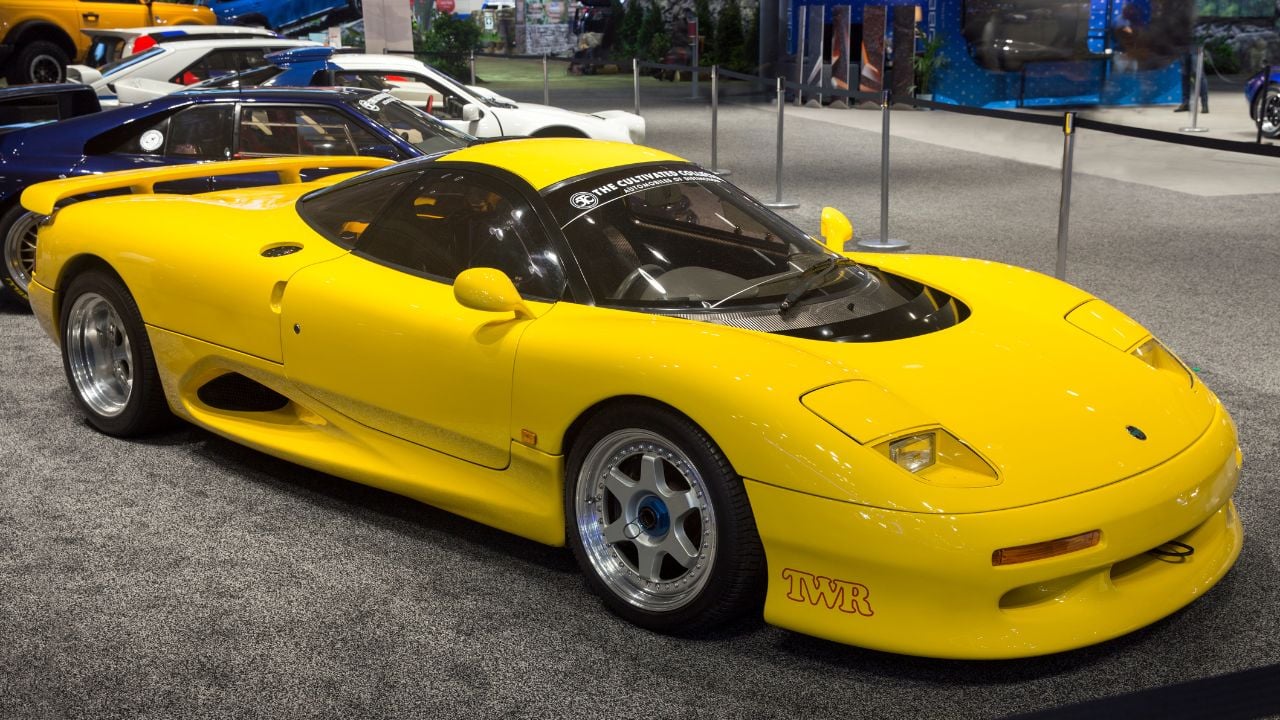
Jaguar XJR-15
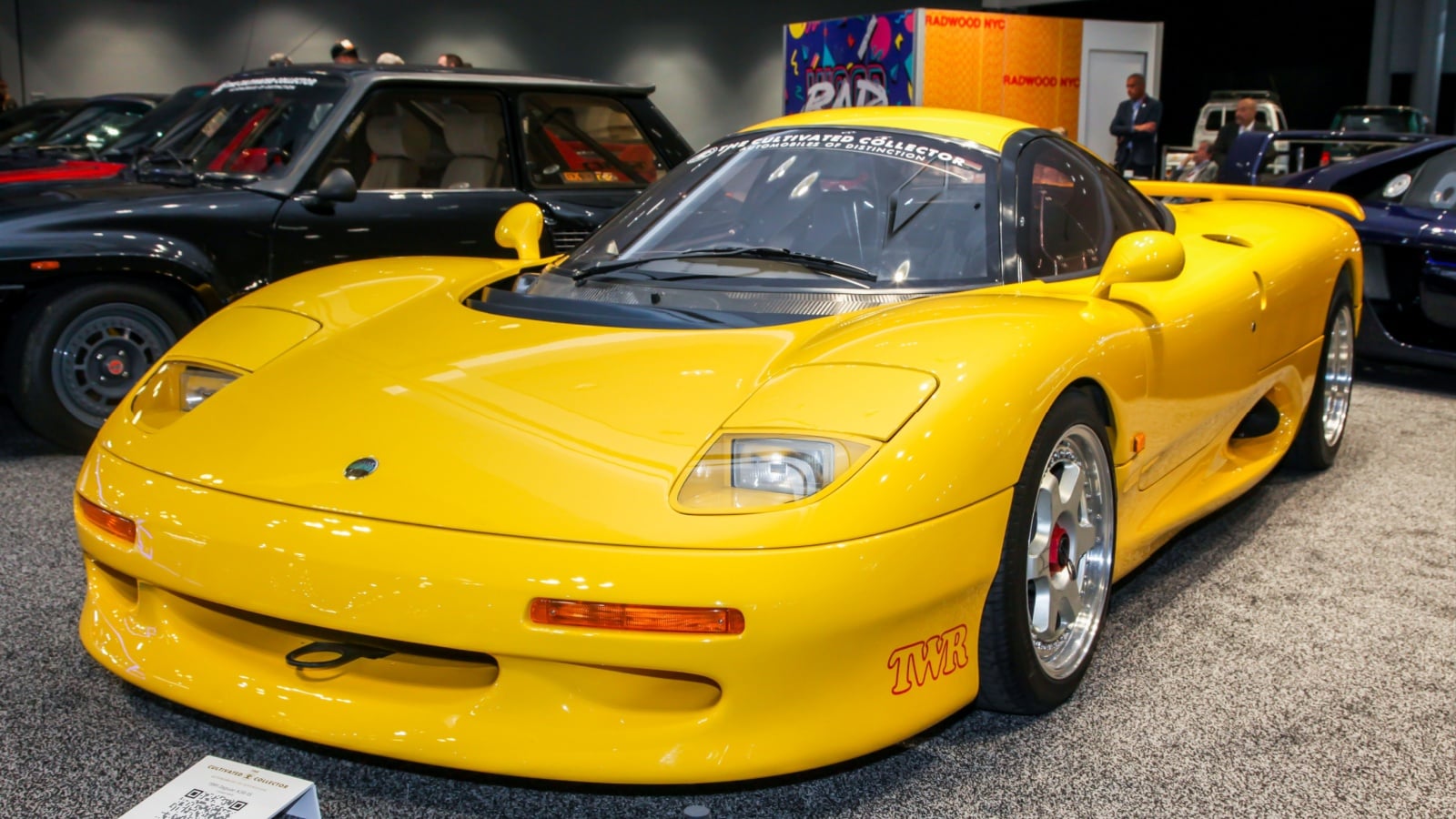
The Jaguar XJR-15 deserves more attention because it was closely tied to Jaguar’s Group C racing era. It arrived before the XJ220 became the better-known Jaguar supercar, but the XJR-15 was the car with the more direct race-bred structure.
Ultimatecarpage notes that the XJR-15 used a carbon-fiber composite monocoque and running gear closely related to the XJR-9. It also used a 6.0-liter V12 based on a production engine, producing around 450 bhp, paired with a TWR 6-speed gearbox developed for Le Mans. A 5-speed synchromesh gearbox was also available as an option.
That made the XJR-15 more than a dramatic road car with racing stickers. It had a carbon structure, a naturally aspirated V12, a low cabin, and a development story rooted in Tom Walkinshaw Racing’s competition work. The road car was raw because it sat so close to the racing world that created it.
The McLaren F1 later became the decade’s most famous carbon-fiber supercar, and the XJ220 became Jaguar’s better-known 1990s exotic. Between those two names, the XJR-15 was pushed into a smaller space in memory. It belongs here because it was serious before many people realized how serious 1990s supercars were becoming.
Lister Storm
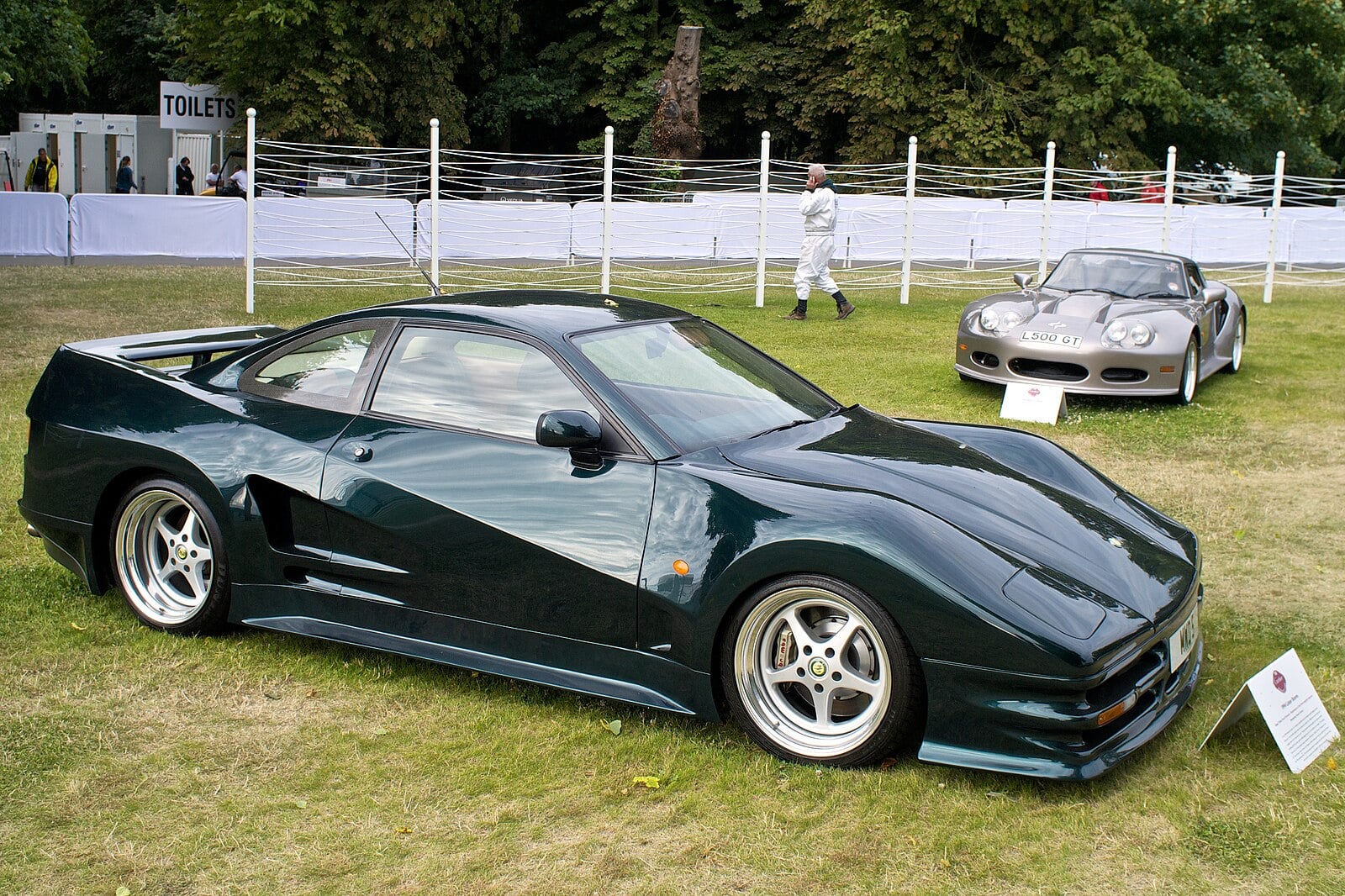
The Lister Storm was a British grand tourer with the hardware to make far more famous supercars nervous. It used a 7.0-liter Jaguar-derived V12, rear-wheel drive, Kevlar and aluminum bodywork, and a shape that looked built around the engine first and styling convention second.
Published output figures for the road car vary, so the safest way to describe it is to note the range. Ultimatecarpage lists the 1993 to 1994 Lister Storm at 545 bhp and 580 lb-ft of torque, while other period-style summaries and databases quote figures closer to 594 hp. Ultimatecarpage also lists only four road cars built, which explains why the Storm remains so rarely seen.
The Storm was not just rare. It was huge, expensive, and mechanically unusual compared with the mid-engine exotics that usually dominate 1990s performance conversations. Its V12 was front-mounted, its cabin was more grand-tourer than stripped-out track special, and its straight-line figures put it in the same discussion as far more familiar supercars.
Lister later developed racing versions from the Storm idea, but the road car already had the ingredients that made it unforgettable: a massive Jaguar-based V12, tiny production, serious speed, and a British badge most casual car fans barely knew. It feels less like a normal GT and more like a privateer endurance-racing project that escaped onto the road.
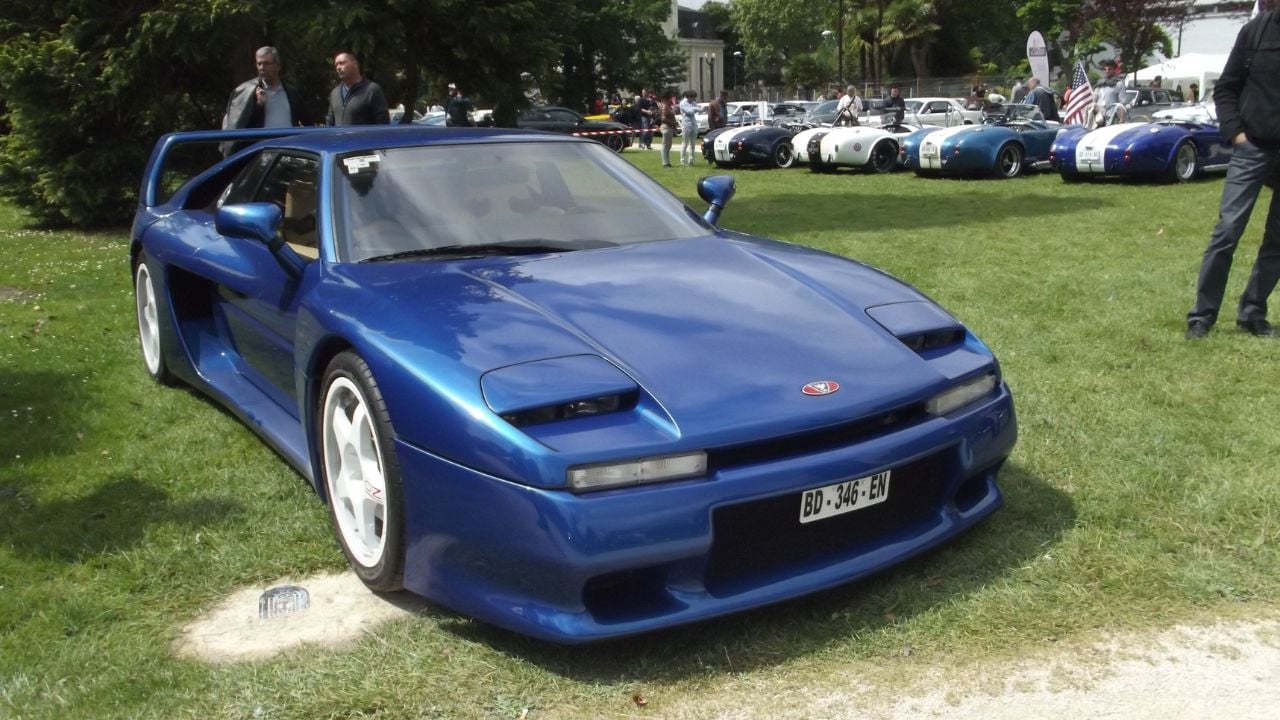
Venturi 400 GT

The Venturi 400 GT is one of the great forgotten French performance cars. It had the profile of a proper mid-engine exotic, but the Venturi name never had the global pull of Ferrari, Porsche, or Lamborghini. That kept the car hidden from many mainstream supercar conversations.
The competition 400 GT Trophy came first. RM Sotheby’s describes the 1994 Venturi 400 GT Trophy as using a V6 developed jointly by Peugeot, Renault, and Volvo, producing 400 bhp in a car weighing under 1,200 kg. The road-going 400 GT carried the idea onto the street with a twin-turbo V6 producing 408 hp, according to Ultimatecarpage.
Ultimatecarpage also notes that the 400 GT used a SADEV 5-speed manual gearbox and fitted carbon-ceramic disc brakes as standard. The same source describes it as the first production road car to use carbon-ceramic disc brakes as standard, a detail that gives the Venturi real technical importance beyond its rarity.
That matters because the 400 GT was not only an obscure French exotic with sharp looks. It had competition roots, a serious power-to-weight story, specialized braking hardware, and a layout that put it in the same broad world as the better-known mid-engine supercars of the decade. The badge was quiet. The engineering was not.
Why These Forgotten Cars Still Matter
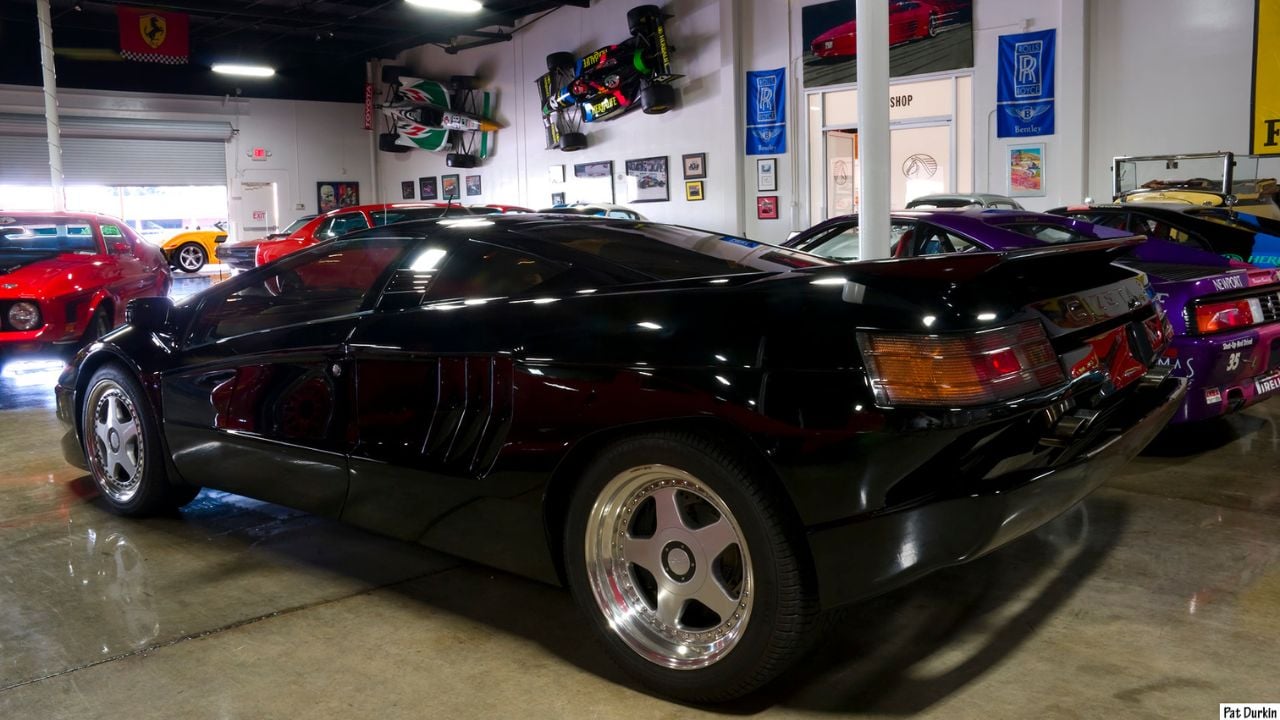
The most famous 1990s performance cars earned their reputations, but they do not explain the whole decade. The same era also produced cars from smaller companies that worked with far less money, fewer dealers, weaker brand recognition, and much thinner safety nets if the project failed.
That pressure produced strange results. The Cizeta V16T used a transverse V16 when almost nobody else would attempt one. The Vector W8 Twin Turbo gave America a wedge-shaped, twin-turbo supercar with aircraft influence. The Jaguar XJR-15 brought Group C hardware closer to the road. The Lister Storm turned a huge Jaguar-derived V12 into a tiny-production GT. The Venturi 400 GT put serious racing ideas and carbon-ceramic brakes into a French mid-engine exotic.
These cars were not forgotten because they lacked ambition. They were forgotten because ambition was expensive, production was tiny, and buyers often chose the badge they already trusted. Ferrari, Lamborghini, Porsche, Jaguar’s own XJ220, and later McLaren all had easier paths into the public imagination.
Today, the same problems make these cars worth revisiting. They show the 1990s as a decade of risk, not just nostalgia. Behind the obvious legends were machines with V16s, twin turbos, carbon tubs, giant V12s, racing gearboxes, and technology that arrived earlier than many people remember.