

For decades, parking enforcement in major American cities has relied on familiar tools: tickets tucked under wipers, wheel boots clamped onto tires, and the looming threat of towing. Now, a new device spreading across urban streets is triggering fascination, ridicule, and debate online after a viral post highlighted its unusual approach to immobilizing vehicles.
According to a viral X post shared by Science Girl, the New York City Police Department is using “Barnacles” to combat illegal parking. The post described the devices as “commercial-grade suction devices” that attach to windshields with roughly 1,000 pounds of force, making removal extremely difficult without a proper release mechanism.
The image instantly sparked thousands of reactions online, with commenters ranging from amused to furious. Many compared the devices to oversized GPS trackers or dystopian movie props.
Others saw them as another example of cities leaning into aggressive enforcement tactics as congestion and parking violations continue to plague dense urban centers. This represents the latest national headline coming from New York.
From Wheel Boots to Windshield Locks
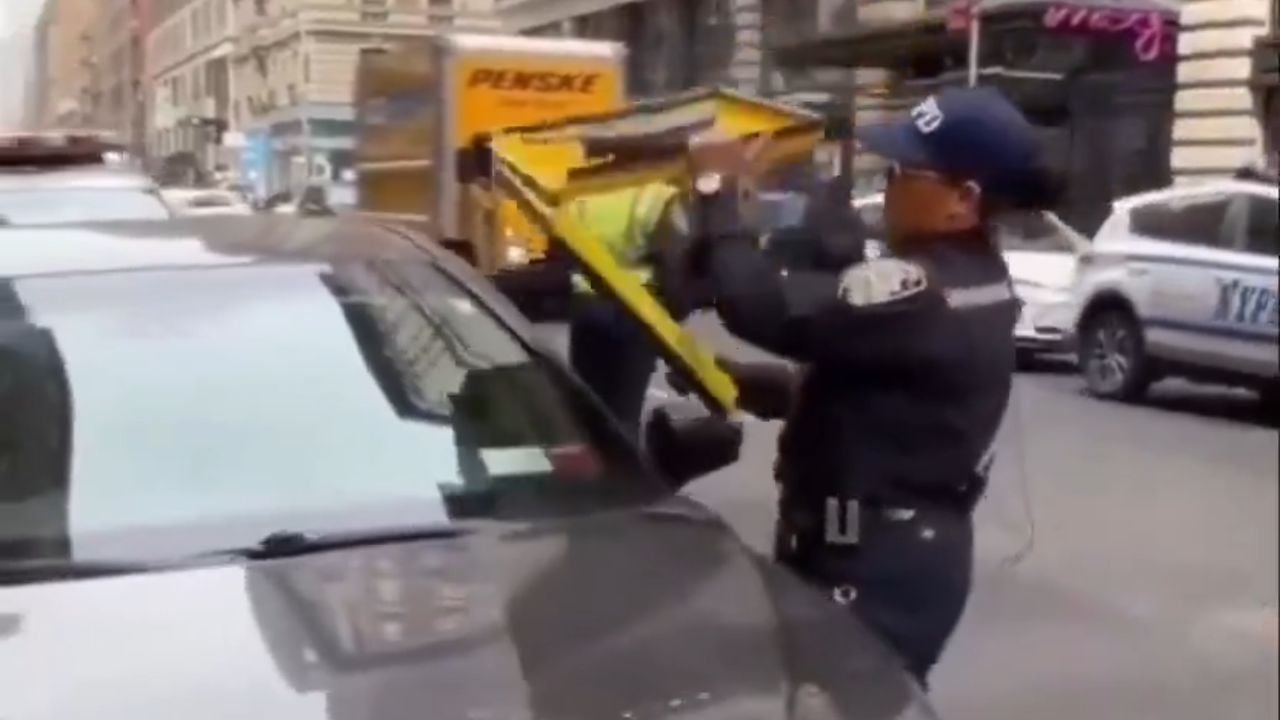
The device itself is officially known as the Barnacle Parking Enforcement Device. Unlike traditional wheel boots that require officers to crouch beside tires, the Barnacle adheres directly to a windshield using industrial-strength vacuum pressure.
Once attached, it blocks visibility and displays instructions for payment or release. The concept actually isn’t new.
It emerged in the mid-2010s as municipalities searched for alternatives to conventional booting systems, which can be heavy, time-consuming, and dangerous for enforcement officers working near traffic. Companies behind the technology argued that suction-based immobilizers are lighter, safer, and faster to deploy.
Cities including New York, Los Angeles, and Philadelphia have experimented with versions of the technology, particularly for repeat parking offenders. The devices are also equipped with GPS and tamper-detection systems in some deployments, allowing authorities to monitor whether a vehicle has been moved illegally.
Historically, parking enforcement has always evolved alongside urban growth. In the early 20th century, cities mainly relied on handwritten citations.
Mechanical parking meters exploded in popularity after the 1930s. Wheel boots became widespread in the 1980s as municipalities sought tougher deterrents for chronic violators. The Barnacle represents the next phase in that progression, one shaped by surveillance technology and automation.
Internet Reactions Reveal a Deeper Frustration
The viral post’s comment section became less about the device itself and more about public resentment toward modern enforcement culture. Some commenters mocked the idea outright.
One joked that “the windshield got violated professionally,” while another imagined explaining to a boss that their car had been “vacuum sealed.” Small-town users contrasted the high-tech enforcement with rural social pressure, joking that in some communities the punishment for bad parking is simply becoming gossip material for years.
Others focused on workarounds and resistance. Several users referenced online videos allegedly showing how the devices can be removed, while one commenter speculated about intentionally breaking the windshield and filing an insurance claim afterward. That suggestion crossed into potential insurance fraud territory, underscoring how emotionally charged parking penalties can become.
Tesla owners and EV enthusiasts also entered the discussion. One user argued that advanced driver assistance systems like Tesla Full Self-Driving would still function because parts of the windshield used by the Barnacle are not essential to visibility sensors. Whether true across all vehicle configurations remains uncertain, but the comment highlighted how enforcement technology is now colliding with increasingly software-driven vehicles.
The most common criticism, however, centered on money. Numerous commenters accused cities of using enforcement primarily as a revenue-generation mechanism rather than a public-order tool. That sentiment has become increasingly common in debates surrounding automated traffic cameras, congestion pricing, and urban parking fines.
Why Cities Keep Escalating Enforcement
Urban transportation experts argue that cities are under mounting pressure to manage overcrowded streets, delivery congestion, ride-share traffic, and limited parking availability. Illegal parking can block bus lanes, delay emergency responders, and disrupt commercial corridors. New York City alone issues millions of parking citations annually, generating substantial revenue while also serving as a traffic management strategy.
The NYPD is using “Barnacles” to tackle illegal parking.
These are commercial-grade suction devices that attach to vehicle windows with around 1,000 pounds of force, making them extremely difficult to remove without proper release. pic.twitter.com/8JxY2tdyIX
— Science girl (@sciencegirl) May 8, 2026
Enforcement agencies contend that repeat offenders often ignore standard tickets, forcing cities to adopt stronger deterrents. Still, devices like the Barnacle raise uncomfortable questions about how far enforcement should go in public spaces increasingly filled with cameras, sensors, and automated monitoring systems.
To critics, the device symbolizes a growing imbalance between citizens and municipal authority. To supporters, it is simply a modern answer to an old urban problem. Either way, the Barnacle has succeeded in one respect few parking tools ever achieve: it has made parking enforcement go viral.