The 1960s collector market has an obvious front row. Hemi Mopars, Shelby Mustangs, split-window Corvettes, early Camaros, Boss Fords, and famous big-block muscle cars already have the attention, the auction headlines, and the pricing pressure.
Some of the more interesting buys now sit just below that headline tier. Collectors are paying closer attention to cars with strong design, unusual engineering, lower production stories, loyal clubs, and values that still leave room for careful buying.
These cars are not hidden. Buick Riviera fans, Toronado defenders, AMC loyalists, Cougar collectors, and Corvair people have been making the case for years. The difference is that broader collector interest is now taking those arguments more seriously.
Each model here comes from the 1960s and has a clear reason to matter today: design, engineering, rarity, relative value, or a collector identity that does not depend on chasing the most obvious badge in the room.
The Collector Logic Behind These Picks
This selection focused on 1960s cars with credible collector momentum, distinctive engineering, strong design identity, and active U.S. market visibility. A car needed more than age or nostalgia to qualify.
The strongest candidates offered at least one clear reason buyers are paying closer attention now: rare packaging, an underappreciated performance story, respected styling, an unusual mechanical layout, a loyal enthusiast base, or a market position that remains more accessible than the decade’s most famous models.
Current auction and marketplace data helped support the choices, while famous blue-chip models were left outside the list. The goal was to focus on cars that already have real collector credibility but still feel more thoughtful than the default 1960s muscle-car picks.
1963 To 1965 Buick Riviera

The first-generation Buick Riviera has the kind of design that keeps aging well. Its low roof, clean sides, sharp nose, and balanced proportions gave Buick one of the strongest personal-luxury coupes of the decade.
The 1965 Gran Sport is the version collectors usually watch closest. Car and Driver’s archive test lists the Riviera Gran Sport with a 425-cu-in V8 producing 360 hp and 465 lb-ft of torque.
Classic.com currently lists the first-generation Riviera’s average sale price at $51,842, with the highest recorded first-generation sale at $275,000 for a 1965 Riviera GS in January 2024.
The collector case is straightforward. A first-generation Riviera looks expensive, delivers big Buick torque, and feels more refined than many louder muscle cars from the same period.
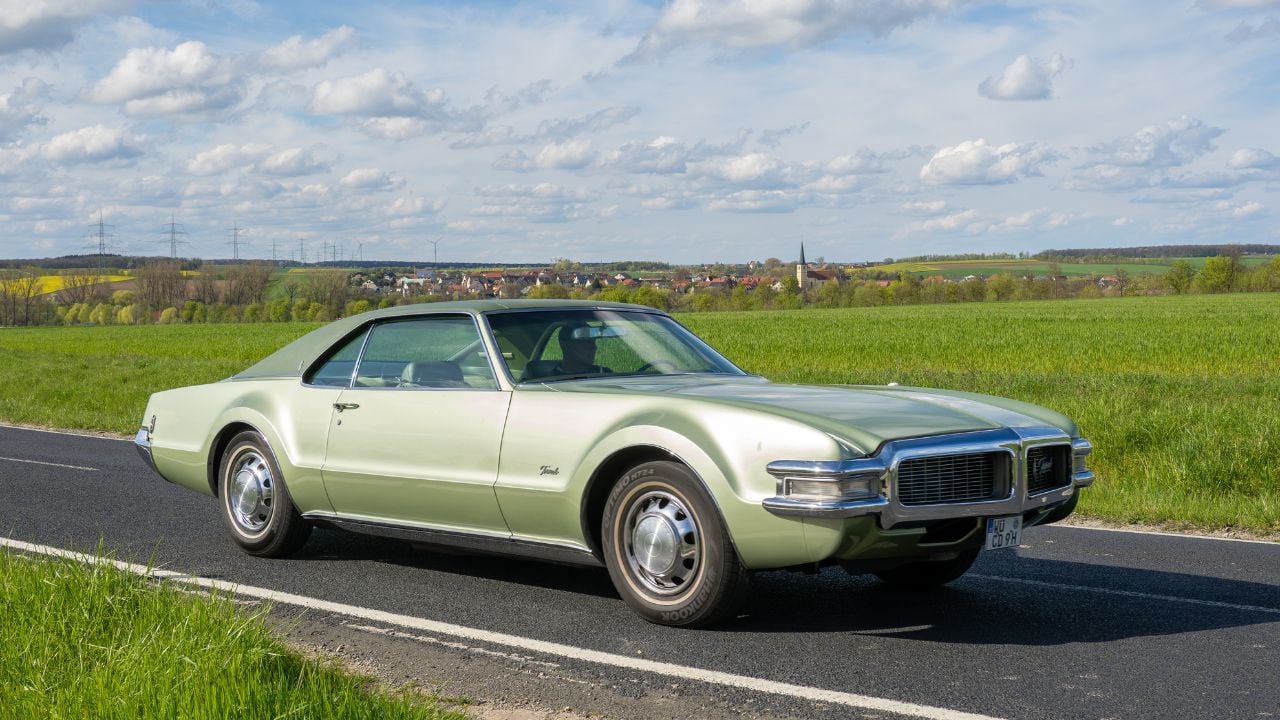
1966 To 1970 Oldsmobile Toronado

The Oldsmobile Toronado is the collector pick for buyers who care about engineering as much as styling. The 1966 model brought front-wheel drive back to American production cars in a major way, wrapped in a long, low personal-luxury body.
MotorTrend described the original Toronado as the first front-drive American production car since the 1937 Cord 810 and 812. Its specifications list a 425.2-cu-in V8 producing 385 hp and 475 lb-ft of torque, paired with a 3-speed automatic and front-wheel drive.
Classic.com shows recent 1966 Toronado sales mostly from the high teens into the mid-$30,000 range, while the first-generation Toronado market’s highest recorded sale remains $49,000 for a 1966 Toronado Deluxe in March 2023.
The Toronado still feels slightly outside the usual 1960s collector script. It has dramatic styling, serious torque, front-drive significance, and a market position that remains more approachable than many better-known big-block coupes.
1968 To 1970 AMC AMX
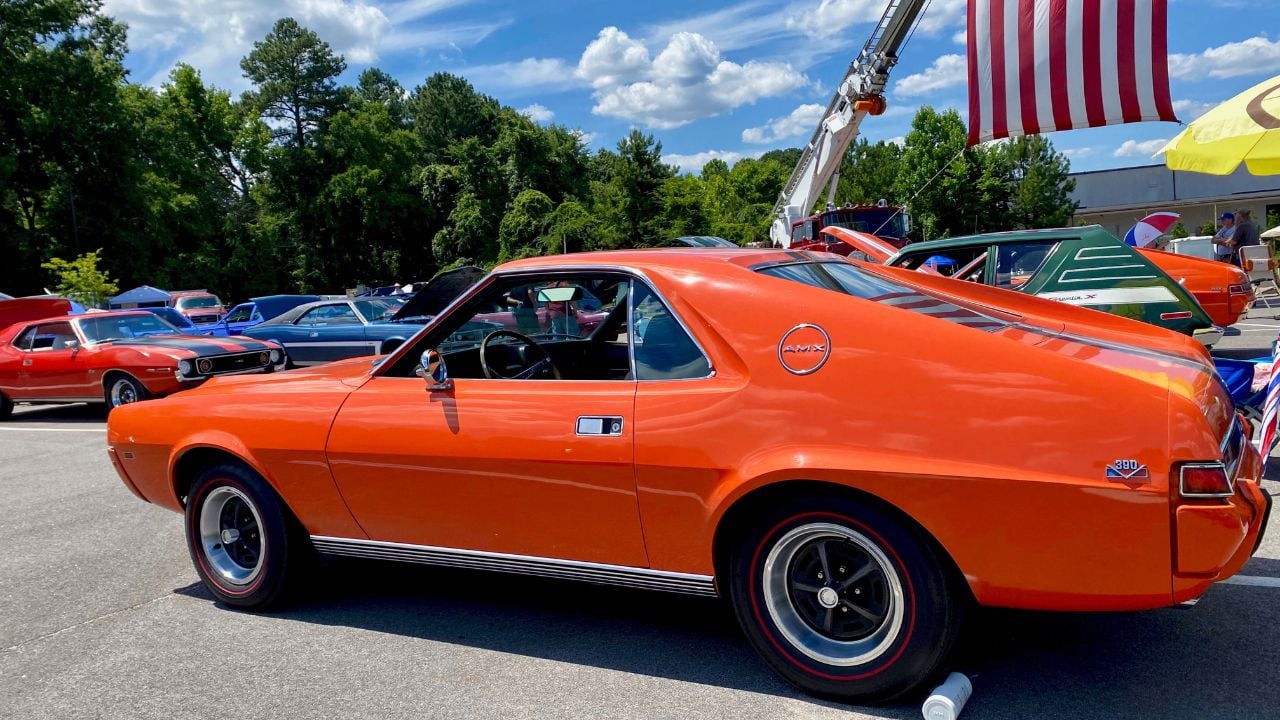
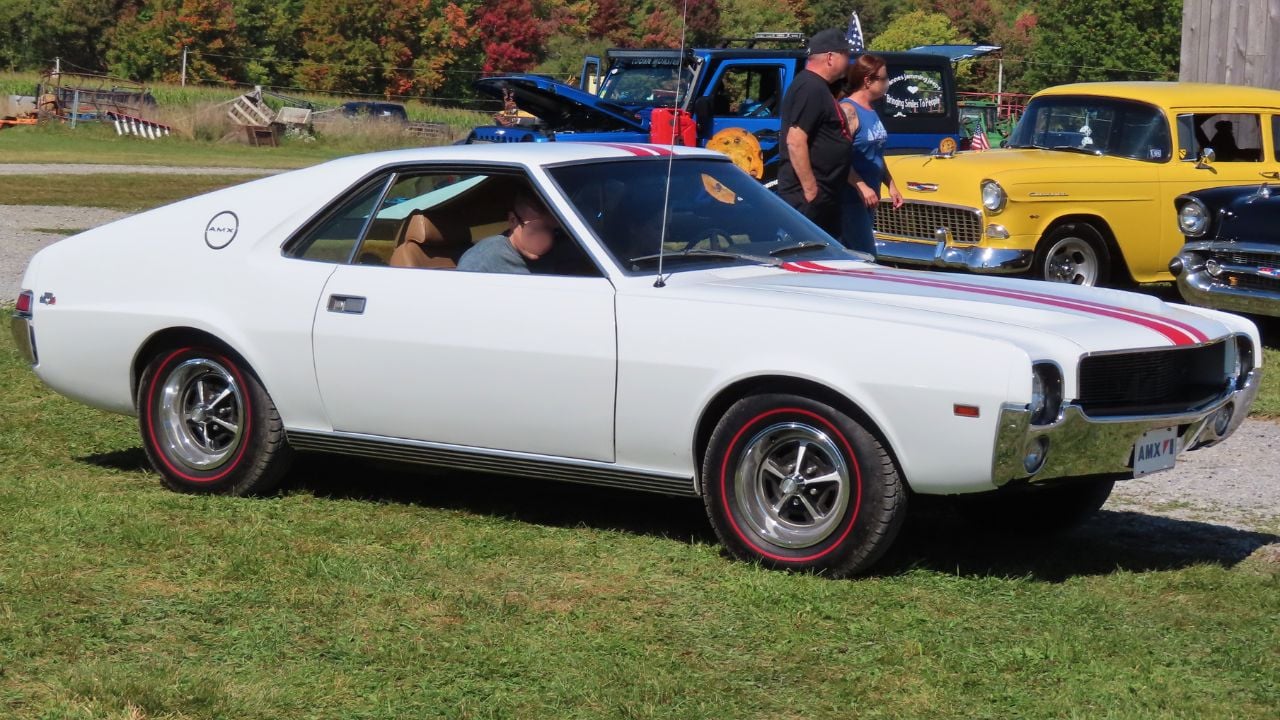
The AMC AMX is the two-seat muscle car that still feels different from the bigger Detroit names. It was short, bold, V8-powered, and more serious than AMC’s outsider image sometimes suggested.
HowStuffWorks notes that the 1968 AMX came with a standard 225-hp 290-cu-in V8, while buyers could step up to a 280-hp 343-cu-in V8 or a 315-hp 390-cu-in V8.
Classic.com currently lists the AMX average sale price at $43,245. Current 1968 examples also show a wide range of market activity, from driver-quality cars in the $30,000s to more expensive, better-optioned examples.
The AMX belongs here because rarity matters. It gives collectors a real two-seat American performance car without following the Mustang, Camaro, Corvette, or Mopar path.
1967 To 1970 Mercury Cougar
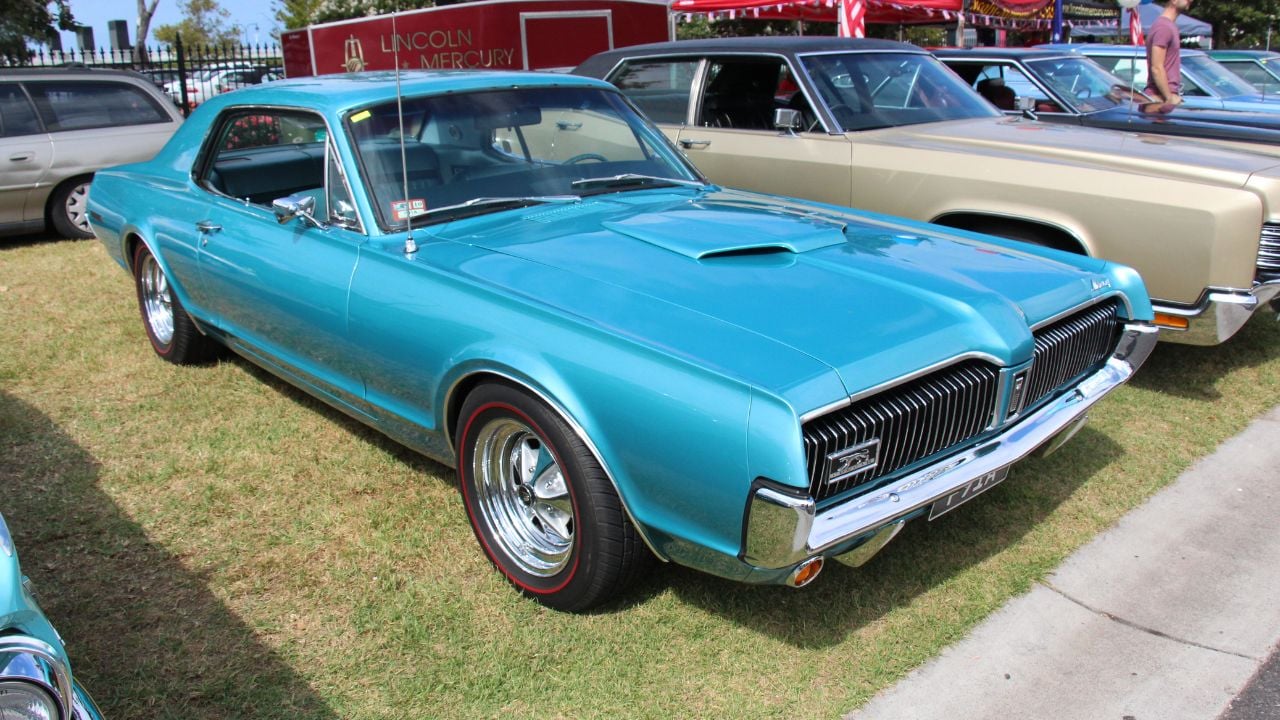
The first-generation Mercury Cougar has been gaining respect because it offers Mustang-related bones with a more mature personality. It was longer, more detailed, and positioned as a more upscale pony car.
The right versions also bring real performance credibility. Over-Drive’s 1967 Cougar fact sheet notes that the GT package included the 390-cu-in V8, special handling package, Wide Oval tires, low-back-pressure dual exhausts, and power disc brakes.
Classic.com currently lists the first-generation Cougar’s average sale price at $47,797, with current 1967 listings showing active buyer interest across several trims and conditions.
The Cougar works as a smarter collector pick because it is familiar without being obvious. It has Ford parts support, Mercury styling, stronger trim differentiation, and a more formal character than the Mustang.
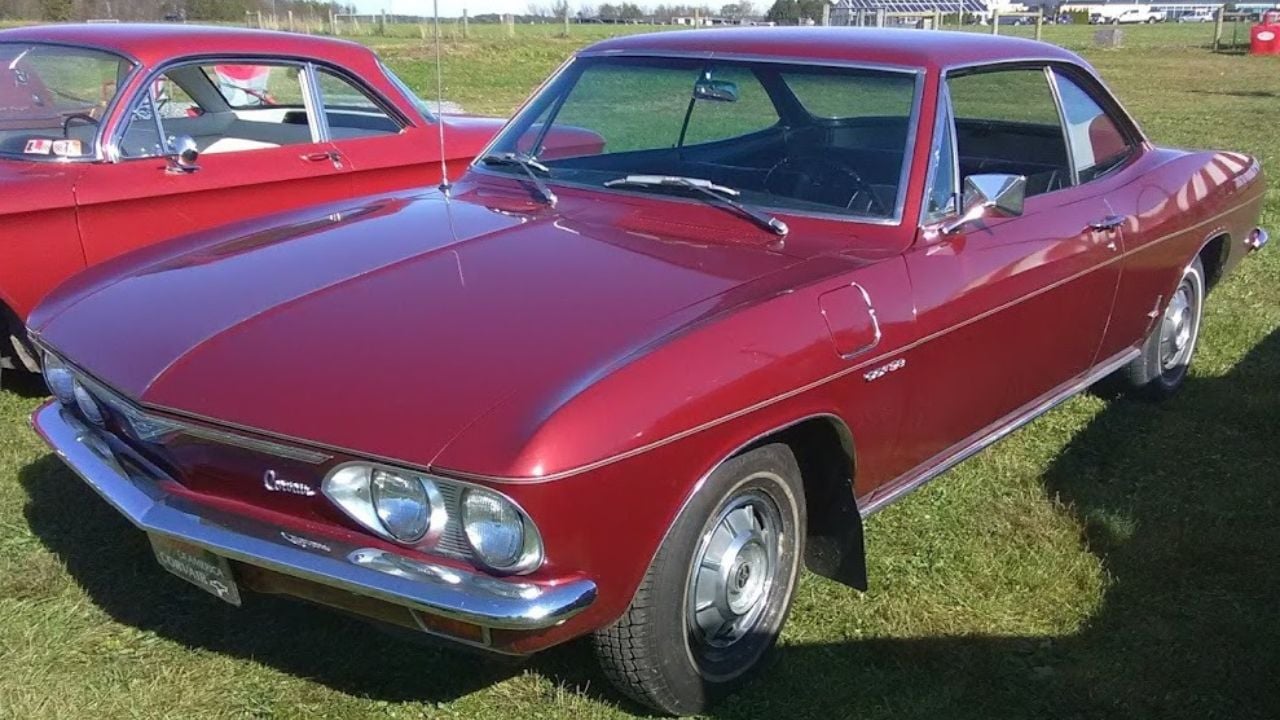
1965 To 1966 Chevrolet Corvair Corsa

The Chevrolet Corvair Corsa is the engineering-minded 1960s Chevy collectible. It does not have Camaro swagger or Corvette mythology, but it has a rear-mounted, air-cooled flat-six, clean second-generation styling, and a loyal enthusiast community.
The redesigned 1965 Corvair also brought a fully independent rear suspension, which made the second-generation cars more appealing to collectors who care about chassis development. The Corsa was the performance-minded version, with the turbocharged 164-cu-in flat-six rated at 180 hp in 1965 and 1966.
Classic.com currently shows active second-generation Corvair market visibility, with 1965-to-1969 cars remaining much more approachable than many collector favorites from the same decade.
A clean Corsa gives buyers unusual engineering, strong visual charm, and a story separate from the usual muscle-car script. That is why it keeps earning attention from collectors who want something more technical than another small-block coupe.
Why These 1960s Collector Cars Are Gaining Respect
Collector interest does not only follow horsepower or badge fame. Design quality, mechanical layout, production context, club support, parts availability, and relative value can all push a car into a stronger market position.
The Riviera makes its case through design and torque. The Toronado adds front-drive significance. The AMX brings rarity and two-seat muscle. The Cougar gives buyers a more upscale pony-car alternative. The Corvair Corsa offers unusual engineering at a more approachable price point.
Those are specific reasons to care, not just nostalgia. Each car gives collectors a story that is easier to defend as prices for the biggest 1960s names keep climbing.
That is why these models are becoming smarter picks. They still have character, market activity, and enthusiast support, but they do not require buyers to chase the same cars everyone else already agrees on.