
A debate event meant to foster dialogue on one of the most divisive topics in the world ended with police reports, injured feet, and a university president insisting his car’s automatic braking system saved the day. Not exactly how anyone planned to spend a Thursday night in Ithaca, New York.
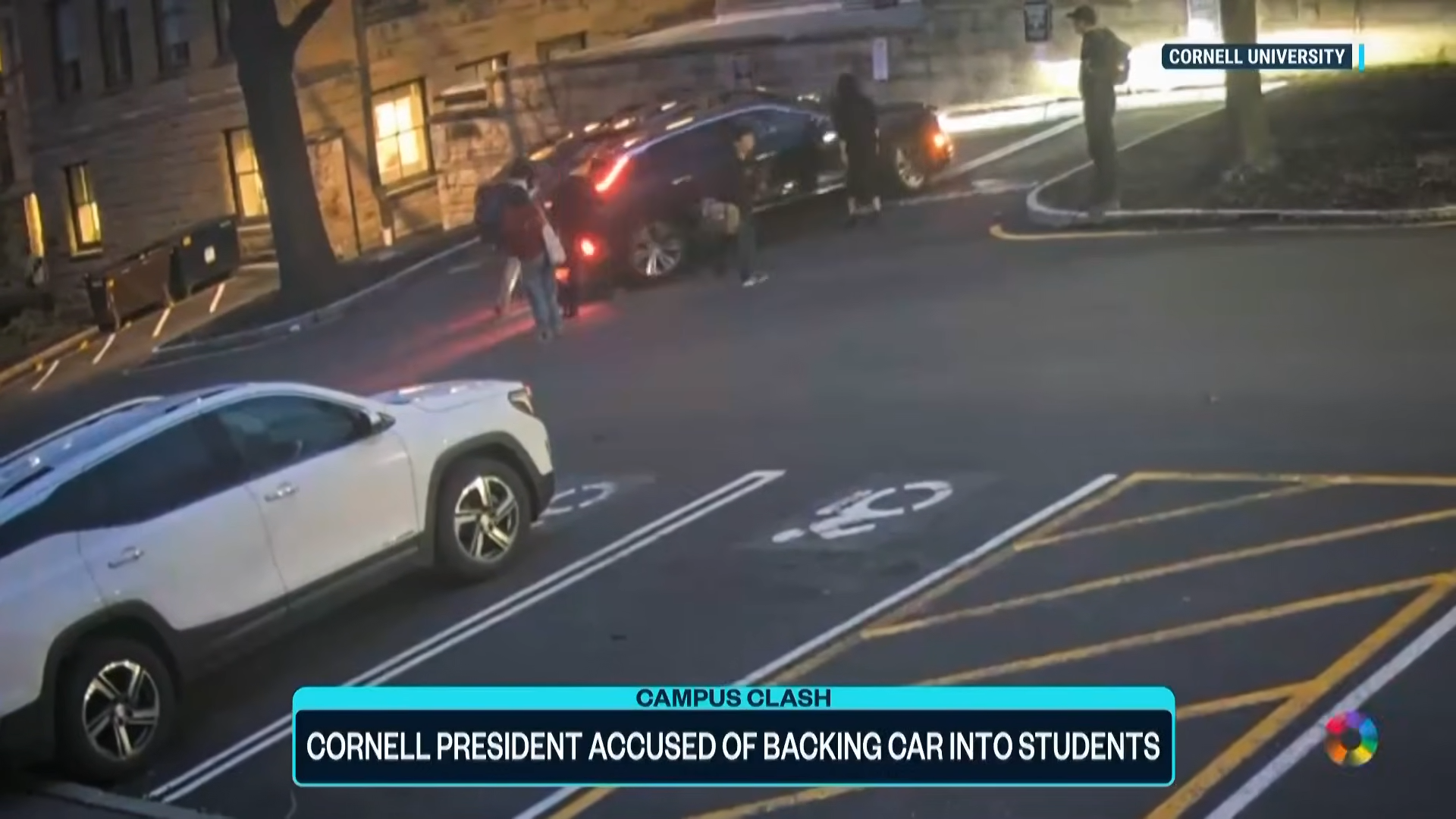
Cornell University President Michael Kotlikoff found himself at the center of a viral controversy after video footage surfaced appearing to show him backing his car into a student protester in a campus parking lot. The incident followed a debate organized by the Cornell Political Union at Goldwin Smith Hall, where several student groups had gathered to discuss the ongoing conflict in the Middle East. Among those present were Cornell Progressives, Cornellians for Israel, and Students for Justice in Palestine, meaning just about every perspective on the issue was accounted for under one roof.
What started as a structured conversation did not end that way. As Kotlikoff left the building after the event, a group of demonstrators followed him all the way to his vehicle. In a written statement he released the following day, the Cornell president said he tried to disengage, told the students he would not be answering further questions, and asked them to stop recording. That request, by all accounts, did not go over well.
The confrontation escalated quickly in the parking lot, with students allegedly surrounding the vehicle, banging on windows, and blocking the car from moving. Then came the moment that set the internet on fire: video footage that appeared to show Kotlikoff’s car rolling backward and making contact with at least one student.
What Kotlikoff Says Happened
Kotlikoff was not shy about sharing his version of events. In his Friday statement, he described the scene as one of harassment and intimidation, saying the demonstrators refused to stop recording him and physically surrounded his vehicle after he tried to leave.
When it came time to actually drive away, he said he waited until he spotted a clear path behind the car before slowly maneuvering out of the parking space. He credited his car’s rear pedestrian alert and automatic braking system for allowing him to exit safely, framing the vehicle’s technology as a safeguard rather than an obstacle.
In other words, the university president’s argument is essentially: the car did what it was supposed to do, and nobody was in serious danger because of it.
What Students Say Happened
Student activist group Students for a Democratic Cornell told a notably different story. According to the group, Kotlikoff had already been dismissive of student attempts at conversation before anything involving the car took place. They posted video to social media that they say shows him backing directly into a student and rolling over the foot of another.
The group also reported that the student whose foot was injured received on-site medical attention from Cornell EMS, and that the student expressed concern about potential retaliation for pursuing any kind of legal action against university leadership. That detail adds a layer of seriousness to what might otherwise be dismissed as a heated but minor campus incident.
Cornell’s Official Response
The university acknowledged the situation and confirmed it is actively investigating what happened. A spokesperson noted that not all individuals involved in the incident are confirmed to be current Cornell students, which could complicate how the university proceeds.
The official statement indicated that the university would take action consistent with its policies once the investigation wraps up, emphasizing its commitment to maintaining a safe campus environment. What that action might look like, or who it might be directed at, was left deliberately vague.
What This Incident Reveals About Campus Tensions
Beyond the specifics of this particular parking lot standoff, the Cornell incident reflects a much broader pattern playing out at universities across the country. Debates over the Middle East conflict have turned into some of the most charged moments in recent campus history, and the line between protected protest and harassment has become a genuinely complicated legal and ethical question.
Kotlikoff’s invocation of feeling harassed is not accidental. Universities have been under enormous pressure from multiple directions: criticized by some for not doing enough to protect free speech and protest rights, and by others for failing to crack down on what they see as targeted intimidation. A university president claiming victimhood after a confrontation with his own students is a striking image, whatever the facts ultimately show.
It also raises real questions about what responsible de-escalation looks like in these moments, from both sides. Following someone to their car and blocking their exit is a confrontational tactic. Slowly driving through a crowd of people, whatever the car’s safety features may be, is also not a neutral act. The investigation will have to sort through all of it, and the outcome is likely to satisfy very few people on either side.