Ford’s best concept cars were never just styling exercises parked under bright lights. At their strongest, they were rolling out arguments about where the company thought design, performance, technology, and daily life might go next.
That history is richer than a simple gallery of unrealized machines. It includes an atomic-age fantasy, the first car to wear the Mustang name, a wind-slicing aerodynamic experiment, two ambitious supercar statements, a centennial-era revival that quickly became real, and a design manifesto that helped reshape Ford’s modern lineup.
Some concepts mattered because they previewed what customers would eventually buy. Others captured Ford’s imagination at full reach, giving the brand a bolder public face than any production model could manage at the time.
The greatest ones did both. They looked ahead, stood apart, and still help explain how Ford sees itself when the brief becomes bigger than the showroom.
When A Concept Car Changes The Conversation
A great Ford concept needs more than a dramatic shape. Historical importance inside the company, originality of design or engineering, influence on later production vehicles, and lasting recognition in automotive culture all carry weight.
Production was never a requirement. Some of Ford’s most important concepts were too ambitious, too experimental, or too tied to a particular cultural moment to reach dealerships. The stronger test is whether the car changed how people thought about Ford.
Pure styling studies can still matter when the visual impact is strong enough, but the most important concepts usually do more than decorate an auto-show stand. They introduce names, ideas, proportions, technologies, or design languages that continue to echo years later.
1958 Ford Nucleon

The Nucleon remains one of the boldest ideas Ford ever showed to the public. The Henry Ford describes it as a 3/8-scale model created to explore how a different energy source might reshape automotive design, with a rear-mounted, self-contained nuclear reactor imagined as the power source.
The idea never had a realistic path to production, but realism was never the point. The Nucleon captured a moment when nuclear power seemed, to many people, like the answer to almost everything. It turned that optimism into a car-shaped object from a future that never arrived.
That gives the Nucleon a lasting power few more practical concepts can match. It does not preview a production Ford. It preserves the ambition of an era when the future looked enormous, technical, and almost limitless.
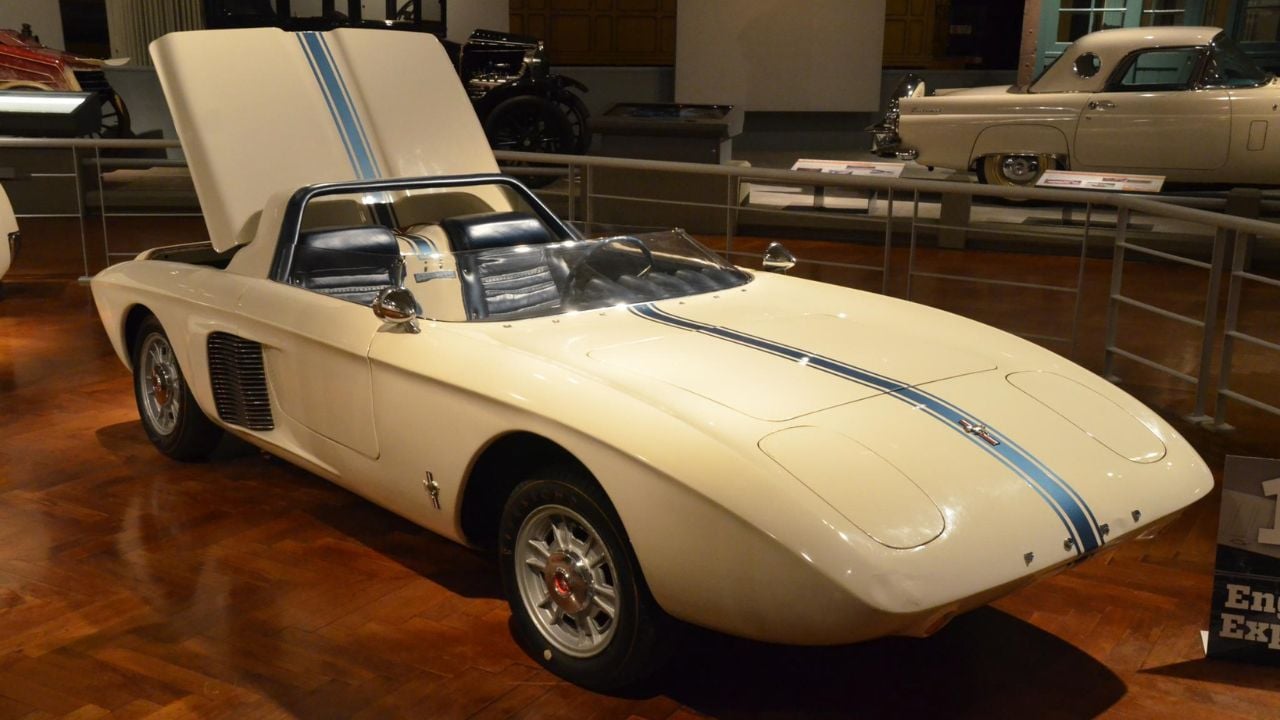
1962 Ford Mustang I
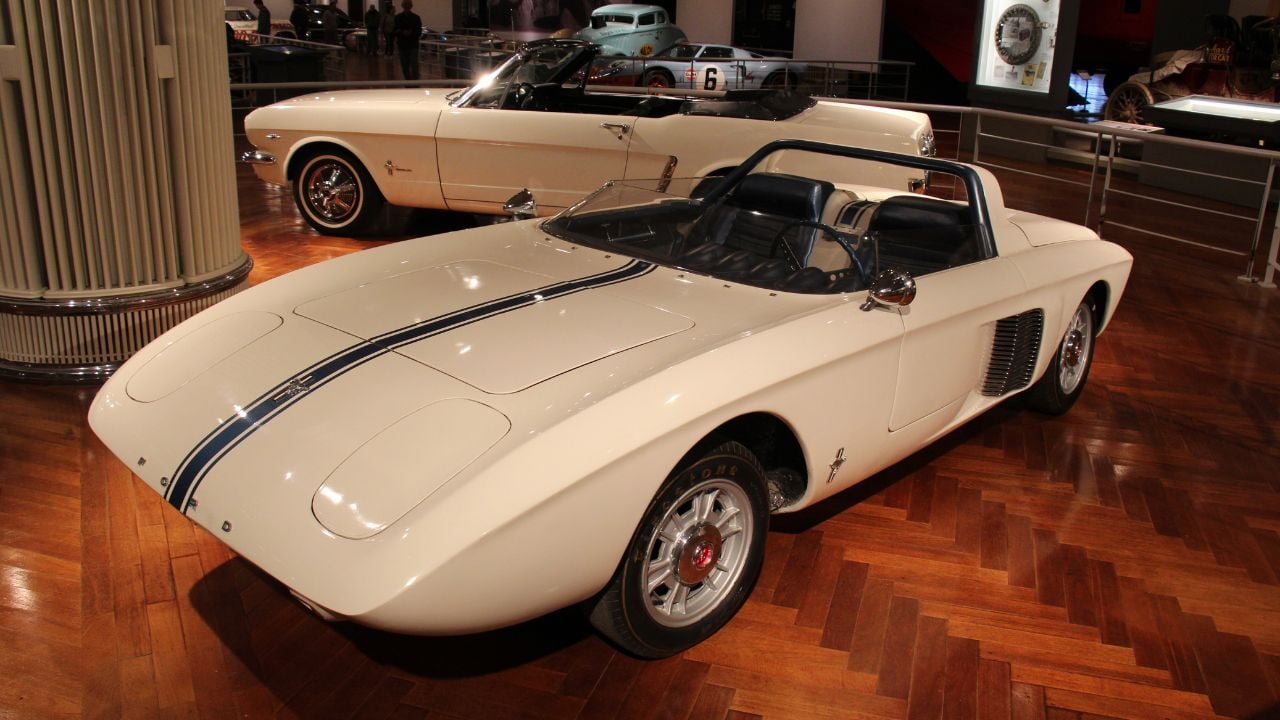
Few concept cars have introduced a more important name. The Mustang I was a sleek, mid-engine, two-seat experimental sports car, and The Henry Ford notes that it was created to generate excitement around Ford’s commitment to performance and sharpen the company’s public image.
It achieved that goal quickly. MotorTrend has recalled that the car made its public debut at Watkins Glen in October 1962, where Dan Gurney drove the running prototype and gave the new Mustang name instant visibility.
The production Mustang that followed took a very different shape, but the concept still carries enormous historical weight. It introduced the identity before the formula was finalized, putting one of the most famous model names in automotive history into public circulation for the first time.
1985 Ford Probe V
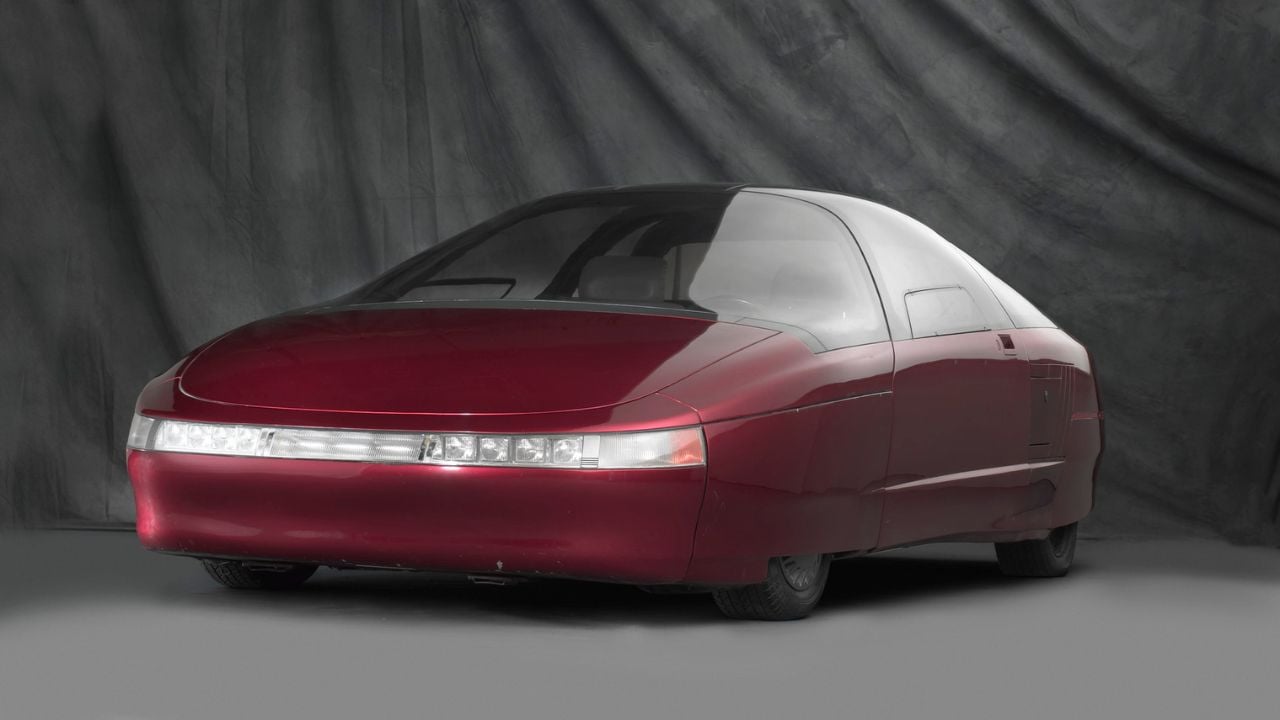
The Probe V pushed Ford’s aerodynamic thinking to an extreme. Motor1 has noted that it was the last of five Probe concepts developed between 1979 and 1985 to showcase aerodynamic advances and that its drag coefficient reached an extraordinary 0.137.
That number still sounds almost unreal. The Probe V was not chasing nostalgia, muscle, or glamour. It treated air itself as the design problem, then shaped the body around efficiency with a level of commitment few production cars could approach.
The result looked like a science project made beautiful. Its importance sits in the discipline of the experiment: Ford was not just sketching a sleek car but testing how far aerodynamic design could go when efficiency became central rather than secondary.
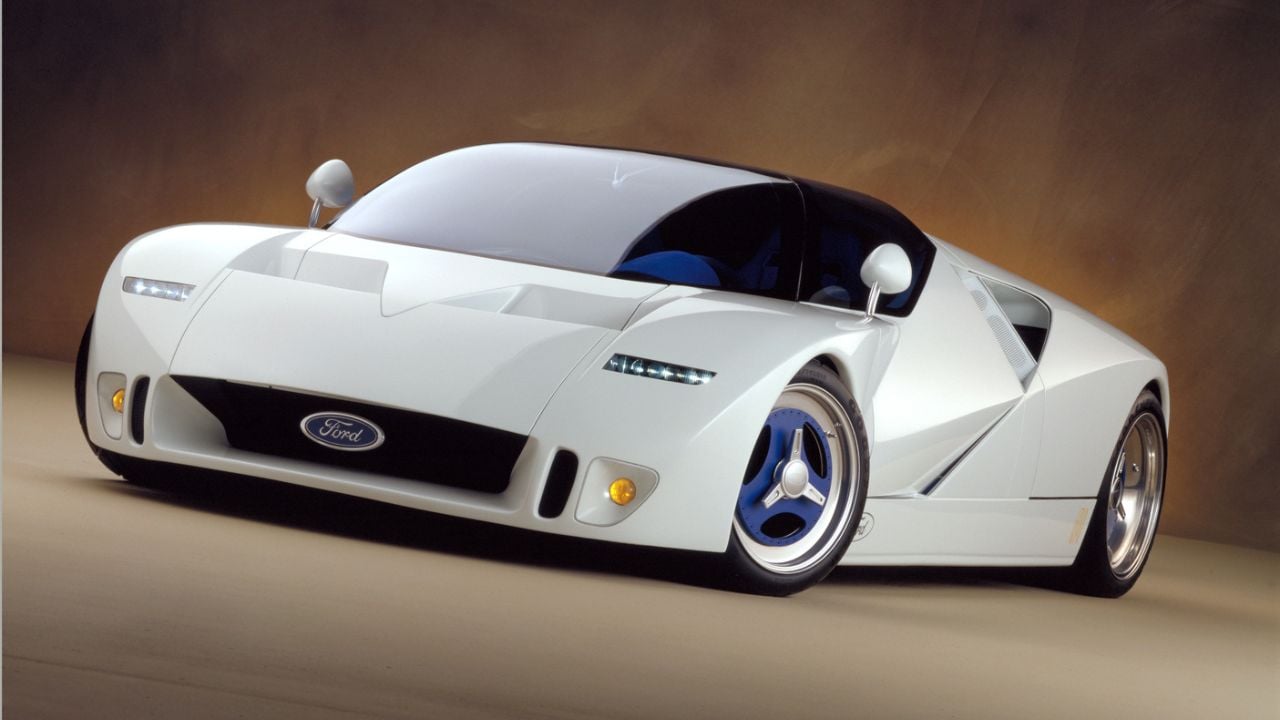
1995 Ford GT90
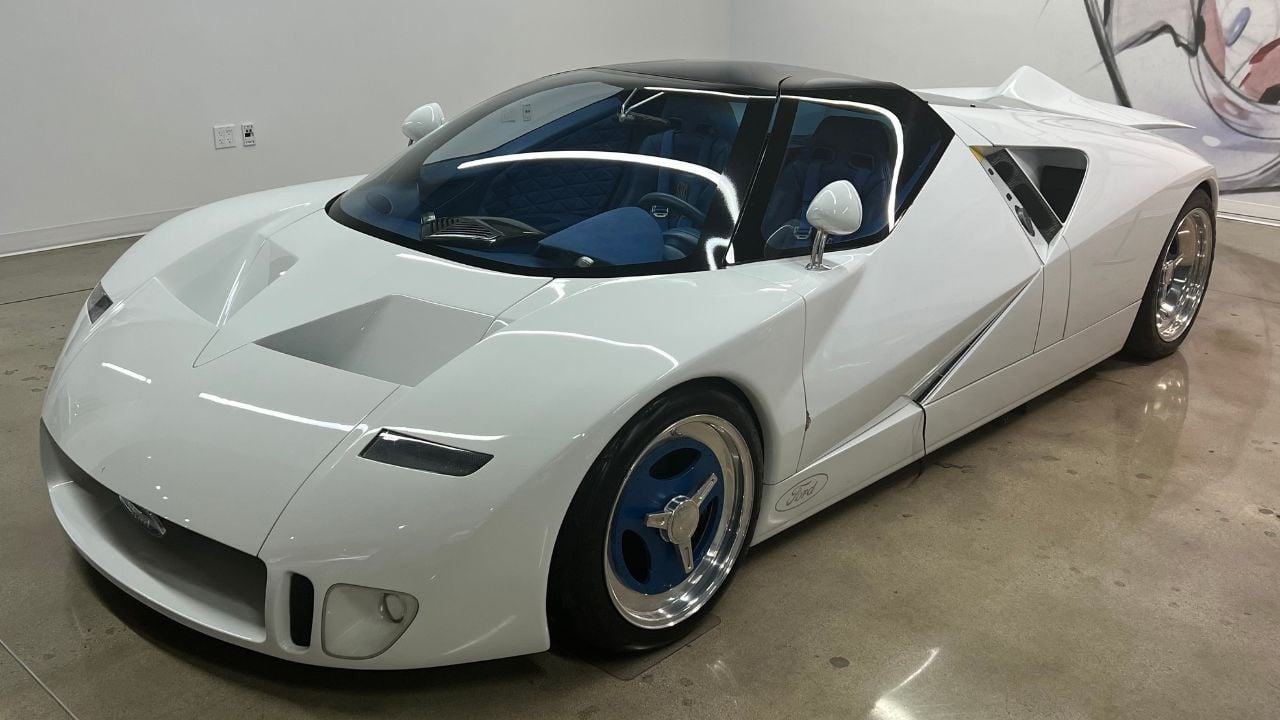
The GT90 was Ford at full throttle. Petersen describes it as a technological and engineering test bed and the first car to feature Ford’s New Edge styling, while MotorTrend’s original road test noted the mid-mounted, quad-turbo DOHC V12’s potential for 720 hp.
The car did not merely aim to look fast. It tried to reset the image of what a Ford halo concept could be in the 1990s. The surfaces were sharp, the proportions were extreme, and the whole project carried the confidence of a company willing to approve something genuinely outrageous.
Even now, the GT90 feels larger than the era that produced it. It was not a practical preview in the ordinary sense. It was a reminder that Ford could still think in supercar scale when it wanted to make the brand feel fearless.
1996 Ford Indigo
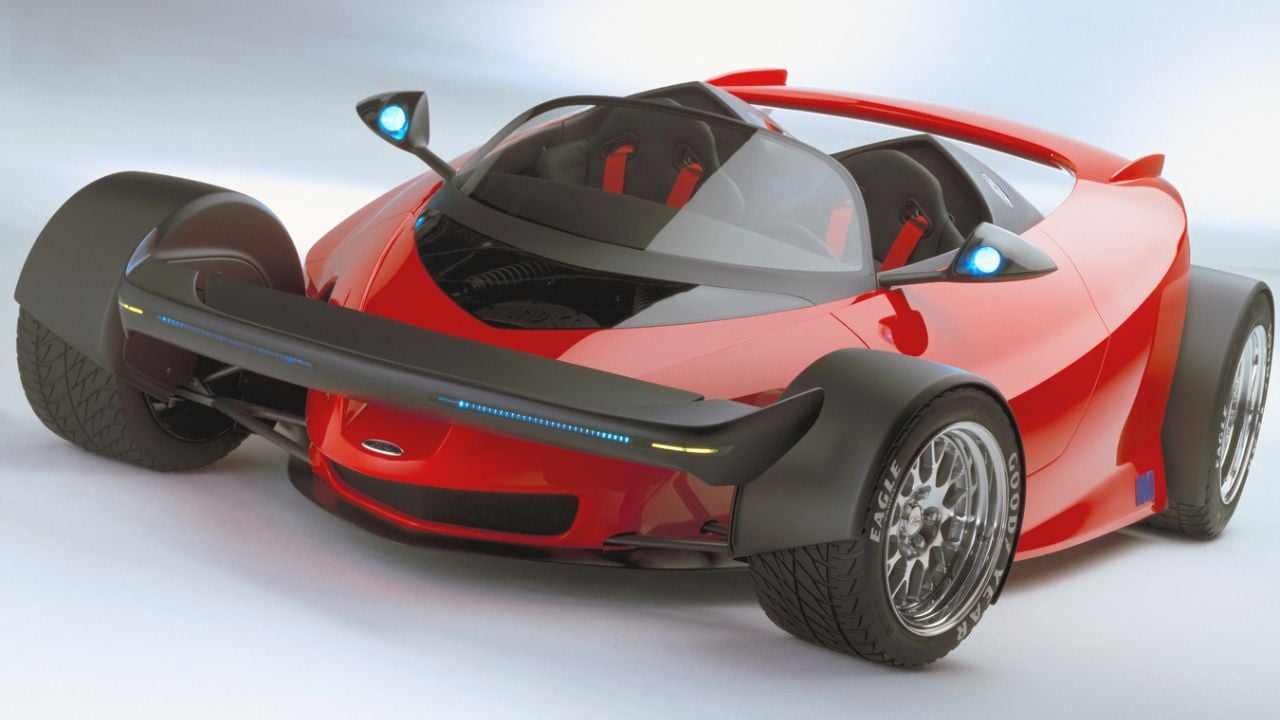
The Indigo took Ford’s supercar imagination in a racier, more exposed direction. MotorTrend reported that the concept used a hand-built 6.0-liter, 435-hp V12 and was projected to reach 60 mph in just under four seconds, with a design inspired by road-car possibilities from Indy technology.
Its open-wheel look gave it a radically different personality from the GT90. Where the GT90 felt like a futuristic closed supercar, the Indigo looked closer to a roadgoing race machine, with visible suspension drama and a cockpit that made the driver feel central to the spectacle.
That difference gives the Indigo its own place in Ford concept history. It showed the company experimenting with a lighter, racier kind of aspiration, one built around motorsport theater rather than grand-touring fantasy.
2002 Ford GT40 Concept
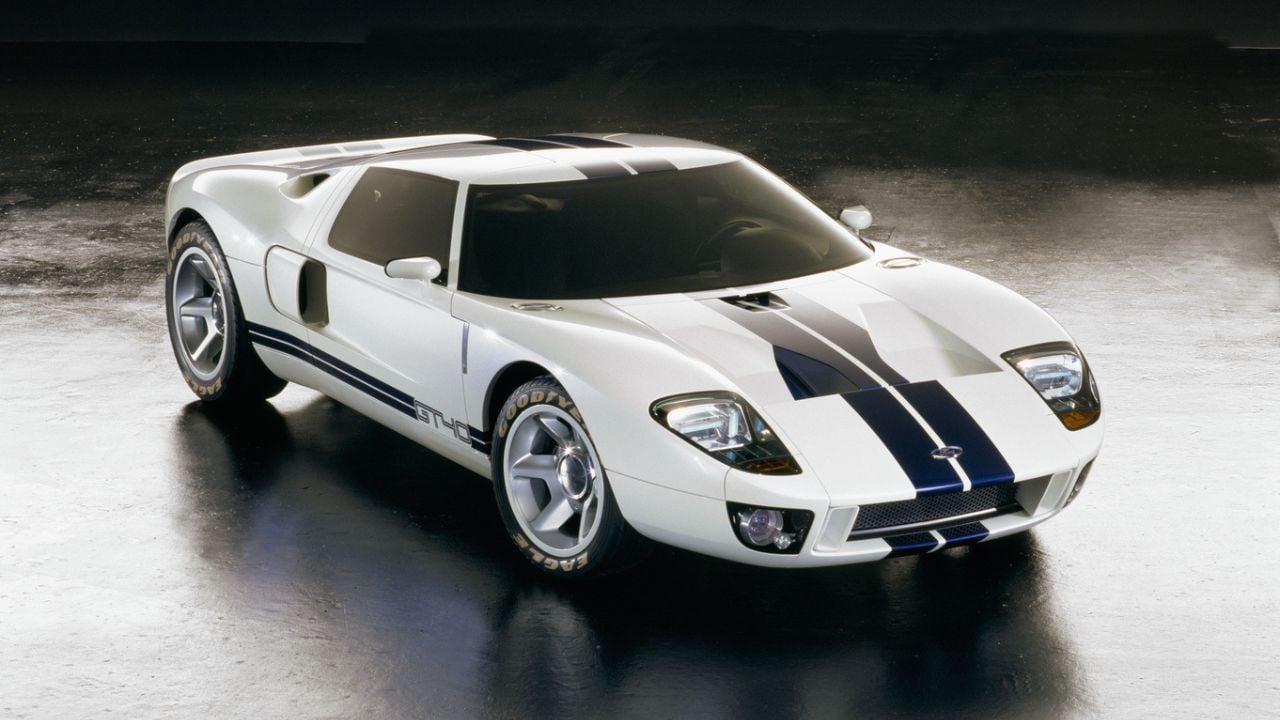
The GT40 concept moved from show-stand fantasy to production reality with unusual speed. Autoweek later noted that the concept debuted at the 2002 Detroit auto show and that the production Ford GT followed in remarkably short order, making it one of Ford’s fastest concept-to-production projects.
The design succeeded because it understood the original Le Mans-winning GT40 without becoming trapped by it. The concept looked modern, forceful, and usable while still carrying the visual memory of one of Ford’s greatest racing achievements.
Heritage exercises can easily become museum pieces. The GT40 concept avoided that trap. It turned a famous past into a living product, giving Ford one of its most convincing modern acts of reinvention.
2011 Ford Evos Concept
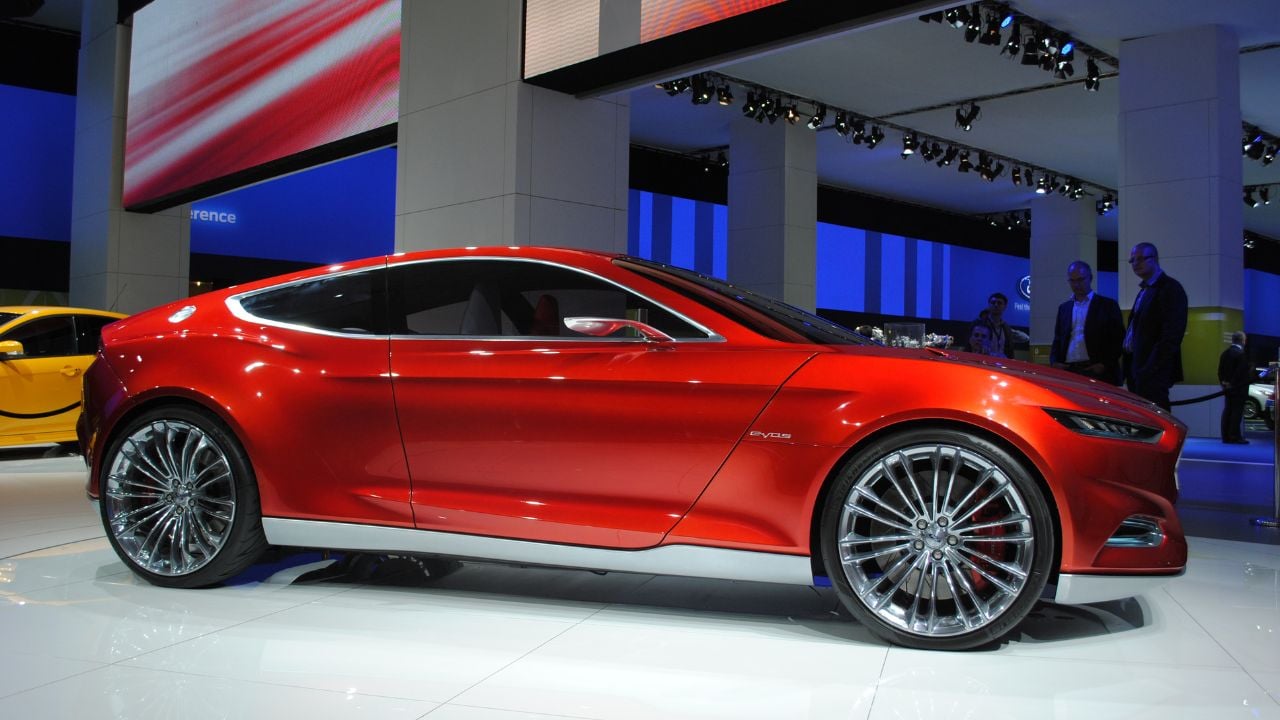
The Evos Concept left its mark through influence rather than production plans. Contemporary coverage described it as the ultimate expression of Ford’s new global design language, and Motor1 later traced its styling impact into models such as the 2013 Fusion, 2015 Edge, 2015 Mustang, and 2015 Focus refresh.
That downstream effect gives the Evos unusual importance. It was not just a pretty four-door concept with dramatic proportions. It helped establish the face and stance of a generation of Ford products.
The technology story added another layer. With cloud-based personalization and a plug-in hybrid powertrain wrapped in a sleek four-door body, the Evos sketched out how Ford wanted future cars to think as well as how it wanted them to look.
The Concepts That Still Make Ford History Feel Alive
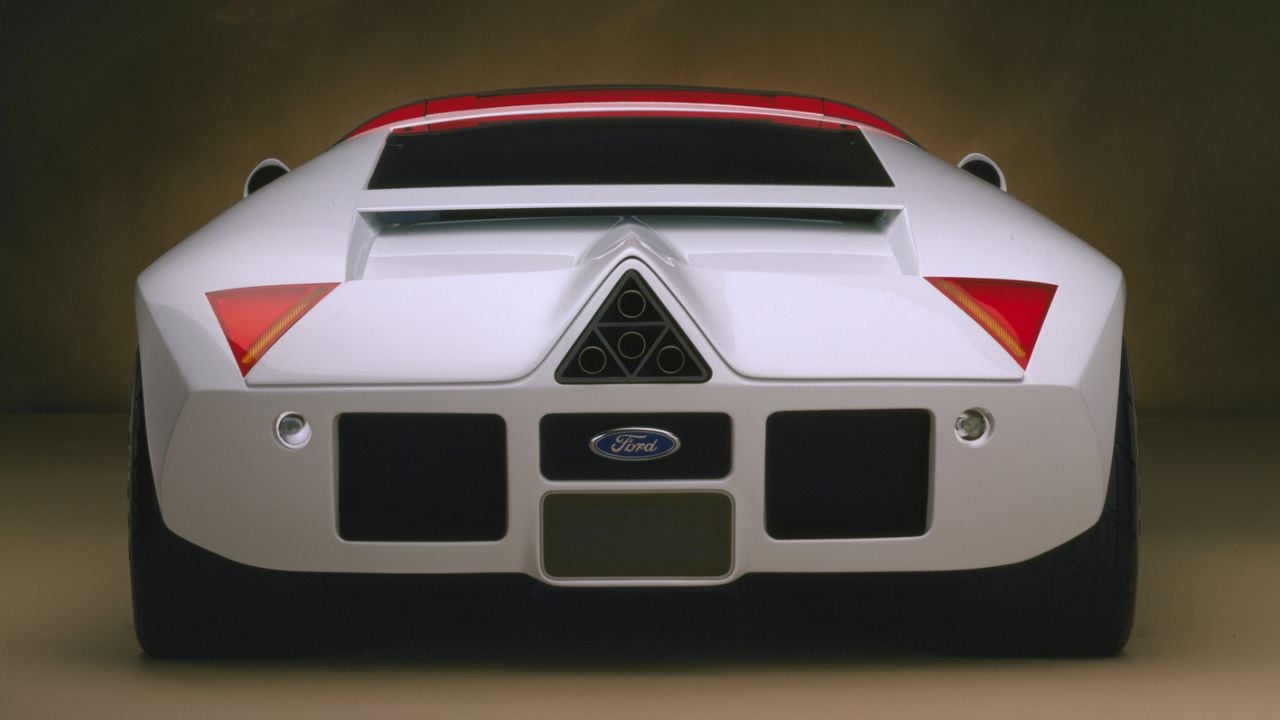
Ford’s greatest concepts are memorable for different reasons. The Nucleon imagined a completely different energy future. Mustang I introduced a name that became an institution. Probe V treated aerodynamics like a frontier. GT90 and Indigo showed how ambitious Ford could become when performance was the main language. The GT40 concept proved heritage could become a living product. Evos helped reshape an entire design era.
Together, they make Ford feel larger than any single production lineup. They show a company using concept cars not only to test shapes but also to test public imagination.
That is why the strongest concept cars last long after the lights go down. They reveal what a brand wants to be when the usual limits are lifted. Ford’s best examples never just decorate history. They help write it.