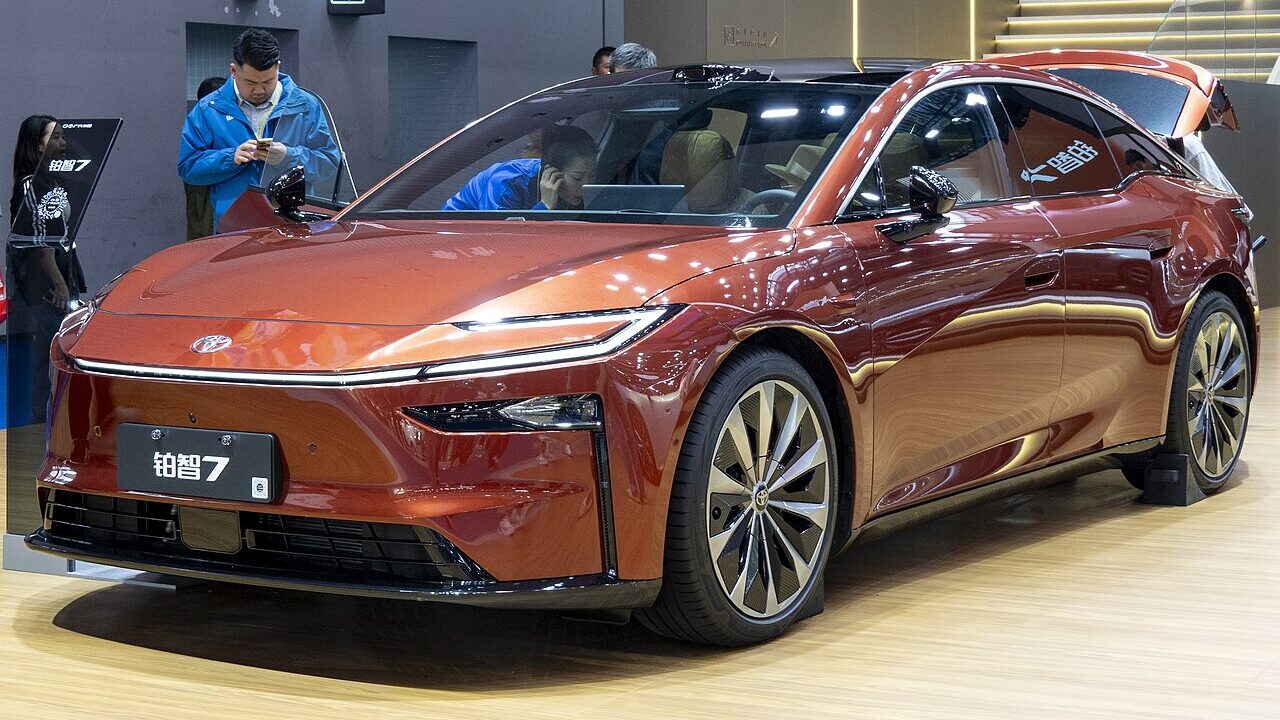

Toyota has spent years being cast as the reluctant player in the electric vehicle race. While rivals poured billions into all-electric futures, it hedged with hybrids, even hydrogen, and a slower rollout of battery EVs.
Many in the industry lambasted (or were curious of) Toyota’s supposed hesitation. Now, the launch of the Toyota bZ7 suggests something else entirely. It’s starting to look more like timing.
Just days after its market outing, the bZ7 has proven to not be just another electric sedan. It is a statement of intent, built specifically for China, the world’s most advanced EV battlefield.
And it arrives with a level of integration, pricing, and market awareness that exposes a deeper strategy many Western automakers are only now beginning to understand.
A Shocking Price
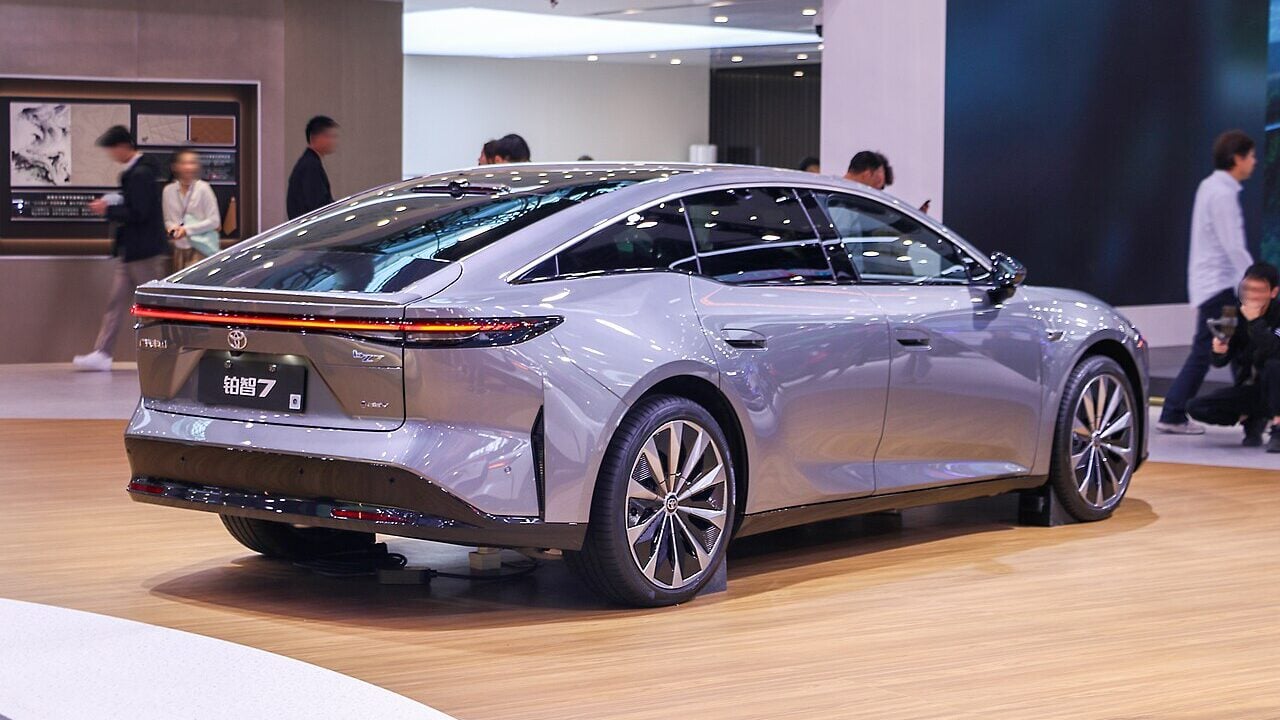
Start with the basics. The bZ7 is a full-size electric sedan, stretching over five meters and positioned as a flagship model in Toyota’s “beyond Zero” lineup. Yet its price begins at roughly $21,500 in China. That figure alone disrupts expectations. In the United States, that price point still belongs to the rock-bottom, entry-level gasoline cars, not large, tech-heavy EVs.
As a matter of fact, it’s extremely rare to find brand‑new cars under $22,000 in the U.S. market. Most entry‑level models now start closer to $23k–$25k, and the few options below $22k are either leftover inventory from prior model years or stripped‑down base trims of subcompact sedans and SUVs. The bZ7 is a striking example of how regional strategies and ecosystems shape affordability.
Then comes the hardware. A Huawei-sourced electric motor delivers around 277 horsepower, paired with lithium-iron-phosphate batteries offering up to 441 miles of range under Chinese testing standards. Fast charging can add nearly 186 miles in about 10 minutes. These are competitive numbers, even if not revolutionary.
What’s Special about the BZ
What sets the bZ7 apart is everything around the drivetrain.
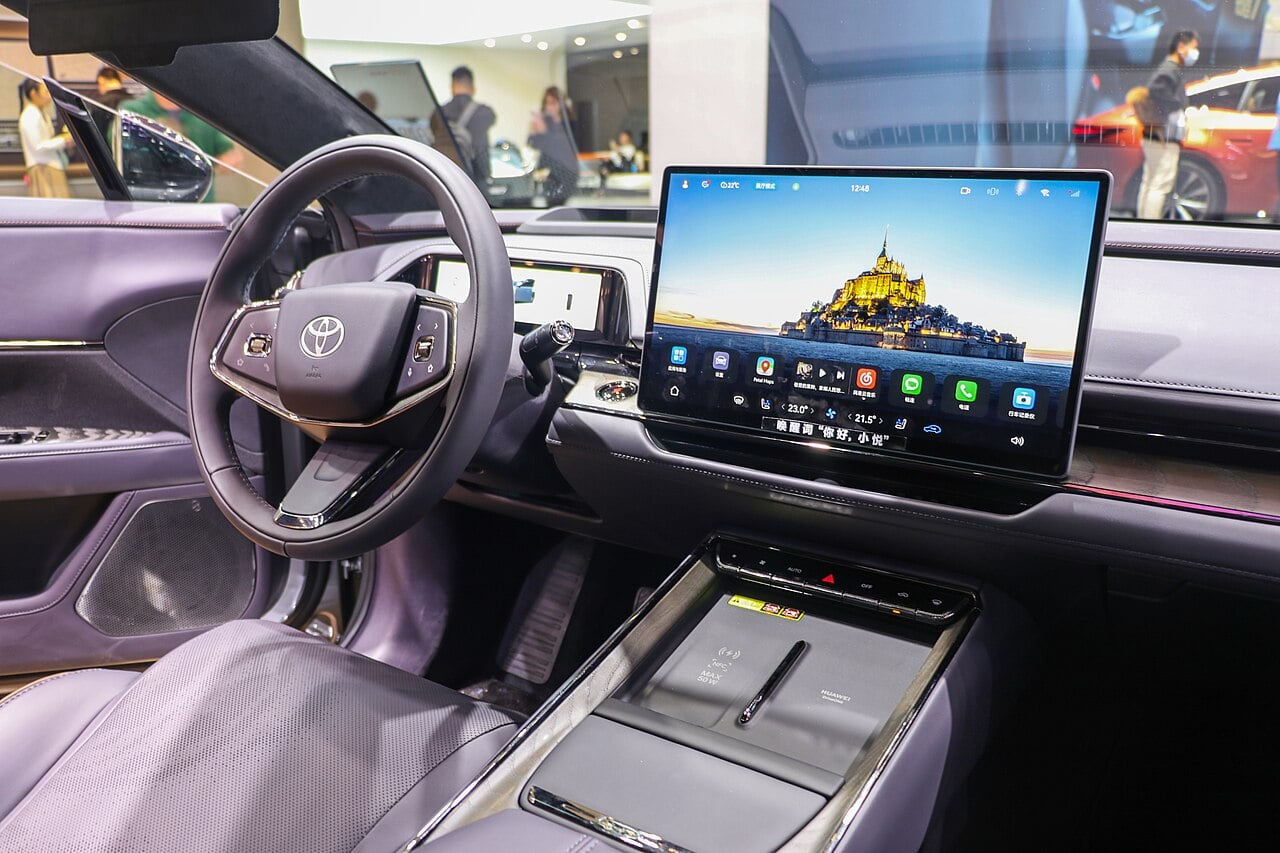
Toyota has leaned heavily on China’s technology ecosystem, partnering with companies like Huawei, Xiaomi, and Momenta. The car runs Huawei’s HarmonyOS, ties into Xiaomi’s smart home platform, and uses advanced driver assistance systems powered by lidar and AI. This transforms the car from a standalone product into a node within a broader digital lifestyle.
That is where the real shift lies. Many legacy automakers treated EVs as replacements for internal combustion vehicles. Toyota, at least in China, is treating them as connected technology platforms.
The early response suggests it is working. The bZ7 secured more than 10,000 pre-orders before launch and added over 3,000 orders within the first hour of sales. That level of demand in China’s brutally competitive EV market is extraordinary. It reflects a product that aligns closely with what buyers there actually want.
Toyota’s Patience is Paying Off
Now step back and look at the broader industry context.
Several Western automakers are pulling back on aggressive EV timelines after facing slower-than-expected adoption, high costs, and infrastructure challenges. Toyota avoided much of that turbulence by not overcommitting too early. Instead, it continued to invest in hybrids, which remain profitable and popular, especially in markets like the United States.
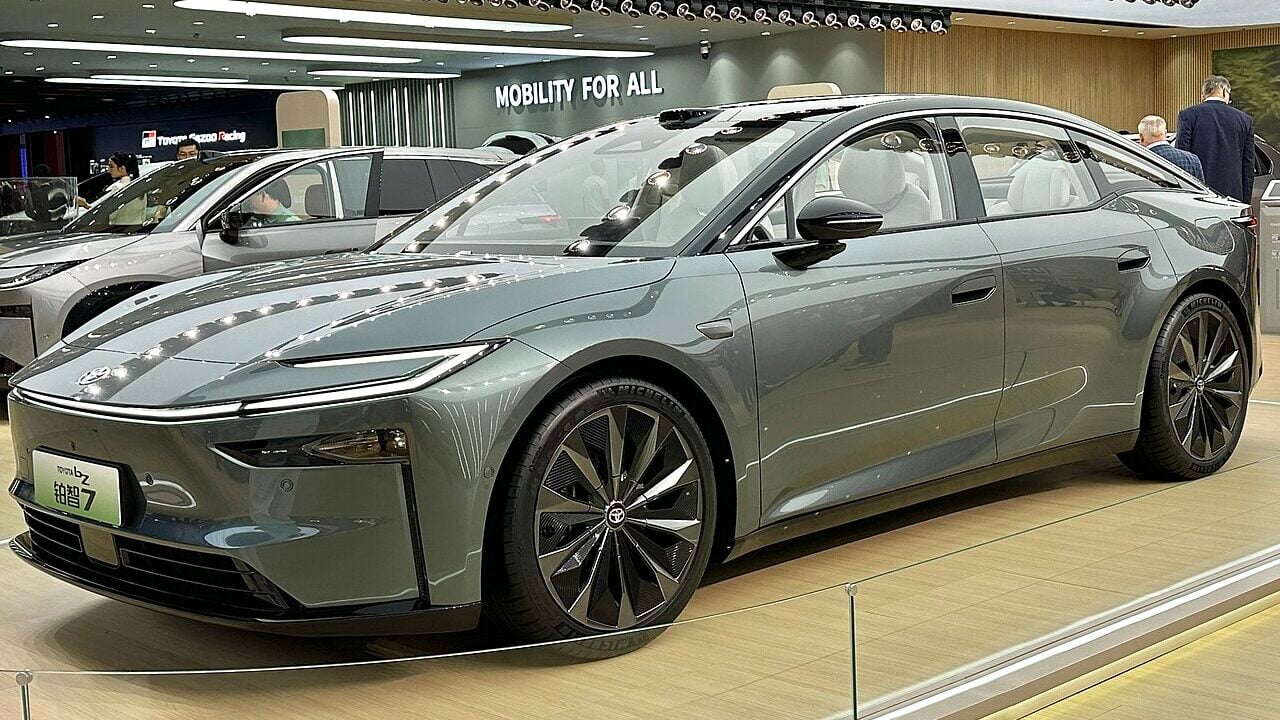
That decision bought time. Time to watch how battery costs evolved. Time to study consumer behavior. Time to see how China’s EV ecosystem matured into something far more integrated than what exists in the West.
The bZ7 is a product of that patience.
It also highlights a structural difference in strategy. Rather than forcing a global, one-size-fits-all EV, Toyota is building region-specific vehicles. The bZ7 is tailored for China, where digital integration, affordability, and rapid innovation cycles define success. There is no indication it will reach the United States anytime soon, and that, too all intent and purposes, is intentional.
The Uncomfortable Question for Americans
For Americans with no choice but to watch from the sidelines, success stories like the bZ7 forces an uncomfortable question. If Toyota can deliver this level of value and technology in China, what is stopping it from doing the same elsewhere?
At the risk of sounding like a broken radio, the answer lies partly in supply chains, regulations, and software ecosystems that differ sharply across regions. But it also points to something more fundamental. The EV race is no longer just about electric propulsion. It is about ecosystems, partnerships, and market-specific execution. Just ask Toyota.
For those who felt Toyota didn’t support the electric push enough, the company did not ignore the future, apparently. It studied it from a distance, then chose where and how to engage.
With the bZ7, that approach is starting to look less like caution and more like calculation.