
Illegal tire dumping is turning quiet neighborhoods into hazardous zones, and one family’s experience highlights how serious the problem has become.
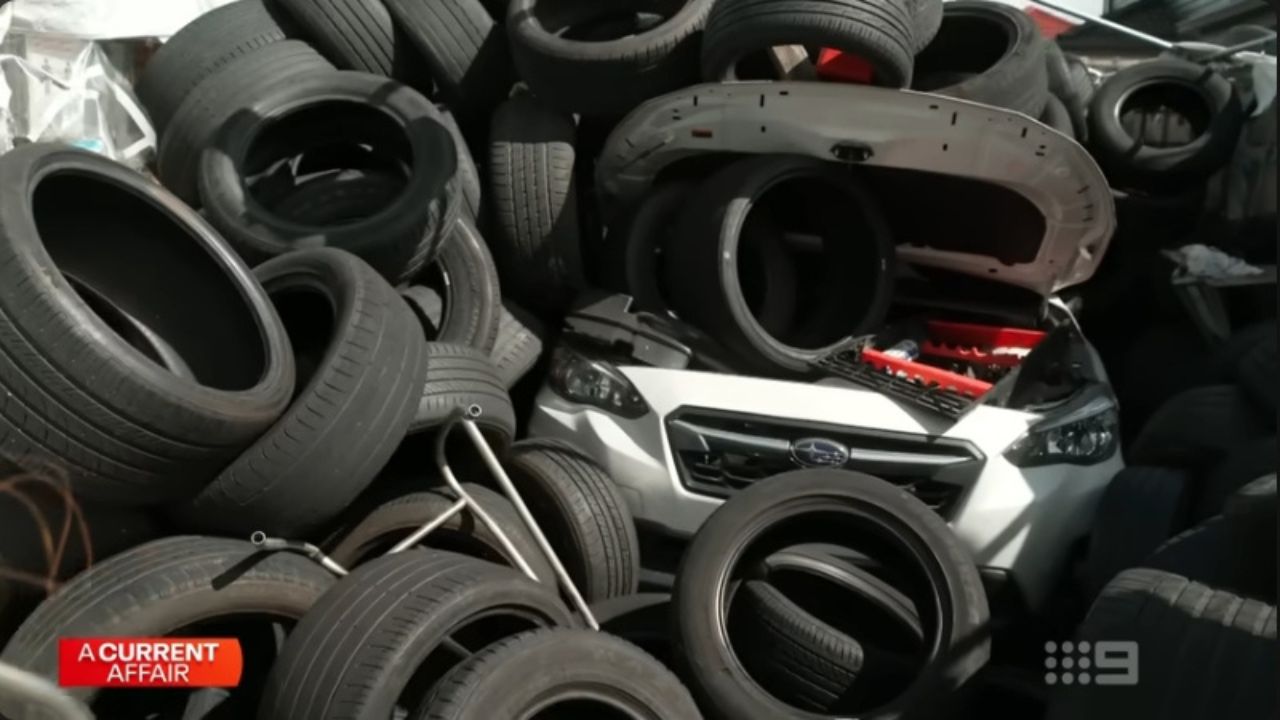
When Vijay moved into his home in Melbourne’s northeastern suburbs just over a year ago, he expected a peaceful environment for his family. Instead, he found himself living beside an abandoned property that had become a dumping ground for massive piles of used car tires.
What began as an eyesore soon revealed deeper risks. The towering stacks of discarded rubber posed a constant fire threat and created unsafe conditions for nearby residents, especially children.
For Vijay and his family, the fear is real. The property next door had already been set ablaze once, with police releasing CCTV footage of a suspected arsonist.

That incident only reinforced concerns about how dangerous the situation could become. Tires are highly flammable, and once ignited, they can burn for long periods while releasing toxic smoke into the air. Living next to such a site is not just uncomfortable, it is potentially life threatening.
Beyond fire hazards, illegally dumped tires present serious environmental and public health risks. They trap water, creating ideal breeding grounds for mosquitoes and other pests. Vermin thrive in these conditions, increasing the likelihood of disease spreading in surrounding communities. Experts warn that these hazards often go unnoticed until the consequences escalate.
The Scale of Australia’s Tire Dumping Crisis
The scale of the issue is staggering. Australia generates close to one million end of life passenger tires each year that end up being dumped illegally. Local councils are left to deal with the aftermath, spending millions annually to clean up waste that should never have been there in the first place.
Estimates suggest that councils are paying around $7 million every year to address the problem, and even that figure may only represent part of the total cost.
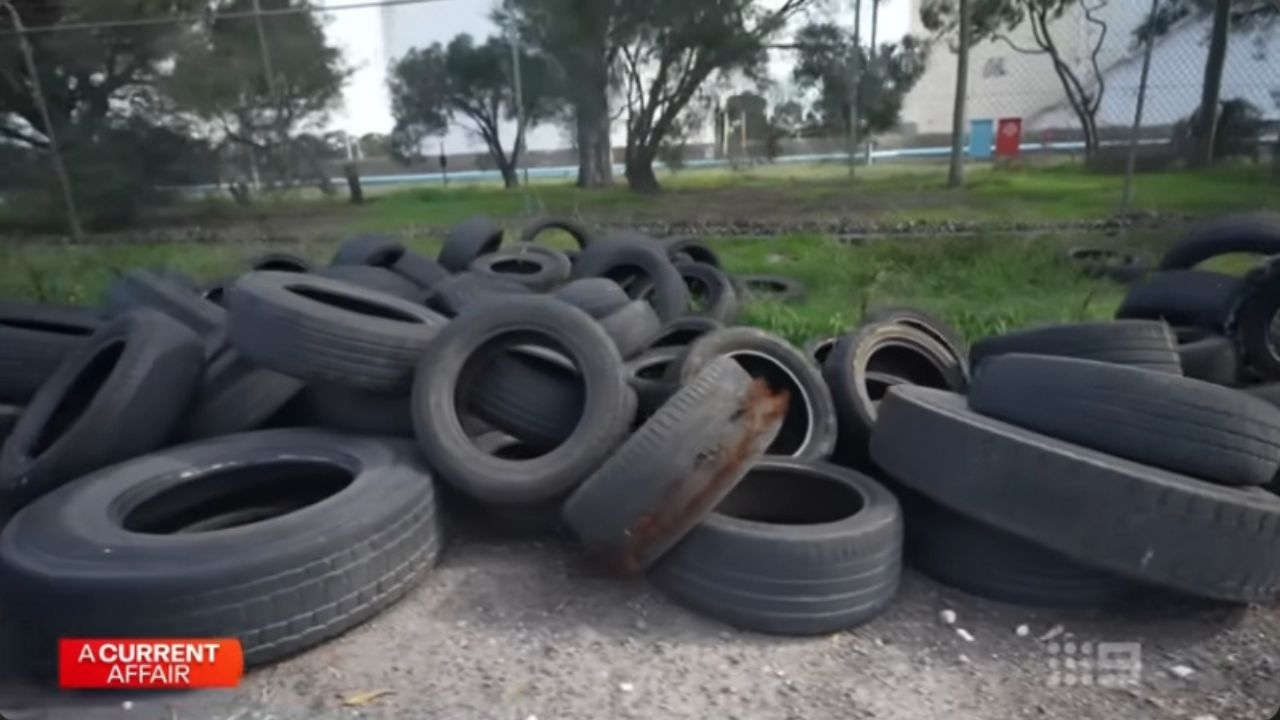
At the center of the issue is a network of opportunistic operators who exploit gaps in the system. These individuals or groups collect used tires from retailers, often charging disposal fees, but instead of processing them responsibly, they dump them in secluded areas such as empty properties, creek beds, and under bridges.
The motive leads back to financial profit. Cutting corners increases profit margins, and current penalties are often too low to act as a deterrent.
A Waste Problem or a Missed Opportunity?
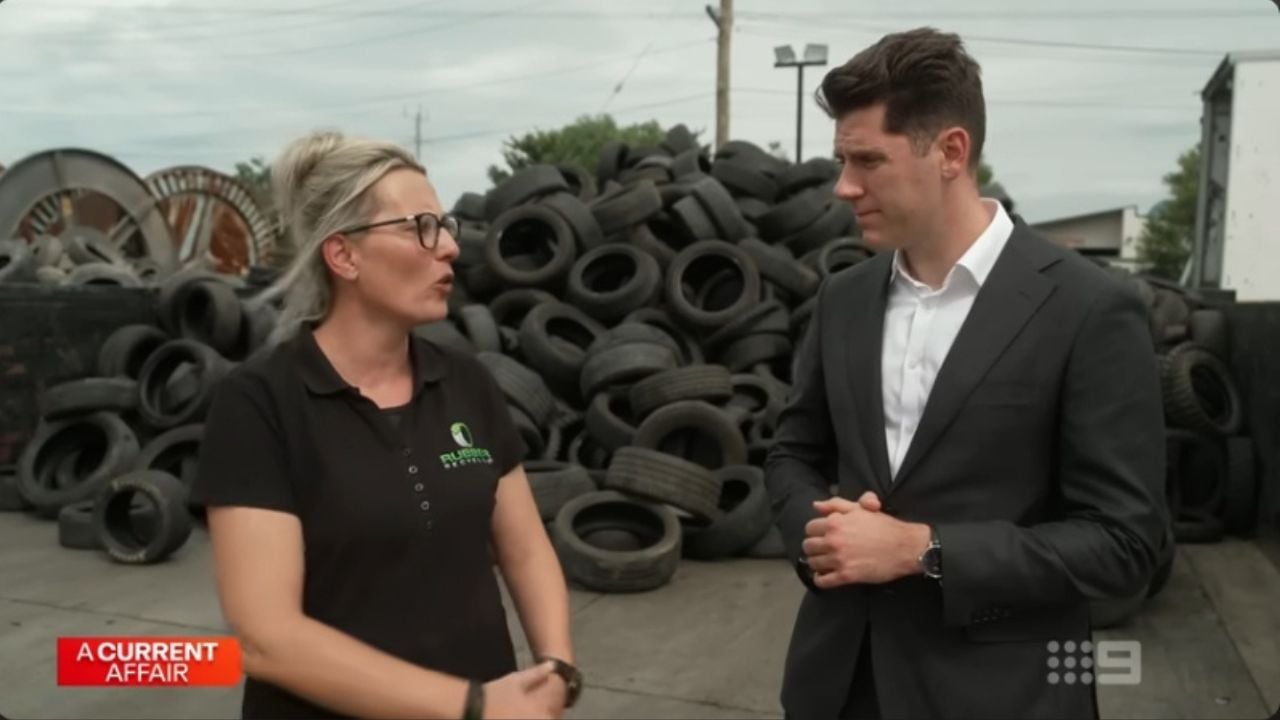
Recycling experts like the CEO of Tire Stewardship, Lena Goodman, argue that this waste could be put to far better use. Properly processed tires can be transformed into crumb rubber, which is used in road construction, asphalt, gym flooring, and permeable pavements.
Australia has made progress in developing innovative applications for recycled rubber, showing that discarded tires don’t have to be useless waste but valuable raw materials.
Facilities dedicated to tire recycling handle enormous volumes daily. Workers must deal with tires that arrive contaminated with mud, debris, and sometimes hazardous materials such as syringes or even wildlife.
The process involves shredding the tires into smaller pieces, separating usable materials, and repurposing them wherever possible. Steel components are recovered and recycled, while rubber is prepared for various industrial applications.
Cost is another factor driving illegal dumping. Disposal fees at some waste facilities can range from $20 to $45 per tire, which discourages proper handling. In contrast, some recycling centers offer significantly cheaper rates, but many people remain unaware of these options. This gap in awareness contributes to the persistence of illegal practices.
The Path Forward: Stricter Enforcement and National Action

Industry leaders believe stricter enforcement is essential. Current fines, which can range from a few thousand to ten thousand dollars, are often seen as insignificant compared to the profits made by illegal dumpers. Without tougher penalties and stronger oversight, the cycle is likely to continue.
There are also calls for a coordinated national response. A mandatory stewardship scheme could ensure that every tire collected is tracked and properly processed. Such a system would make it harder for rogue operators to exploit loopholes and would place greater accountability on everyone involved in the supply chain.
For residents like Vijay, action cannot come soon enough. What sits next door is a daily reminder of a system that needs fixing, and of the risks that come with ignoring a growing environmental crime.