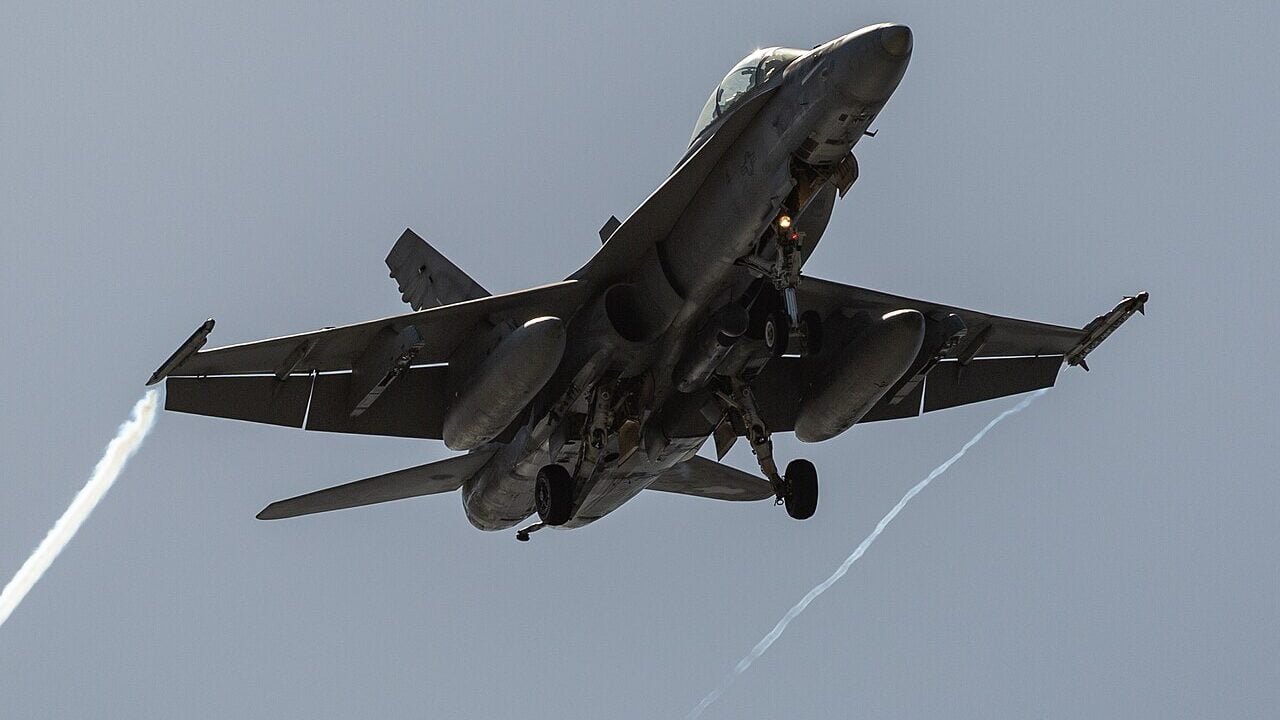

A dramatic and potentially consequential claim has emerged from Tehran, where the Islamic Revolutionary Guard Corps (IRGC) says it has successfully targeted a U.S. military aircraft in its airspace. According to initial reports broadcast live, Iranian sources have released footage that allegedly shows a F/A-18 Hornet being engaged by anti-aircraft fire.
Details remain scarce and fluid, but the significance of the claim is already raising serious questions about the air supremacy in the region.
The footage, described as fresh and still under scrutiny, appears to capture the aircraft in flight before it is fired upon. While independent verification has not yet been established, there has been immediate denial by U.S. defense officials.
🚫FALSE: The Islamic Revolutionary Guard Corps announced a U.S. F/A-18 fighter was struck over Chabahar using new advanced air defense systems.
✅TRUE: No U.S. fighter aircraft have been shot down by Iran. pic.twitter.com/I25QFjYo0l
— U.S. Central Command (@CENTCOM) March 25, 2026
The US Central Command (CENTCOM) denied the incident outright, stating that no U.S. aircraft had been shot down. US military officials described the Iranian reports and footage as false and misleading propaganda. The U.S. military emphasized that all its aircraft operating in the region were accounted for.
A Pattern of Claims Against Advanced Aircraft
What makes this development particularly notable is that it does not appear to be an isolated incident. Iranian officials have, in recent days, asserted that multiple advanced Western aircraft have been targeted.
Among them are the F-35 Lightning II, widely regarded as one of the most sophisticated stealth fighters in the world, as well as the F-16 Fighting Falcon and F-15 Eagle. If accurate, these claims would represent an unprecedented challenge to aircraft long considered dominant in modern aerial warfare.
The IRGC has attributed these incidents to a newly developed system, reportedly introduced following a brief but intense conflict referred to as the “12-day war” in June 2025.
Tonight, Iranians hunted a F/A-18 “unconditionally” – right in the middle of “negotiations”. Thank your for your attention…. pic.twitter.com/nQpFTVlPVQ
— Iran In Deutschland (@IraninBerlin) March 25, 2026
While specifics about this system remain unclear, Iranian officials suggest it has enhanced their ability to detect, track, and engage high-performance aircraft that were previously difficult to counter.
If true, this raises critical questions for military analysts. Is this purported new capability a breakthrough in radar technology, electronic warfare, or missile guidance systems? Or could it be a combination of multiple layered defense systems working in coordination?
Without concrete technical details, much of the discussion remains speculative. However, even the perception of such capability could shift strategic calculations.
Challenging Assumptions of Air Supremacy
Previously, a dominant narrative had taken hold that Iranian airspace was largely vulnerable to advanced Western and allied aircraft.
The latest claims, whether fully verified or not, challenge that assumption. If Iranian defenses are indeed capable of intermittently targeting these jets, it suggests a more contested and unpredictable air environment.
There is also the question of information warfare. In modern conflicts, narrative control can be as important as battlefield success. By publicizing these incidents, Iran may be seeking to project strength and deterrence, both domestically and internationally.
The release of video footage, even if later disputed, plays a key role in shaping perceptions.
Furthermore, the implications are significant for the United States and its allies. Aircraft like the F-35 and F-18 are central to air operations across multiple theaters. Any credible threat to their operational safety forces a reassessment of tactics, deployment strategies, and risk tolerance.
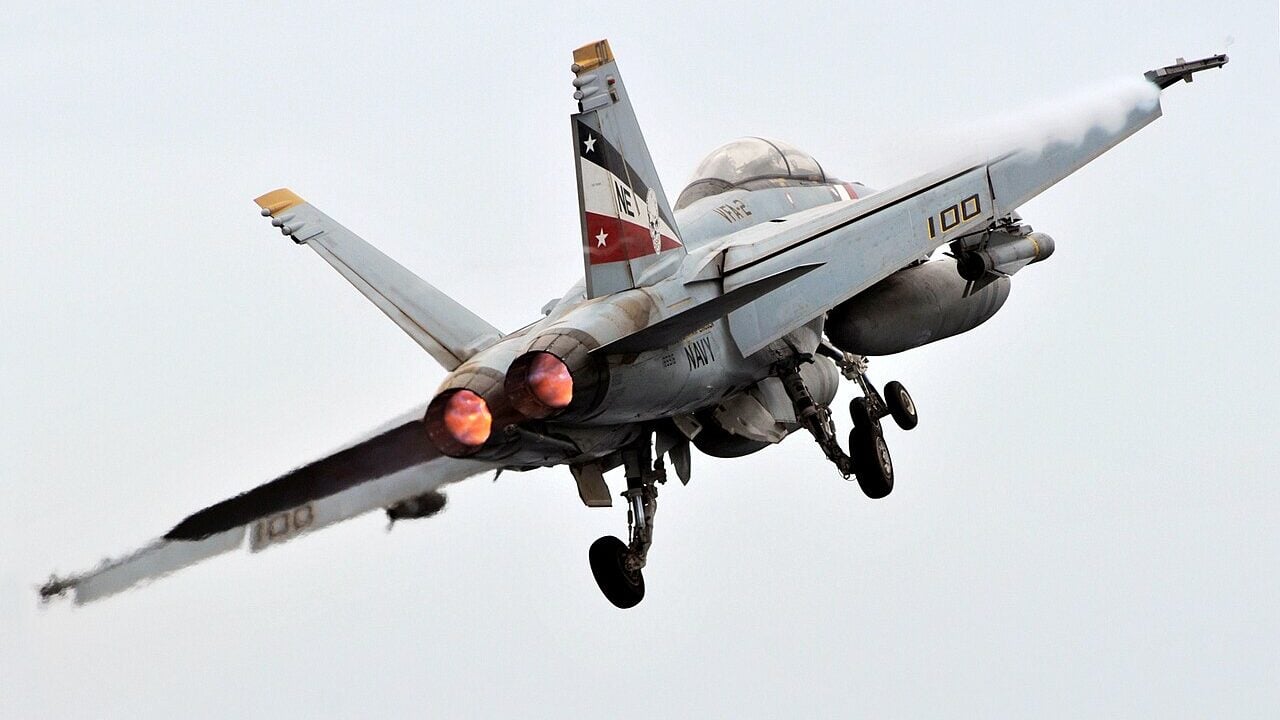
The F/A-18 Is a Difficult Target
Because the F/A‑18 Hornet is built to survive in contested airspace, it is extremely difficult for adversaries like the IRGC to down. First, its speed and agility are formidable: capable of Mach 1.8, with superb maneuverability that allows rapid evasive action against surface-to-air threats.
Second, its avionics and radar systems provide advanced situational awareness; pilots can detect and avoid hostile fire before engagement. Third, the Hornet carries robust electronic countermeasures (ECM) that jam or mislead enemy radar and missile guidance systems.
Fourth, its combat-proven design includes redundant flight controls and hardened structures, giving it resilience against damage. Finally, U.S. Navy and Marine Corps pilots train extensively in suppression of enemy air defenses (SEAD), meaning they rarely enter hostile zones without support assets.
Taken together, the Hornet’s speed, agility, electronic warfare suite, and pilot tactics make it a very tough target for Iranian systems.
That said, at this stage, the situation remains highly dynamic. Verification from independent sources and official responses from the Pentagon remain crucial in determining the accuracy and impact of these claims. Still, Tehran’s claims reinforces that the technological edge in modern warfare is constantly evolving, and assumptions of dominance can quickly be tested.