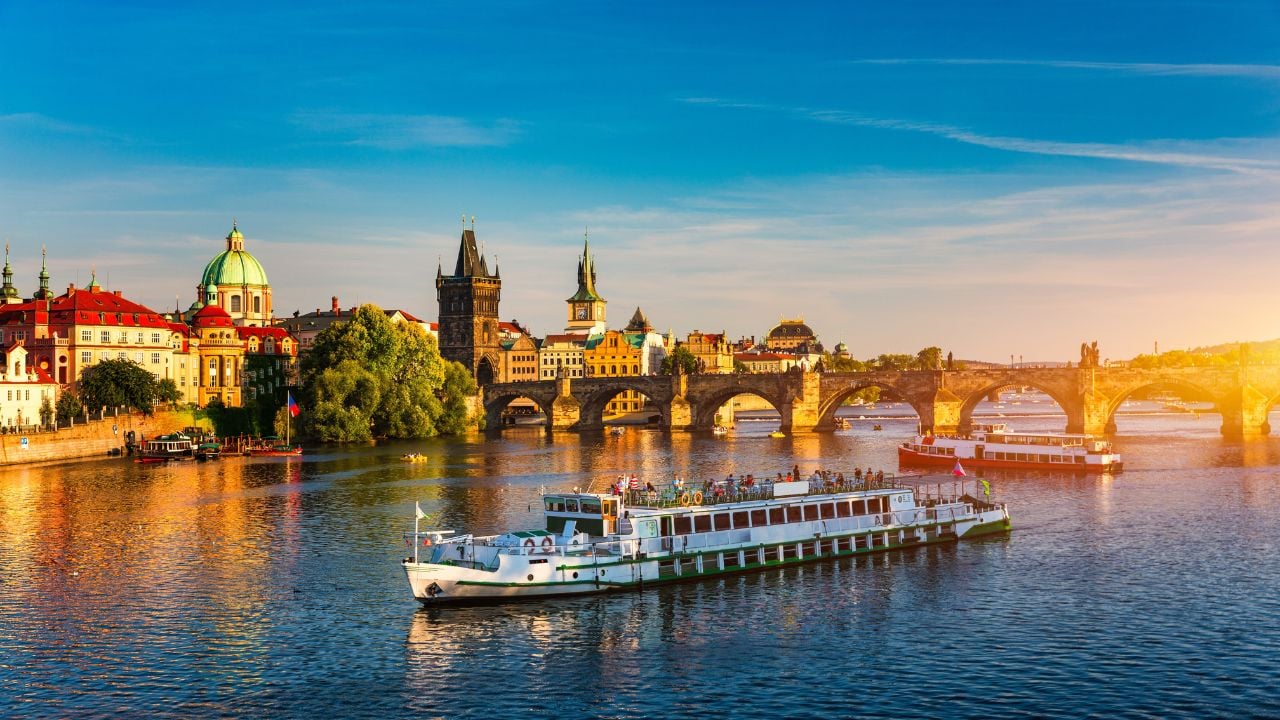
Dan Brown’s The Secret of Secrets brings Robert Langdon to Prague for Katherine Solomon’s major lecture before the visit spirals into murder, disappearance, and a frantic search through the city. Prague City Tourism has embraced that connection with an official The Secret of Secrets Prague Map, created with Argo Publishers, which points readers to 15 real-life locations from the novel.
That makes Prague unusually easy to explore as a literary destination. Rather than guessing at vague thriller scenery, you can build a walk around places backed by Dan Brown’s own Prague travel guide and Prague City Tourism’s City of Secrets campaign.
1. Clementinum
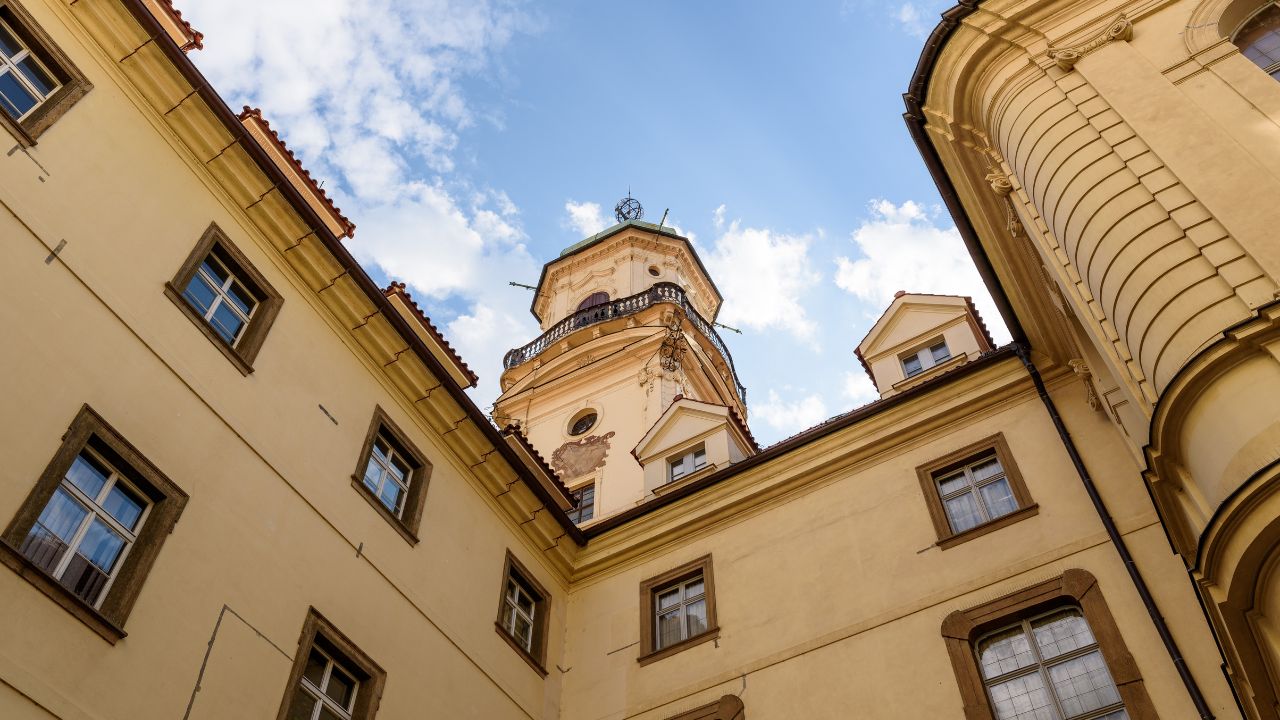
If one place feels like the true heart of Brown’s Prague, it is the Clementinum. Dan Brown’s “Live Like Langdon” guide points readers straight to the Baroque Library at the Klementinum, describing it as home to ancient books, manuscripts, maps, and a secret architectural feature that saves Langdon’s life. Prague’s official novel map also specifically highlights the Clementinum complex.
In real life, the site more than lives up to the fiction. Prague City Tourism describes the Clementinum as Prague’s second-largest building complex after Prague Castle, with the Baroque Library and Astronomical Tower forming one of the city’s signature sightseeing routes. It is exactly the kind of place where a Langdon story feels instantly believable.
2. Charles Bridge

Charles Bridge is one of the clearest novel-to-reality stops on the whole itinerary. Brown’s travel guide names it as part of Langdon’s Prague walk, and the page quotes a passage from Chapter 3 placing him near the Church of St. Francis of Assisi as he approaches the bridge’s eastern entrance under Prague’s rare gas lamps.
The scene works because the bridge already feels cinematic without any fictional help. Prague City Tourism calls Charles Bridge one of the most beautiful and photographed monuments in the world, and even notes that its magic stands out especially at night. For a Brown-inspired route, that makes it feel less like a backdrop and more like a genuine stage set.
3. Prague Castle and St. Vitus Cathedral
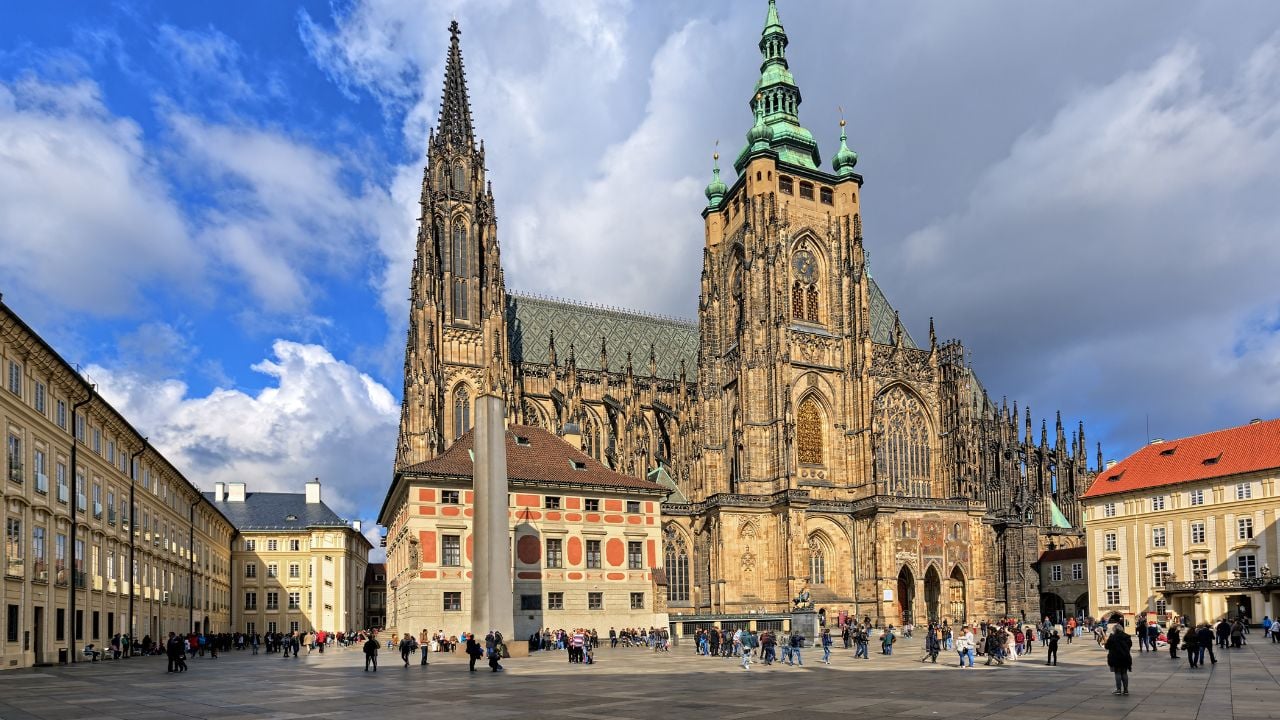
Prague Castle belongs on any Brown-inspired route because Prague City Tourism has tied the novel directly to the city’s monumental core. Its Dan Brown’s Prague: The Codes of Prague Castle walk leads visitors through Prague Castle, Vladislav Hall, St. Vitus Cathedral, and Wallenstein Garden, explicitly linking those landmarks to The Secret of Secrets.
That makes the stop easy to justify even without forcing the novel too hard. Prague City Tourism describes Prague Castle as the largest castle complex in the world, while St. Vitus Cathedral remains one of the Czech state’s defining spiritual and historical symbols. That mix of scale, symbolism, and layered history is exactly the kind of architecture Brown likes to use when belief, danger, and old secrets start colliding.
4. Old Town Square and the Astronomical Clock
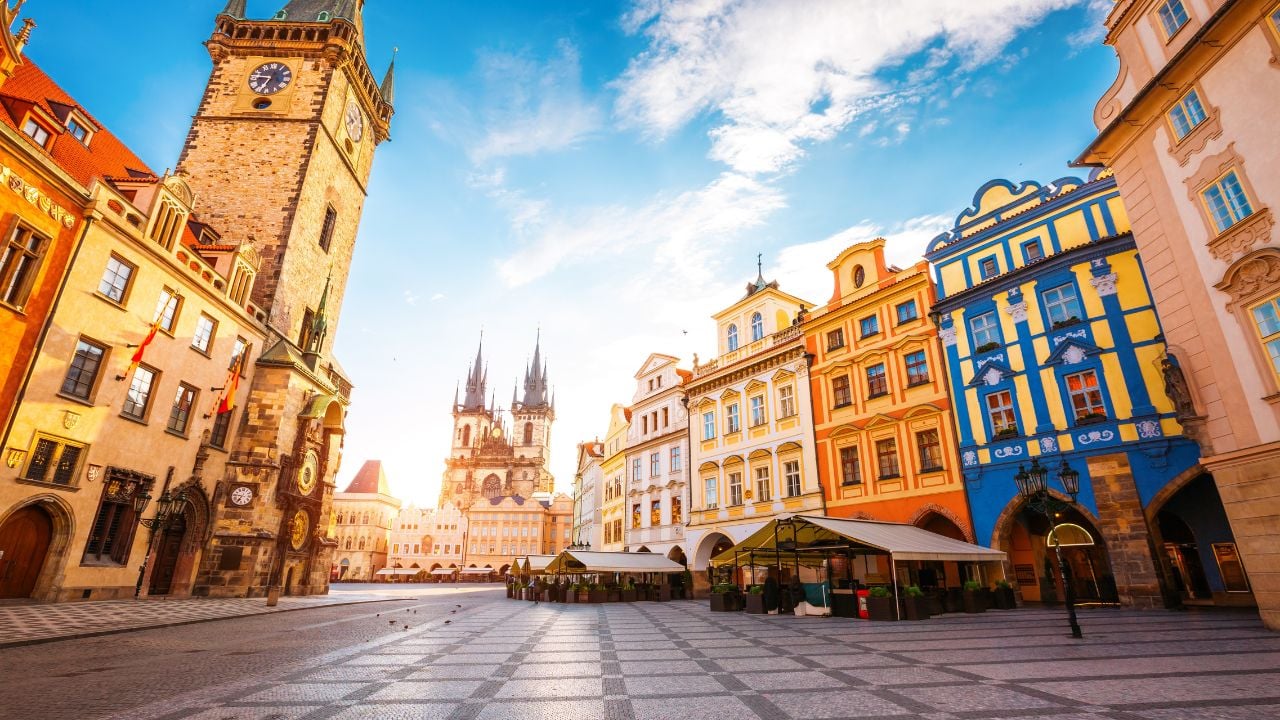
The official Secret of Secrets Prague Map promises readers “the mysterious Old Town,” which makes Old Town Square essential for anyone trying to follow Prague as Brown presents it. This is where the city turns theatrical, with dense medieval streets, church towers, and one of its most famous symbols at the center.
That symbol is the Astronomical Clock. Prague City Tourism says the Old Town Hall was established in 1338, while the Orloj has been showing time there for roughly six centuries. The original mechanism was constructed before 1410, and the apostles still appear every hour, which helps explain why this stop feels less like generic sightseeing and more like walking straight into the city’s symbolic core.
5. Wallenstein Palace and Garden
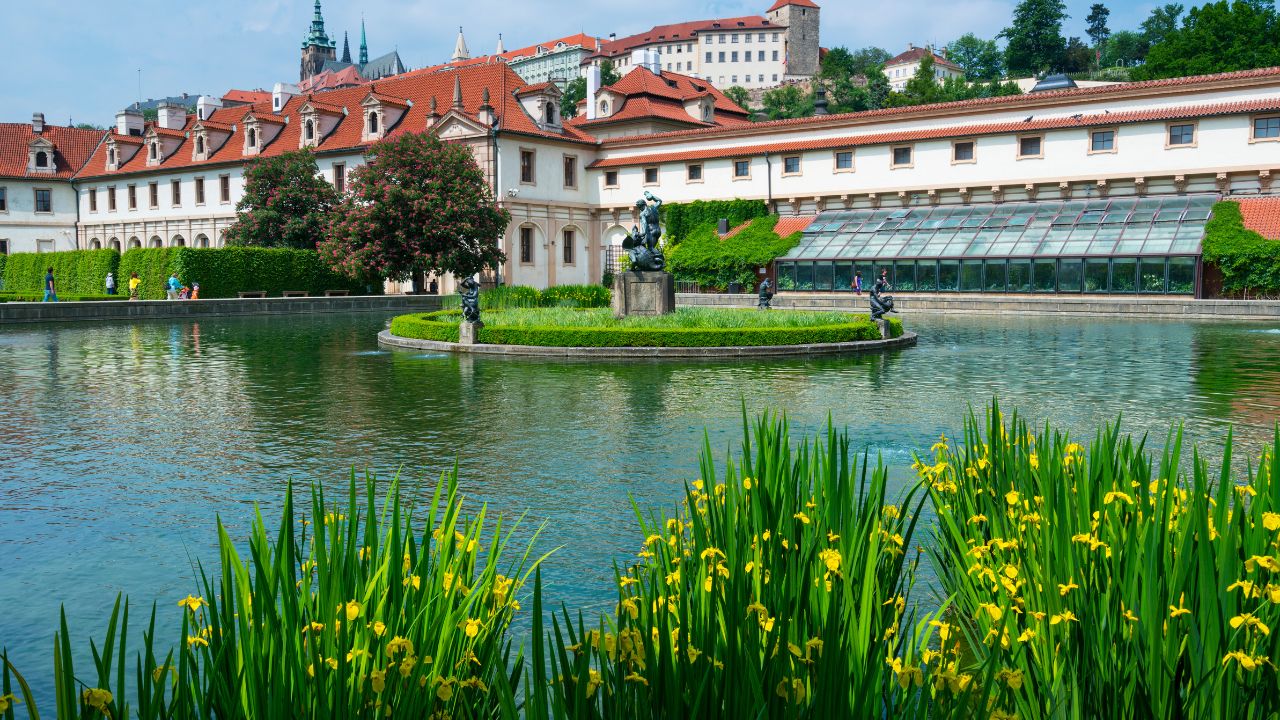
Wallenstein Palace is a strong pick for readers who want something slightly less obvious than the bridge or castle. Dan Brown’s official book page includes an excerpt that glides over the symmetrical gardens of Wallenstein Palace, while Prague City Tourism’s Prague Castle-themed Dan Brown walk also includes Wallenstein Garden as part of the route.
The real setting is every bit as atmospheric as that suggests. Prague City Tourism says Wallenstein Palace was the first monumental early Baroque secular building in Prague and is now the seat of the Czech Senate, while the garden adds strict geometry, a sala pavilion, and an artificial grotto. It feels secretive, symmetrical, and slightly unreal in exactly the right way.
6. The Jewish Quarter
The Jewish Quarter deserves a place in this tighter six-stop version because Prague City Tourism has made it part of its broader Dan Brown programming. Its official Golem and the Secrets of the Jewish Quarter route sends visitors to the Old Jewish Cemetery and the Old-New Synagogue, tying the novel’s atmosphere to one of Prague’s most myth-soaked districts.
That gives the article a darker, stronger ending than a generic neighborhood stop would. The Old Jewish Cemetery and the Old-New Synagogue, with its famous Golem legend, bring in exactly the ingredients Brown readers expect: ritual, myth, old stones, and the sense that Prague is always hiding one more layer beneath the surface.