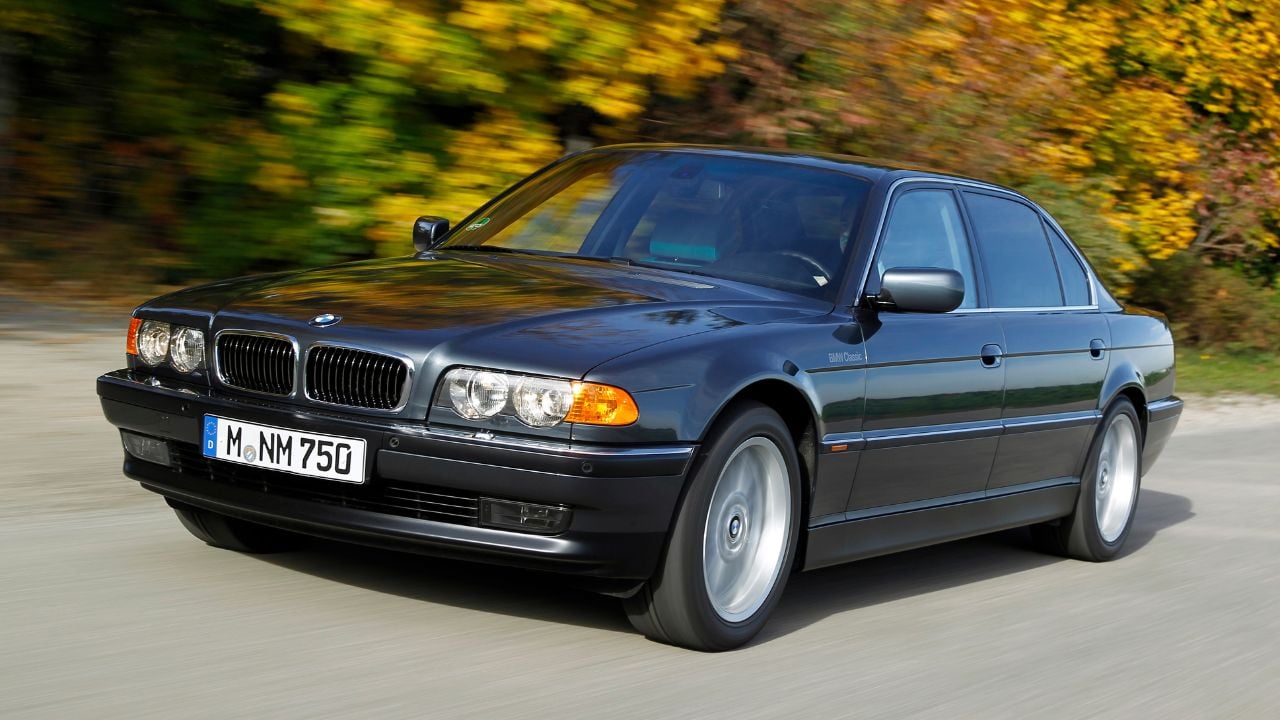
What does about $25,000 buy in 2026? In the sensible corner of the market, it buys a new Honda Civic sedan, a compact car built around economy, simplicity, and zero appetite for drama.
In a stranger, more romantic corner of the market, that same money can also put a BMW E38 750iL in your driveway, a full-size German flagship from the era when twelve cylinders still meant something ceremonial. Honda lists the 2026 Civic Sedan from $24,695, while Classic.com puts the average E38 750iL sale at $18,435, with recent recorded sales ranging from $7,700 for rougher examples to well above $20,000 for nicer cars.
That contrast is what makes the E38 750iL so compelling now. This was not just another upper trim luxury sedan when it was new. BMW Classic describes it as the flagship model of the E38 generation, and in long wheelbase iL form, it was stretched by 14 centimeters and packed with what the company called every conceivable comfort and quality feature. Nearly 17,750 750iL sedans were built, which means it was never a one-off curiosity, yet it now lives in that peculiar space where the market still knows it is special without fully pricing it like a future monument.
The Standard For Judging A Car Like This

A story like this can go wrong in two very easy ways. One version turns the E38 into cheap fantasy, as if every old V12 sedan were just waiting to become a bargain miracle. The other turns it into collector mythology, as if every surviving 750iL were already a blue chip artifact. Neither approach is very useful. The better question is simpler. What did this car represent when it was new, what does it still do well now, and why has the market left it sitting in this strange and tempting price band for so long?
That is the lens here. The E38 750iL deserves attention not because it is merely old and powerful, but because it captures a very specific idea of luxury that modern cars rarely chase in quite the same way. It came from a period when flagship sedans still relied on proportion, quiet authority, and deep mechanical smoothness instead of giant screens and attention-seeking design.
That matters, because cars like this are often remembered emotionally before they are fully revalued financially. The market may still see an old BMW with a big engine. A good drive reveals something much richer than that.
When BMW Still Knew How To Make Authority Look Effortless
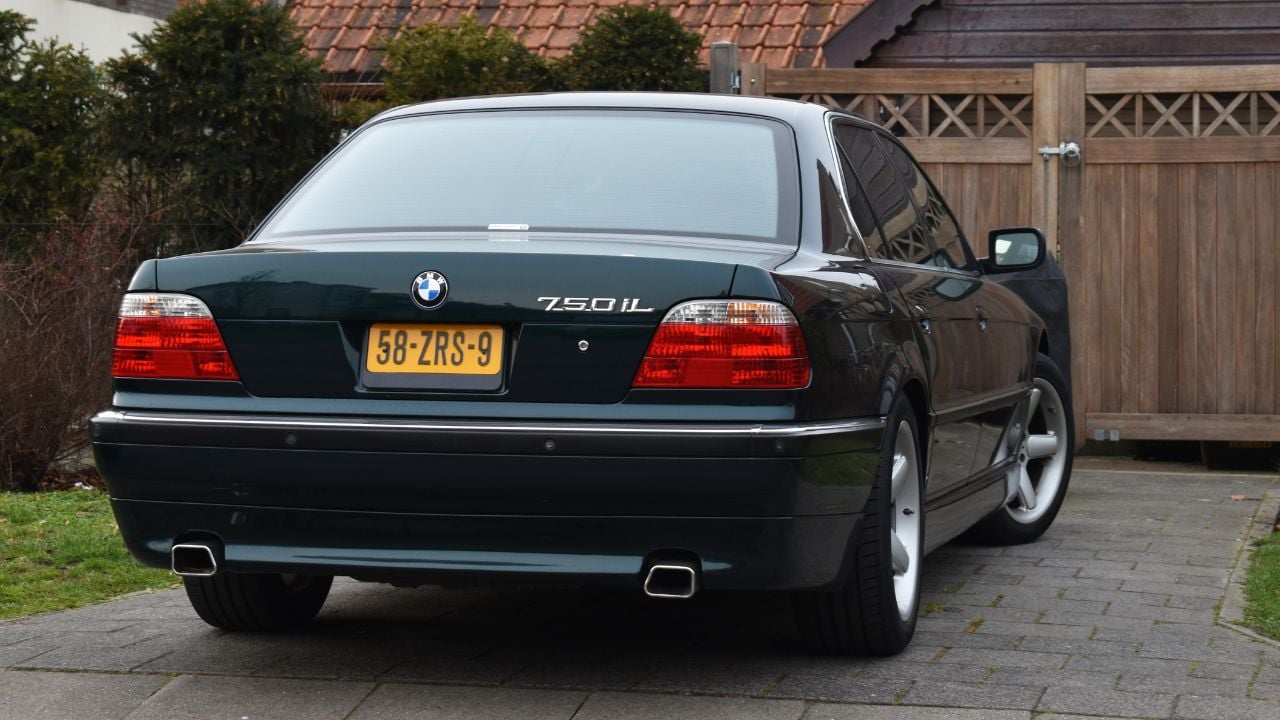
The E38 has aged so well partly because it never tried too hard in the first place. There is no visual desperation in it, no swollen aggression, and no oversized grill trying to explain its importance to people in the next lane.
The 750iL simply looks expensive in the old-fashioned way. The hood is long, the greenhouse is formal, the long-wheelbase proportions give the car a sense of calm scale, and the whole body carries itself with the kind of restraint BMW once did better than almost anybody. That is why the shape still lands now. It was designed around presence, not noise.
BMW’s own historical description helps explain why the car has stayed in people’s minds. The company notes that the 750iL became popular as the James Bond era 7 Series, even though the actual film car in Tomorrow Never Dies was a 740iL rather than the V12 flagship. That small detail says a lot. The E38 did not need the V12 badge in order to project mystery, status, or cinematic confidence. The whole platform already had that aura. The 750iL simply took the most complete, most indulgent version of it and turned the volume up a little further.
The 330 Cubic Inch V12 Was The Entire Point
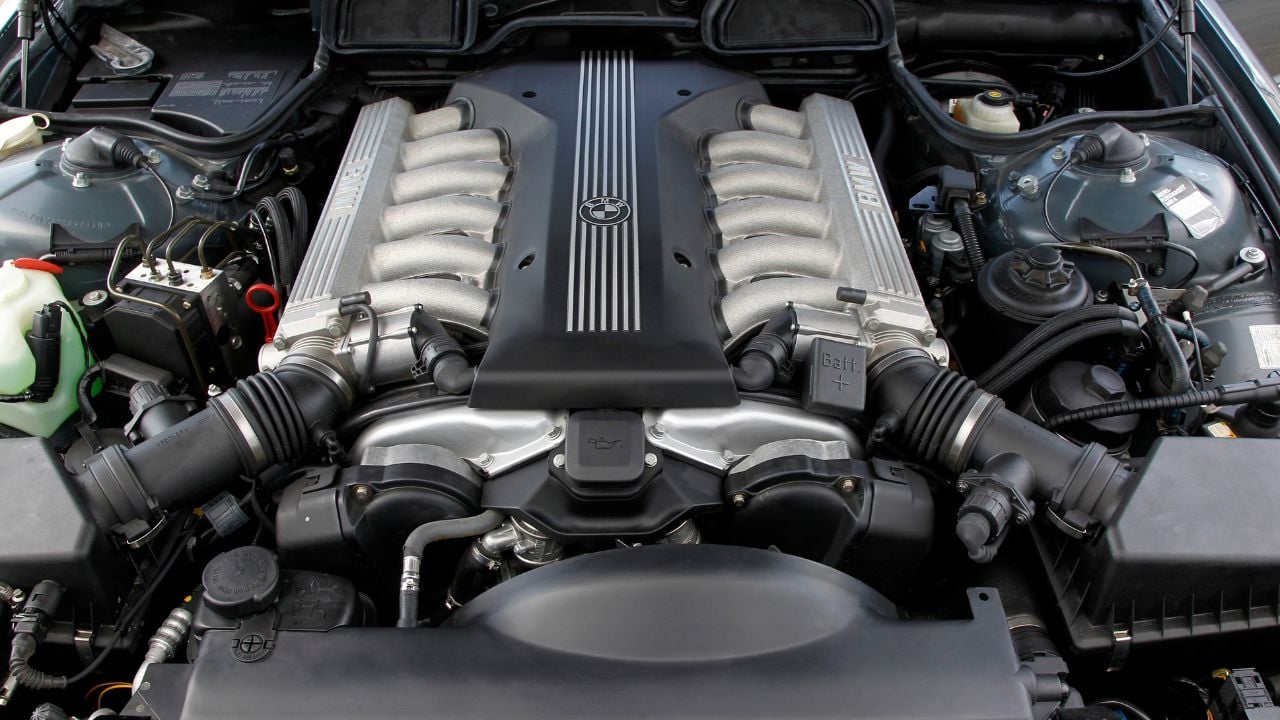
The engine is what turns the 750iL from a handsome old flagship into something much more memorable. BMW’s 2000 U.S. brochure for the E38 describes the car’s 330 cubic inch V12 as delivering 326 hp and 361 lb-ft of torque. Those are still respectable numbers, but the point of this engine was never shock value. The M73 V12 was about effortlessness. It was there to make the entire car feel calmer, heavier with intent, and richer in the way it gathered speed. A good V12 does not simply go fast. It lowers the temperature of the whole experience.
That is what makes the E38 750iL feel so different from many later luxury sedans that chased performance numbers more aggressively. The V12 does not bring a hot rod personality to the car. It brings authority. There is a softness to the way the power arrives, but not weakness. You sense the weight of the engine’s character more than the violence of its output.
That distinction matters because it defines the whole car. A V12 flagship should feel like it has reserves you may never fully use. The E38 gets that exactly right. Even now, that sort of mechanical dignity is surprisingly hard to replace once you have experienced it.
This Was Luxury Before Luxury Became Loud
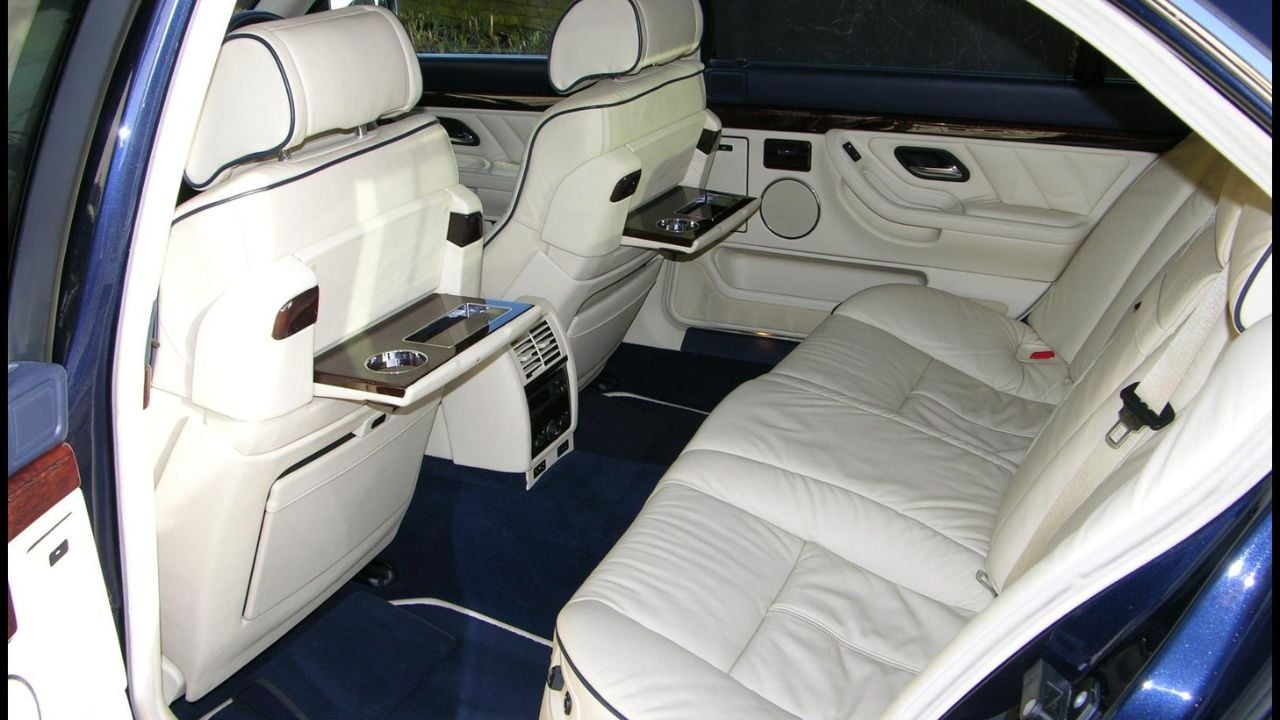
A lot of modern luxury cars feel desperate to prove they are luxurious. They glow, chime, animate, and surround every ordinary action with a layer of digital ceremony. The E38 came from a quieter philosophy. Its appeal lives in how little it needs to explain itself. The long-wheelbase cabin gives rear passengers the space they were supposed to get in a real flagship.
The controls are deliberate rather than decorative. The seating position feels formal without becoming stiff. Nothing about the car tries to impress you in the first thirty seconds because it assumes it has more time than that.
BMW Classic’s line about every conceivable comfort and quality feature may sound like period brochure language, but it points to something real. The E38 750iL belonged to an era when flagship luxury was still measured by isolation, fit, tactility, and the sense that the car had been assembled for grown adults rather than configured for a software demonstration. That is one reason the model has aged with such grace. It does not feel primitive. It feels focused. Plenty of newer luxury cars offer more functions. Very few offer this kind of serenity.
Why It Still Feels Better Balanced Than It Should
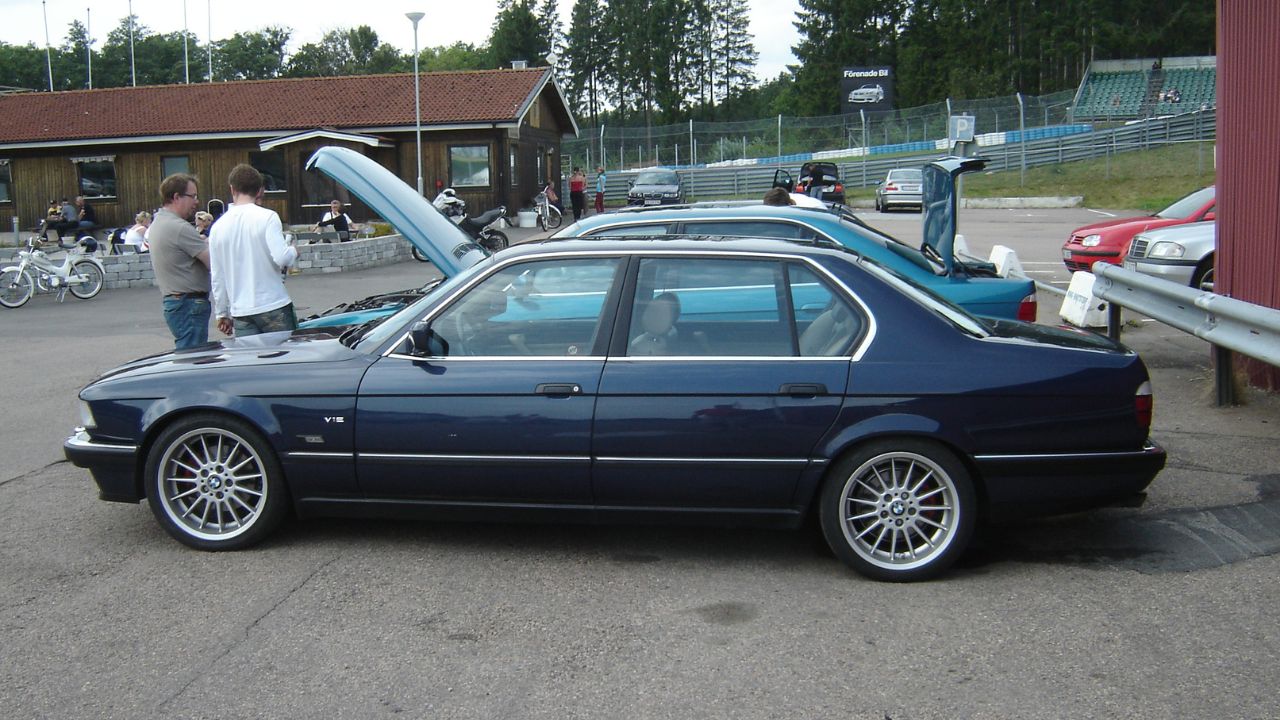
The 750iL is not a sports sedan in the way enthusiasts often use the term, and treating it like one misses the real charm. The surprise is not that it drives like a 3 Series. It is that it never feels loose, clumsy, or confused about its own size. The E38’s gift is coherence. The steering, the body control, the long wheelbase composure, and the way the car settles into a corner all work together to make it feel much more graceful than a large V12 luxury sedan has any right to feel. That is where the E38 wins people over. Not with fake agility, but with confidence.
That balance is also part of why the car still feels modern in a useful sense. It does not need modern tricks to feel resolved. There is enough structure in the way it moves that you never feel like you are just floating behind a giant engine. Instead, you feel the car carrying its mass with discipline.
That is a much more flattering quality in an old luxury sedan than outright speed ever could be. The best classic flagships do not ask you to excuse them. They ask you to notice how complete they still are. The 750iL does exactly that.
Why The Market Still Has Not Fully Woken Up
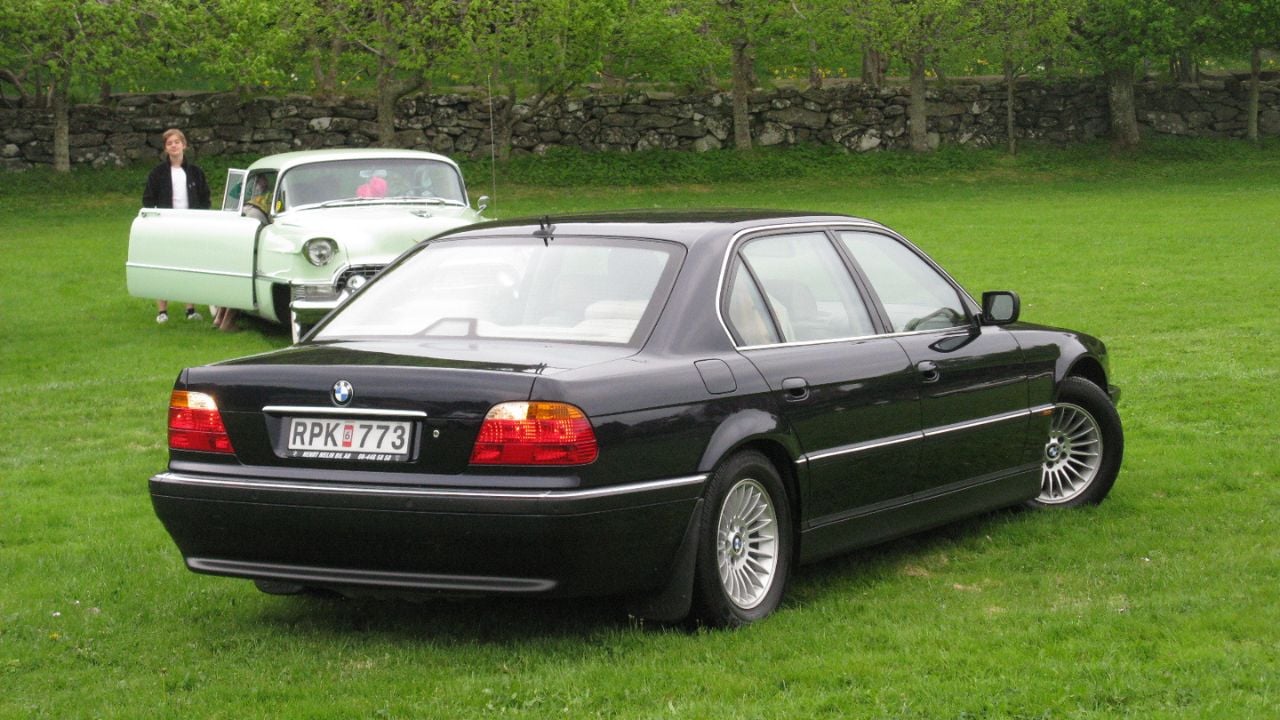
This is where the article’s central tension becomes most interesting. The market knows the E38 matters, but not evenly. Classic.com’s current E38 750iL market page shows an average sale price of $18,435. One especially prized 2001 750iL Sport reached $61,000 in March 2025, which proves the very best examples already have collector gravity.
At the other end, a 2001 car sold for $7,700 in May 2025, and earlier 1998 sales ranged from $5,800 to $23,750 depending on condition and mileage. In other words, the model is not one thing yet. It is still being priced as both an old luxury sedan and an emerging modern classic, sometimes at the same time.
That split is exactly why the “price of a Civic” headline works. A new Civic starts at $24,695. A strong E38 750iL can still trade below that line, and even very nice cars sometimes do not clear it by much. Exceptional survivors are moving into their own category, but the broader market still leaves room for buyers who understand what the car is before everyone else decides they do.
That does not make it a cheap car to own. A V12 BMW never will be. But it does make it one of the most seductive value propositions in the old luxury world: a car that already feels important, yet still has not been priced entirely like one.
Why Cars Like This Matter More With Time
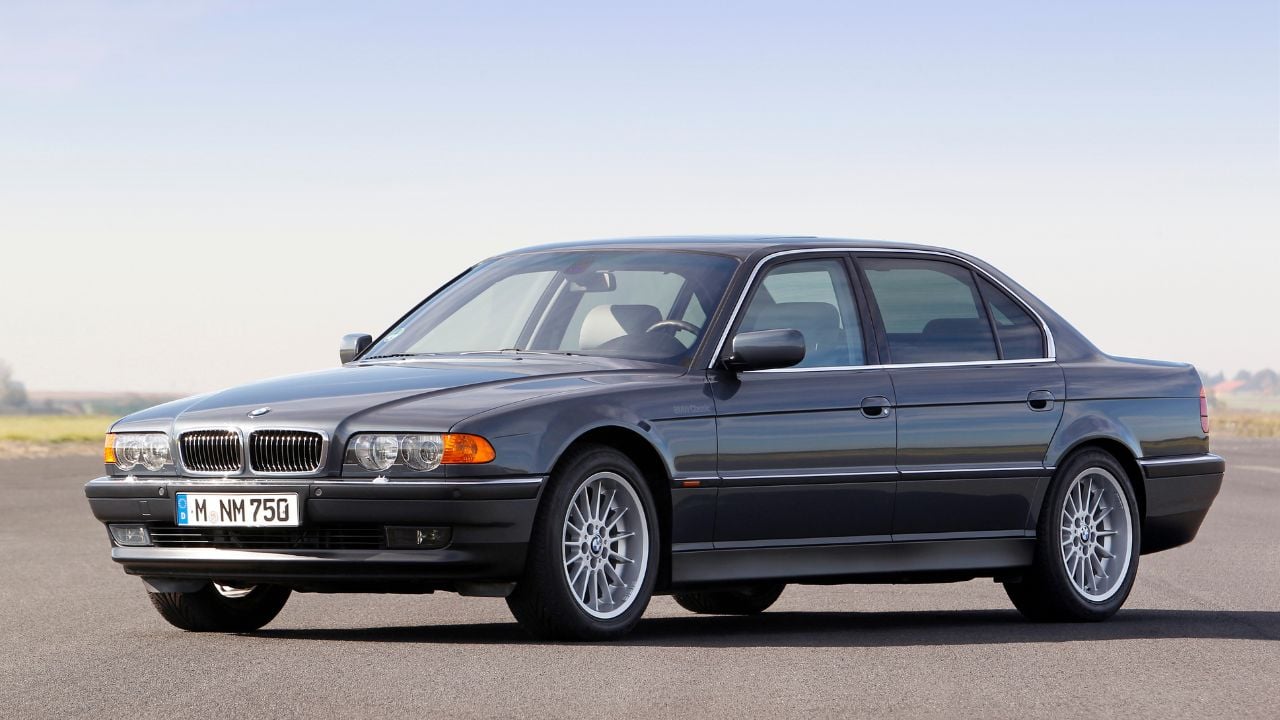
The E38 750iL is easy to admire for its engine, easy to admire for its shape, and easy to admire for the simple absurdity of buying a V12 BMW for used Honda money. But none of those things fully explains why the car stays with people.
The deeper reason is that it represents a version of luxury that now feels nearly extinct. It comes from a time when flagship sedans were designed to project calm rather than content and when a twelve-cylinder engine still meant the manufacturer wanted the top car to feel fundamentally different from everything else below it.
That is why the 750iL feels more interesting now than it did for years. The market is crowded with cars that are faster, more efficient, and far more complicated. Very few feel this self-possessed. Very few wear their status with such little strain. And very few offer the same strange thrill of knowing that a machine built to be the absolute summit of BMW sedan luxury can now slip into the driveway for the cost of a perfectly ordinary new compact. The E38 750iL is not just forgotten. It is waiting for the right kind of buyer to remember what it always was.