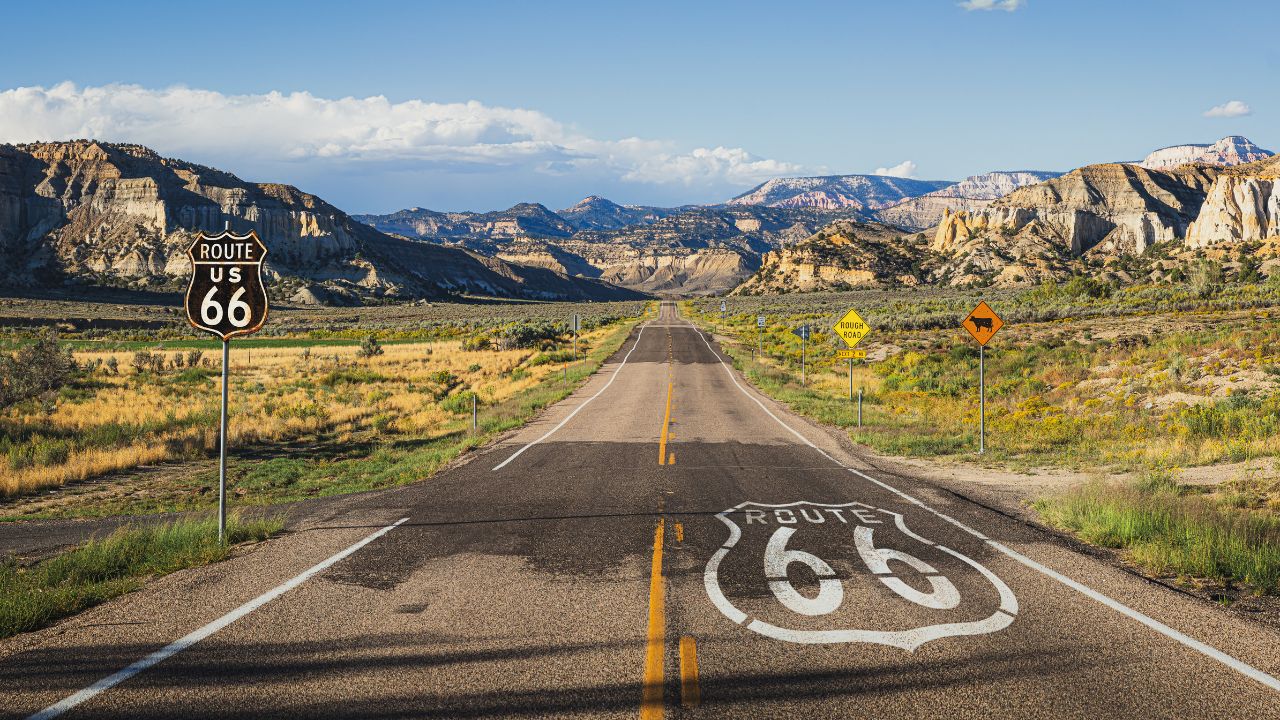
A retro American road trip works because it turns the country into a moving museum with pie, neon, and occasional giant roadside nonsense. The strongest version still runs along Route 66, whose centennial is being celebrated in 2026 after Congress established the Route 66 Centennial Commission to mark the highway’s 100th anniversary. The National Park Service, through its Route 66 Corridor Preservation Program, treats the road’s period of significance as 1926 through 1985, which tells you this is not nostalgia pulled out of thin air. It is preserved history with motor oil in its veins.
That is what gives the journey its unusual power. You get presidential history, old transportation lore, midcentury diners, desert towns, restored signs, and the oddball confidence of a nation that once looked at the horizon and thought, yes, let us build a hot dog statue over there. If you want a route that feels deeply American without becoming stiff or lecture-heavy, this is the one. Route 66 still celebrates the country best when you let the serious history and the charming absurdity ride in the same car.
1. Start in Illinois, Where the Whole Legend Gets Rolling
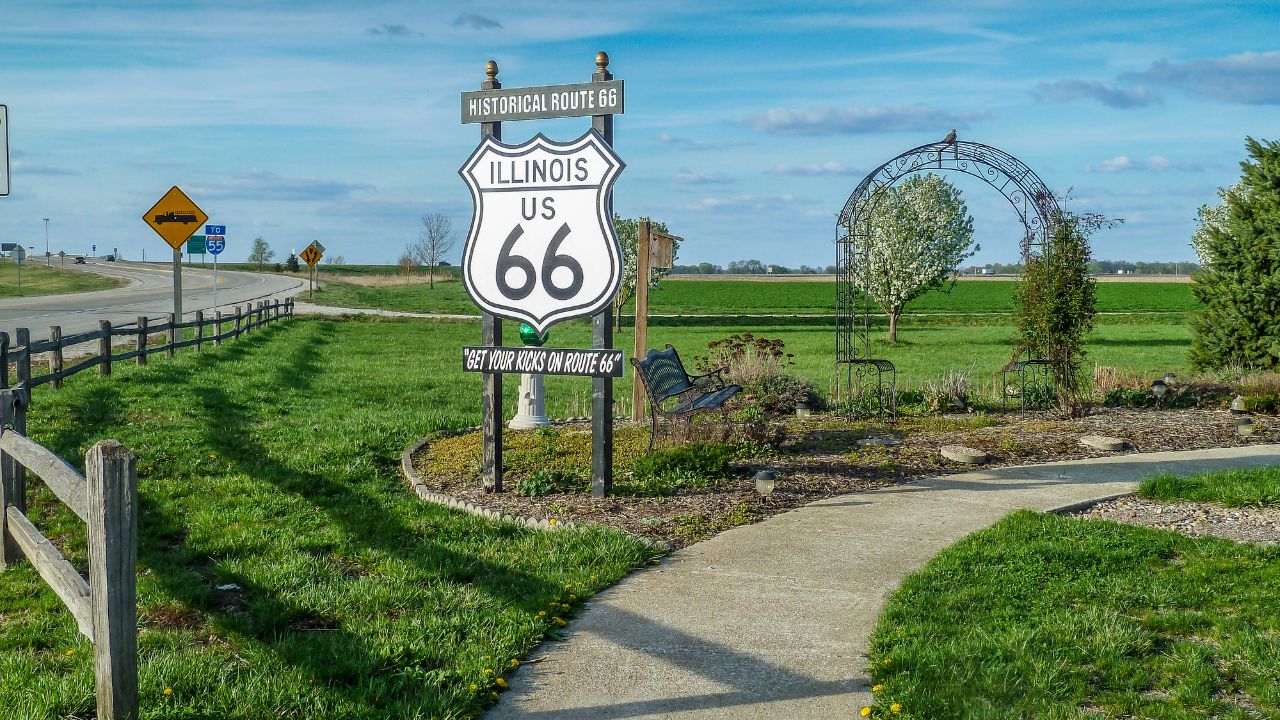
A proper run should begin where Route 66 began, and Illinois still knows how to sell that story with style. Enjoy Illinois says the road starts in Chicago and runs 301 miles through the state, with diners, museums, and vintage roadside attractions scattered along the way. The state is also leaning hard into the moment, promoting centennial events along that 301-mile stretch in 2026. That gives the opening leg a nice once-in-a-century glow instead of ordinary road-trip wallpaper.
Illinois also sets the tone for the whole drive. This is where you learn that a nostalgic road trip is less about speed than atmosphere, and atmosphere needs time. Springfield’s Route 66 Legends Neon Park preserves restored signs from historic Route 66 businesses, which is exactly the kind of cheerfully excessive Americana the route deserves. Start there, and the rest of the drive begins to make immediate emotional sense.
2. Missouri Reminds You That the Mother Road Was Built From Real Places, Not Only Mythology
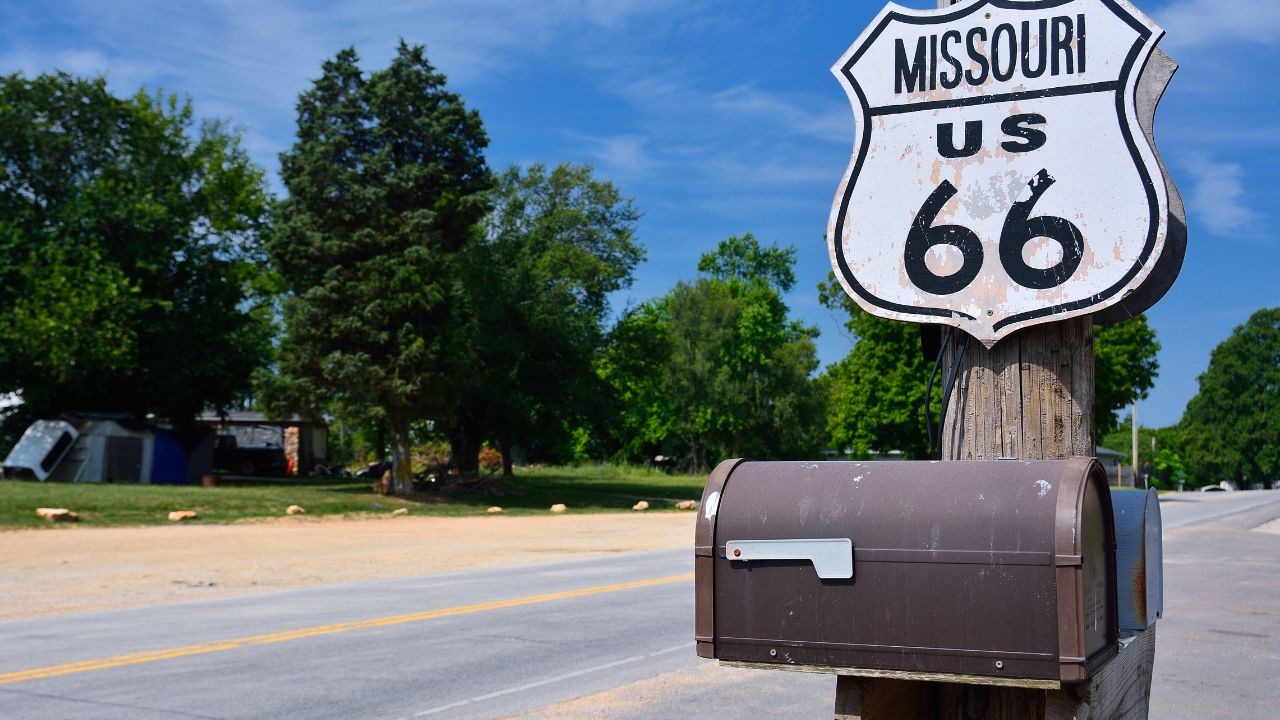
Missouri’s stretch is where the romance gets a little sturdier. Route 66 State Park near St. Louis includes a visitor center in the former Bridgehead Inn, a 1935 roadhouse that sat on the original route, and the park interprets both the highway itself and the complicated local story of Times Beach. The best retro journeys are never only shiny. They also carry the texture of the communities that rose, changed, and sometimes vanished along the way.
This is also where the experience starts feeling less like a themed drive and more like a national story told through pavement. Missouri State Parks describes Route 66 as the “Main Street of America”, and that nickname still fits because the road exposed millions of travelers to towns they otherwise would have sped past. A retro road trip earns its keep when it makes you slow down enough to notice those places again. Missouri is very good at teaching that lesson without making a fuss about it.
3. Oklahoma Is Where the Trip’s Quirky Side Starts Grinning Openly
If Illinois provides the prelude, Oklahoma supplies the bigger, louder middle act. TravelOK says the state has the nation’s longest drivable stretch of Route 66, running more than 400 miles past charming towns, diners, and quirky attractions. That is excellent news for anyone who wants the road-trip version of Americana to come with a little extra theater. Oklahoma does not hide its weirdness under a tasteful blanket. It puts the thing on the lawn and paints it brightly.
The official state tourism material leans into that eccentric spirit without apology. TravelOK’s Route 66 coverage highlights roadside oddities, oversized attractions, and authentic hometowns, which is a polite statewide way of saying this section understands the value of delightful nonsense. Quirky stops are not fluff on a retro drive. They are part of the historical record too, evidence of an era when gas stations, burger stands, motels, and towns all competed to catch a motorist’s eye.
4. Texas and New Mexico Keep the Road Large, Dusty, and Gloriously Theatrical
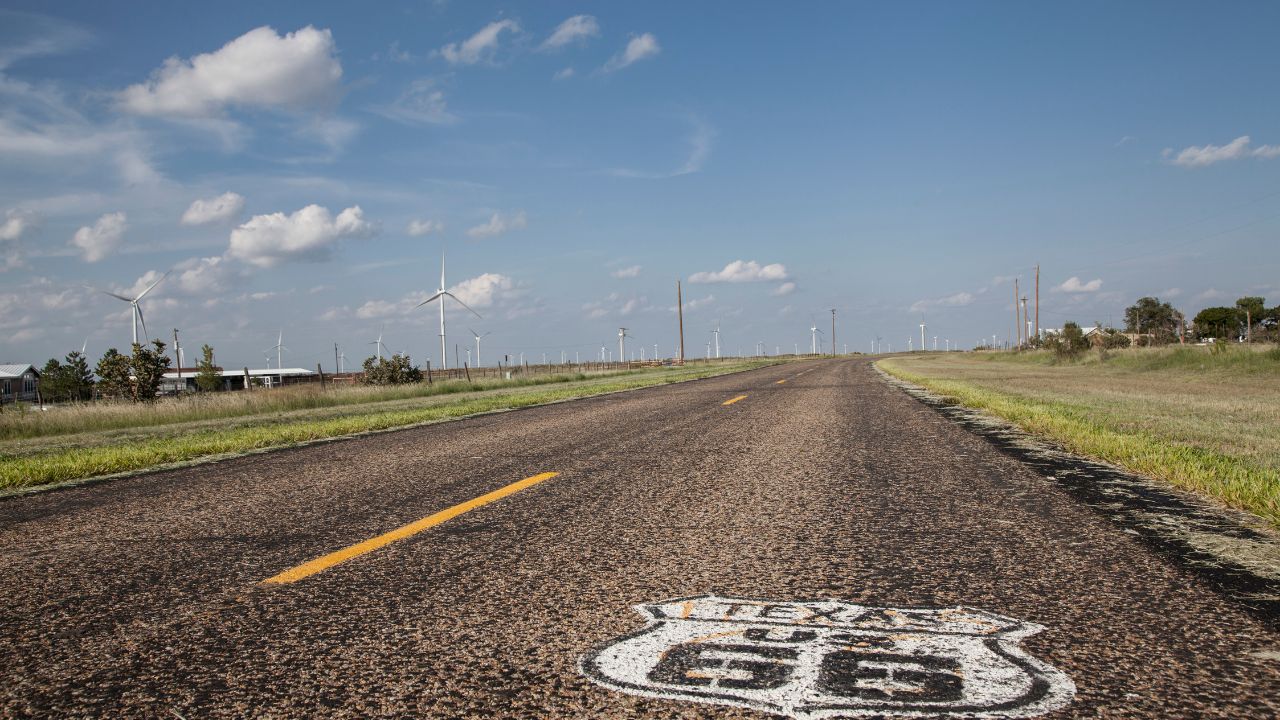
The Texas Panhandle feels like Route 66 turning up the volume. Travel Texas says the Route 66 run through the Panhandle stretches 177 miles, and Amarillo remains its biggest hub, where roadside nostalgia collides with canyon country and outsized attractions. Amarillo’s official Route 66 Historic District page gives that stretch real local body instead of vague highway myth.
New Mexico then changes the flavor without losing the atmosphere. The New Mexico Tourism Department says all 535 miles of the state’s Route 66 once bustled with life and still offer neon, high prairie, mountain views, and strong connections to Native Puebloan cultures. That mix is crucial to the success of the whole journey. A retro road adventure gets much richer when it stops pretending the story belongs only to chrome and milkshakes. The Southwest carried older, deeper histories long before any tourist postcard learned to wink.
5. Arizona May Be the Single Strongest State for Pure Route 66 Preservation
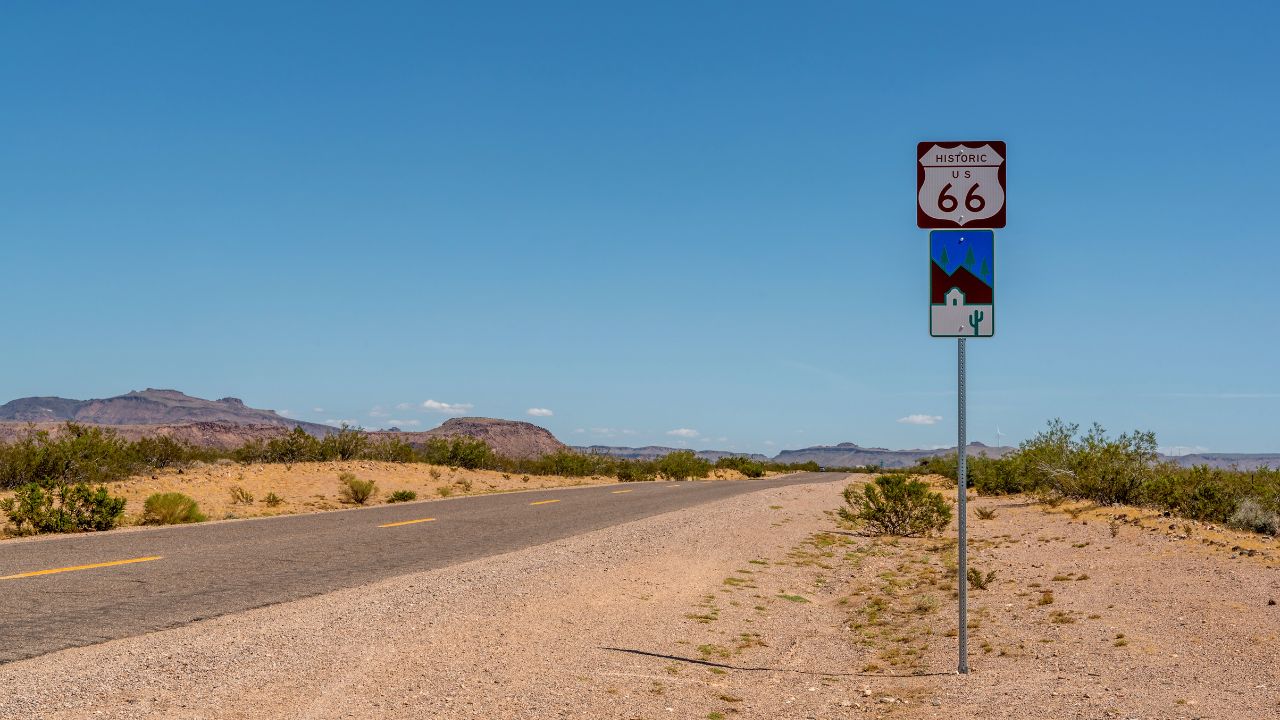
Arizona plays a different game from the earlier states. Visit Arizona says the state has 385.2 miles of the longest preserved stretch of the original Mother Road in the United States. That gives the drive a rare continuity, the feeling that the old alignment still has enough body left to speak for itself. You are not merely chasing fragments there. You are traveling through one of the route’s most intact surviving chapters.
Arizona also lets the retro atmosphere crash beautifully into far older landscapes. Petrified Forest National Park is the only unit in the National Park System containing a section of Historic Route 66, and the park pairs that highway story with more than 13,000 years of human history and culture. That combination is catnip for a journey like this. One moment you are thinking about tailfins and Burma-Shave energy, and the next you are staring at a landscape that makes the entire car age look like a very recent hobby.
6. Santa Monica Gives the Journey a Finish That Feels Earned, Not Manufactured
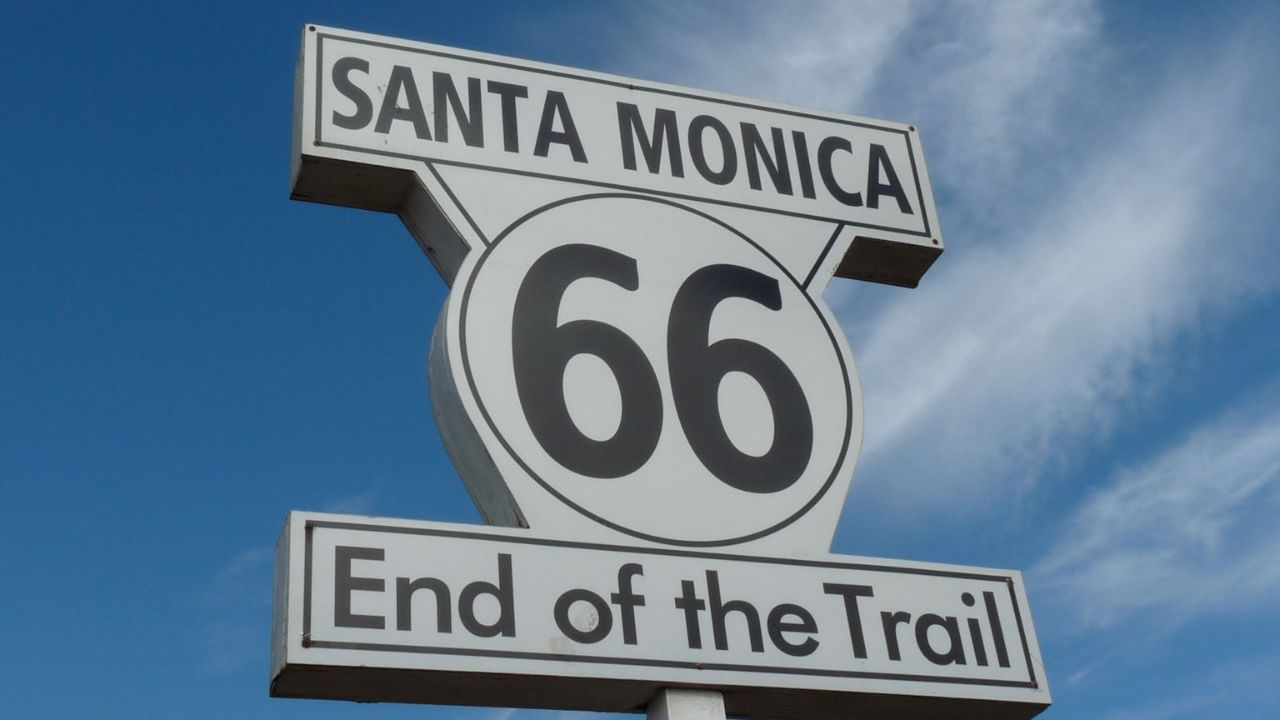
A retro drive needs a proper ending, and Santa Monica still knows how to play the role. Santa Monica Travel and Tourism says Route 66 officially concluded at the intersection of Olympic Boulevard and Lincoln Boulevard, while the much-photographed “End of the Trail” sign near the pier serves as the symbolic finish most travelers want. That distinction is perfect, really. America loves both historical precision and a good photo op, and this destination cheerfully provides both.
The timing is especially good right now. Santa Monica kicked off Route 66’s centennial year in January 2026 with a vintage-vehicle caravan heading east toward Chicago, which neatly captured the highway’s whole strange magic in one gesture. Even at the ocean, the story keeps pointing inland again. That is why this trip works so well as a celebration of national history and quirky charm. It ends at the Pacific, but the feeling lingers like neon after dark.
The smartest way to do this journey is to leave room for the unserious stuff. Stop for the restored signs, the odd museums, the stubborn old cafes, and the little downtowns that still remember what the road once meant. Those places are not distractions from the history. They are the history, just wearing brighter colors and slightly sillier hats.