
Some vehicles fall into the category of “if you know, you know.” The Suzuki Samurai is one of them.
Many people still picture the Samurai, or the Jimny as it is known overseas, as a cute beach-going mini Jeep driven by college kids or young adults looking for a quirky runabout. But that reputation is probably better suited for vehicles like the Geo Tracker that came later.
In reality, the Samurai was something very different. It was small, simple, lightweight, and surprisingly capable off-road. In many ways, it felt closer in spirit to the original Jeep or a Toyota FJ40 than the beach cruiser many people remember. And today, those little trucks are starting to get expensive.
The Controversy That Followed the Samurai for Decades
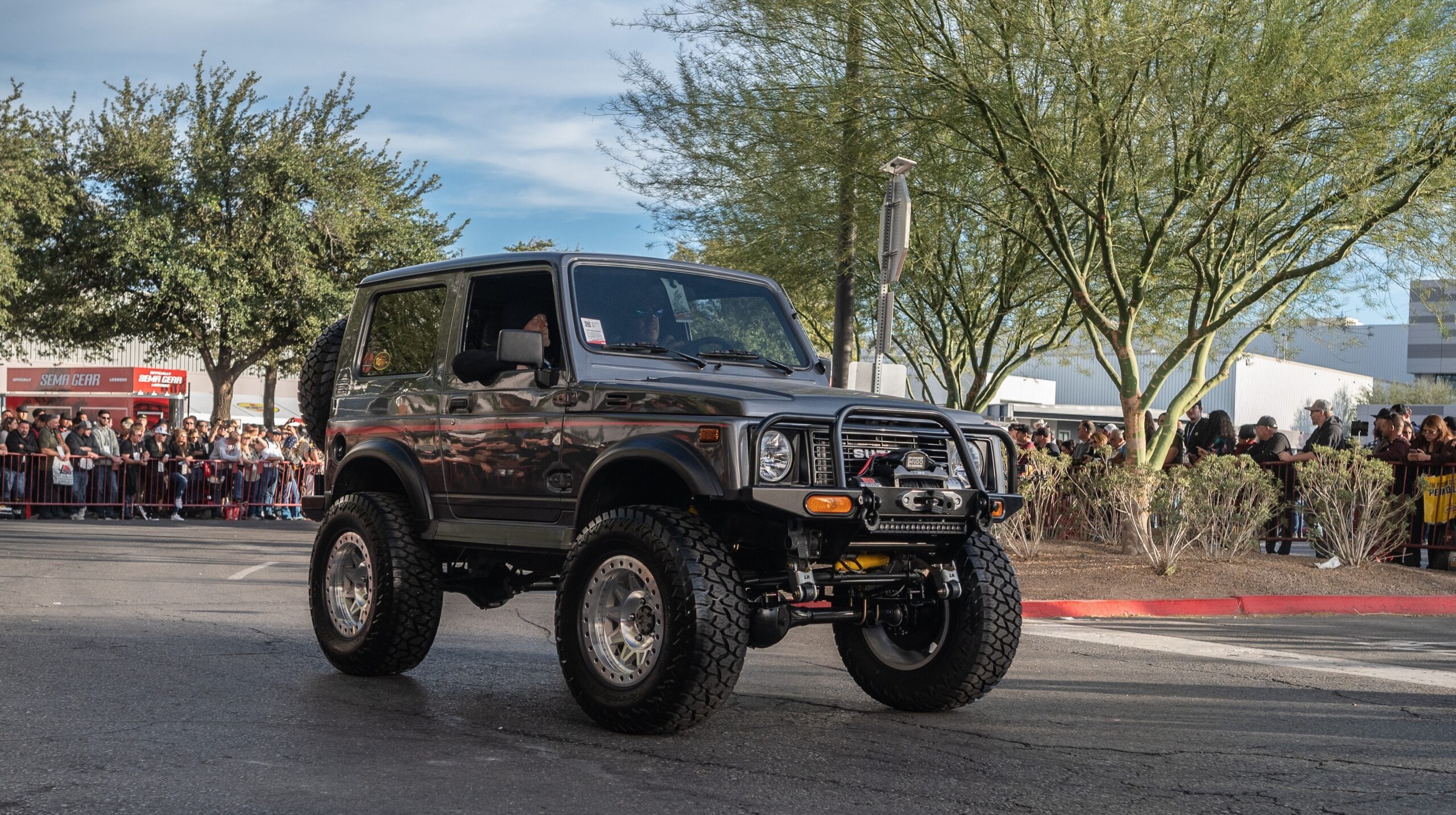
Part of the reason the Samurai never fully caught on in the United States traces back to one of the most controversial automotive reviews of the 1980s.
In 1988, Consumer Reports published a test claiming the Samurai had a dangerous tendency to roll over during emergency maneuvers and labeled the vehicle “not acceptable.” Suzuki strongly disputed the results and accused the publication of manipulating the testing conditions to produce the failure.
The automaker eventually filed a lawsuit against Consumers Union, the nonprofit publisher of the magazine, arguing the testing had unfairly damaged the vehicle’s reputation. The dispute dragged on for years before the two sides eventually settled in 2004, with the lawsuit dismissed according to reporting from the Los Angeles Times.
By that point, however, the damage had largely been done. For many Americans, the Samurai became better known for rollover jokes than for what it was actually capable of.
Enthusiasts Eventually Rediscovered Them
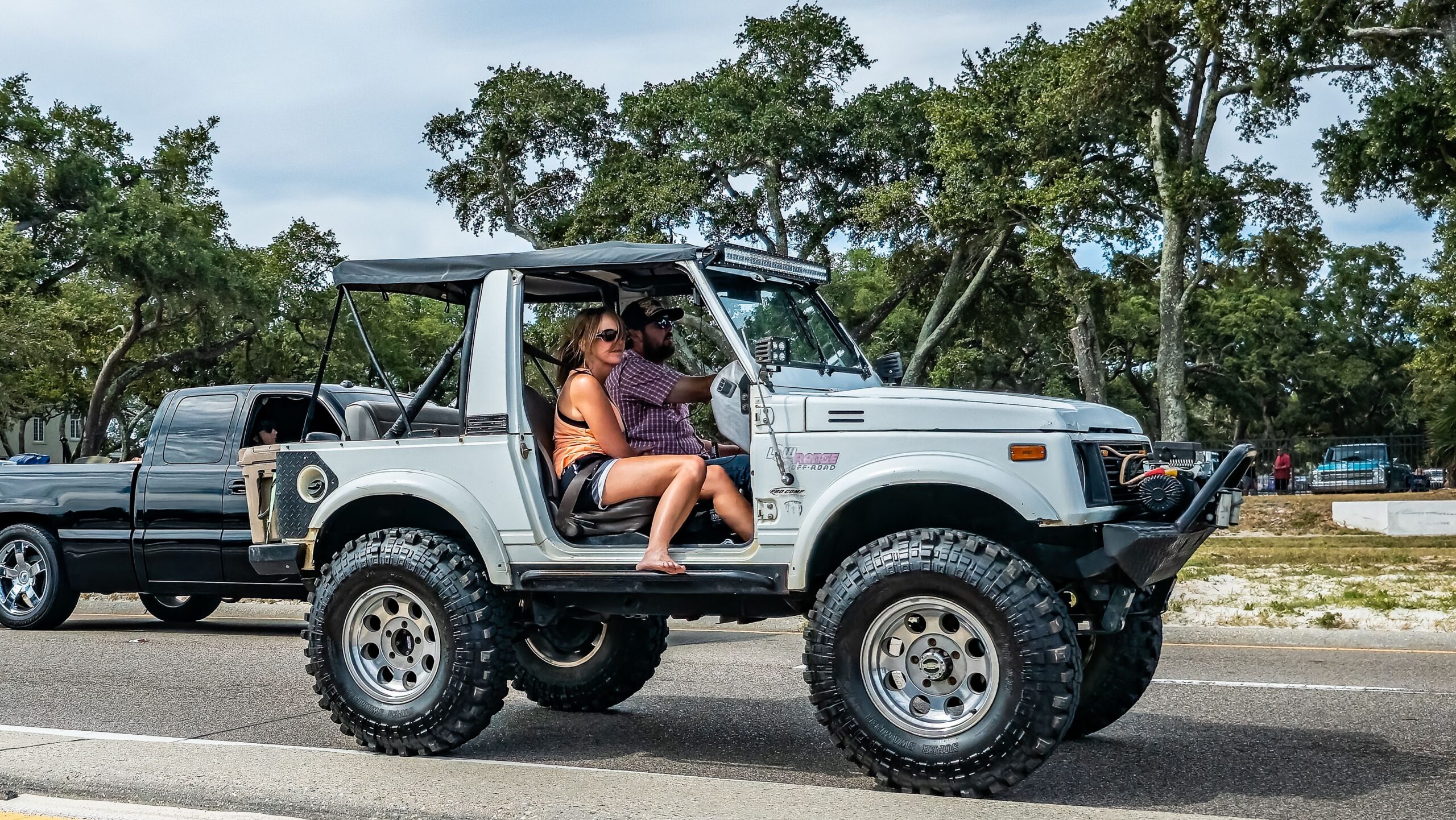
Decades later, off-road enthusiasts began rediscovering something Samurai owners had known all along. These little rigs are far more capable than their size suggests once the trail gets rough.
Their lightweight design, simple mechanics, and solid axle Four Wheel Drive layout make them easy to modify. They are also far cheaper to build into a serious trail rig than many traditional platforms. Some owners have even begun treating them as inexpensive street-legal alternatives to UTVs.
I can personally vouch for that appeal. I have owned two Samurais over the years, and both have proved just how capable these little trucks are off-road.
Rust, unfortunately, is the enemy of any vehicle approaching 40 years old. My first Samurai eventually lost that battle, while the second one I sold to help launch my company. It was the right decision at the time, but it still stings a little seeing how much these trucks are worth today.
A decade ago, decent Samurai often traded hands for just a few thousand dollars. Today, clean examples regularly sell for $6,000 to $14,000 depending on condition and modifications, according to enthusiast market data cited by Hagerty. Still cheaper than a Toyota FJ40, sure, but compared with what they used to cost, it can still feel like sticker shock.
Which brings us to something most Americans never got.
A Samurai Pickup the U.S. Never Officially Received
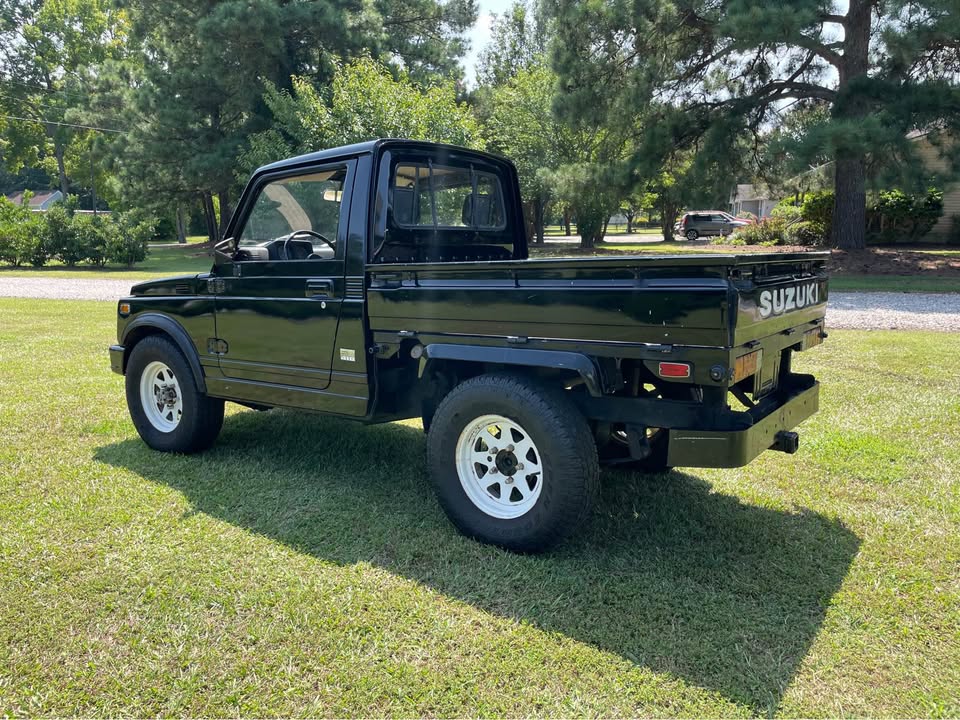
While the Samurai was sold in the United States from 1985 through 1995, Suzuki actually built a pickup version for other markets.
Known as the Suzuki Jimny SJ410K, the small truck used the same rugged platform as the Samurai but added a compact pickup bed and a slightly longer wheelbase. Thanks to the 25-year import rule, these trucks have begun to appear in the United States.
One example currently listed on Facebook Marketplace in North Carolina is priced at $15,000.
The truck features a tray-style bed with fold-down sides and a tailgate, giving it surprising utility for something this small.
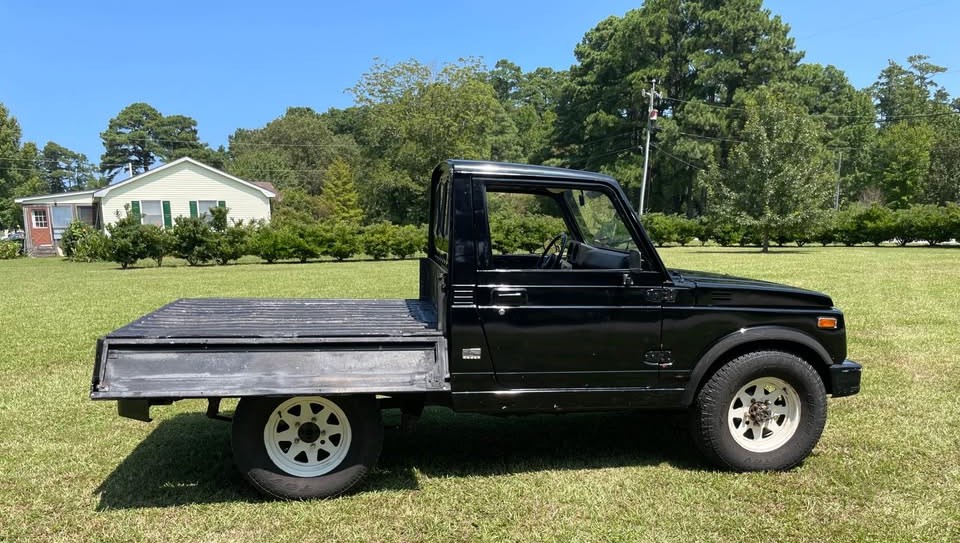
Power comes from a 1.0-liter four-cylinder engine producing roughly 59 horsepower that sends power to all four wheels through a simple Four Wheel Drive system. That may not sound like much, but vehicles this small do not need much power to be useful off-road.
The Samurai and Jimny platform has always been more about light weight and gearing than outright horsepower. For enthusiasts seeking more power, however, the platform has become famous for its engine-swapping options.
One of the most common upgrades is swapping in a 1.6-liter Suzuki engine from the Sidekick or Geo Tracker. It is widely considered one of the easiest upgrades since it stays within the Suzuki parts ecosystem, and depending on the version, can increase output to roughly 80 to 95 horsepower while improving highway performance.
Others take things further with swaps such as the Suzuki 2.0-liter J20 engine used in later Vitara models, or diesel options like the Volkswagen 1.9 TDI, which has become popular among off-road builders seeking strong torque and excellent fuel economy.
In other words, if the stock engine feels underpowered, the Samurai platform offers plenty of ways to wake it up.
Could $15,000 Actually Be a Deal?
While the Samurai was often mocked a bit during its original run in the United States, its simplicity and off-road capability have helped it gain a loyal following among enthusiasts.
That growing appreciation is part of the reason Hagerty included the Samurai on its Bull Market list of collectible vehicles expected to rise in value.
Considering clean Samurais are already selling for five figures, and the pickup version was never officially sold in the United States, the $15,000 asking price for this rare Jimny truck might not be as crazy as it first sounds. Especially if you are one of those enthusiasts who understand exactly why the Samurai falls into that “if you know, you know” category.
So what do you think? Would you pay $15,000 for this little Samurai truck?
If it were yours, how would you build it? Keep it mostly stock as a quirky survivor, turn it into a serious off-road trail rig, or put it to work as a lightweight homestead truck? Or would you take it in a completely different direction with an engine swap and a full custom build?
Let us know what you would do with it in the comments.