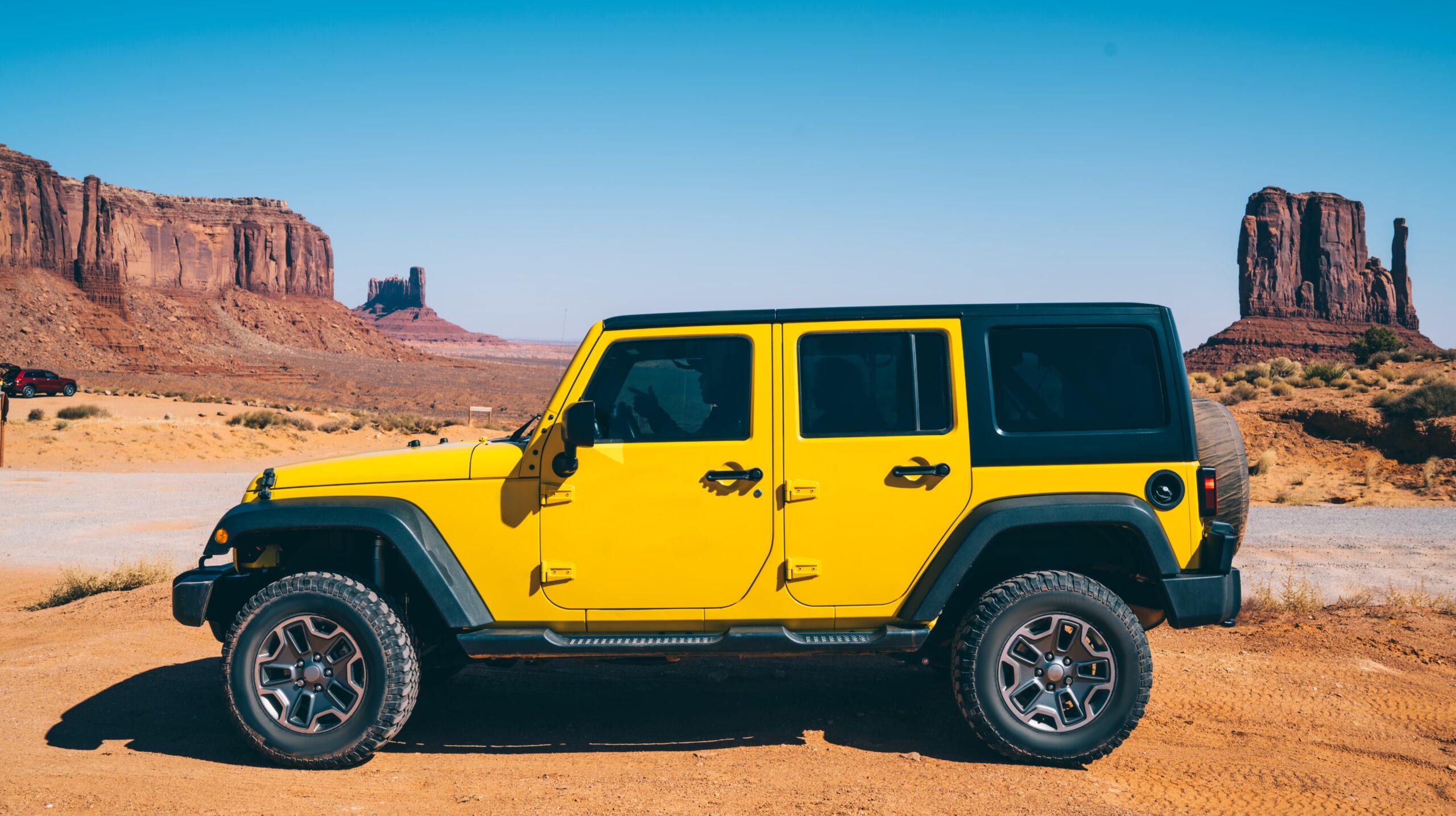
Wrangler owners know something outsiders often miss: criticizing the Jeep Wrangler is a bit like teasing a sibling. You can make fun of your sibling all you want, but the second a stranger tries it, there’s going to be a problem. If you own one, you are allowed to complain about the quirks. But when someone who does not own one starts piling on, the defense squad tends to show up quickly.
And the Wrangler definitely has quirks. The ride can feel agricultural on the highway, and fuel economy is rarely impressive. Longtime owners joke about “death wobble” like it’s just part of the Jeep ownership experience. Yet none of that has stopped the Wrangler from becoming one of the most beloved off-road vehicles in America.
There was one criticism that was harder to shrug off, though: crash tests in which the Wrangler tended to tip over.
For years, the Insurance Institute for Highway Safety flagged the issue during its demanding small overlap front crash test. In earlier tests of the modern-generation Wrangler, the SUV sometimes tipped onto its side after striking the barrier. IIHS testing of the 2022 Wrangler showed the vehicle tipping during the driver-side small overlap crash test, repeating a problem first identified with the 2019 model.
Now, according to the safety group, Jeep may have finally fixed it.
The Wrangler Finally Stays Upright
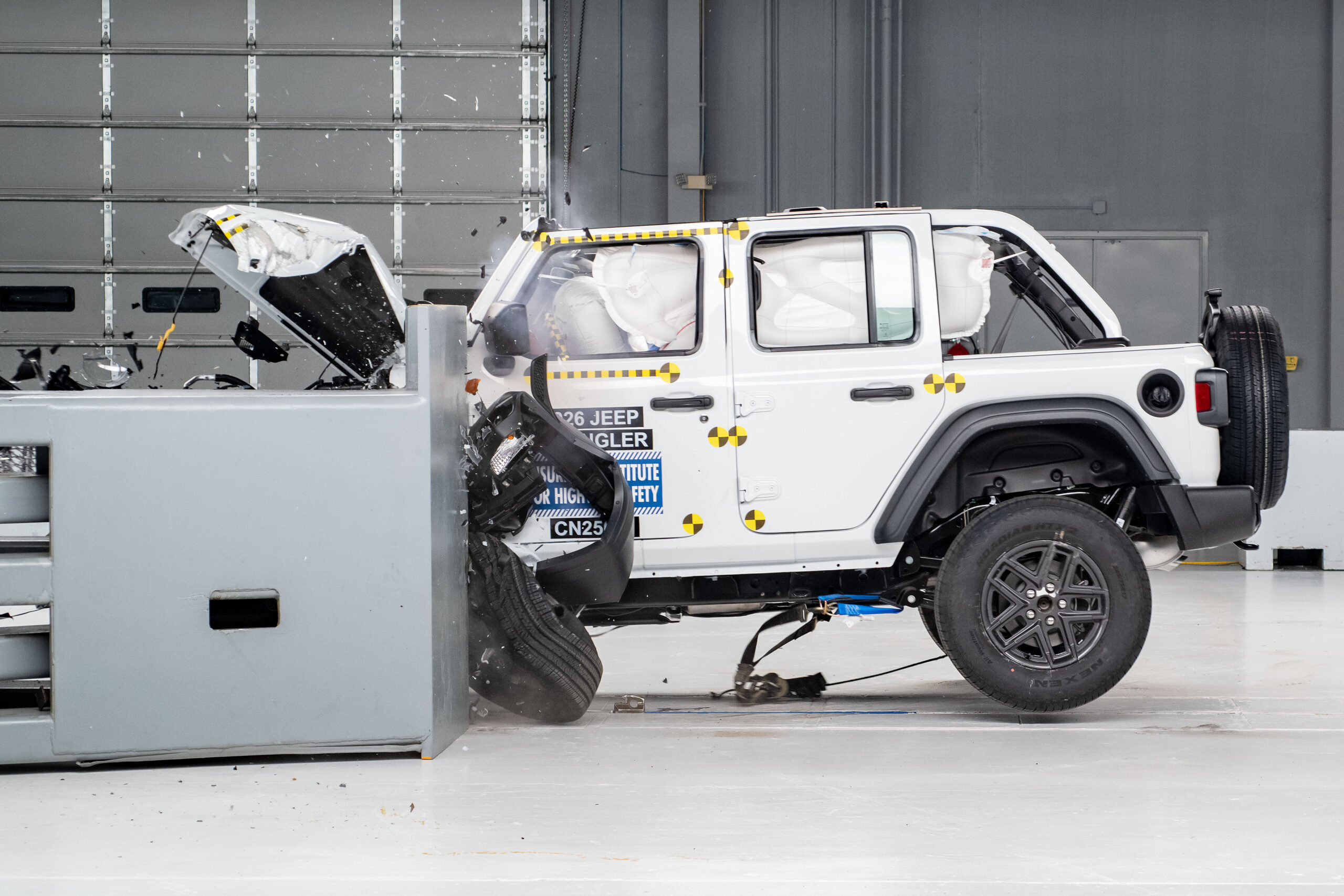
In a recent update, the Insurance Institute for Highway Safety said the 2026 Jeep Wrangler four-door remained upright during the driver-side small overlap crash test after structural changes were made to the vehicle’s frame rail. That might sound like a small detail, but it resolves a problem that has followed the vehicle for years.
The issue first appeared in IIHS testing of the 2019 Wrangler, when the SUV tipped onto its passenger side after hitting the barrier. Even after earlier changes, the same thing happened again when the institute tested a 2022 model.
For the 2026 model year, Stellantis engineers modified the frame rail. According to IIHS, the reinforcement acts as a deflector when the front wheel and tire engage the barrier in this crash scenario. With the update, Wranglers built after October 2025 now earn an acceptable small overlap rating, which combines results from both driver-side and passenger-side testing.
That does not mean the Wrangler suddenly became a safety benchmark, but it does mean the dramatic rollover seen in earlier tests appears to be solved.
A Vehicle That Was Always a Little Different
Some of the Wrangler’s crash-test challenges stem from what makes it special in the first place. Unlike most modern SUVs, the Wrangler is still built as a serious off-road machine with exposed wheels, solid axles, and proportions designed for climbing rocks rather than slicing through wind tunnels.
That formula has made the vehicle incredibly capable off pavement. It also means it does not behave like a typical crossover during certain types of crashes.
Federal safety testing has also shown the Wrangler carries a relatively high rollover risk compared with many vehicles. According to National Highway Traffic Safety Administration data, the current-generation Wrangler has an estimated rollover risk of about 26.7 percent in government testing, higher than many SUVs.
Wranglers built after October 2025 appear to handle the IIHS small overlap scenario better thanks to the revised frame rail design.
Reddit Reacted About How You’d Expect
If you were wondering how the internet reacted to the news, Reddit delivered exactly what you would expect.
Some commenters gave Jeep credit for finally addressing a crash-test issue that had been hanging over the Wrangler for years. Others were far less impressed, joking that fixing the rollover problem still leaves plenty of other things for owners to worry about.
Complaints about reliability quickly entered the conversation, with some users bringing up familiar Wrangler talking points, such as electrical gremlins and long-running debates about the durability of Stellantis engines. Others took the more traditional Jeep-owner stance: the Wrangler was never meant to be a perfect daily driver anyway.
As is often the case with Wrangler discussions online, the thread turned into a mix of criticism, jokes, and the occasional owner jumping in to say their Jeep has been perfectly fine for years.
Still Not Perfect
Even with the improvement, the Wrangler is not suddenly flawless in the safety department. IIHS testing still showed a high risk of injury to the front passenger’s right foot and leg in the passenger-side small overlap crash test.
The change also applies to the Wrangler’s pickup sibling. Jeep made the same frame-rail modification to the 2026 Gladiator, which now earns an acceptable rating in the same test configuration.
IIHS ratings range from Good, Acceptable, Marginal, and Poor, and a vehicle must score Good in both driver-side and passenger-side small overlap tests to qualify for the organization’s top safety awards. So while the Wrangler’s latest update solves a long-standing issue, it does not suddenly turn the off-road icon into a safety superstar.
The Wrangler Paradox
And yet, none of this will probably change the way most Wrangler owners feel about their vehicles.
Jeep people already know what they bought. The Wrangler is loud. The ride can be rough. The gas mileage is not great. And until recently, it had a habit of embarrassing itself in crash tests.
But that has always been part of the deal. For many owners, the Wrangler is what you buy when capability and character matter more than perfection. Now it appears Jeep has managed to fix one of its flaws while leaving the rest of the personality intact.