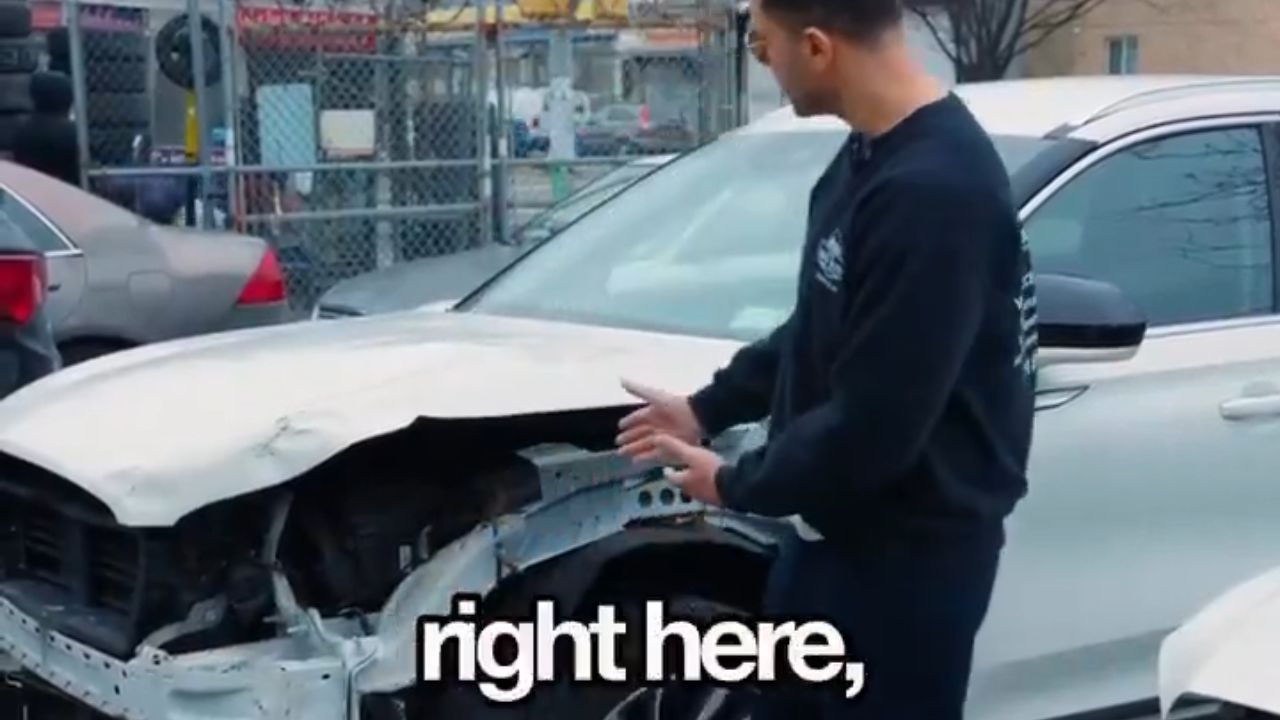

The viral X video shared by @financedystop on February 20, 2026, got people within the automotive and insurance communities talking up a storm.
In the clip, filmed outside an auto body shop amid damaged vehicles including a white SUV with visible front damage and a red car nearby, a shop owner delivers a stark warning to drivers involved in crashes: avoid sending photos of the accident damage directly to your insurance company.
Why You Should Let Professionals Handle It
Standing confidently in a black sweatshirt emblazoned with “Lambo Body” and matching joggers, the man—presumed to be the shop owner—addresses the camera directly. He argues that submitting photos yourself can severely limit what the body shop can later claim and repair.
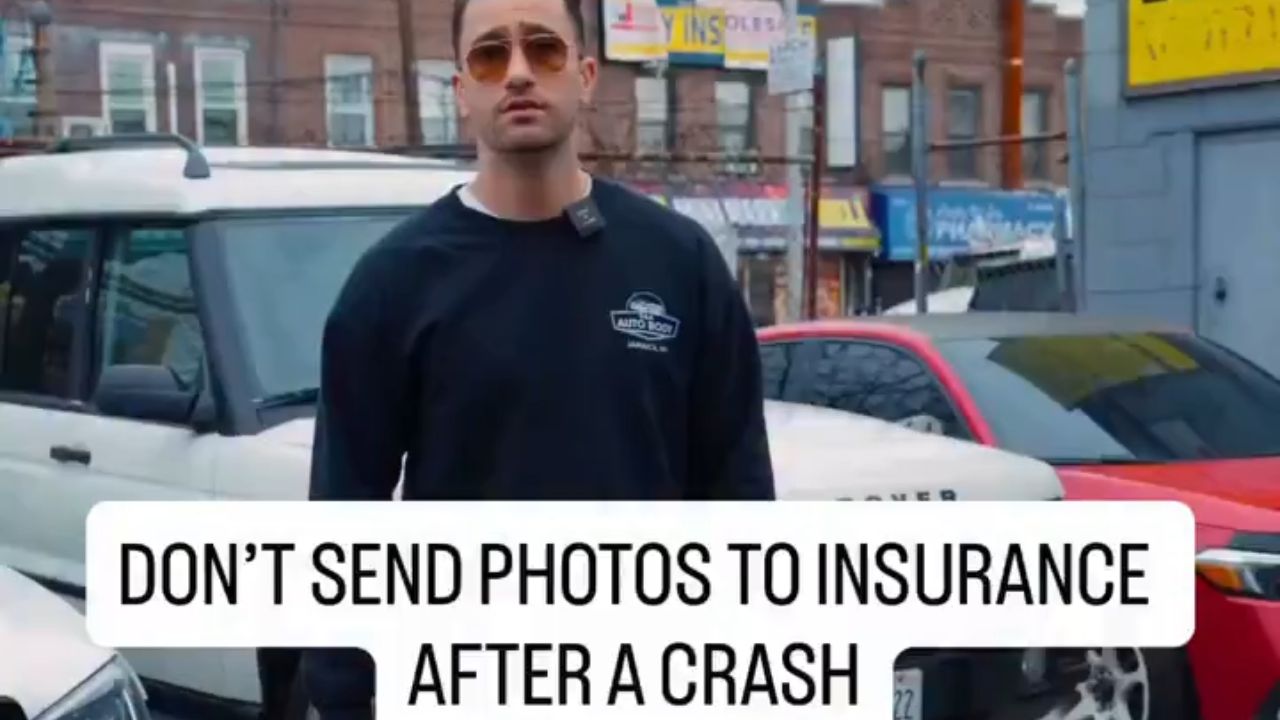
According to his explanation, insurance companies often use initial photos submitted by the policyholder to generate a preliminary estimate. If those images don’t capture every dent, scratch, or underlying issue, the insurer may lock in a lower payout, refusing to cover “supplements” (additional repairs discovered once the vehicle is disassembled).
He emphasizes that legitimate body shops conduct thorough inspections, often finding hidden damage like frame issues, misaligned panels, or compromised components not visible in amateur snapshots. By sending photos upfront, drivers inadvertently hand the insurer ammunition to deny or minimize these extra costs.
The shop owner positions this as a common tactic that benefits insurers at the expense of proper repairs, potentially leaving vehicles unsafe or cosmetically imperfect.

He urges viewers to let the body shop handle all communication and documentation with the insurer instead, allowing professionals to submit detailed estimates after teardown.
The post, which amassed over 5,800 likes, 660 reposts, and more than 385,000 views in days, includes overlaid text reinforcing the message: “DON’T SEND PHOTOS TO INSURANCE AFTER A CRASH.” The background features urban signage from an auto body and collision repair facility, so the viewer is reassured of the speaker’s industry perspective.
Helpful Advice or Self-Serving Scheme?
The polarized reactions on X might be rather surprising. Some users defend the advice, sharing anecdotes of shops uncovering extensive hidden damage only after initial insurer approvals. Others call it misleading or self-serving, accusing the shop owner of wanting to inflate claims for profit.
The body shop’s advice may be flawed when held up to the fact that many insurers require policyholders to upload photos via apps or portals to initiate claims, and refusing could delay processing. One commenter noted, “This isn’t saving me money, it’s saving the guy at the body shop a phone call to the insurance company.”
Another labeled it “a flat out lie,” explaining that supplements are standard when new damage emerges during repairs. Skeptics argue the real motivation is enabling shops to exaggerate damage without early insurer scrutiny, ultimately driving up premiums industry-wide.
Broader insurance practices show nuance. Industry sources indicate that while policyholders should document damage with their own timestamped photos for protection, sending them directly supports quick initial assessments—often aided by AI tools for estimating repair costs.
However, final payouts typically rely on professional appraiser or shop-submitted reports. In cases of total loss evaluations, insurers may request full-vehicle photos to compare pre-accident condition and value.
Legal and claims experts generally advise taking comprehensive personal photos immediately but sharing them strategically—primarily with your own insurer if filing a claim, or through an attorney in disputed cases.
The Bottom Line for Drivers
In any case, the controversy around this video highlights ongoing tensions between drivers, repair shops, and insurers. Shops complain of lowball initial estimates forcing them to fight for supplements, while insurers aim to control costs amid rising repair prices from advanced vehicle tech.
Through all the noise, one takeaway for the car owner is the importance of documenting everything yourself for your records.
This auto-body shop owner explains what you shouldn’t do with your insurance company after getting into an accident pic.twitter.com/R4o2Rop2vF
— Financial Dystopia (@financedystop) February 20, 2026
But understand that early photo submission can influence the claim trajectory. That much is undisputed. In disputed accidents, consulting an independent appraiser or attorney may help ensure fair compensation without unintended limitations.