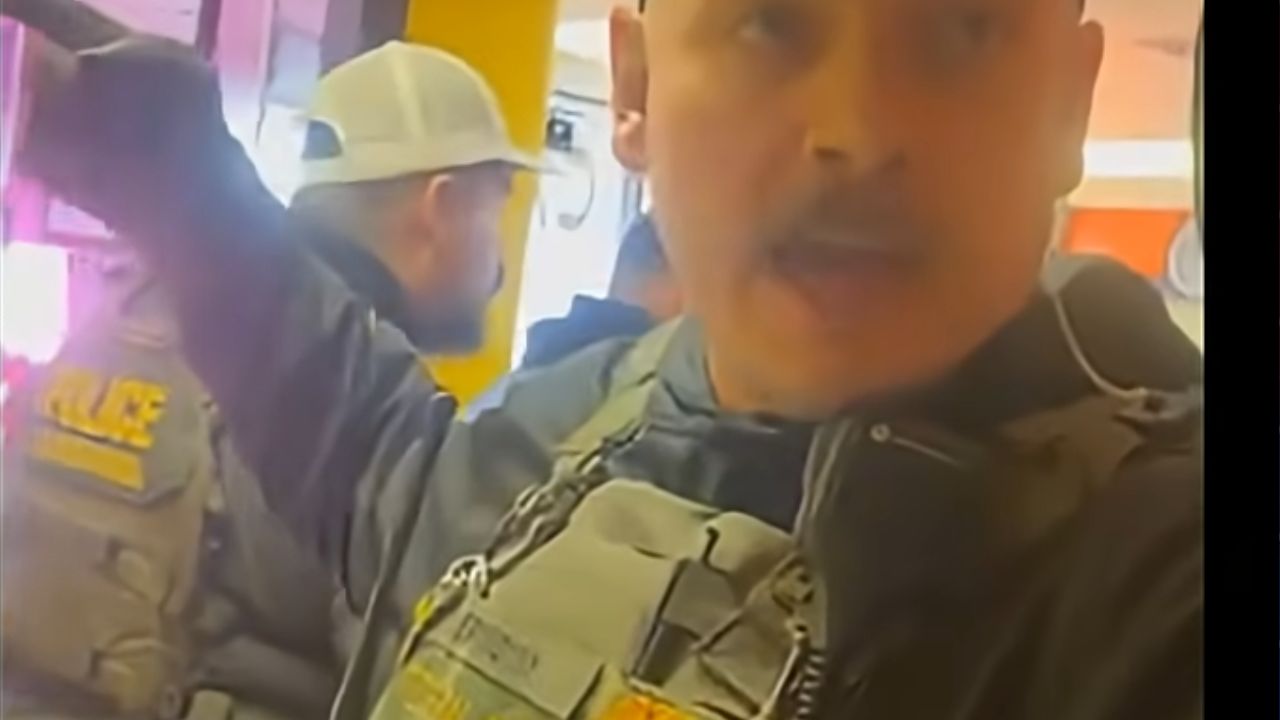

A video that has swept social media shows federal immigration officers smashing through the glass door of a West Valley City auto body shop to detain two men, effectively adding to the never-ending debate about federal law enforcement powers and constitutional rights.
The incident unfolded late last week at Viper Auto Care. Agents from U.S. Customs and Border Protection approached the modest automotive repair business in suburban Utah after a vehicle fled law enforcement and drove onto the shop’s property.
At least one witness recorded parts of the encounter after the detained men and agents were already inside the business, capturing the damaged glass entry and a tense back-and-forth between agents and bystanders.
In the clip obtained by news crews, the wife of one of the detained men frantically asks agents to produce a warrant. The officers, wearing federal identifiers, repeatedly tell her they do not need one. “Where’s your warrant,” she demands, her voice echoing off the walls of the shop. “I don’t need one,” an agent responds on camera.
Federal Justification Meets Sharp Pushback
According to CBP’s official statement, the operation was part of a targeted immigration enforcement action that resulted in the arrest of Wilmer Alberto Jimenez-Menjivar, identified by federal officials as a Salvadoran national with a final order of removal, and Ismael Avalos-Gonzalez, the auto body shop owner.
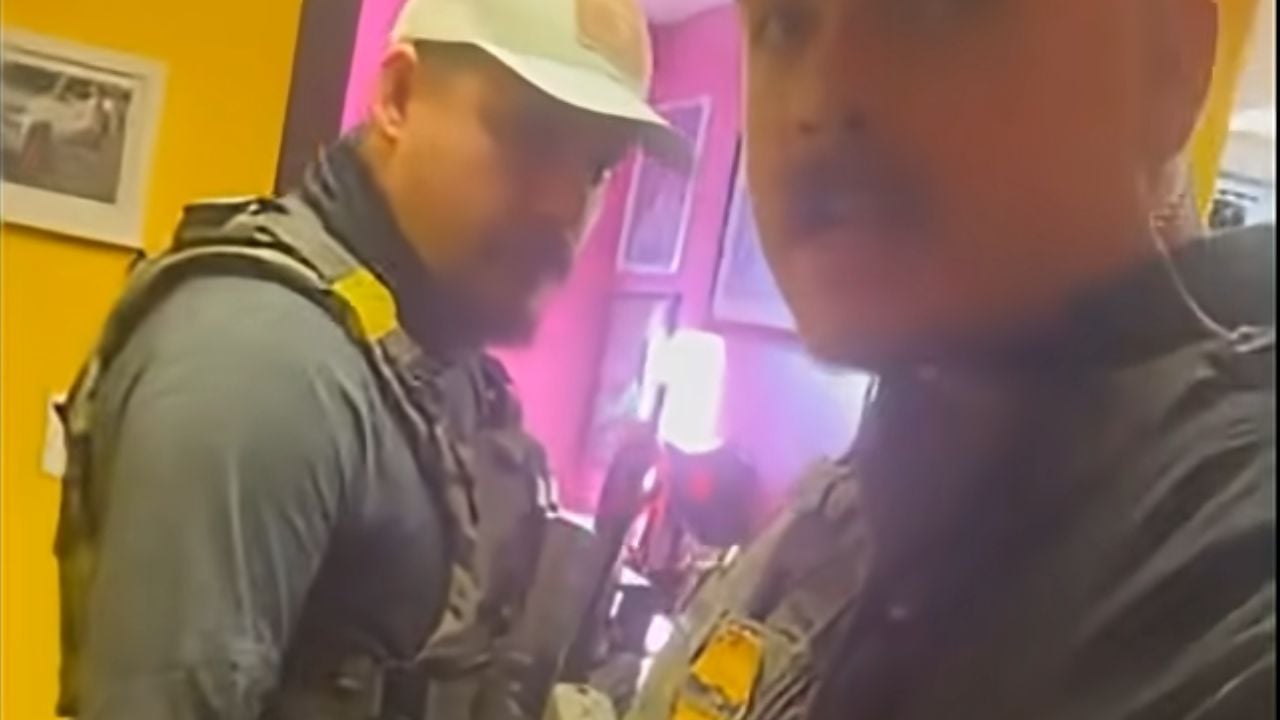
The agency said agents pursued the vehicle because occupants refused to stop, and that exigent circumstances justified entering the premises without a warrant.
But that account is sharply contested by the men’s attorney and family members. Legal representatives argue that the evidence does not support a high-speed vehicle chase and that neither man posed a threat requiring warrantless entry.
They also say normal immigration statutes and constitutional protections limit warrantless arrests to narrow “exigent” situations, and that none clearly applied in this case.
“She went into the place of business thinking he was going to be safe in there without a warrant,” said the wife of Jimenez-Menjivar, recounting how her husband ducked inside and locked the door before agents broke it.
Federal immigration authorities, according to her account, arrived in unmarked cars and followed him onto private property, shattering glass to gain access.
At the Heart of a Constitutional Clash
The dispute touches at the heart of Fourth Amendment protections against unreasonable searches and seizures, protections that require law enforcement officials to obtain judicial approval before entering private premises in most circumstances.
Civil liberties advocates say that ordinary administrative warrants issued in immigration cases do not confer the same power as a judge-signed warrant, and that law enforcement must wait or seek formal judicial authorization if they lack consent.
This clash comes amid broader controversy over immigration enforcement practices. A leaked internal memo from Immigration and Customs Enforcement last month appeared to assert that officers can use administrative warrants to enter homes without a judge’s approval in certain deportation cases.
That directive, which has not been widely published by the agency, has drawn intense criticism from legal advocates who argue it strains long-standing constitutional safeguards and could embolden warrantless actions in more situations.
Back in West Valley City, the community response has been swift. The Salt Lake Tribune reports that friends and family gathered near the shop following the arrests, holding signs and expressing frustration with what they see as a heavy-handed federal approach that disregards procedural rights.
One relative described the detentions as deeply unfair and disruptive to family life.
Community Outcry and Broader Tensions
The episode also highlights growing tensions within Utah and across the United States over local and federal immigration enforcement collaboration. Many law enforcement agencies in Utah have entered federal programs that broaden their immigration enforcement capabilities.
That trend has drawn support and criticism from law-and-order proponents and civil liberties groups.
Federal officials maintain that illegal reentry into the United States after deportation orders is a felony and that current policies prioritize detaining individuals who fall into that category. But questions persist about the legality and appropriateness of forcibly entering a private business without what many view as due judicial process.
For the automotive shop and its community, the incident leaves a glass entryway replaced not just physically but symbolically. At issue is not just the cost of repairs but whether the reach of federal power now extends inside small businesses in ways that some legal experts and ordinary residents never expected to see.
Sources: KUTV