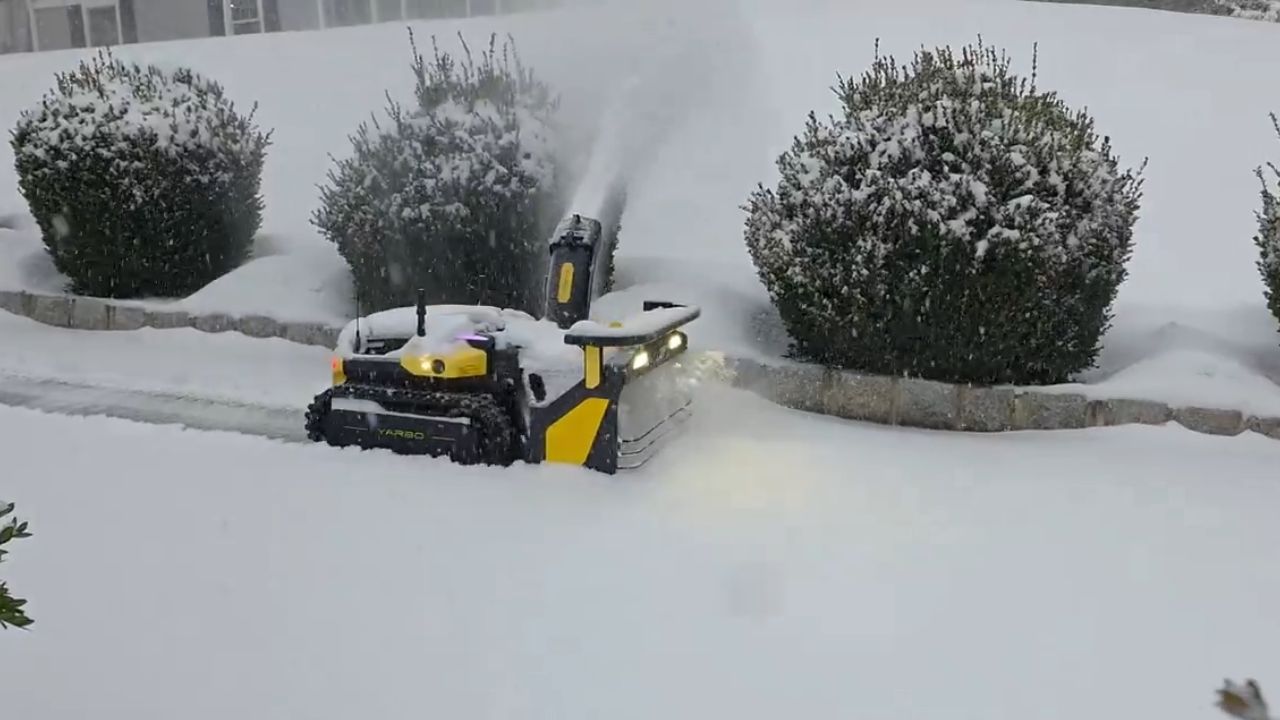

When Winter Storm Fern blasted the northeastern U.S. this January with sleet, slush, and more than half a foot of snow, most homeowners grabbed shovels or sweaty gas-guzzling snow blowers. But not Tom Moloughney. He stayed inside, coffee in hand, as a $4,999 autonomous snow-clearing robot went to work on his driveway.
A snow-shoveling robot is fitting for Moloughney, seeing as he is a tech reviewer and host of the YouTube channel State of Charge. It’s fitting that he’d put one of the new breeds of robotic snow blowers — specifically the autonomy-driven Yarbo Snow Blower — through its paces as the snow piled up outside his home.
Posted on X, the video quickly drew more than just laughs. Tiny robot tracks methodically chewing through 6,000 square feet of fresh snow while its human operator stayed nice and warm indoors. At press time, the video has been viewed more than 1.5 million times and generated hundreds of comments.
“It’s definitely a 21st-century way to beat winter,” he joked in one post — and for many watching around the world, the idea of a robot replacing back-breaking shovel work is just too good to resist.
The Snow-Blasting Machine You Don’t Push
Winter Storm Fern has descended upon NJ this morning and my @yarboglobal autonomous snow blower went into action.
This is going to be a great test to see if this robot can handle a 6,000 sq.ft. driveway during a major winter storm.
I’m inside sipping a coffee while it’s doing… pic.twitter.com/52DuOGUc9a— Tom Moloughney (@tommolog) January 25, 2026
As this video shows so convincingly, the Yarbo isn’t your granddad’s walk-behind gas snow blower. Instead of human-powered navigation, this one uses onboard sensors and programmed maps to find its way.
It clears snow with a 24-inch-wide intake, handles up to 12 inches of snow depth, and can hurl the white stuff as far as 40 feet away from the driveway. Now, that’s enough throwing distance to keep pathways clear without tripping on leftover drifts.
The best part for us isn’t just that it can shovel snow while you read newspapers indoors. The best part is that once its battery dips too low, it doesn’t beep for attention or sit stranded in the snowbank. Instead, it wheels itself back to a dedicated charging dock, recharges, and heads back out automatically — all without human input.
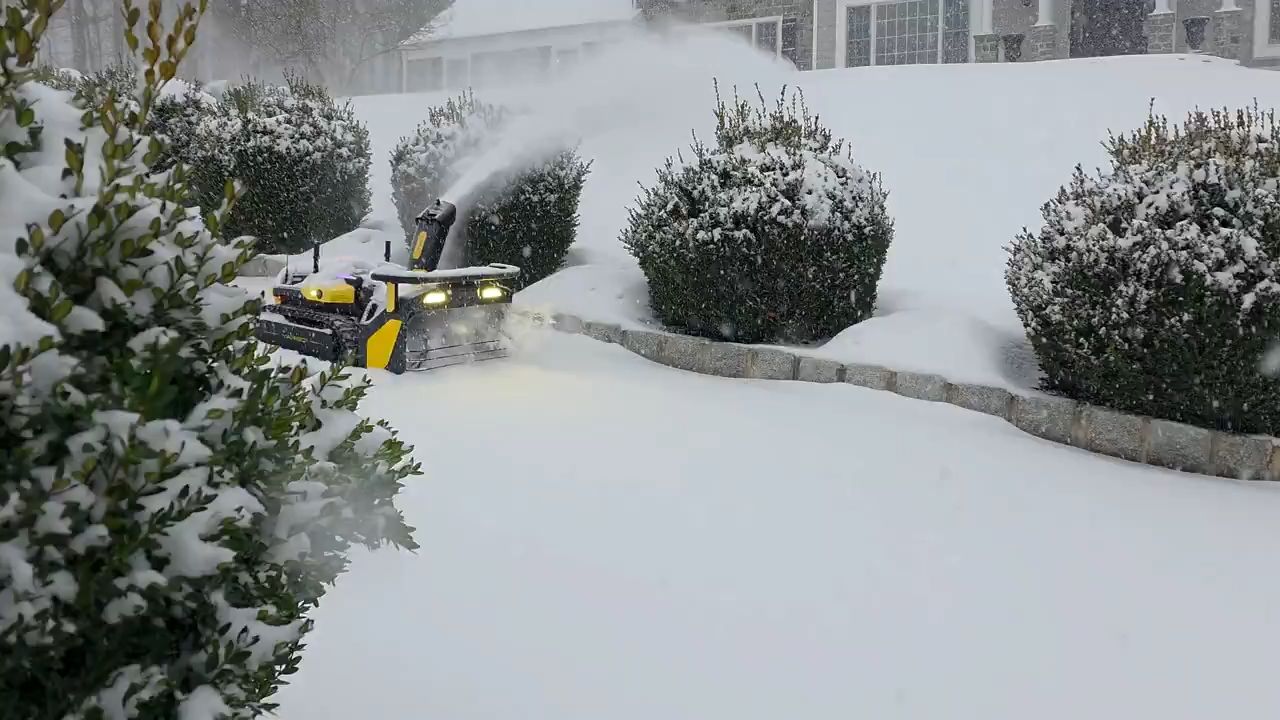
For Moloughney’s lengthy, curved driveway, that meant continuous passes throughout the storm while he sipped coffee and monitored progress via app. The question then is, how long can it keep going before breaking?
But this robotic helper isn’t perfect. According to Moloughney’s own posts, setup can be fiddly, what with all the extended digital configuration required before the storm, and even the best sensors struggle on crystalline ice or super-dense snow.
One storm left a sheet of ice across his driveway that the robot simply couldn’t shift; and that right there is the limits of even cutting-edge automation proven yet again.
Robot vs. Traditional Snow Blowers
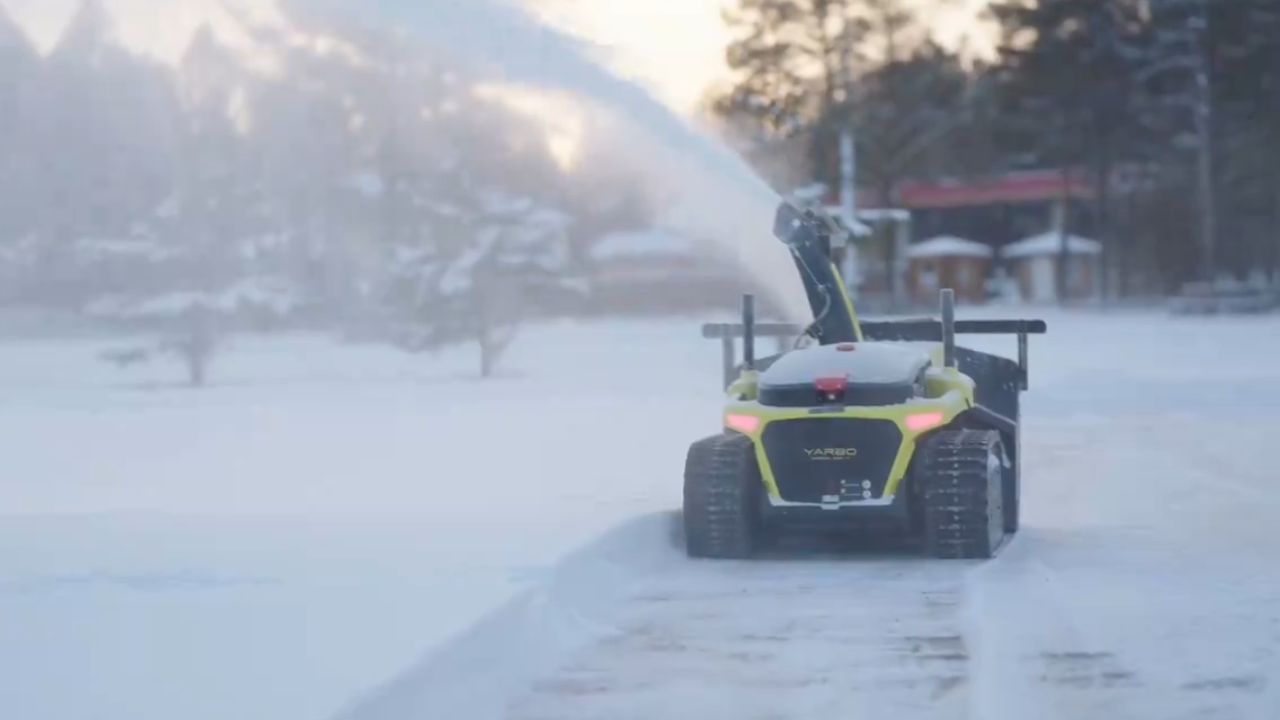
Autonomous snow blowers like Yarbo sit at the high end of winter maintenance tech — think “robot mower” meets snow-clearing machine. Traditional snow blowers, electric or gas, require human operation and struggle in extreme cold or long driveways.
In contrast, robotic units can be programmed to run multiple cycles, retrace paths, and return to a charging base without supervision.
Still, price is a major sticking point. At just under $5,000, the Yarbo is significantly pricier than many manually-operated or even battery-powered snow blowers on the market — but it’s also in a category largely without direct competition.
Just thinking about the price reminds you of that 2012 Chevy Traverse collecting dust at “Old Mr. Real Deal” used car dealership across the street. That said, a handful of autonomous and semi-autonomous designs are starting to show up on the market, each with its own twist:
Yarbo’s own wider system: Beyond the snow-blowing attachment, Yarbo’s modular platform can swap tools for lawn mowing and leaf blowing, making it something of a year-round yard “robot assistant” rather than a seasonal gadget.
Yarbo empowers you to take control of every season—whether it’s cutting grass, blowing leaves, or removing snow. Designed for performance and built for convenience, every task becomes simpler, smarter, and more efficient.
Tune in to our Yarbo Spring Sale live on April 7th at 3… pic.twitter.com/d9gPlylc8r
— Yarbo (@yarboglobal) April 7, 2025
Other robotic variants: Smaller, fully autonomous robots from a handful of startups claim to clear snow less expensively but usually operate best on smaller, flat driveways and struggle in heavy storms. These prioritize obstacle avoidance and app controls but typically lack the Yarbo system’s raw snow-throwing power.
Remote-controlled options: For users not ready to commit to full autonomy, remote-controlled snow blowers offer a halfway point: hands-off for physical power, hands-on for decision making. These cost far less but demand you be outside pushing buttons rather than lounging with coffee.
Is This the Future of Winter Chores?
As with self-driving cars and robotic vacuums, autonomous snow blowers are a snapshot of how automation may redefine everyday chores. For now, they’re pricey and best-suited to tech lovers or homeowners with large driveways who really hate shoveling. I mean, you really have to hate shoveling (and the cold) to fork over $5,000 for a snow blower.
But watching a little machine slough through feet of snow while its owner enjoys a warm beverage? That’s the kind of spectacle that makes your day, every day.
If this snowy experiment in New Jersey is any indication, the robot revolution won’t knock politely. It’ll roll in on tracks and handle the job for you.