

Who says EVs should have all the efficiency tech? A quiet regulatory shift in the United Kingdom is changing the way drivers understand fuel costs, and it could offer a preview of where the United States may eventually head.
Beginning this year, UK gas stations will be required to display new mandatory cost information directly at fuel pumps, moving beyond simple price per liter and toward clearer, real-world cost comparisons.
While this change is unfolding overseas, its implications stretch far beyond British roads. For American drivers who are navigating volatile fuel prices, growing electric vehicle adoption, and constant debates about transparency at the pump, the UK’s move offers a compelling case study.
A Simple Metric That Could Change How We Buy Fuel
Traditionally, fuel pumps in both the UK and the US show only one figure that truly matters to consumers at first glance. That number is the price per unit of fuel. In Britain, it is price per liter. In America, it is price per gallon.

What that number does not explain is how much it actually costs to drive a certain distance, a perk that has historically come with electric vehicles. Ironically, it is also the metric gas drivers feel most in their daily lives.
Under the new UK rules, fuel pumps must display estimated cost per 62 miles (100 kilometers) for petrol and diesel vehicles. For stations that also offer electric vehicle charging, equivalent figures must be shown for EVs using standardized charging cost assumptions.
The goal is to convert abstract fuel prices into something drivers can immediately understand, namely the cost of traveling a given distance.
It helps to translate that figure into familiar terms stateside. Since a hundred kilometers equals about 62 miles, UK drivers are, in effect, shown a rough estimate of how much it costs to drive a little over sixty miles using different energy sources. That kind of comparison is largely absent at American fuel stations today.
Could This “Window Sticker for Pumps” Come to the U.S.?
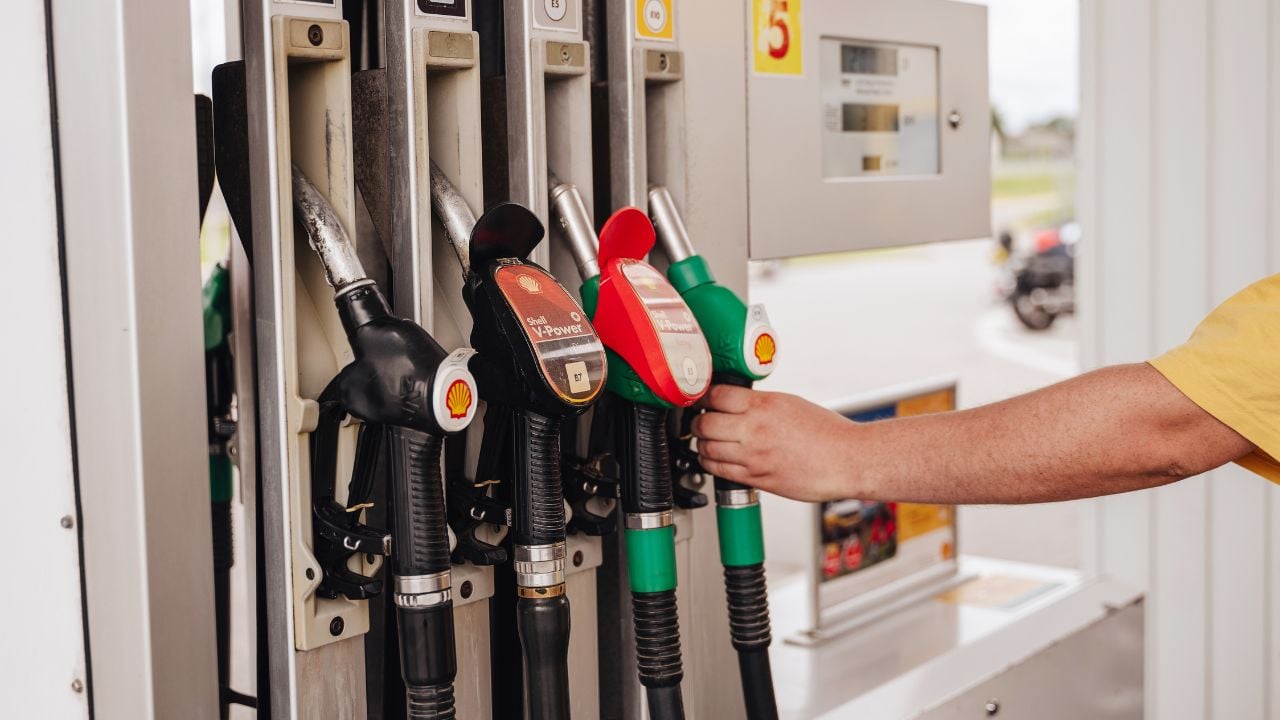
UK regulators argue that price per liter alone does not tell the whole story because fuels differ in efficiency and energy density. A cheaper price at the pump does not always mean cheaper travel. By forcing stations to present distance-based cost estimates, officials say drivers can make more informed decisions about vehicle choice and fuel type.
This is where the story becomes especially relevant for the United States. American drivers are already accustomed to seeing fuel economy labels on new cars, expressed in miles per gallon or miles per kilowatt hour. What they do not see is a standardized cost-per-distance figure at the point of refueling.
The UK model essentially brings the logic of the window sticker directly to the pump.
The change could also influence how consumers compare internal combustion vehicles with electric cars. In the US, EV advocates often cite lower operating costs, while skeptics point to charging prices that vary widely by region.
A standardized display like the one now mandated in the UK could cut through some of that confusion by offering a neutral reference point, even if it does not reflect every individual driving habit.
How the Numbers Work: Are They Really Accurate?
If you’re wondering about the correctness of the gas pump’s estimates? You’re not alone. Critics in Britain have raised familiar concerns. Real-world fuel consumption depends on traffic, weather, driving style, and vehicle condition. A standardized figure may oversimplify reality.
That tension is actually the biggest criticism of the policy, both in the UK and from analysts watching it from the US.
Here’s how it’s supposed to work, and where the cracks are.
First, the numbers shown at UK fuel pumps are not vehicle-specific promises. They are standardized reference estimates. Regulators base them on nationally approved average consumption figures, similar in spirit to EPA combined MPG ratings in the US or WLTP figures in Europe.
The pump is not trying to tell a driver what their car will achieve. It is offering a neutral benchmark so fuels can be compared on the same scale.
In practice, that means the pump’s cost-per-distance figure is calculated using three ingredients:
- A standardized average efficiency value for a typical vehicle using that fuel.
- The current fuel price.
- A fixed distance unit, such as 100 kilometers.
That average efficiency value does not change for a heavy pickup, a compact hatchback, or a high-performance SUV. It assumes a “typical” vehicle operating under normal conditions. Regulators are very clear that this is an illustrative metric and not a performance guarantee.
The Familiar Problem of a One-Size-Fits-All Estimate

And right here is where the disconnect arises. Real-world vehicle efficiency varies wildly. In the US, drivers already experience this gap with EPA ratings. Two vehicles both rated at 30 mpg can deliver very different real-world results depending on driving style, traffic, terrain, load, weather, tire pressure, and maintenance. The same problem exists in the UK system, just moved from the showroom sticker to the pump.
Critics argue that putting a single cost-per-distance number on the pump risks creating a false sense of precision. A driver in a lifted truck or a loaded work van may see a figure that looks far cheaper than their actual experience. Conversely, someone in a small, efficient hybrid could outperform the estimate and wonder why the pump suggests higher costs.
Regulators counter this by emphasizing comparative value rather than accuracy. The display is meant to answer a relative question, not a personal one. Which fuel type is generally cheaper per distance under standardized assumptions? How does petrol stack up against diesel or electricity when measured the same way? On those terms, the system arguably works.
What the UK Experiment Means for American Drivers

There are also safeguards built into the rules. Stations must include disclaimers making it clear that figures are averages and that real-world results vary. The methodology for the estimates is centrally defined so stations cannot manipulate the numbers to favor one fuel over another. In other words, the guarantee is not about performance but about consistency and neutrality.
From a US perspective, this debate should sound very familiar. The EPA does not guarantee that your car will hit its rated mpg. What it guarantees is that every vehicle is tested using the same procedure so consumers can compare options fairly. The UK pump rule is essentially applying that same philosophy at the point of refueling.
Still, the concern is legitimate. As vehicles become more diverse, especially with electrification, a one-size-fits-all estimate becomes less representative. That is why some experts believe this is only a first step. Future versions could incorporate ranges, confidence bands, or even QR codes linking to vehicle-specific tools rather than a single headline number.
For American policymakers, the UK experiment may serve as a testing ground. The US has long debated fuel price transparency, from ethanol labeling to discussions about showing tax breakdowns at the pump. Distance-based cost displays could eventually enter that conversation, especially as electrification accelerates and fuel choices diversify.
Sources: COPDAZ, Cherriemoraga.com