

There’s a viral post on X that’s racked up over 2.5 million views since January 20, 2026. In that post, tech enthusiast Tansu Yegen showcased what he called a “new-generation automatic car wash machine” from a Chinese company.
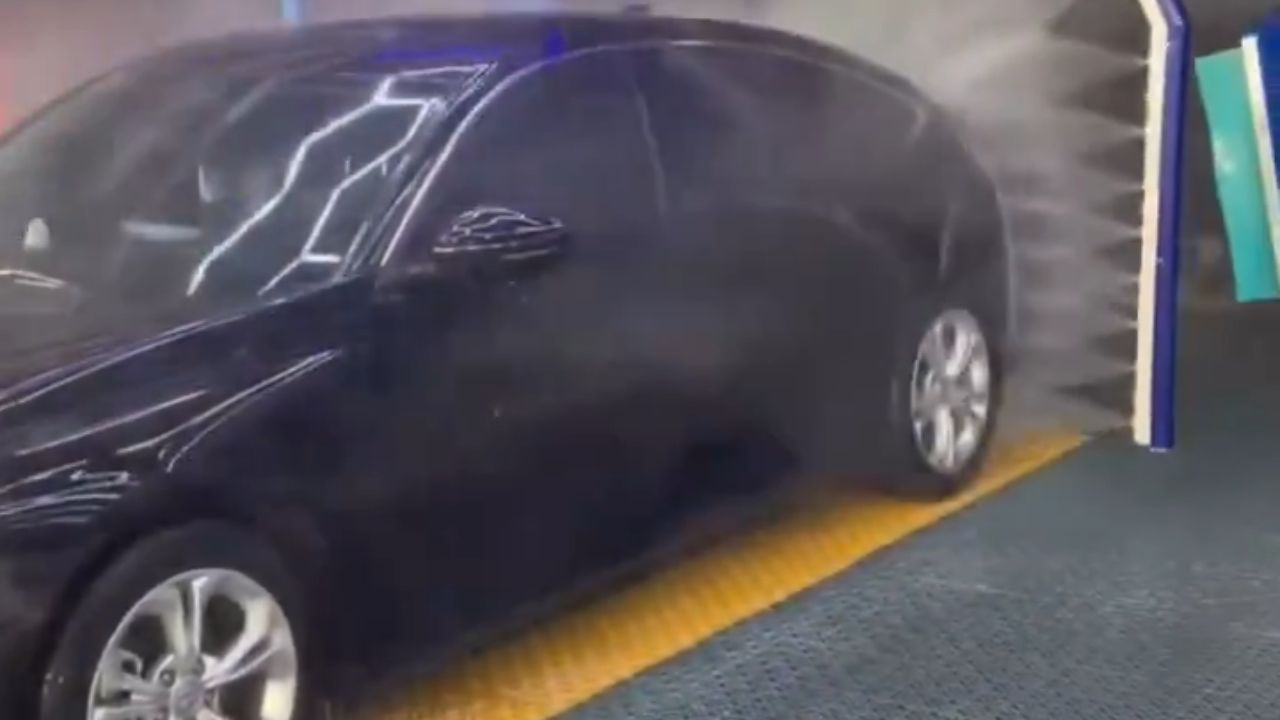
The video features a black Honda Accord sedan undergoing the sort of high-tech cleanse that’s almost guaranteed to get people talking. With the slogan “we wash with a gushing, splashing sound,” this system promises to douse vehicles in a simulated downpour, scrubbing them spotless in seconds.
But how does it actually work? We’re actually piqued enough to break it down step by step, then stack it against American counterparts to see if China’s really pushing boundaries—or if the U.S. has been here all along.
Step 1: An Underground Blast Cleans from Below
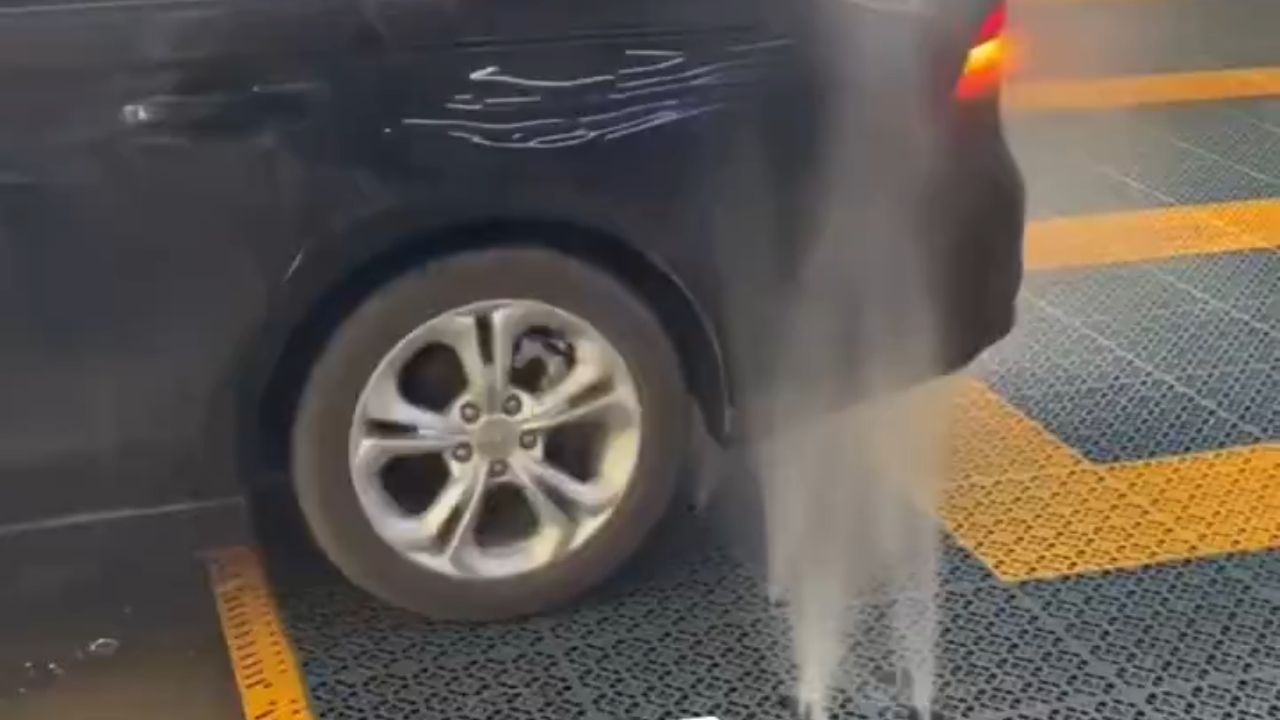
The process begins, of course, with the vehicle pulling into a designated bay, which is a grated floor marked by bright yellow borders for precise positioning.
In the footage, a barely noticeable (because you’re focused on the car) worker in a red jacket approaches a control panel mounted on a nearby pillar. With a simple flip of a lever or press of a button—likely initiating an automated sequence—the magic starts. High-pressure water jets erupt from nozzles embedded in the floor along the bay’s perimeter.
These sprays shoot upward like a row of fountains, targeting the undercarriage, wheels, and lower body panels. This initial blast dislodges dirt, salt, and grime that accumulates from road use, creating a misty curtain that envelops the car’s base. It’s efficient for electric vehicles (EVs), common in China, where battery compartments need protection from corrosive buildup.
Step 2: Robotic Arms Deliver a Touchless, Foamy Shroud
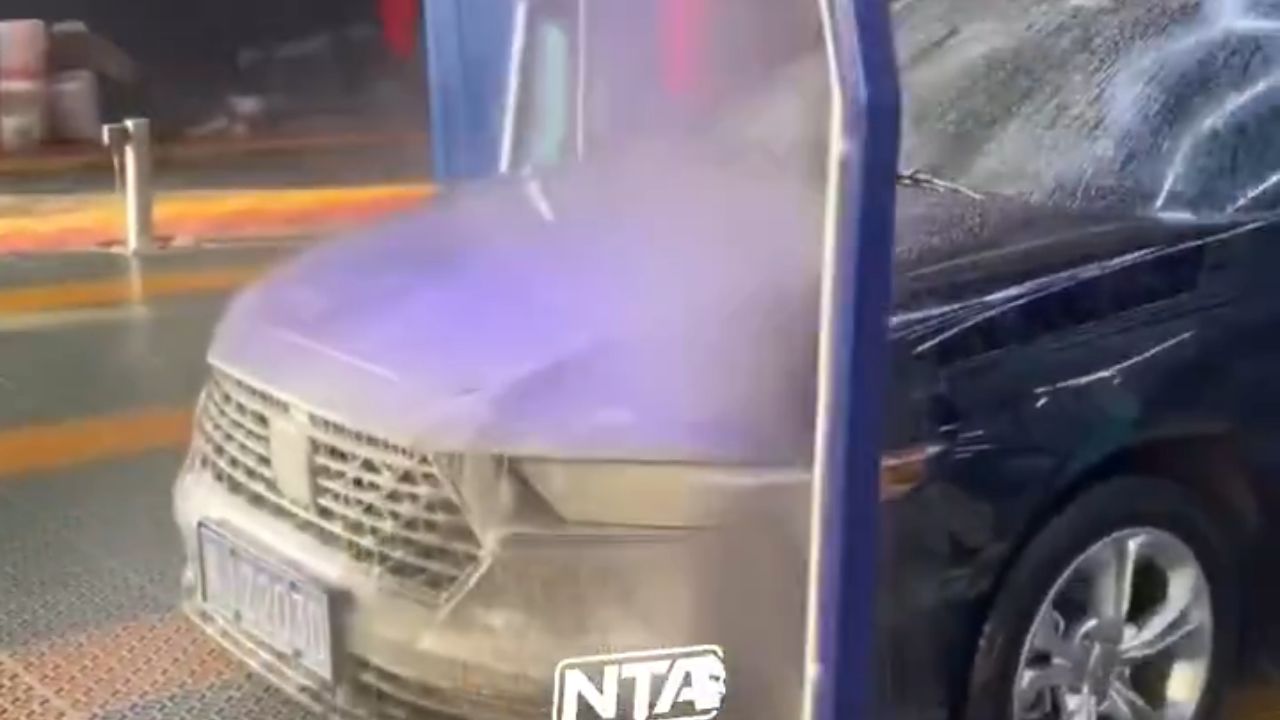
Next, a large overhead arm—branded with “7YC” (a nod to a popular unmanned self-service chain in China)—descends and pivots into action. This robotic appendage, equipped with multiple nozzles, swings over the vehicle in a calculated arc. It first dispenses a thick layer of foaming detergent, contouring to the car’s shape for even coverage.
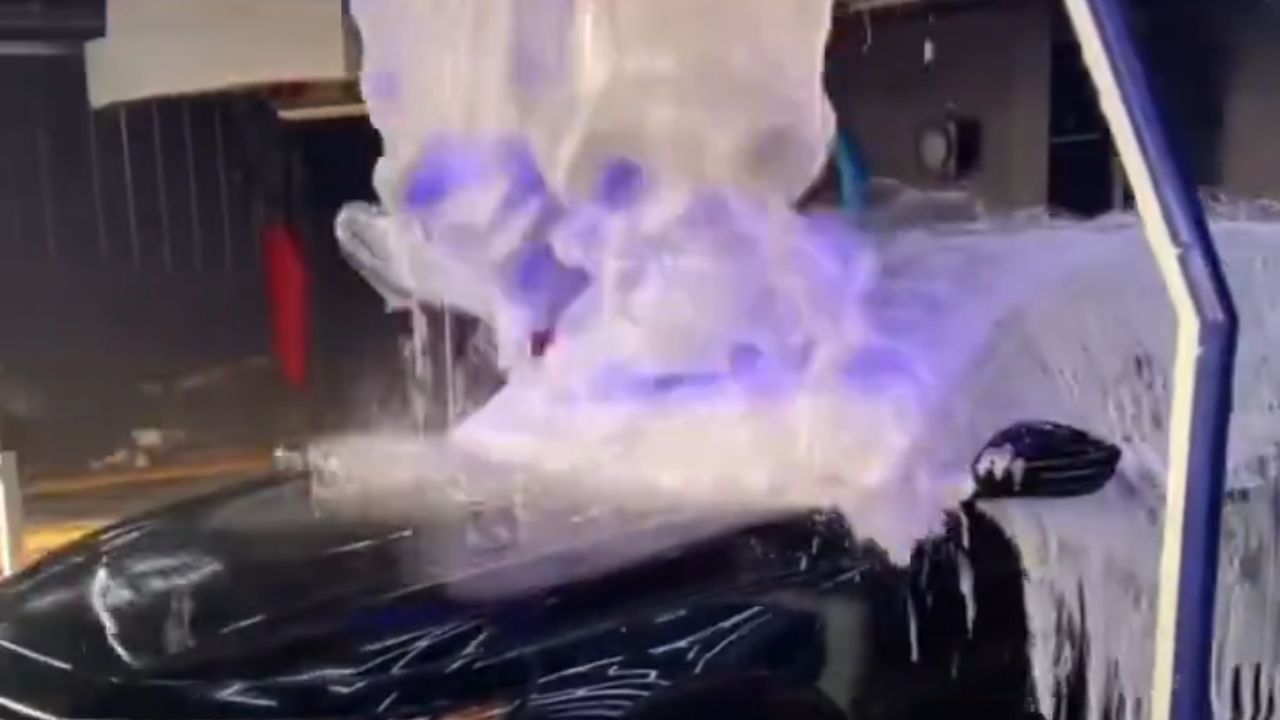
The foam clings to the paint, breaking down contaminants without physical contact, which prevents scratches on modern clear coats.
As the arm glides along the length of the sedan, it adjusts its angle dynamically, perhaps using sensors to detect the vehicle’s contours. This touchless approach is key as it relies on chemical potency rather than brushes.
Step 3: A Simulated Downpour and Rapid-Fire Finish
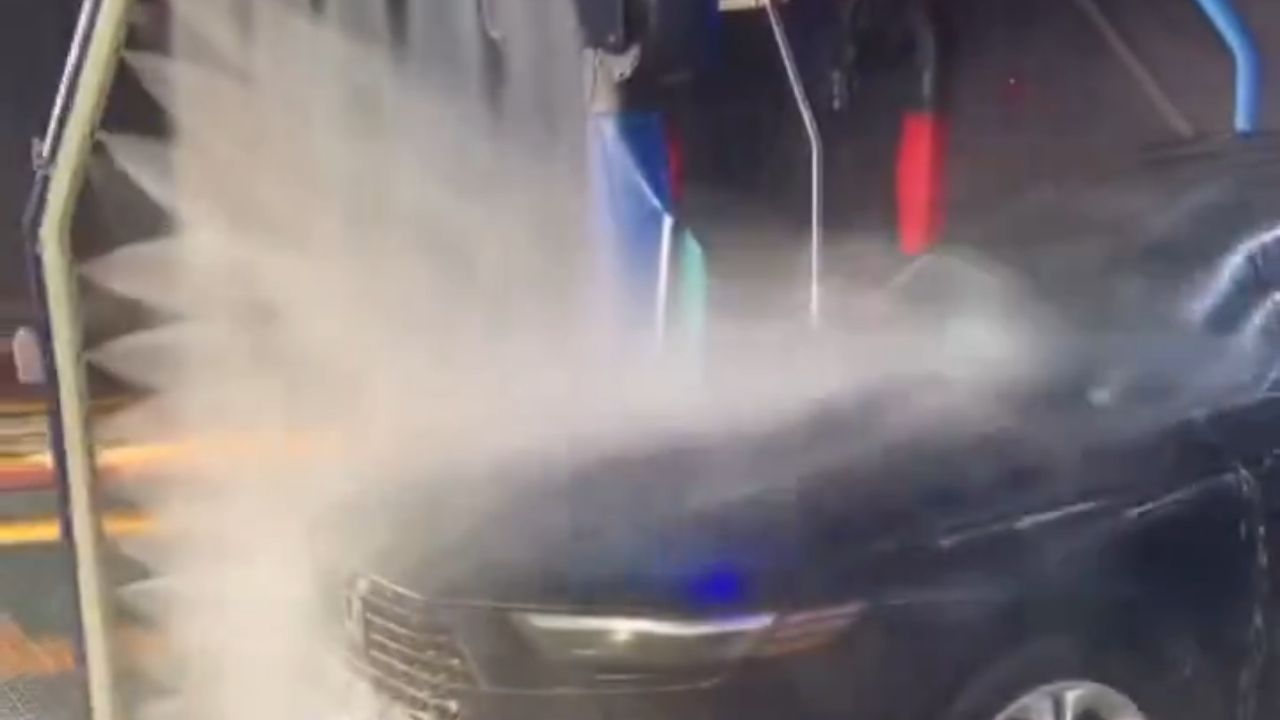
Then comes the rinse phase: The arm recirculates, unleashing a torrent of water that mimics “pouring rain,” as Yegen described. High-velocity streams cascade from above and the sides, rinsing away the suds in a dramatic splash.
The video, which appears slightly sped up for effect, shows the car emerging from a foggy haze, water sheeting off its surfaces. A final pass might include a wax or sealant spray, though not explicitly shown, leaving the vehicle gleaming.
The entire ordeal wraps in under a minute, with water draining through the grated floor to a recycling system below—eco-friendly touches that align with China’s push for sustainable tech.
U.S. Touchless Systems vs. the Speed of Scale
Now to the real reason we took the pains to dissect the “We Wash with a Gushing” carwash; how does it stack up against the U.S.? American drivers are no strangers to touchless car washes. Systems like PDQ’s LaserWash 360 Plus, widely available at chains such as Tommy’s Express or local gas stations, operate similarly.
In these in-bay automatics, the car remains stationary while articulating arms scan the vehicle with lasers for precise mapping, then apply pre-soaks, high-pressure rinses, and spot-free finishes.
A typical U.S. wash takes 3-5 minutes, slightly longer than the Chinese demo, but can handle 100-120 cars daily with chemical costs under $1 per vehicle.
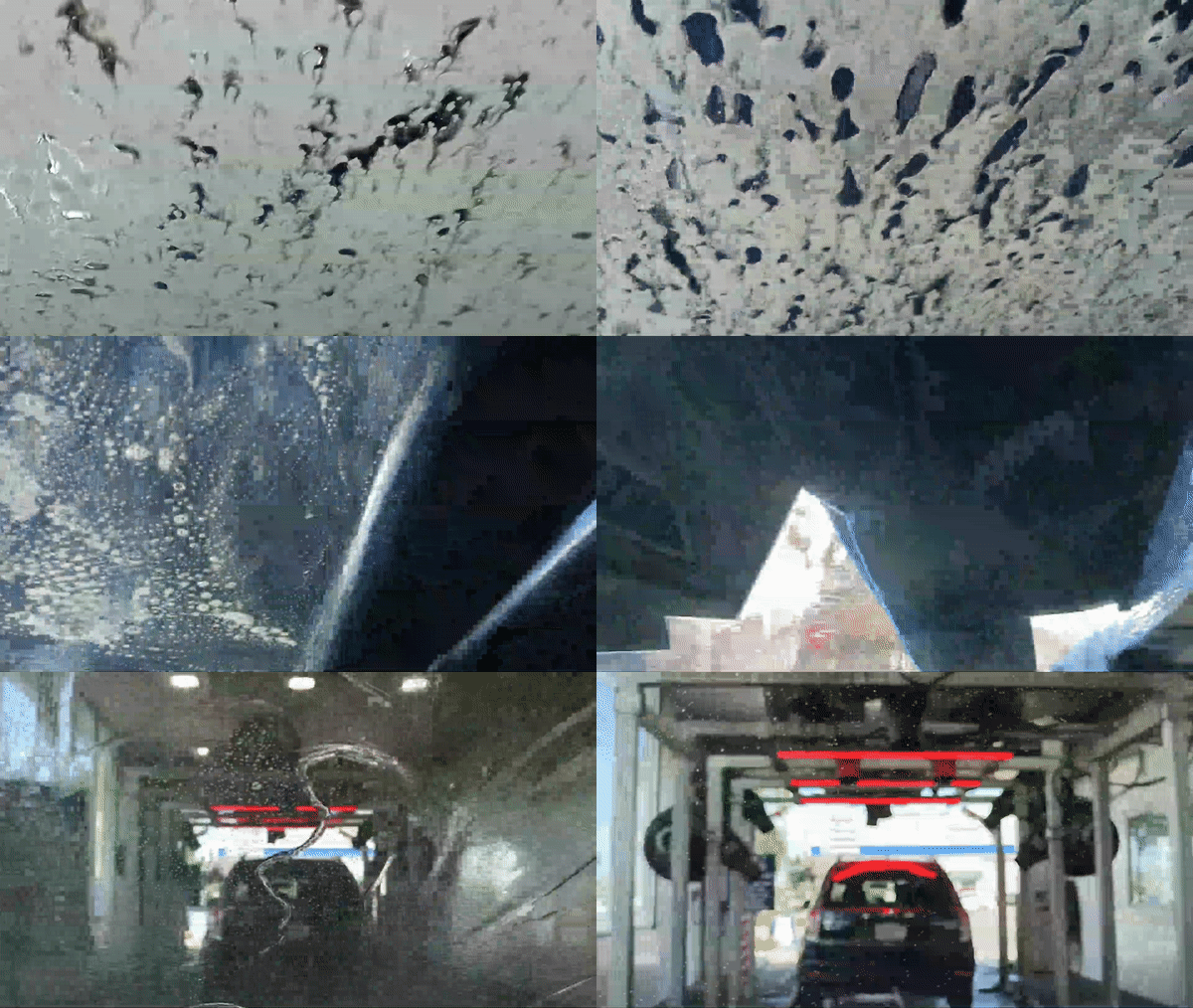
Drive-through tunnels, like those at Mister Car Wash, move the car on a conveyor past stationary jets and blowers, offering speed for high-volume sites.
However, U.S. systems often emphasize add-ons like underbody blasts or tire shines, integrated via apps for contactless payment and mirroring China’s unmanned ethos.
So?
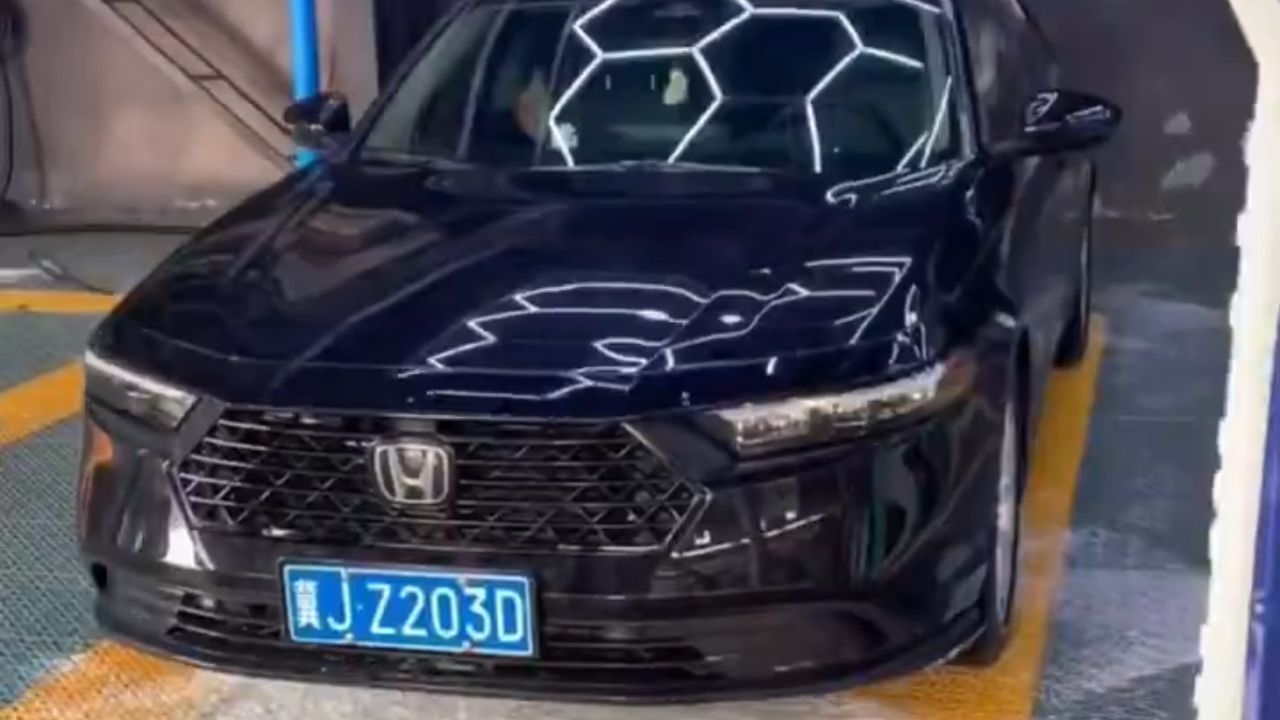
The differences? Scale and integration. While U.S. innovations date back to the 1990s (think early Istobal or Ryko models), China’s versions are proliferating amid the EV boom. With over 8 million EVs on roads by 2026, companies like Leisu or CBK are embedding these washes in charging stations, blending maintenance with refueling.
This holistic approach reduces downtime for fleet operators, which is just apt for China’s densely populated cities.
A Chinese company’s new-generation automatic car wash machine, launched with the slogan “we wash with a gushing, splashing sound”, sprays water like pouring rain and cleans the vehicle from end to end in mere seconds, leaving it spotless.
— Tansu Yegen (@TansuYegen) January 20, 2026
Ultimately, skeptics in the X replies point out it’s “nothing new”—and they’re partly right. Similar tech has existed in the U.S., Australia, and Europe for decades. But China isn’t playing around. By rapidly deploying affordable, AI-enhanced systems (some under $25,000 per unit), they’re democratizing premium auto care, tying it to their dominance in electric mobility.
As American automakers like Tesla and Ford eye global competition, this “splash” is kind of saying, “China’s automotive edge is in execution, not just invention.” If the U.S. wants to keep pace, it might need a deeper clean of its own strategies.