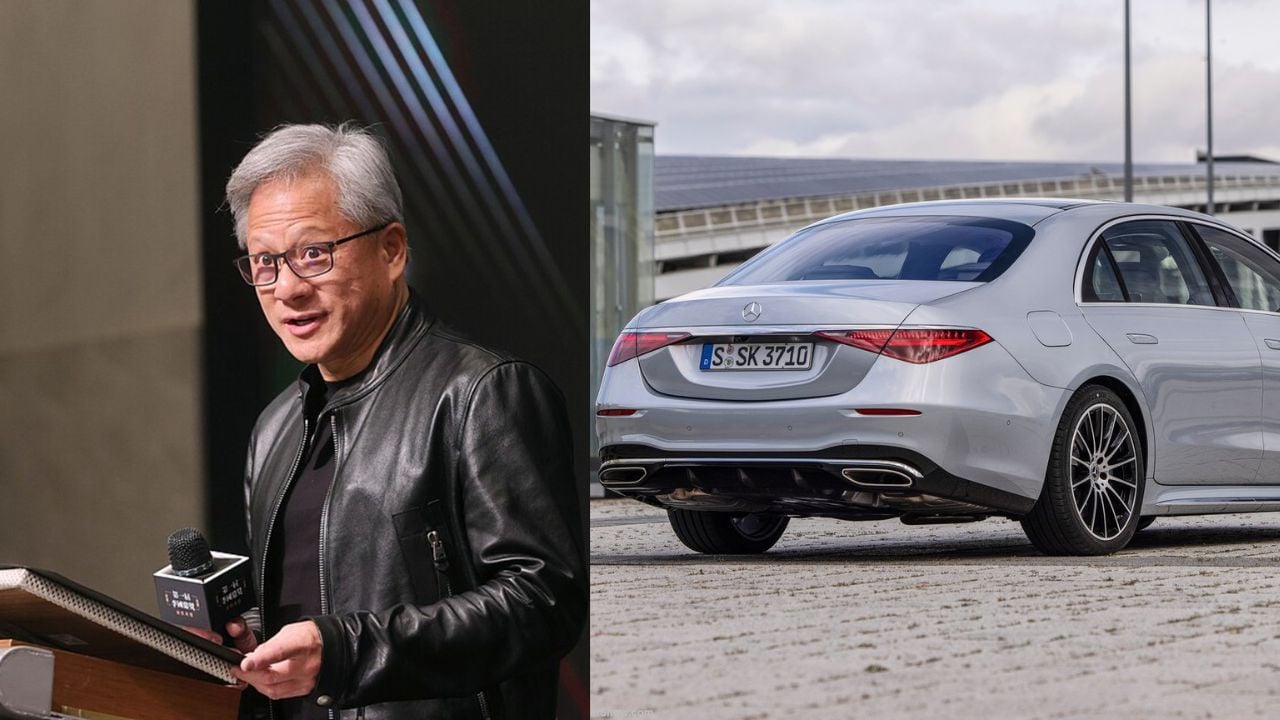

When you think of Jensen Huang, the iconic leather‑jacket‑clad CEO of NVIDIA, it’s usually in the context of AI, graphics chips, or battlefield‑changing computing.
But at this year’s World Economic Forum in Davos, Huang revealed something far more human (and car‑centric) than any GPU roadmap or AI keynote: his one and only real regret involves a Mercedes‑Benz S‑Class.
Not a failed chip design. Not a botched AI strategy. Not even a missed investment opportunity in some hyped startup. Instead, it’s a luxury sedan, and the story behind it resonates in a way that every enthusiast understands: the bitter tang of opportunity cost.
The “Most Expensive Car in the World”

In a humorous yet introspective moment on the Davos stage, Huang looked back to Nvidia’s early days when the company’s market capitalization was still a modest $300 million. In a bid to do something nice for his parents, he sold off a chunk of his NVIDIA stock to buy them a brand‑new Mercedes‑Benz S‑Class.
Who can blame him? The S-Class represented the very definition of automotive luxury in its segment at the time.
“It’s the most expensive car in the world now,” Huang joked, his grin amplified by the irony: had he held onto those shares, their value today — after Nvidia’s meteoric rise — would be worth billions.
What once seemed like a heartfelt gift now sits, in hindsight, as a multi‑billion‑dollar lesson about timing, priorities, and the real cost of shiny toys when you’re building something historic.
Even calling for deeper reflection is the fact he didn’t pamper himself with the car; it was a gift to his parents. A thank you offering for their impact on his life. But he ended up spending way more than even his parents would’ve allowed him to if they could predict the future.
The Car
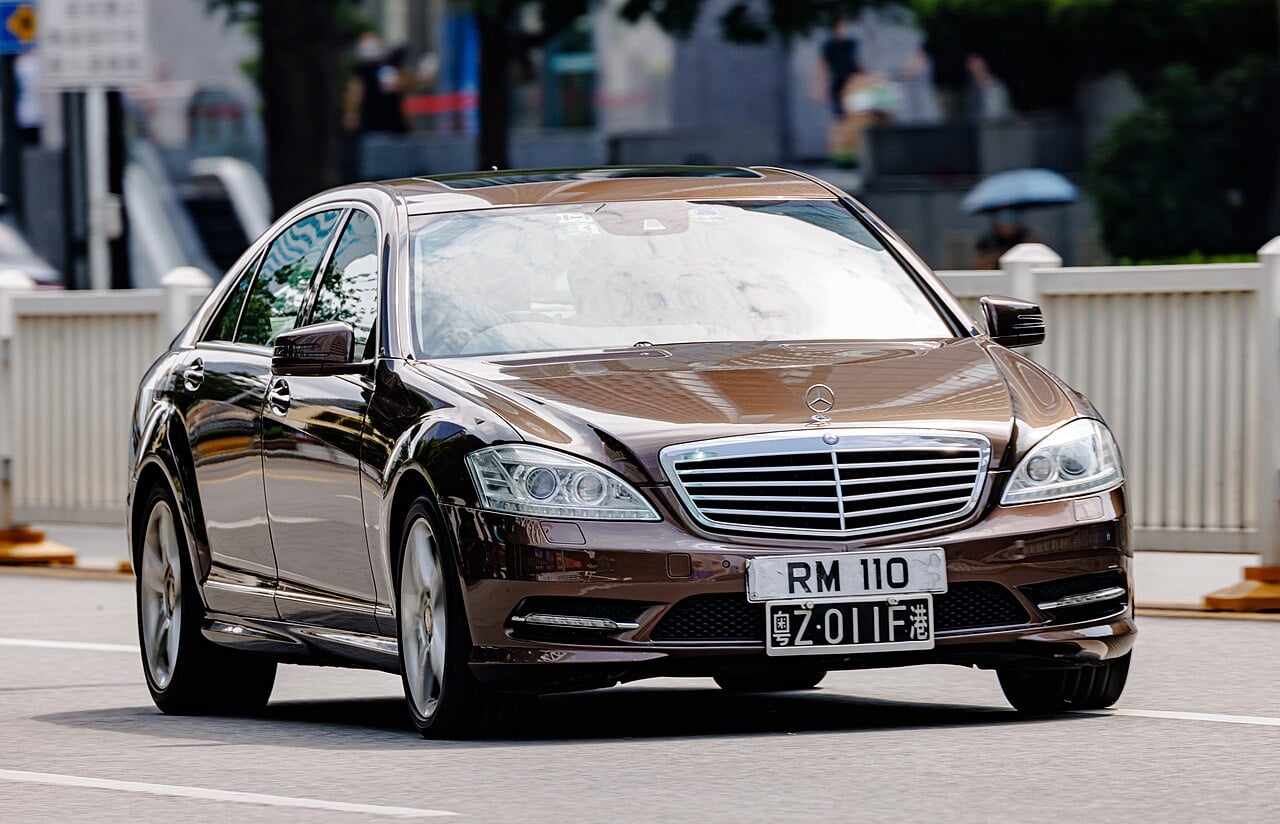
For context, NVIDIA’s market capitalization was around $300 million in the late 1990s, specifically close to 1999 and shortly after its IPO on NASDAQ. At that time, the company was still a relatively small player compared to its current multi-trillion-dollar valuation. Check the table below:
| Year | Approx. Mkt. Capitalization | Key Events |
| 1999 | ~$300M–$400M | NVIDIA IPO on NASDAQ; launch of RIVA TNT2 and GeForce 256 (first GPU marketed as such). |
| Early 2000s | ~$1B–$2B | Rapid growth due to success of GeForce line and acquisition of 3dfx assets. |
| 2010 | ~$5B–$10B | Expansion into high-performance computing and CUDA adoption. |
| 2020 | ~$300B | AI boom, gaming GPUs, and data center dominance. |
| 2026 | ~$4.5T | Leading role in AI hardware, data centers, and autonomous systems. |
That means the S-Class Huang bought his parents was the W220 generation, launched in 1998 and sold through the 2000s. That’s the reason we’ve accompanied this article with photos of the 2021 S-Class. Jensen Huang sold shares after NVIDIA’s IPO in 1999 to buy his parents this model, which was the newly released generation at the time.
The Billion-Dollar S-Class (W220 – 1998–2005)
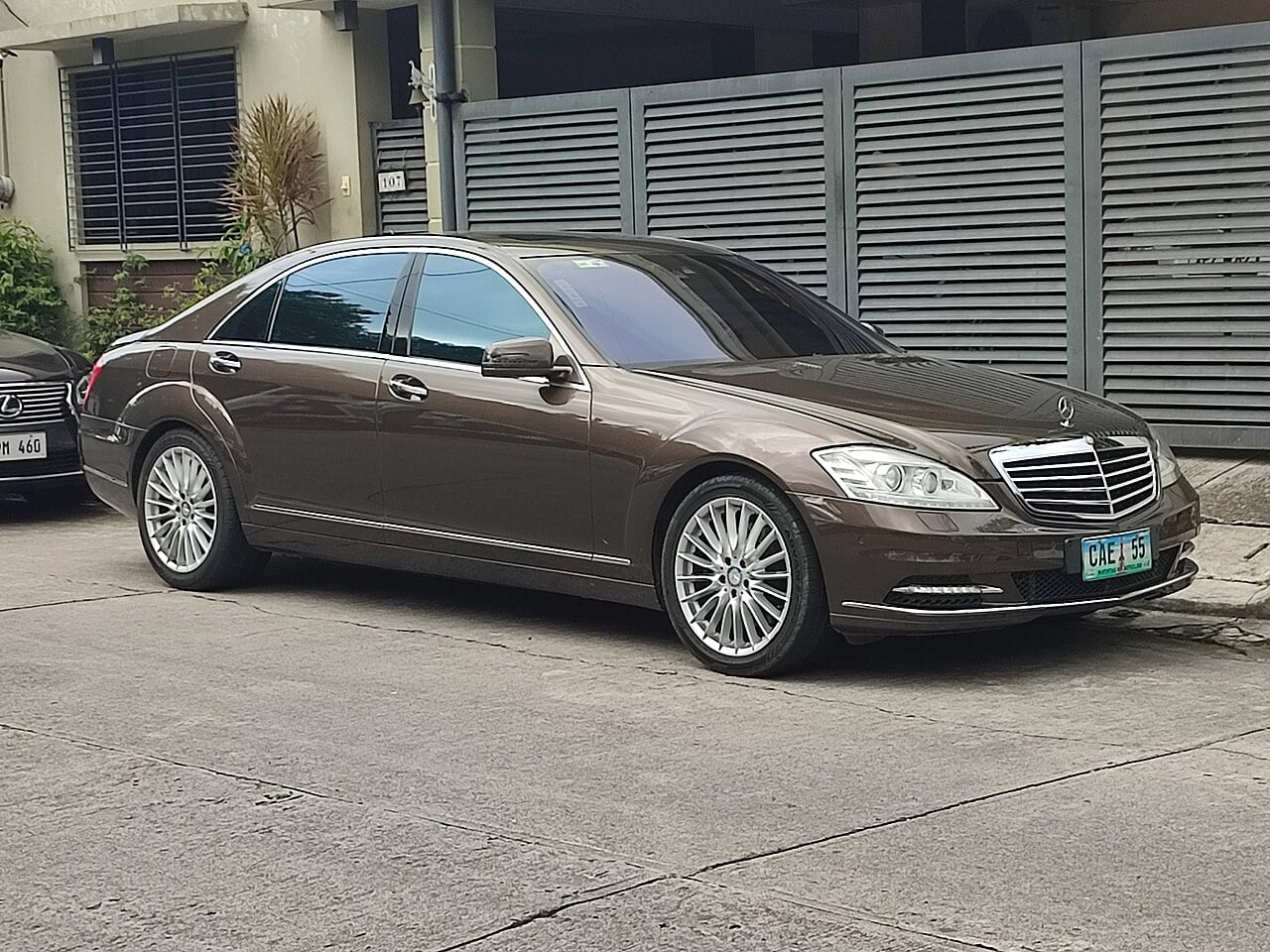
The fourth generation S-Class, known by its chassis code W220, was introduced in 1998 and became available for sale in 1999. This generation marked a shift in design philosophy: it moved away from the heavy, boxy look of the previous W140 and adopted a more rounded, streamlined, and aerodynamic profile.
Alongside its sleeker appearance, the W220 brought several technological innovations, including AIRMATIC air suspension, the COMAND infotainment system, and Distronic adaptive cruise control. At launch in 1999, the car was priced at around $78,000, depending on the trim and options.
Compared to the W140, which had been produced from 1991 to 1998, the W220 was lighter and more efficient, weighing about 1,750 kilograms versus the W140’s roughly 2,000 kilograms.
The W140 had been perceived as an “over-engineered luxury tank,” with features like double-pane windows and early electronic stability programs, while the W220 was seen as a modern, tech-forward executive sedan.
The timing of Huang’s purchase is significant. NVIDIA had just gone public in January 1999, and the W220 was the newest S-Class available at that moment. Huang later reflected that selling shares to buy the car was his only regret, since NVIDIA’s stock skyrocketed in value afterward.
The story underscores both the prestige of the S-Class at the time and the extraordinary trajectory of NVIDIA’s growth.
More Than Just a Funny Anecdote
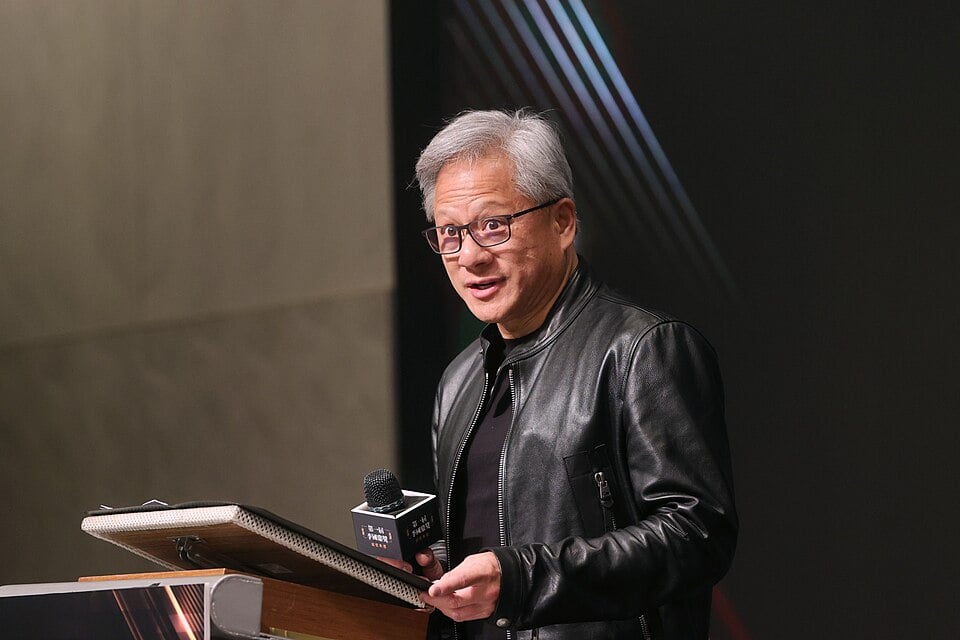
For us gearheads, this is a tale with deep resonance. Enthusiasts and gearheads often face similar questions: keep the money invested and grow it?
Or take the plunge on the limited‑edition, V12‑powered dream machine that command respect at car meets?
Huang’s candid confession puts into perspective that tension between financial prudence and automotive passion.
But Huang didn’t just leave it at that. He used the anecdote to pivot to something bigger: the massive economic wave he believes is coming from artificial intelligence — and how it will touch everything from data centers to, yes, cars.
AI and the Future of Driving
At Davos, Huang described AI as a “five‑layer cake”; a sprawling, interdependent stack that includes energy, chips, cloud infrastructure, AI models, and applications. It’s a useful mental image for auto industry watchers, because each of those layers, especially computing infrastructure and AI models, is already reshaping the way vehicles are designed, built, and operated.
Take autonomous driving, for instance. NVIDIA’s platforms are powering next‑gen vehicle intelligence and helping OEMs, including luxury brands, bring automated, reasoning‑based systems to life. That shift is transforming cars from mechanical marvels into mobile AI platforms that see, reason, and learn.
And whether you’re plugging into a track day or cruising your daily commute, that revolution affects every corner of automotive culture.
From Stock to Steering Wheels
Huang’s Mercedes story is more than a CEO’s humorous slip‑up. For us, it’s a visceral reminder that even the sharpest minds can look back and see what “could have been.” For the car community, it’s satisfying to see such a powerful tech leader reference a real car in such a vivid way.
Too often, auto culture exists in its own bubble, dismissed by tech elites as nostalgia. But Huang’s story bridges that divide by combining the heart‑racing joy of owning a dream car with the sobering reality of strategic investment.
And while he might chuckle about the billion‑dollar S‑Class in hindsight, one can’t help but imagine the kind of garage that executive now has. It’s probably stocked with something even better, and maybe still with a place for that S‑Class story. After all, some regrets make the best conversations.
Sources: Times of India