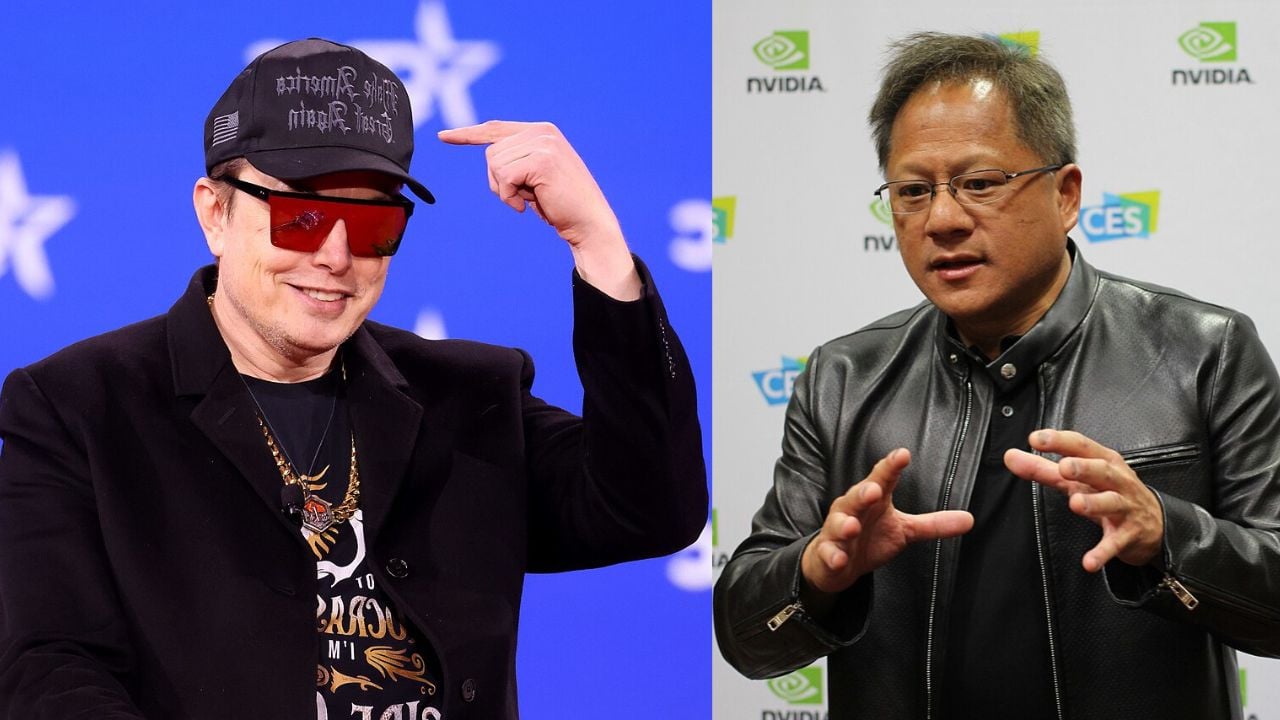

The contest for tomorrow’s autonomous vehicle future accelerated earlier this week at the Consumer Electronics Show. Nvidia’s CEO Jensen Huang took to the stage with a bold new pitch for the technology that goes well past what most carmakers have tried so far.
The chipmaker unveiled “Alpamayo,” which is a suite of artificial intelligence models designed to help cars navigate real-world complexity by reasoning about rare and unpredictable driving situations in ways traditional systems have not attempted before.
Huang described what he was showing as a “moment for physical AI,” an inflection in which machines begin to think through the physical world rather than simply react to patterns in data. The immediate proof point was a Mercedes-Benz CLA equipped with the system that navigated parts of San Francisco with a simulated explanation of its decisions.
Nvidia’s Bet Shakes Tesla’s Foundation
At first blush it looked like the industry’s accelerating arms race in autonomous vehicles. Nvidia is not building self-driving cars itself. Instead, it is pitching a full stack — chips, software, simulation tools and open AI models — to partners including Mercedes-Benz and others rolling out driver-assistance features this year.
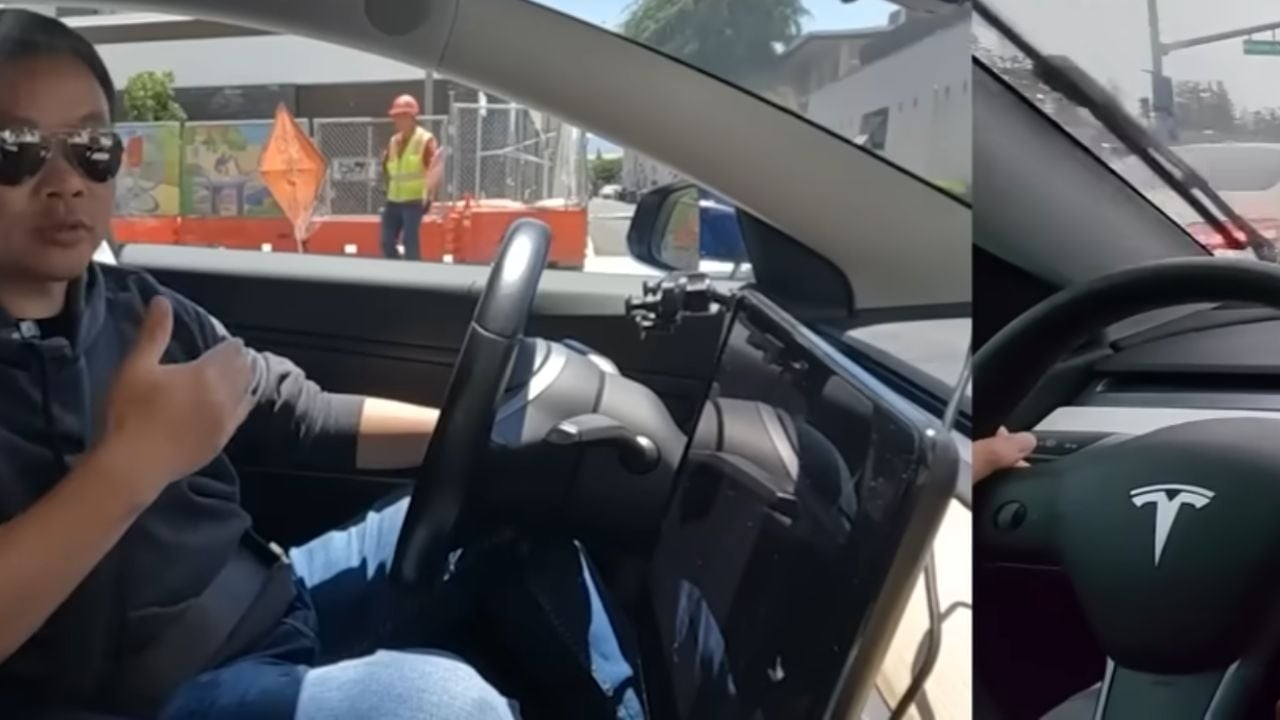
That approach contrasts sharply with Tesla’s vertically integrated strategy, where Elon Musk’s firm has sought to own nearly every piece of the autonomy puzzle, including hardware, software, and the massive fleet of vehicles providing real-world training data.
This matters because for years Tesla has made autonomy central to its future valuation narrative. The company’s Full Self-Driving software, known as FSD, remains a key pillar underpinning the long-term robotaxi business and the idea that Tesla’s cars will drive themselves without a human on board.
The system is still classified as requiring driver supervision in production vehicles, and Musk himself recently updated the company’s training milestone, saying roughly 10 billion miles of high-quality autonomous data will be needed before unsupervised operation is truly safe, marking a significant increase from earlier targets.
So Nvidia’s arrival on the autonomous stage set off reverberations not only in tech circles but on Wall Street. Tesla’s stock dipped modestly in response to the announcements, while Nvidia’s shares ticked modestly higher on optimism that its AI infrastructure would be at the core of many future autonomous platforms.
Analyst reactions were mixed. Some noted that Nvidia’s open model ecosystem might lower barriers to entry for legacy automakers that have struggled to catch up, even as they conceded Tesla still holds a lead due to its massive real-world data advantage and scale.
Calling the Shot, Drawing the Battle Lines
The immediate response from Musk underscored the tension between rhetoric and reality. On social media, Musk characterized Nvidia’s newfound competition as a threat that will not materialize meaningfully for five to six years, citing the difficulty of solving the “long tail” of rare and unusual driving situations that autonomous systems encounter outside of well-structured scenarios.
He argued that while achieving a baseline of performance might be comparatively straightforward, advancing beyond that toward human-level safety is where rivals will struggle. Musk also both downplayed the immediate competitive risk and publicly wished Nvidia success, a mix of bravado and careful signal to investors that Tesla’s autonomy lead remains intact.
But beneath the Musk soundbites lie deeper strategic realities. Nvidia’s approach emphasizes multi-sensor fusion — combining cameras, radar and lidar data — and open-sourced AI frameworks that let third parties experiment rapidly. Tesla’s philosophy has been largely camera-based and proprietary, trusting massive fleets and neural nets to learn driving behavior from real human roads rather than rely on engineered sensor redundancy. Each strategy has passionate defenders and detractors in the AI and automotive worlds.
Despite Musk’s assertions that competitors will still be years behind, the broader autonomous landscape is evolving quickly. Outside of Tesla and Nvidia, companies like Waymo and Uber are deploying robotaxis with deeply different technical stacks and business models. Uber’s robotaxi, developed with Lucid Motors and powered by Nvidia’s automotive systems, was also highlighted at CES, showing how far the industry is opening up beyond a two-player narrative.
The Pivot Point
From a regulatory and safety perspective, the industry is still grappling with fundamental questions about liability, oversight, and the definition of “safe enough” autonomy. Full Level 5 autonomy, in which no human oversight is required at all, remains something few companies claim to have achieved or can reliably deliver at scale. That gap between ambition and reality is the source of both the optimism and the skepticism fueling debate across boardrooms and trading floors.
In a decade that once promised driverless cars as commonplace by the mid-2020s, this week’s clash in Las Vegas feels like a pivot point, not just in technology but in strategy. Nvidia’s rising role challenges the idea that one company can or should do everything itself. For Tesla, the question now is whether its singular vision of autonomy can outpace an ecosystem willing to build collective momentum around open platforms and partnerships. Only time will tell, but for now, the self-driving race is suddenly broader, fiercer, and more unpredictable than ever.
Sources: The Guardian