The Mustang II gets roasted harder than a rubber tire on hot asphalt, and honestly, it’s time we had a real conversation about this misunderstood pony car.
Since its debut in 1974, the second-generation Mustang has been the automotive equivalent of that middle child nobody talks about at family gatherings. Sure, it didn’t have the thundering V8s of its predecessors, but calling it a mistake ignores some pretty important context. This wasn’t just Ford phoning it in — this was Ford reading the room during one of the most turbulent decades in American automotive history.
The Mustang II deserves a fair shake, not because it was perfect, but because it kept the nameplate alive when it could have easily died. So let’s dig into why this pony car deserves more respect than it gets.
It Saved the Mustang From Extinction
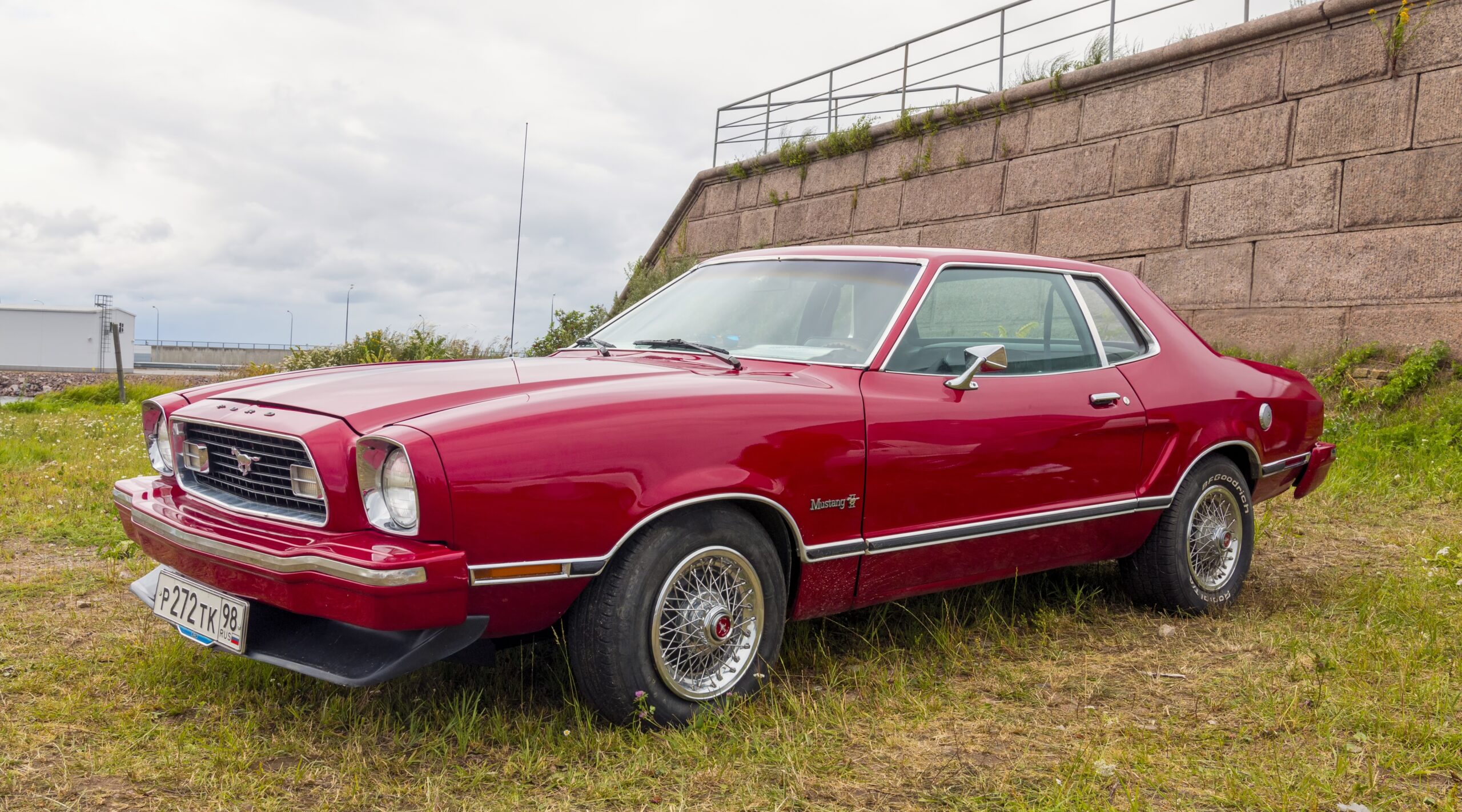
Here’s the uncomfortable truth that enthusiasts often ignore: the original Mustang formula was dying, and the Mustang II performed CPR on the entire nameplate.
By 1973, the first-generation Mustang had ballooned into a bloated beast that had strayed far from Lee Iacocca’s original vision of a nimble, affordable sporty car. Sales were plummeting, and Ford was seriously considering killing the Mustang altogether. The Mustang II’s downsized approach wasn’t a betrayal — it was a lifeline that kept the brand breathing through the darkest days of the oil crisis. Without this radical reimagining, there would be no Fox Body, no SN95, and certainly no modern Mustang GT or Dark Horse.
Sometimes survival requires adaptation, and the Mustang II adapted when it mattered most.
Perfect Timing for the Oil Crisis

The Mustang II arrived in showrooms in September 1973, mere weeks before the OPEC oil embargo turned America’s gas stations into scenes from a disaster movie. While other automakers scrambled to respond to fuel prices that quadrupled almost overnight, Ford had already pivoted to smaller, more efficient vehicles.
The Mustang II’s 2.3-liter four-cylinder and available 2.8-liter V6 suddenly looked genius rather than gutless. Buyers weren’t exactly dreaming of quarter-mile times when they were sitting in gas lines that stretched for blocks. The Mustang II sold over 385,000 units in its first year, making it the best-selling Mustang since 1966 and proving that Ford had read the market perfectly.
In retrospect, launching a full-on muscle car revival in 1974 would have been commercial suicide.
It Brought Back the Original Spirit

Die-hard fans love to forget that the first Mustang wasn’t actually a muscle car — it was a stylish, compact, affordable pony car that happened to offer V8 power as an option. The Mustang II returned to those roots with a wheelbase of 96.2 inches, nearly identical to the original 1964 model’s 108-inch wheelbase proportionally scaled down.
It was nimble, tossable, and fun in ways the 1973 behemoth could never be. Ford even marketed it as a return to the original concept, and they weren’t wrong. The early Mustangs were about looking good and feeling sporty, not necessarily about destroying tires at every stoplight.
The Mustang II recaptured that accessible performance vibe that made the original such a phenomenon, even if it did so with significantly less horsepower.
Impressive Sales Numbers Tell a Different Story

If the Mustang II was such a disaster, somebody forgot to tell the buying public!
Beyond that explosive first year, the Mustang II consistently moved metal throughout its production run from 1974 to 1978. Total production exceeded 1.1 million units over five model years, with the car regularly landing in the top tier of its segment. These weren’t just people settling for a bad car — these were customers who genuinely wanted what the Mustang II offered. The hardtop, hatchback, and sporty Cobra II variants all found their audiences.
Motor Trend even named it Car of the Year in 1974, recognizing its significance in a rapidly changing market. You can argue all day about performance specs, but you can’t argue with numbers like these suggesting the car connected with its intended audience.
The Styling Was Actually Pretty Sharp

Okay, let’s be honest: the Mustang II was a good-looking car, especially by mid-1970s standards when automotive design was going through an awkward phase. The long hood, short deck proportions paid homage to the original Mustang while feeling contemporary and European-inspired. The fastback hatchback version had particularly clean lines that hold up reasonably well today.
Sure, the Cobra II graphics package could get a bit enthusiastic with the stripes, but the base design had real appeal. Compare it to what else was on the road in 1975 — we’re talking about the era of vinyl roofs and baroque chrome excess — and the Mustang II’s restrained styling looks even better.
It wasn’t trying to be something it wasn’t, and that honesty in design deserves recognition.
Handling Was Actually Respectable

Here’s where the Mustang II surprises people who’ve never actually driven one: it handled pretty well for its era! The rack-and-pinion steering was responsive, and the modified MacPherson strut front suspension was borrowed from the Pinto but tuned specifically for the Mustang’s character.
The shorter wheelbase and reduced weight compared to the 1973 model made it genuinely fun to toss around on twisty roads. No, it wasn’t a Porsche 914, but it was engaging in ways that the land-yacht Mustangs of the early seventies could never be. Car magazines of the era consistently praised its road manners and noted that it felt more European than American.
When you’re piloting a Mustang II on a good back road, you quickly understand that straight-line speed isn’t the only measure of driving enjoyment.
The V8 Option Kept the Dream Alive

Yes, the base four-cylinder was underwhelming with its 88 horsepower, but let’s talk about the 302 cubic-inch V8 that became available in 1975. Sure, it only made 140 horsepower thanks to emissions equipment, but it was still a V8, and it kept the pony car dream flickering during the darkest days.
Ford didn’t abandon performance entirely — they just adapted it to meet the regulations and market conditions of the time. The V8-equipped Mustang II could hit 60 mph in about 10 seconds, which wasn’t embarrassing by mid-seventies standards when a Corvette was running similar numbers.
More importantly, offering the V8 signaled that Ford hadn’t given up on performance, just temporarily compromised on it. That commitment would pay dividends when the performance renaissance arrived in the eighties.
It Pioneered Affordable Performance Variants

The King Cobra and Cobra II packages showed that Ford understood their audience still wanted to feel special, even if outright speed was limited. These appearance packages offered enthusiasts a way to express their automotive passion without breaking the bank or guzzling gas. The graphics, spoilers, and special wheels gave owners something to be proud of in parking lots and at cruise nights.
Yes, they were mostly cosmetic, but that’s not inherently bad: it democratized the performance car experience for people who couldn’t afford or justify a true muscle car during tough economic times. These packages also established a template for future special editions, showing that you could create excitement and differentiation without always resorting to bigger engines.
The Mustang II’s approach to special editions influenced how manufacturers would market sporty cars for decades to come.
It’s a Tuner’s Dream Today

Modern Mustang II owners have discovered what the original critics missed: this platform has serious potential once you remove the emissions stranglehold. The lightweight chassis responds beautifully to modern fuel injection, upgraded suspension components, and contemporary engine swaps. You can drop in a modern 5.0-liter Coyote engine, and suddenly you’ve got a lightweight rocket that surprises just about everyone at the track.
The aftermarket support has grown substantially as enthusiasts recognize the platform’s bones are solid. There’s something satisfying about taking an underdog and proving the haters wrong with actual performance. The Mustang II has become a favorite of builders who appreciate that lightweight, good handling, and modern power create an incredible combination.
Collectibility Is Rising Steadily

The market has started recognizing what a few smart collectors knew all along: the Mustang II represents an important chapter in automotive history and a genuine value proposition. Clean, original examples — especially V8-equipped Cobras and King Cobras — have been appreciating steadily as baby boomers seek nostalgia and younger enthusiasts discover affordable classic pony cars.
You can still find decent Mustang II projects for reasonable money, unlike earlier Mustangs that have priced out many enthusiasts entirely. The rising tide of classic car values eventually lifts all boats, and the Mustang II’s time is coming.
Investment potential aside, there’s genuine satisfaction in owning and preserving a car that everyone else overlooked, and the Mustang II community is passionate and welcoming.
It Maintained the Mustang’s Cultural Presence

Even with reduced performance, the Mustang II kept the nameplate in the public consciousness during years when it could have faded entirely. It appeared in movies, television shows, and remained part of the automotive conversation. That continuous cultural presence mattered enormously for brand equity and kept the Mustang relevant to younger buyers who would eventually purchase Fox Bodies and newer generations.
Ford’s marketing successfully positioned it as a lifestyle vehicle that was stylish and fun, even if it wasn’t the fastest thing on the street. The Mustang remained aspirational and attainable simultaneously, which is a difficult balance to strike.
By maintaining visibility and desirability through the lean years, the Mustang II served as a bridge that connected the muscle car era to the modern performance car landscape.
Context Matters More Than Specs

Perhaps the biggest reason to stop bullying the Mustang II is that judging any car outside its historical context is fundamentally unfair. This wasn’t a car designed for 2025 sensibilities — it was engineered for 1974 realities including federal safety regulations, emissions requirements, insurance costs, and economic uncertainty.
Comparing it directly to a 1969 Boss 429 is like comparing apples to carburetors. The Mustang II succeeded at what it was actually designed to do: provide affordable, efficient, stylish transportation with a sporty character during impossible circumstances. It kept dealerships moving product, workers employed, and the Mustang name alive.
Sometimes the hero isn’t the one who wins the race but the one who makes sure there’s still a race to run tomorrow.
Conclusion

The Mustang II doesn’t need to be your favorite Mustang — it probably won’t ever win that contest. But it deserves recognition for being exactly what Ford and the American market needed at exactly the right moment.
This pony car navigated one of the most challenging periods in automotive history and emerged with the nameplate intact and actually thriving. Every Mustang you love today exists because the Mustang II refused to let the line die during the seventies. The next time you see one at a car show, maybe give it a second look instead of the usual dismissive glance.
You might just find yourself appreciating a car that’s been underestimated for far too long, and there’s something genuinely cool about championing the underdog.