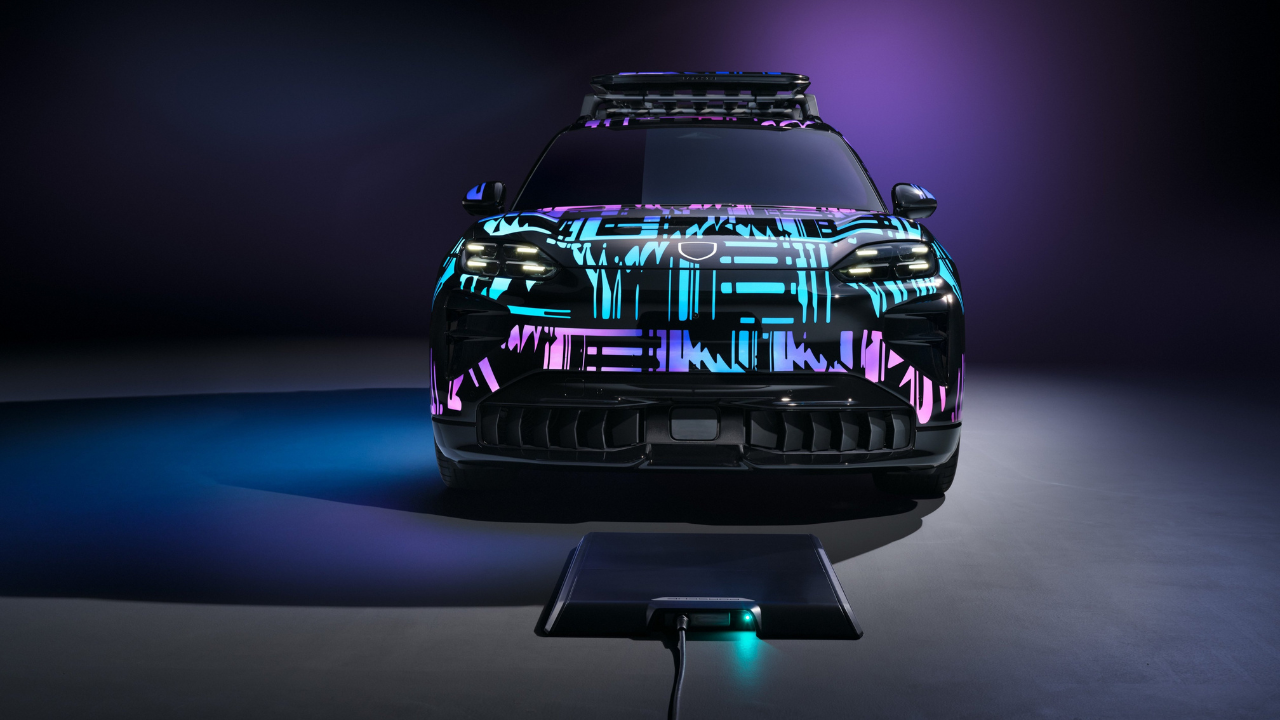
Porsche has just made the most annoying part of EV life feel like dropping your phone on a nightstand. At IAA Mobility in Munich, the company demonstrated Porsche Wireless Charging, a home floor plate that sends up to 11 kW through thin air to the new Cayenne Electric. You park over the pad, set the brake, and the juice starts flowing.
No wall box on the garage wall, no cable to coil, no wet connector to wipe off after a storm. For daily charging, that is a real quality-of-life upgrade.
How It Works in Your Garage
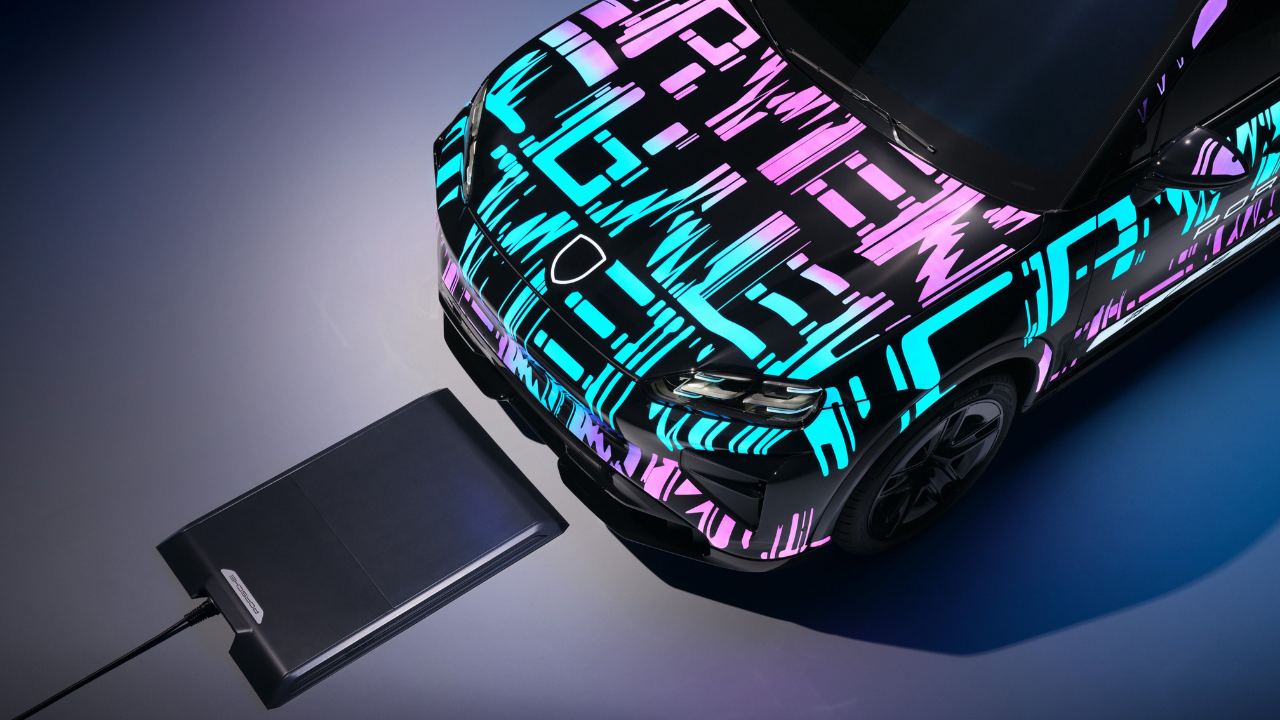
The system has two parts: a receiver unit mounted under the Cayenne Electric between the front wheels and a “one-box” floor plate that contains all the electronics except the supply cable. Since the smarts are built into the pad, you don’t need a separate wall box or control unit. The car lowers its ride height automatically and aligns over the plate, then an air gap of roughly four to six inches handles the contactless energy transfer.
A motion detector and foreign object detection keep things safe by pausing the session if anything strays under the car. Porsche’s Surround View adds a special camera view to help you hit the sweet spot, and the My Porsche app lets you start, stop, and monitor charging, including departure timers and preconditioning.
Why This Matters

Most home charging is routine. You come home, you plug in, you go inside. Removing the plug step sounds trivial until you multiply it by 300 nights a year, or by a cold snap, or by a spouse who does not love draping a cable across the garage. Wireless charging will not make your car faster, but it can reduce the friction of EV ownership, which is how habits stick.
Porsche also says it will be the first automaker to bring an 11 kW “one-box” inductive system for battery EVs to market, which raises the bar beyond the trickle-charge pads some people remember from early trials. Initial availability is planned for Europe in 2026, with other regions to follow.
The First Customer for the Tech

The Cayenne Electric will be the first Porsche you can order with the wireless receiver. The SUV is scheduled for a world premiere near the end of 2025, which gives Porsche a tidy runway to industrialize the pad and the underbody hardware together. If you are already picturing a tangle-free garage, timing matters.
A Show Car That Literally Lights Up

Because it is Porsche, the demo hardware arrived with a bit of theater. The IAA prototype wears a fluorescent, electroluminescent paint treatment that glows in five controllable colors when electricity flows, like a rolling black-light poster that actually serves a purpose.
The coating stacks more than 25 ultra-thin layers, from conductive primers to insulating films to the light-emitting material itself. It is a fun way to telegraph the invisible energy moving between pad and car, and it neatly answers the “is anything happening” question the first time you try wireless charging.
The Opinion Bit
If you are the person in the house who always plugs in, this reads like freedom. If you are the forgetful type, this reads like insurance (it’s me, I’m the one who always forgets to plug in the car). Either way, it points to a larger truth about EV adoption.
You might be thinking that this is silly and unnecessary, really, how hard is it to take a minute to plug your car in? Kids, groceries, dogs, weather, and the stress of holding your bladder in traffic and rushing inside when you get home can all leave us with dying batteries. Let’s be honest, a lot of us drag out going to the gas stations, too. Ever needed gas on the way home and thought, “I’ll just stop in the morning on my way to work,” knowing you’ll regret it the next day? Then you know where I’m coming from.
Specs get headlines, convenience closes deals. Porsche is not claiming wireless is faster than a top-spec wall box or cheaper than a basic Level 2. The pitch is simpler: make the daily cycle effortless, and people will actually use the range they paid for. If you also like a tidy garage with fewer trip hazards and fewer grimy connector caps, that is a bonus.
There are practical questions left. Pricing will determine whether buyers select the option. Installation details will matter for older garages, sloped driveways, and households with multiple EVs. But as a signal of where premium EV ownership is headed, this is right on brand. Make the tech disappear into the experience. Let the car do a little more work so the driver does a little less.
For Porsche, the timing is brilliant. Tie the pad to the Cayenne Electric launch, make a good first impression with early adopters, then let the tech trickle across the lineup as costs fall and confidence rises. If the execution matches the demo, this could be one of those quiet features that owners rave about in group chats, even if it never makes a splashy commercial.
Bottom line: park, click, charge, done. If that is the future of home charging, many garages are about to become simpler.