
Three-wheeled cars occupy that delightful space where automotive engineering meets fever dream. Somewhere between a motorcycle and a full-on four-wheeler, these machines have been the answer to questions nobody asked, but they were made anyways. Whether it was to dodge taxes, boost efficiency, or just stand out in traffic like a rolling punchline, three-wheelers have always turned heads and broken molds.
From the earliest postwar economy pods to futuristic concept experiments, three-wheeled cars have always been driven by eccentric inventors and bold ideas. You don’t buy a three-wheeler because it’s the best tool for the job. You buy it because it makes you smile. After all, it’s different, and because deep down, you kind of like confusing the neighbors. These cars tossed the rulebook out the window at 40 mph while tilting into a hairpin on two contact patches.
A Road Paved by Odd Ideas
Yes, three-wheelers are weird, but we wanted to find cars that were more than that. These oddballs were real, and they were street-legal, and many were designed with purpose (even if that purpose was just because we could). Some of these cars were designed to help relieve the financial burden of fuel shortages, while others were created to give city drivers more compact options. But every car here ran on imagination first and gasoline second.
I included models that were production-ready (even if only barely), had cultural impact, or were just too wild to ignore. You’ll see economy heroes, home-built oddities, and even a few that went racing. Bonus points went to any car with a devoted fan base or a legendary flop story.
Reliant Robin

The Reliant Robin is probably the most famous (or infamous) three-wheeler in the world (and for good reason). Launched in 1973 as the spiritual successor to the Reliant Regal, the Robin was Britain’s answer to affordable motoring with a twist: three wheels, fiberglass body, and a motorcycle license if you played your cards right. Weighing in under 450 kg, it technically qualified as a “tricycle,” which meant lower taxes and insurance, making it a weirdly sensible option for cash-strapped families in the UK.
But let’s talk about the elephant, or rather, the tricycle, in the room: the handling. With one wheel up front doing all the steering and two out back holding the line, the Robin had a tendency to lean hard into corners, sometimes too hard. Top Gear famously exaggerated this by intentionally flipping one in every turn, but real-world owners knew that with careful driving, the Robin could handle daily life just fine. It was basic, yes, but also lightweight, efficient, and strangely lovable. Over 60,000 were sold, and today it lives on as a cult classic; part car, part meme, and 100% British charm.
Bond Bug

Few cars from the 1970s had the sheer nerve of the Bond Bug. Just look at it, a bright orange, wedge-shaped car that looked like something stolen from a sci-fi set. Designed by Tom Karen of Ogle Design and built by Reliant after they took over Bond Cars Ltd., the Bug hit the road in 1970 with one goal: to make economy fun. And boy, did it succeed. Entry wasn’t through a door, but by tilting the entire canopy forward, like climbing into a fighter jet or a carnival ride, depending on your mood.
Underneath, it shared mechanicals with the Reliant Regal, including a 700cc or 750cc four-cylinder engine mounted up front and driving the rear wheels. Performance wasn’t exactly blistering (0-60 took a full lunar cycle), but that wasn’t the point. The Bug was about making a statement, one that said, “Why blend in when you can blast off?” It was marketed squarely at young drivers who wanted something cheeky, affordable, and different. Only around 2,270 were built before production ended in 1974, but its impact was outsized.
BMW Isetta

The BMW Isetta is one of those rare cars that makes people smile before it even starts. Originally designed by the Italian firm Iso in the early 1950s, the design was later licensed by BMW, who turned it into a postwar success story. To meet German regulations and production capabilities, BMW reworked the Isetta with a 247cc single-cylinder engine from its motorcycle line. It wasn’t fast, but it was famously efficient, often reaching over 50 miles per gallon, and perfect for navigating Europe’s narrow, war-ravaged streets.
The most iconic feature? That fridge-style front door. You opened the entire nose of the car to climb inside. Early models had three wheels, with the single rear wheel simplifying the drivetrain, though BMW eventually moved to a closely spaced four-wheel setup for added stability. It became the best-selling single-cylinder car in the world for a time, helping BMW survive financially and win over a new generation of drivers. Today, the Isetta is more than just a quirky footnote. It’s a reminder of how smart design and a little optimism can go a long way.
Daihatsu Bee

The Daihatsu Bee buzzed onto the scene in 1951 as one of Japan’s earliest experiments in bridging the gap between motorcycle and automobile. Built in the wake of World War II, it was engineered for a country rebuilding its infrastructure and economy. With one wheel up front for steering and two in the rear for drive, the Bee had a rear-engine, rear-drive layout and a footprint that made kei cars look roomy. Under the hood sat a 540cc two-cylinder engine producing around 13 horsepower, which was just enough to get a couple of people and some groceries through Tokyo traffic without complaint.
Despite its comical appearance, complete with bulbous fenders and a smiling face of a grille, the Bee took its job seriously. It featured real car-like elements: enclosed seating, proper doors, a steering wheel, and even a small trunk. Only a few hundred were built before it was discontinued, but it played an important role in Japan’s shift toward personal transportation. The Bee was a stepping stone toward Japan’s small car revolution, proof that even the humblest vehicles can push the industry forward.
Peel P50

The Peel P50 is as much a punchline with a license plate as it is a car. Built by Peel Engineering on the Isle of Man between 1962 and 1965, it holds the Guinness World Record for the smallest production car ever made. Just 54 inches long and 39 inches wide, the P50 was marketed as being able to fit “one adult and one shopping bag,” which was only a slight exaggeration. It had three wheels, a single headlight, and one solitary door on the left-hand side. Power came from a 49cc DKW two-stroke engine good for about 4.5 horsepower, enough to hit speeds up to 38 mph (eventually).
With no reverse gear, owners had to drag the car backwards using a handle mounted on the rear. At just under 140 pounds, that was entirely doable. The P50 became a cult classic thanks to its outrageous proportions and a now-legendary segment on Top Gear, where Jeremy Clarkson famously drove one through the BBC offices. Fewer than 50 were made originally, but the car’s legacy far outweighs its size. Today, it’s less of a practical machine and more of a cultural artifact, a tiny, wheezing reminder that sometimes, smaller really is funnier.
Messerschmitt KR200

The KR200 didn’t just look like it came from an aircraft hangar, and it felt like it, too. Designed by Fritz Fend, who had worked on actual fighter planes, the controls were straight out of an aviation daydream. You didn’t get a steering wheel. You got handlebars. And instead of a floor-mounted shifter, you toggled through gears with a selector that felt more Vespa than Volkswagen. It was weird, yes, but once you got the hang of it, the whole setup was surprisingly intuitive.
What made the KR200 so lovable was that it didn’t just get you around town, it made every trip feel like a mission. It buzzed, it turned heads, and it gave postwar drivers something different in a world full of plain gray boxes. Today, it’s a microcar legend, adored by collectors not just for its rarity but for the guts it took to build something so radically different and so fun.
Morgan Three-Wheeler

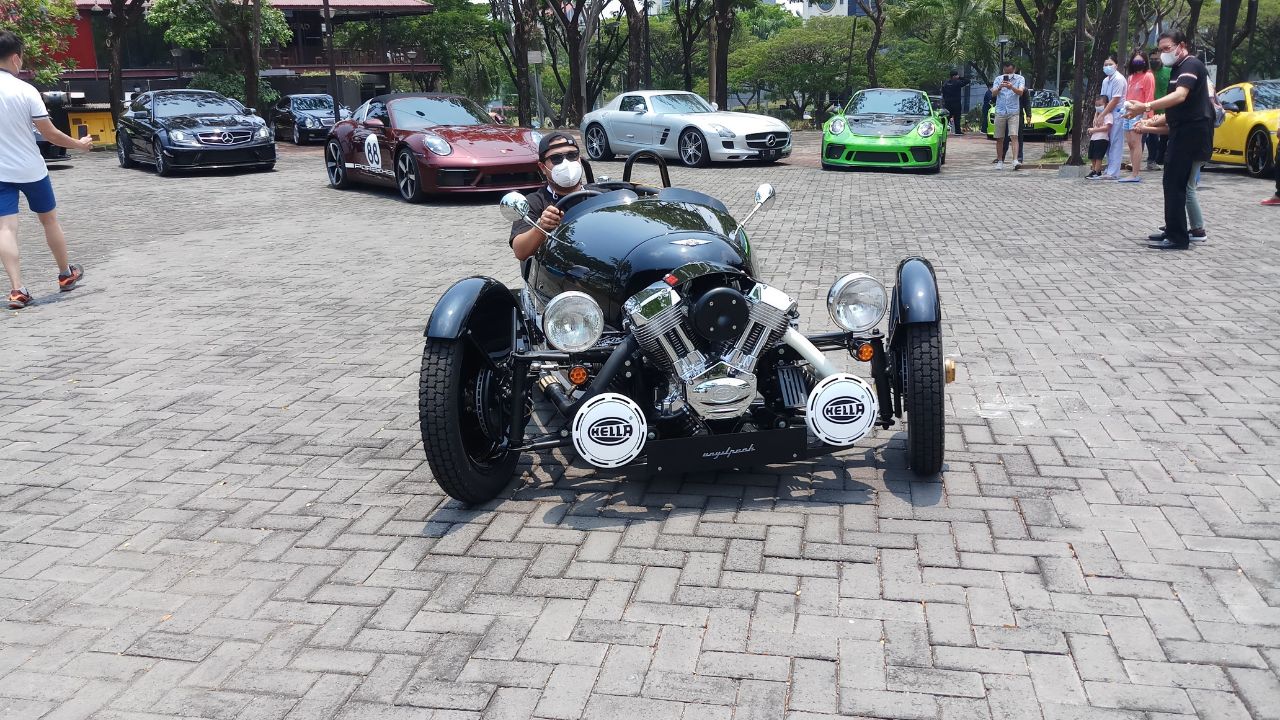
The Morgan Three-Wheeler might look like a vintage toy, but it’s one of the most enduring expressions of British motoring eccentricity. Originally introduced in 1911, it was designed to dodge Britain’s tax laws, which favored three-wheeled vehicles as motorcycles. But what Morgan created was far more than a loophole, it was a lightweight performance machine that punched well above its weight. Early models dominated cyclecar races and hill climbs, proving that speed didn’t require four wheels or a massive engine.
What really sets it apart is the exposed V-twin engine bolted to the front like a mechanical badge of honor. You feel every gear change, every vibration, every roar from the twin cylinders. With two wheels up front for stability and one driven wheel at the back, it corners with charm and a touch of cheekiness. The modern revival brought back all the raw joy with just enough tech to keep it road legal.
Brütsch Mopetta

The Brütsch Mopetta looked like something a cartoon character might drive, but it was real, road-ready, and unapologetically weird. Built in West Germany during the microcar boom of the mid-1950s, this pint-sized oddity stretched less than six feet in length and weighed under 200 pounds. It was the brainchild of Egon Brütsch, a designer who specialized in minimalist vehicles and wasn’t afraid to ask, “What if a jellybean had wheels?”
The Mopetta ran on a 49cc single-cylinder engine borrowed from a motorcycle, and could hit a top speed of around 22 mph, which was plenty if your idea of adventure was running errands in style. Its fiberglass bubble body, scooter-like handlebar steering, and open-air cockpit gave it the feel of a beach cruiser that wandered into traffic. Only a few were ever built (estimates say five), which has turned this little three-wheeler into a unicorn among collectors. The Mopetta might not have changed the world, but it definitely made it a lot more fun to look at.
Davis Divan

The Davis Divan was a wild gamble on three wheels, and it almost worked. Launched in the late 1940s by a charismatic promoter named Gary Davis, this California-built curiosity looked like it rolled straight out of a Buck Rogers comic. It had two wheels up front, one out back, and a sleek aluminum body that borrowed more from aviation than Detroit. Davis claimed it was the car of the future, and to be fair, it kind of looked like one.
Inside, the Divan boasted a single bench seat wide enough for four adults, which makes it practically a limo by microcar standards. Davis pitched it as an affordable, efficient family car that could be mass-produced for postwar America. He even convinced investors and hired a sales team before a single production line was fully operational. Only about 13 were built before lawsuits and scandal brought the whole operation crashing down.
Velorex Oskar

The Velorex Oskar was a rolling testament to postwar resourcefulness. Born in Czechoslovakia during the 1950s, it was built for people who needed wheels but didn’t have the budget for traditional steel-bodied cars. Instead of heavy metal panels, the Oskar wore a skin of vinyl-covered fabric stretched over a tubular steel frame. It looked like a motorized pup tent with personality, and it absolutely owned that vibe.
Powered by a small Jawa motorcycle engine and riding on three wheels, the Velorex was light, frugal, and surprisingly popular. It was a common sight throughout Eastern Bloc countries, offering reliable transportation to the masses when options were limited. Sure, it flapped a little in the wind and wouldn’t survive a fender-bender, but it gave people freedom where it mattered. Today, the Oskar lives on as a cult classic and a beloved oddball, proudly reminding us that practicality doesn’t have to be boring.
AC Petite

In response to post-war mobility needs, Britain saw the launch of this tiny three-wheeler. It was practical, frugal, and just quirky enough to be memorable. It featured two wheels at the back, one up front, and a small Villiers single-cylinder engine tucked in the rear. The layout made it easy to maintain and inexpensive to run, perfect for families moving up from motorcycles but not quite ready for a full-sized car.
Its bubble-shaped body gave it a friendly, almost toy-like appearance, and with seating for two plus a bit of space for groceries, it did the job without fuss. While it never sold in huge numbers, the Petite was part of a broader wave of British microcars that tried to rethink personal transportation in leaner times. Today, it’s a fun reminder that even serious carmakers like AC knew how to keep things light both literally and figuratively.
Campagna T-Rex

The Campagna T-Rex is what happens when Canada decides to throw its toque into the high-performance three-wheeler game. First unleashed in the mid-1990s but inspired by sketches dating back to the ’80s, the T-Rex blends motorcycle guts with sports car geometry. Early versions used Kawasaki inline-fours, while later models upped the ante with BMW and even Suzuki powerplants, delivering anywhere from 120 to over 200 horsepower to that lone rear wheel.
Its two wide front wheels give it insane cornering grip, while the exposed suspension and low-slung seating make you feel like you’re strapped into a fighter jet on three wheels. With a curb weight around 1,100 pounds, it’s light enough to out-accelerate most supercars to 60, and raw enough that you’ll feel every pebble on the road.
When Three Wheels Carry Big Dreams

Three-wheeled cars are the oddballs we never asked for but are so glad exist. They weren’t always fast, or practical, or even that safe, but they were imaginative. Every one of them came from someone looking at a four-wheeled car and thinking, “Eh, we can lose one.” And somehow, they were right (at least for a little while).
I’ve seen these things parked sideways in garages, tucked into corners at car meets, and occasionally wobbling through traffic like they forgot what a center of gravity is. And every time, I grin. Because even if they’re weird, they’re memorable. They dared to be different.