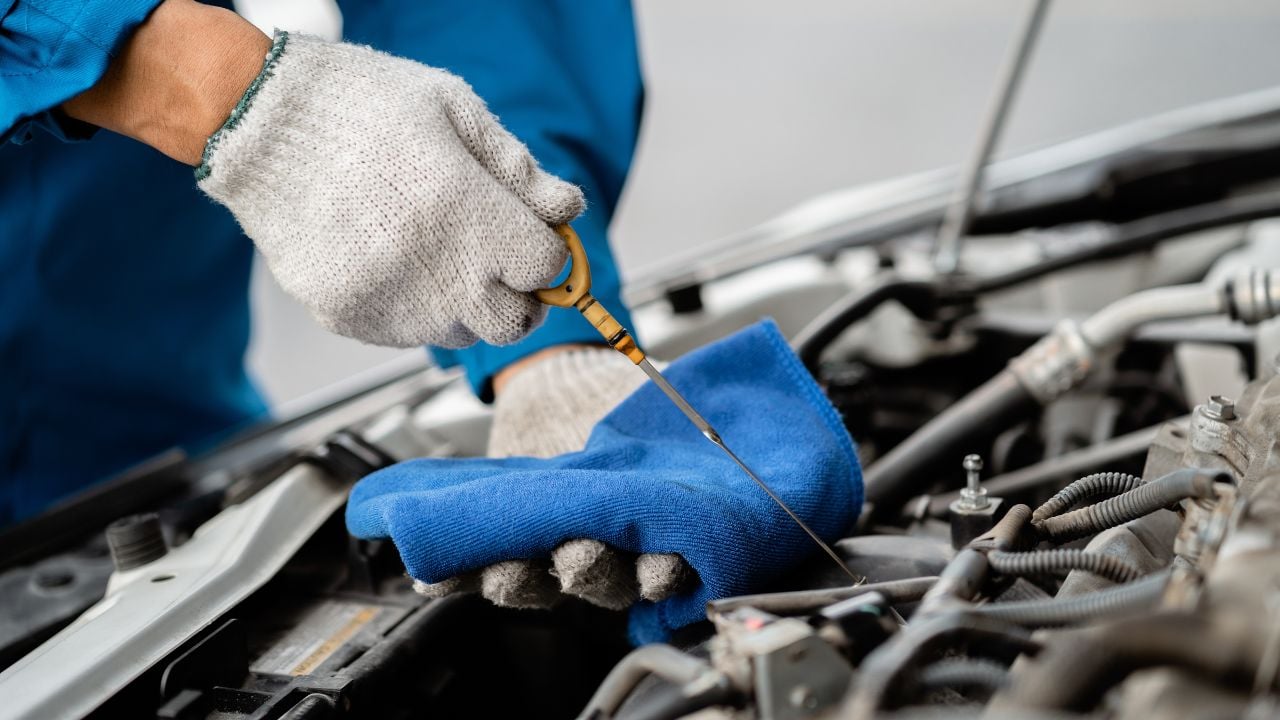

When most people think about car maintenance, they picture the usual stuff like oil changes, new tires, and maybe replacing brake pads when they start to squeal. However, under the hood and beneath the car are a handful of fluids quietly doing the hard work of keeping everything moving. Ignore them, and you’re asking for trouble. I’ve seen perfectly good engines ruined, transmissions cooked, and brakes fail, all because someone assumed a fluid was fine without ever checking it.
The truth is, not every fluid lasts until the manufacturer’s suggested service interval, especially if you drive in harsh conditions, tow, or spend a lot of time in stop-and-go traffic. Heat, moisture, and even a small leak can turn a healthy system into a costly repair faster than you’d think. In this article, we’ll go over the fluids worth checking more often, why they matter, and what signs mean it’s time to take action. A few minutes with a rag and a dipstick can save you a lot of money and keep your car running like it should.
Engine Oil
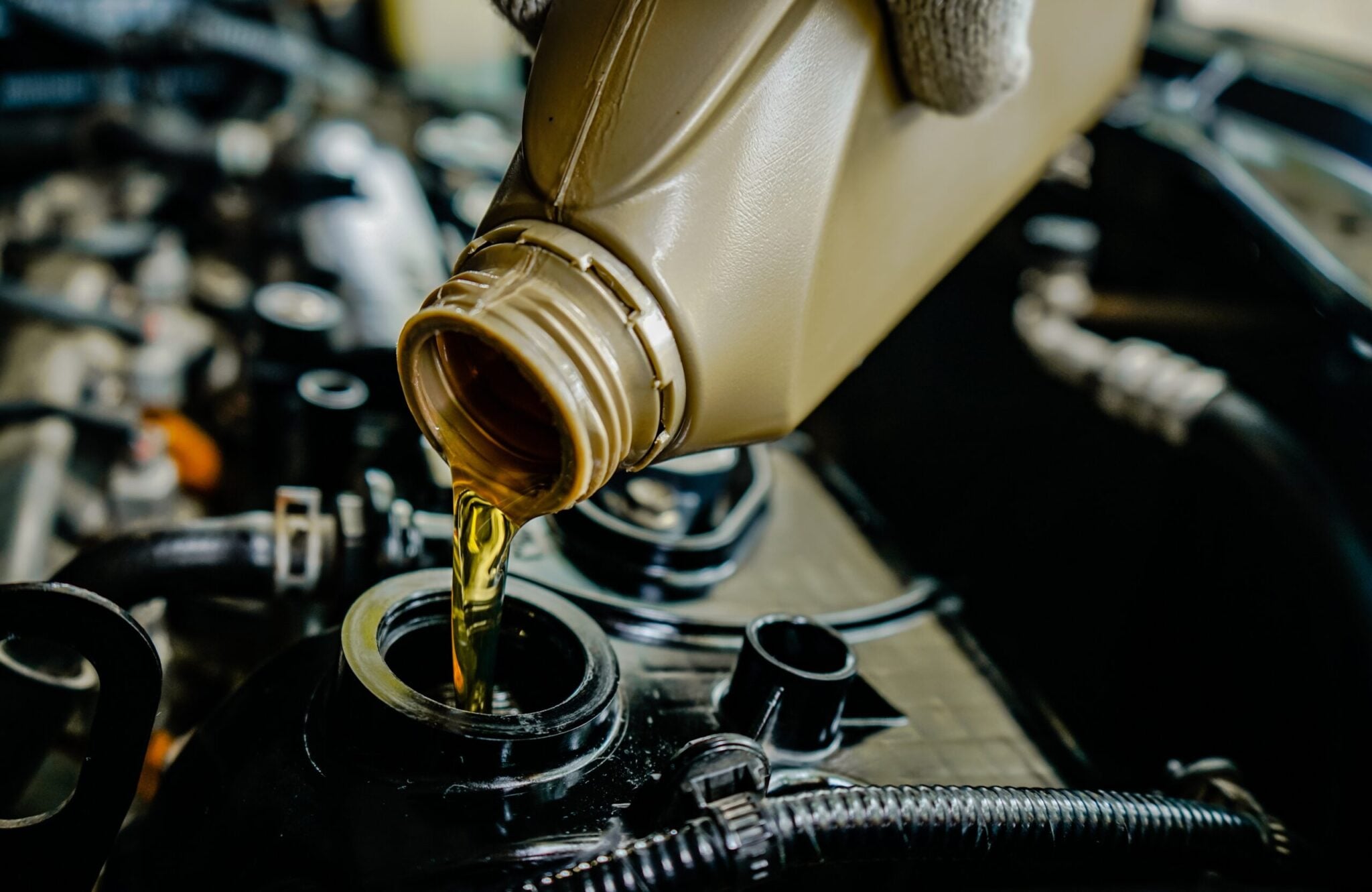
Kicking it off with the basics everyone knows, engine oil is the one fluid everyone’s heard about. Yet it’s amazing how often I see cars come into the shop bone-dry between services. Even if you’re on top of your oil changes, follow your owner’s manual mileage and time interval, since many modern vehicles run synthetic oil change intervals around 7,500 to 10,000 miles, and severe service can require shorter intervals. As internal components wear down over time, some engines can burn oil or develop small leaks that drop the level before your next appointment. Run low, and you’re looking at extra heat, extra wear, and possibly a seized engine.
Checking it takes less than two minutes. Let the engine cool, pull the dipstick, wipe it clean, reinsert it, and then check the level and color. Oil often darkens quickly in normal use, so color alone is not a reliable indicator. If it feels gritty, looks sludgy, smells burnt, or the level is dropping, you’re due for service, and it may be sooner than planned. If your car burns a bit of oil, keep a quart in the trunk so you can top it off before trouble starts. Think of it like keeping your phone charged: it’s simple, it’s quick, and if you forget, you might find yourself stranded.
Transmission Fluid
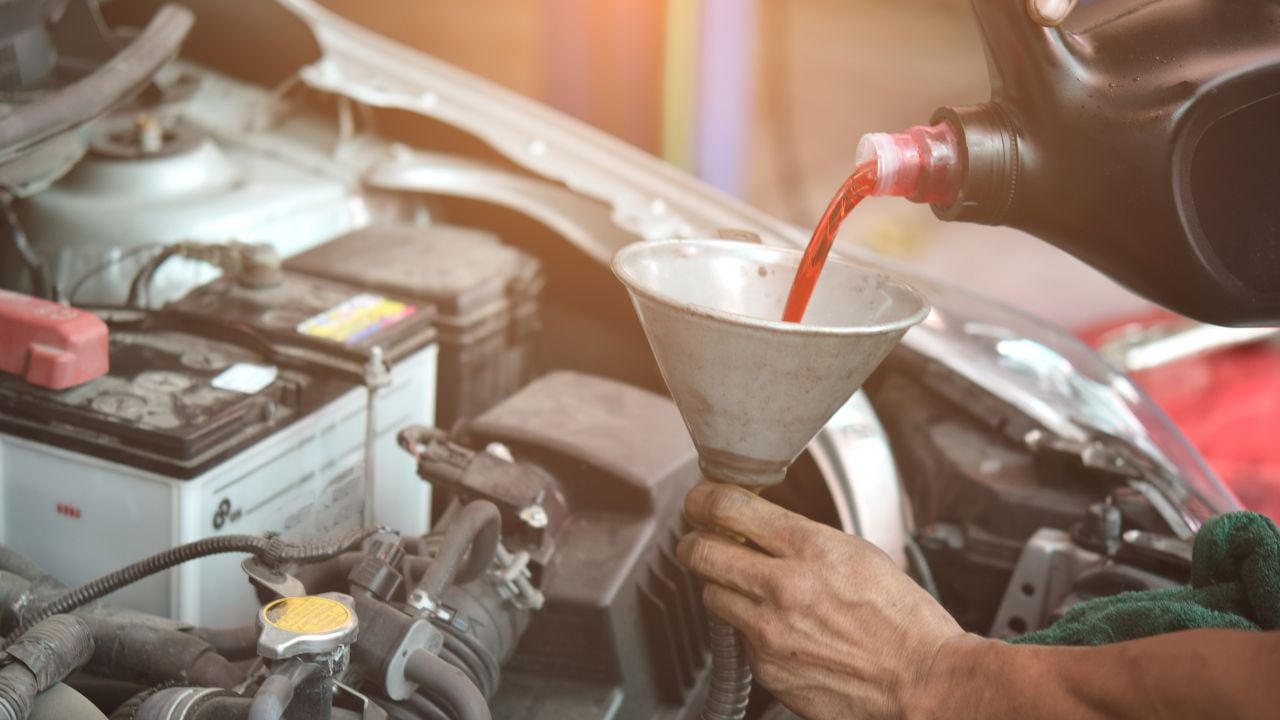
Transmission fluid protects one of the most expensive parts of your car to replace (besides the engine). Manufacturers like to throw around the term “lifetime fluid,” but in the shop, I’ve seen enough burned, worn-out fluid to know that “lifetime” doesn’t always mean your lifetime or your car’s. Heat, stop-and-go traffic, towing, and even just age can break it down faster than you’d expect. Your transmission will show you signs that it’s becoming damaged, but by that point, it’s usually too late.
If your car has a transmission dipstick, get in the habit of checking it every month or so. Transmission fluid color varies by specification and can be red, green, blue, or other shades, so use your owner’s manual as the reference. What matters most is condition; if it is very dark, smells burnt, or feels gritty, it needs attention. If it’s dark, smells burnt, or feels gritty, it’s past its prime. For “sealed” systems without a dipstick, have a mechanic inspect it periodically, especially if you tow, spend a lot of time in traffic, or drive in extreme heat or cold. Staying ahead of it is a lot cheaper than paying for a transmission rebuild.
Coolant (Antifreeze)

Coolant isn’t just colored water; it’s your engine’s temperature manager and corrosion shield. It keeps things from boiling over in the summer and freezing solid in the winter, while also protecting the inside of the engine from rust and scale. Over time, leaks can drop the level, and the additives in the coolant break down, leaving your engine exposed.
We know it’s not fun, but checking it once a month (or more often if you’re dealing with extreme temps) can save you a major headache later. Always check when the engine’s cool, using the markings on the reservoir as your guide. The coolant should be clear and consistent in appearance, but coolant color is not standardized and can be green, orange, pink, blue, yellow, purple, and more depending on formulation, and it should never look muddy, rusty, or oily. If you’re constantly topping it off, there’s a leak or gasket issue that needs fixing. Overheating is one of the quickest ways to destroy an engine, so treat coolant checks as cheap insurance. Oh, and PS, don’t choose coolant based on color. Use the coolant specification listed for your vehicle, and if you are unsure, top off with distilled water and schedule a proper service.
Brake Fluid

Yeah, another component of your braking system that needs to be serviced besides your pads and rotors. Brake fluid doesn’t make noise, but leaks can leave spots or a trail and can quickly compromise braking. Without enough fluid, you’re not stopping. It’s the hydraulic link between your foot and the brakes, and it has one big weakness…it slowly absorbs moisture from the air. That water lowers the fluid’s boiling point, which can lead to a soft pedal or complete brake fade when things get hot.
Take a look every couple of months, put a note on your calendar, and check it with the rest of your fluids. Most reservoirs are see-through, so you can check the level and color without even opening the cap. Good fluid is clear to light amber. If it’s dark, murky, or has bits floating in it, it’s due for a flush. A low level might be normal pad wear, but it can also point to a leak; either way, check it out immediately. With brakes, “better safe than sorry” isn’t advice; it’s the standard.
Power Steering Fluid
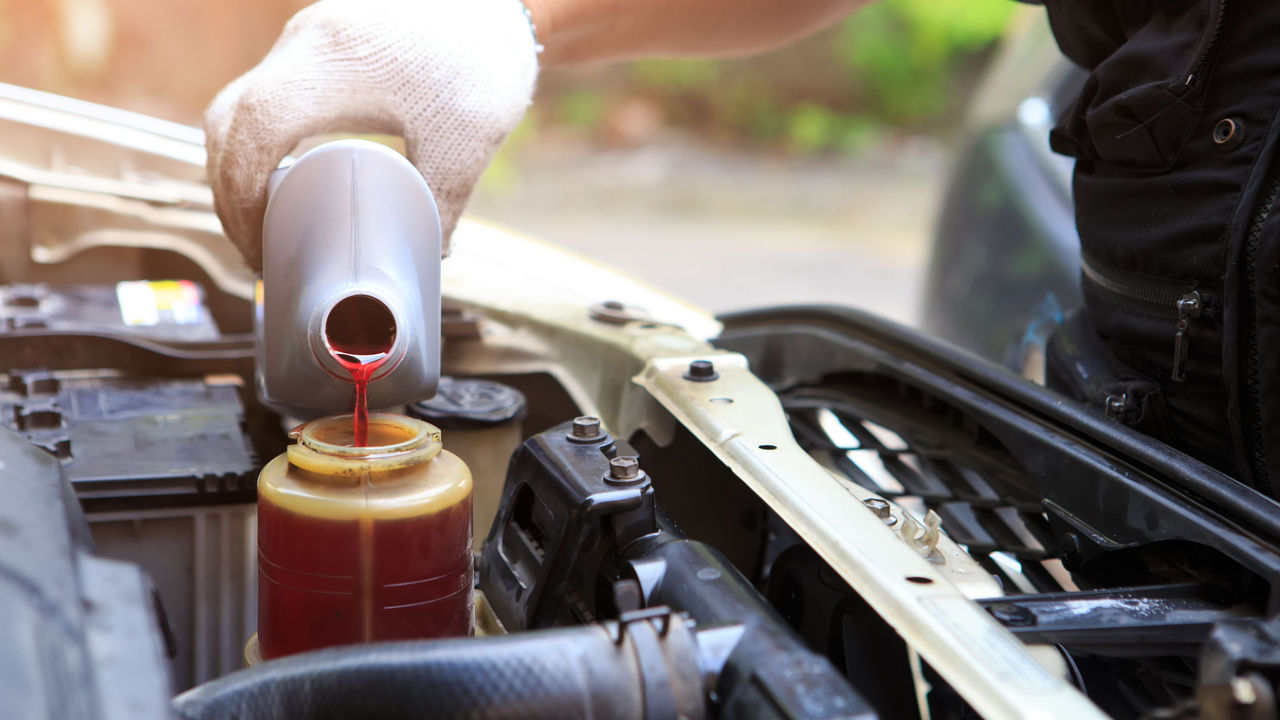
Power steering fluid isn’t something you think about until you lose it (if you have a modern car that uses power steering fluid, that is). Without it, the wheel feels heavy and slow to respond, making the car harder and less safe to control. This fluid keeps the steering pump lubricated and the system moving smoothly, especially at low speeds or when parking.
You might be sick of hearing this already, but yep… check it about once a month. Keeping your power steering fluid in good shape makes steering sharp, light, and predictable, which is exactly how you want it when something unexpected happens.
Windshield Washer Fluid

Windshield washer fluid isn’t a mechanical necessity, but it can make a huge difference for your safety and sanity. A dirty windshield can cut your reaction time, especially when the sun’s low or the rain’s coming down. This is one fluid you actually use up fast, especially in dusty, muddy, or salty winter conditions.
Check it at least once a week, or before any long drive, but this one is easy because you’ll know when you’ve run out and it’s time to add more. Topping off is quick, cheap, and could save you from a dangerous moment. In winter, use a formula with antifreeze to keep it from icing over. Full washer fluid means you can clear mud, bugs, or road grime in seconds, so you’re not squinting through a smeared mess when you should be watching the road.
Wrapping It Up: Why Fluid Checks Matter More Than You Think

We know it sounds played out, but your car’s fluids really are its lifeblood, and if you ignore one, the whole system can pay the price. Taking time out of your schedule and spending money on car maintenance isn’t fun, but neither is spending more to replace your engine or transmission because you skipped a few monthly checks.
Most of these inspections take less time than brewing your morning coffee, and they give you a solid read on your car’s condition. The next time you have the hood open, take a moment to check the reservoirs and dipsticks. Or don’t, and risk paying the price later.