

Sports cars should be selling like hotcakes at a Sunday morning car meet. Instead, some of today’s most capable machines are sitting on dealer lots longer than a project car in your buddy’s garage. It’s not that these cars can’t perform; many of them would embarrass a Porsche 911 on the right day. The problem is more complicated than that.
We’re living in the golden age of automotive performance, where a family sedan can hit 60 mph faster than most supercars from the ’80s. Yet somehow, genuinely great new and used sports cars are struggling to find homes. The culprits? Everything from badge snobbery to the unfortunate reality that most people would rather drive a lifted grocery getter than something that makes their spine tingle.
Underperforming Icons

I love sports cars and I love driving them. So you can’t blame me for these cars not selling, I can tell you that much. Instead, we examined market trends and sales data to identify which sports cars were falling short with the general public, focusing on cars that have experienced a decline in sales over the last few years.
We also checked out some forums and other places where car enthusiasts go to complain, hoping to gain insight into what might be holding these cars back. Of course, some people love to read their own complaints, so we took it with a grain of salt. Still, if a bunch of people had something to say, we took note.
By combining hard data with real-world insights, we identified the sports cars that, despite their capabilities, are simply not connecting with today’s market.
Oh and by the way, we know the definition of a sports car, but the world has moved on, and so do we. The thing is that most people don’t think of a 2 seater, 2 door car when they say “sports car” , but rather the terminology now includes things like sports sedans, grand tourers and more. So don’t yell at us on that one, please.
Nissan Z

Starting Price: $41,015
Horsepower: 400 hp
0-60: 4.5 seconds
Remember when everyone was begging Nissan to bring back the Z? Well, they did, and now those same people are apparently too busy shopping for Rogues. The new Z packs a twin-turbo V6 that makes 400 horsepower and enough torque to spin the rear wheels in three gears, but it’s selling about as well as a convertible in Seattle.
The problem isn’t performance; this thing will outrun most of what’s parked at your local Starbucks. It’s that $41k starting price in a world where you can get a Mustang GT for $38k or a Camaro SS for similar money. Both of those come with V8s and the kind of brand recognition that doesn’t require explaining what a “Z” is to your insurance agent. Plus, the Z’s interior leaves something to be desired (which is why Autopian tried to “fix it” for them).
Sales have been so slow that some dealers are offering incentives. When a sports car needs rebates six months after launch, that’s not a good sign.
Toyota GR Supra
Starting Price: $46,440
Horsepower: 382 hp
0-60: 3.9 seconds
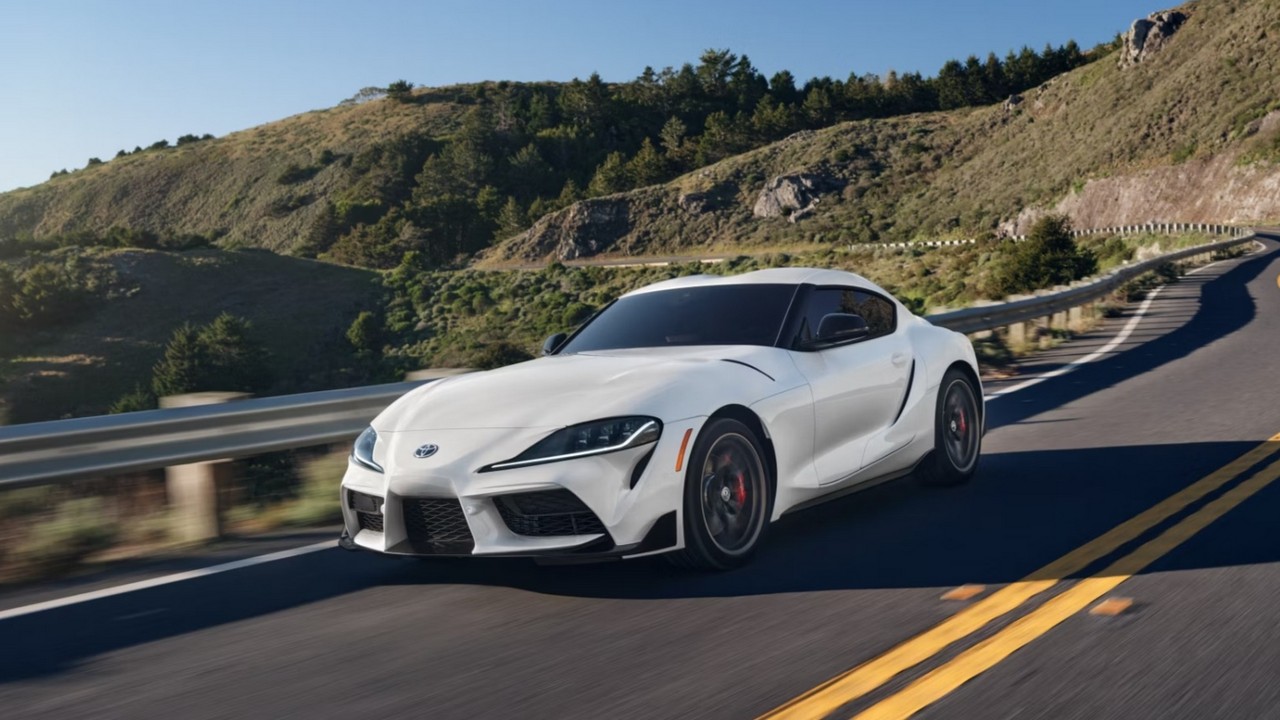
Toyota spent years teasing us with concept cars and “maybe we’ll bring back the Supra” hints, then delivered a car that’s basically a BMW Z4 in a different dress. Don’t get us wrong: it’s a fantastic machine that’ll embarrass most sports cars on a track. But try explaining to your fellow Toyota enthusiasts why your Supra has a BMW engine, BMW transmission, BMW interior bits, and BMW infotainment.
The B58 inline-six is actually brilliant; it’s the same engine BMW puts in their M240i and base Z4. It makes 382 horsepower and responds to modifications like a teenager responds to pizza money. However, at $46k, you’re competing against a used Corvette Stingray, which starts at $68k but depreciates so fast you can find low-mile examples for Supra money.
The Supra has faced several market challenges, including production delays, elevated dealer pricing, and a two-seat configuration that may not suit buyers seeking more practicality. Sales figures have remained modest, suggesting that while the car appeals to enthusiasts, it may not align with broader consumer preferences.
Jaguar F-Type

Starting Price: $73,400
Horsepower: 444-575 hp
0-60: 3.5-4.4 seconds
The F-Type is drop-dead gorgeous and sounds like Thor clearing his throat, but it’s about as reliable as British weather and twice as expensive to fix. Jaguar managed to create one of the most beautiful cars ever made, then saddled it with electrical gremlins that would make a 1970s British Leyland owner nostalgic.
With base prices starting north of $73k, the F-Type competes against Porsches, Mercedes AMGs, and BMW Ms: all of which have better reliability reputations and higher resale values. The supercharged V8 models make up to 575 hp and sound absolutely magnificent, but good luck finding a mechanic who doesn’t charge Bentley rates to work on one.
The real issue? Jaguar’s U.S. sales network has been shrinking faster than a wool sweater in hot water. Finding parts and service is becoming a treasure hunt, and most buyers would rather not turn their sports car hobby into a full-time archaeology expedition. The F-Type is entering its final production year, which means it’s basically the automotive equivalent of buying a Zune in 2010.
Acura NSX

Starting Price: $169,500
Horsepower: 573 hp
0-60: 2.9 seconds
The NSX is a technological marvel that can lap the Nürburgring in 7:37 and hit 60 mph in under three seconds. It’s also from Acura, a brand most people associate with your accountant’s daily driver. That badge confusion has created an identity crisis more complex than a philosophy major’s senior thesis.
At $169k, the NSX competed against Ferraris, Lamborghinis, and McLarens: cars with names that make people’s pupils dilate. Meanwhile, “Acura” is better known as an everyday car brand, invoking thoughts of lease specials and complimentary oil changes. The hybrid powertrain is brilliantly engineered, combining a twin-turbo V6 with three electric motors, but try explaining that to someone who just wants their supercar to make big noise and bigger drama.
Total NSX sales from 2016 to 2022 were around 2,900 units globally. To put that in perspective, Ferrari sells more 488s in a good month. The NSX is faster around most tracks than cars costing twice as much, but in the supercar world, logic takes a backseat to emotion and badge prestige.
Mazda MX-5 Miata RF

Starting Price: $33,045
Horsepower: 181 hp
0-60: 6.5 seconds
The Miata RF (Retractable Fastback) is proof that sometimes more isn’t better. Mazda took the perfect roadster formula and added a power-folding hardtop, extra weight, additional complexity, and a $5,000 price premium. The result? A car that’s less pure than the soft-top version and more expensive than buyers want to pay for 181 hp.
Miata buyers typically want simplicity, reliability, and that direct connection to the road that made the original car legendary. The RF adds 113 pounds, takes longer to drop its top, and costs more to fix when something inevitably breaks. It’s like ordering a burger and asking them to make it more complicated and expensive.
Sales figures show that roughly 70% of Miata buyers choose the soft-top version, leaving RF inventory sitting longer than leftover fruitcake. The RF isn’t bad: it’s still a joy to drive and looks fantastic with the top up. But in a segment built on “light is right,” adding weight and complexity is like bringing a calculator to a poetry reading.
BMW Z4
Starting Price: $52,500
Horsepower: 255-382 hp
0-60: 4.4-5.2 seconds
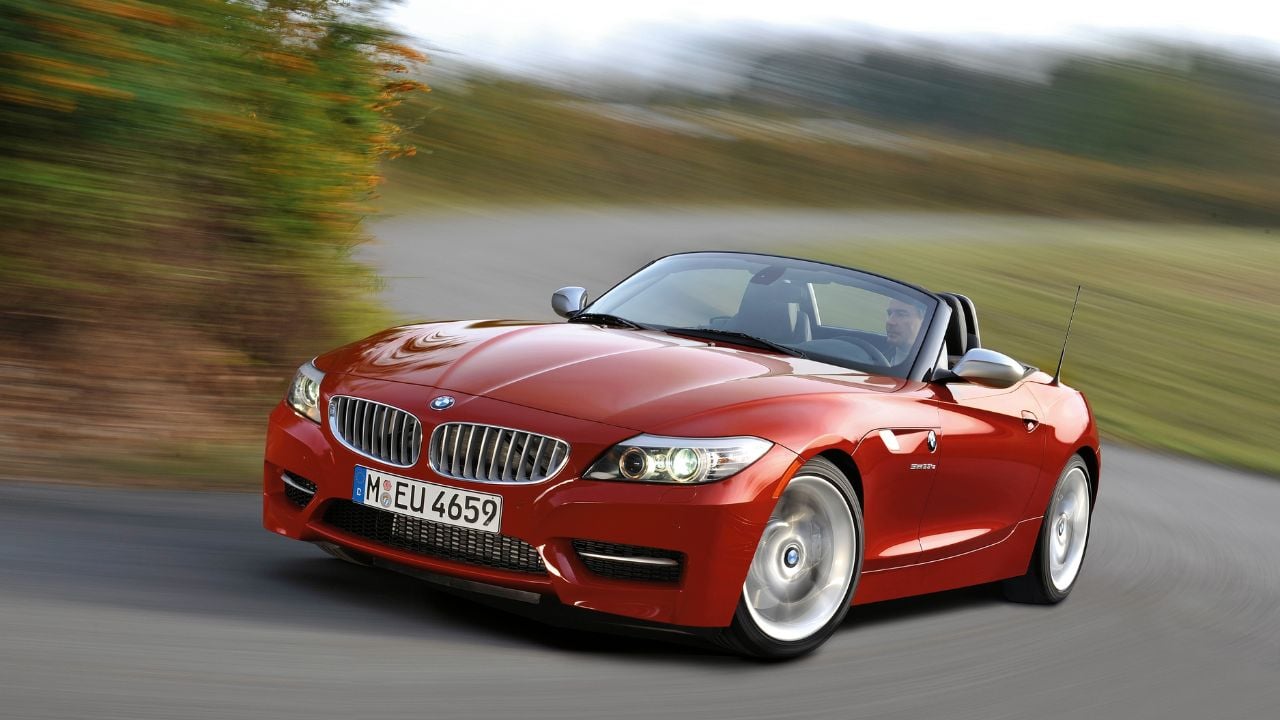
The Z4 is like that friend who can’t decide what they want to be when they grow up. Is it a sports car? A luxury cruiser? A Supra with different clothes? BMW seems as confused as potential buyers, which explains why Z4s sit on lots like wallflowers at a high school dance.
The base Z4 makes 255 horsepower from a turbo four-cylinder and costs $52k; money that buys you a lightly used Corvette Stingray with a V8 and actual American muscle car credentials. The M40i version makes 382 hp and costs $65k, which puts you in Porsche Boxster S territory. Neither price point makes much sense when you consider the alternatives.
“The Z4 fits very awkwardly in the market against its competitors (Boxster, ND Miata, Corvette, and Mustang/Camaro convertibles),” said one guy on a Reddit thread about the discontinuation of the Z4. “People who want a sports car with a high budget just go with the Boxster. People who want a lower-cost sports car always go for the Miata.”
Another Redditor added, “Because people are boring and keep buying SUVs.”
BMW’s decision to share the Z4’s platform with the Toyota Supra created another problem: the Supra is faster, cheaper, and has a fixed roof for year-round usability. Meanwhile, convertible sports cars are about as popular as manual transmissions in traffic, appealing mainly to empty nesters who remember when driving was supposed to be fun.
Audi TT
Starting Price: $50,900
Horsepower: 228-394 hp
0-60: 4.4-5.3 seconds
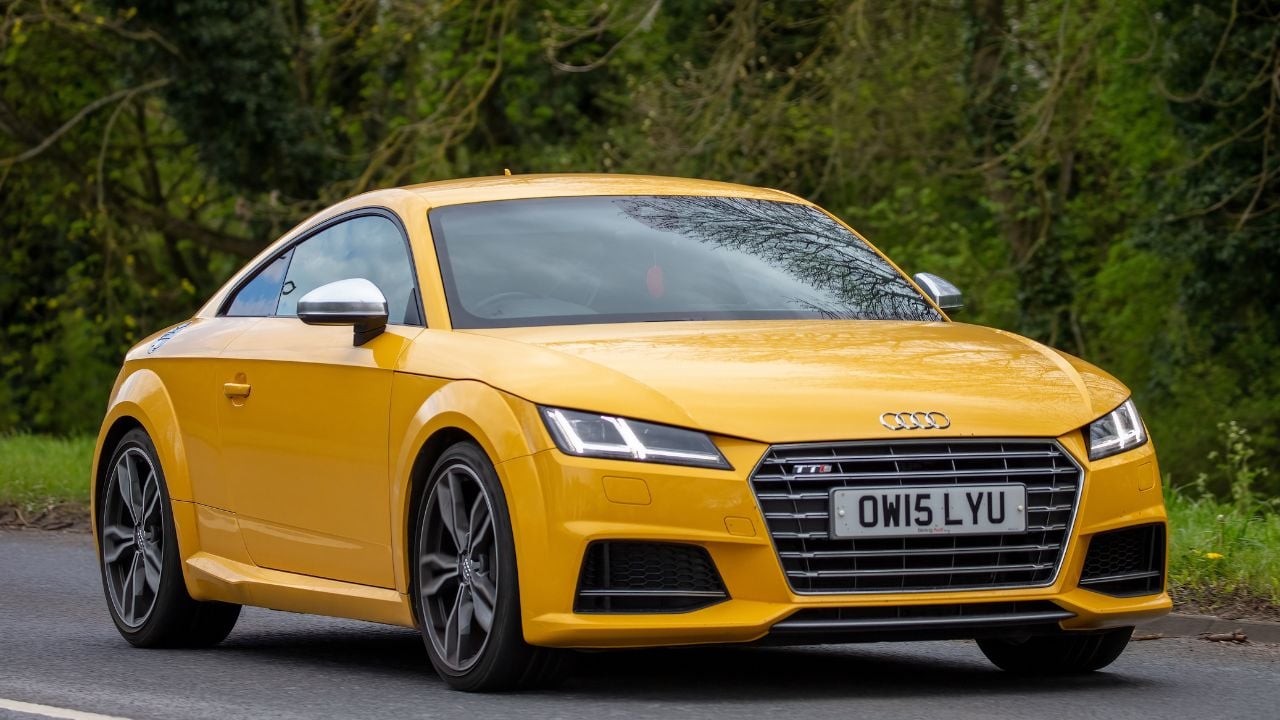
The TT’s problem was that it was a victim of its own brand’s success. When it launched in 1998, the TT was Audi’s halo sports car. By the end, it was overshadowed by the S3, RS3, R8, and basically every other performance Audi that makes more power and carries more prestige.
At $50k, the base TT makes 228 horsepower from a turbo four-cylinder – respectable but not exactly thrilling in 2025. The TT RS makes 394 horsepower and costs $70k, but at that price, you’re shopping against Porsche Caymans and BMW M2s, both of which offer more engaging driving experiences.
The TT’s biggest problem is that it’s become the sensible choice in a segment where nobody wants to be sensible. It’s refined, comfortable, and reliable – all great qualities for a daily driver, terrible qualities for generating excitement in a sports car showroom. Audi discontinued the TT after 2023, which tells you everything about how well it was selling.
Alfa Romeo 4C
Starting Price: $67,495 (when available)
Horsepower: 237 hp
0-60: 4.1 seconds
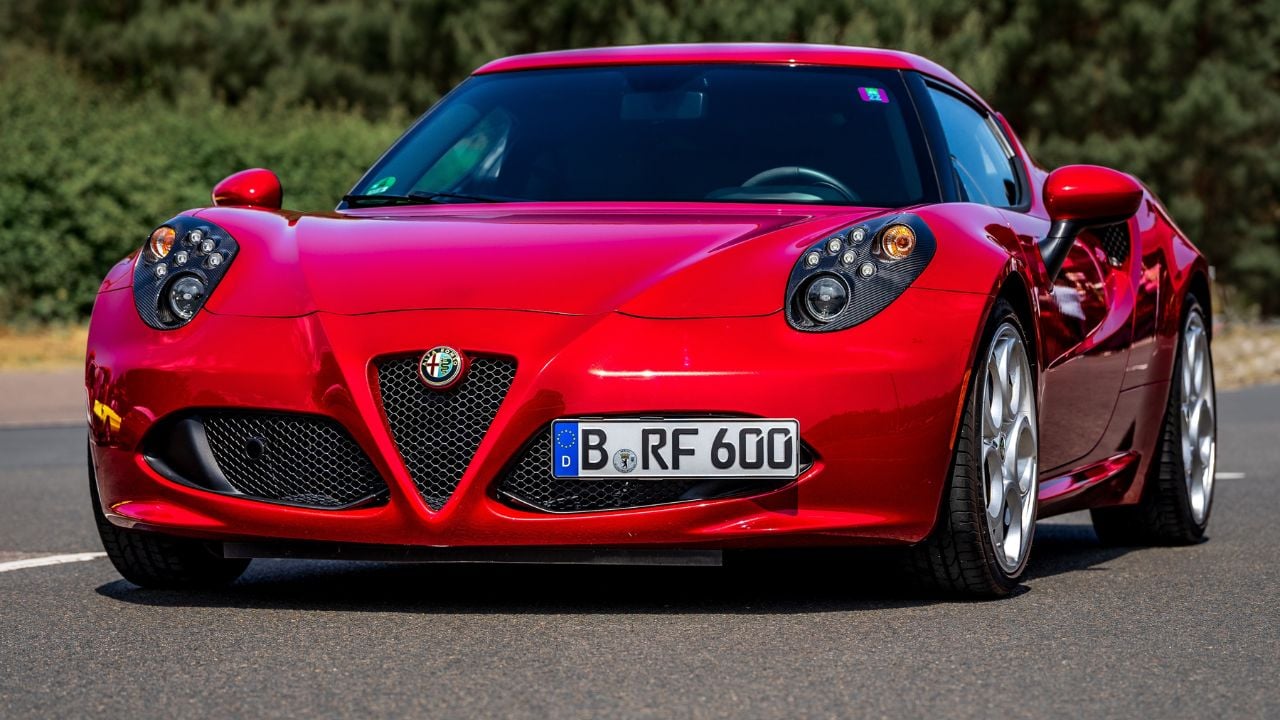
The 4C is what happens when engineers design a car for themselves instead of actual customers. It’s a carbon fiber masterpiece that weighs just 2,465 pounds and handles like a slot car. It’s also about as comfortable as sitting on a park bench during a hailstorm.
Alfa Romeo equipped the 4C with no power steering (for “purity”), a harsh suspension setup that transmits every pebble directly to your spine, and an interior that makes a Lotus Elise seem luxurious. The result is a car that’s absolutely brilliant on a smooth racetrack and absolutely miserable everywhere else… which is where most people actually drive.
Sales were so slow that finding one became harder than finding a decent Italian restaurant in small-town America. Alfa’s U.S. dealer network is thinner than the 4C’s sound deadening, making service and parts a perpetual adventure. The 4C was discontinued after 2020, likely because it was more popular as a garage art piece than as a means of transportation.
Lexus LC 500

Starting Price: $97,350
Horsepower: 471 hp
0-60: 4.4 seconds
The LC 500 is absolutely stunning: it looks like a concept car that accidentally made it to production. Under the hood sits a naturally aspirated 5.0-liter V8 that sounds like angels singing opera. The problem? It weighs 4,280 pounds and drives like it’s carrying that weight in gold bars.
At nearly $100k, the LC competes against Porsche 911s, BMW M8s, and Mercedes-AMG GTs — all of which are significantly faster and more engaging to drive. The LC is more of a luxury cruiser than a sports car, which would be fine if it competed against other luxury cruisers. Instead, it’s priced against genuine sports cars and consistently comes up short in performance comparisons.
Lexus sold just 1,715 LC models in 2022, down from a peak of 4,500 in 2018. Those numbers suggest the LC is more of a halo car than a volume seller, which explains why you’re more likely to see one in a Lexus brochure than in your local Cars & Coffee parking lot.
Chevrolet Corvette (C7 Generation, Late Models)

Starting Price: $55,900 (2019)
Horsepower: 455-755 hp
0-60: 2.9-3.7 seconds
The C7 Corvette was a fantastic sports car that had the misfortune of being overshadowed by its own successor. When GM announced the C8 would move the engine to the middle, suddenly every C7 on dealer lots looked as outdated as a BlackBerry.
Even though the C7 Z06 and ZR1 were capable of embarrassing supercars costing three times as much, buyers were willing to wait for the revolutionary C8. The result? Heavy incentives, slow sales, and dealers practically giving away some of America’s best sports cars. C7 inventory sat so long that some 2019 models were still on lots when the 2020 C8 arrived.
The irony is that late-production C7s, especially Z06 and ZR1 models, are now appreciating as collectors realize they were the end of an era. Sometimes the market’s timing is as bad as a teenager’s first date
Conclusion: Great Cars, Wrong Timing
These sports cars prove that excellence doesn’t guarantee sales success. In a market where everyone wants practicality, connectivity, and high seating positions, traditional sports cars face challenges that would make a NASCAR driver sweat. Rising prices, shrinking dealer networks, and the unstoppable march toward electrification have created a perfect storm for sports car sales.
The real tragedy is that many of these cars are genuinely excellent. The Supra is faster than most buyers will ever need, the F-Type sounds better than a symphony orchestra, and the NSX is a technological tour de force. But in today’s market, being great isn’t enough — you need to be great, and practical, and affordable, and trendy.
For enthusiasts, this creates opportunities. Slow-selling sports cars often mean better deals, lower prices, and the chance to own something special before it becomes collectible. Just remember: today’s sales flop might be tomorrow’s classic. After all, nobody wanted to buy a Toyota Supra Mk4 when it was new either.